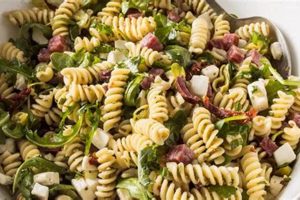
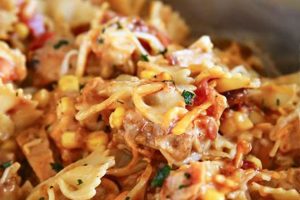
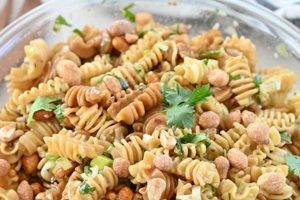
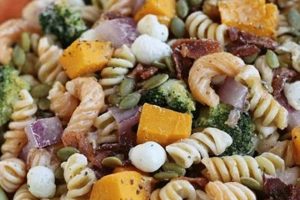
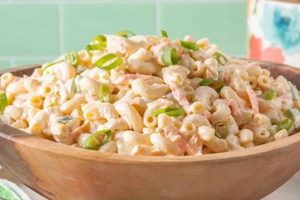
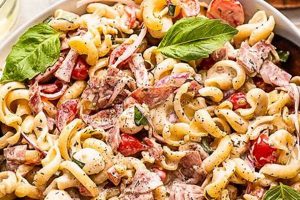
A top-tier pasta salad involves a harmonious blend of high-quality ingredients, balanced flavors, and appealing presentation. This often includes perfectly cooked pasta, fresh vegetables, flavorful proteins, and a complementary dressing. A vibrant, colorful presentation enhances the dining experience. For example, a classic Italian pasta salad might combine rotini pasta, cherry tomatoes, black olives, mozzarella balls, salami, and a tangy vinaigrette.
A well-executed dish in this category offers numerous advantages. It can be a refreshing and satisfying meal, particularly during warmer months. Its versatility makes it ideal for picnics, potlucks, and barbecues, or as a simple side dish for a weeknight dinner. The adaptability of pasta salad allows for customization based on dietary preferences and seasonal ingredients. Historically, pasta salads have evolved from simple pasta and vegetable combinations to incorporate a wider variety of components influenced by culinary traditions worldwide.
The following sections will delve into specific elements that contribute to an exceptional pasta salad experience. This includes selecting the appropriate pasta shape, preparing the ingredients, crafting a delicious dressing, and presenting the final dish effectively. Guidance on ingredient substitutions and creative variations will also be provided.
Tips for an Exceptional Pasta Salad
Creating a memorable pasta salad involves attention to detail and an understanding of key components. The following tips offer guidance on achieving optimal results.
Tip 1: Select the Right Pasta. Choose pasta shapes that hold the dressing well and provide textural interest. Rotini, fusilli, farfalle, and penne are excellent choices. Avoid long, thin pasta like spaghetti or angel hair, which can become tangled and difficult to manage in a salad.
Tip 2: Cook Pasta Al Dente. Slightly firm pasta holds its shape better in the salad and prevents a mushy texture. Cook pasta according to package directions, reducing the cooking time by a minute or two for optimal firmness.
Tip 3: Rinse and Chill. After cooking, rinse the pasta under cold water to stop the cooking process and remove excess starch. This helps prevent the pasta from sticking together and creates a more refreshing salad. Chilling the pasta before adding other ingredients also helps the salad maintain its temperature.
Tip 4: Balance Flavors and Textures. Incorporate a variety of ingredients for a balanced flavor profile. Consider contrasting textures like crunchy vegetables, creamy cheese, and savory proteins. Examples include bell peppers, cucumbers, olives, feta cheese, grilled chicken, or chickpeas.
Tip 5: Craft a Flavorful Dressing. The dressing is crucial for binding the ingredients and adding depth of flavor. A simple vinaigrette, a creamy dressing, or a pesto-based sauce can all work well. Ensure the dressing complements the other ingredients without overpowering them.
Tip 6: Add Ingredients Strategically. Add more delicate ingredients, such as herbs or leafy greens, closer to serving time to prevent wilting or discoloration. Sturdier vegetables can be added earlier.
Tip 7: Season Carefully. Taste and adjust seasonings throughout the preparation process. Remember that flavors can meld and intensify over time, so start with a light hand and add more salt, pepper, or other spices as needed.
By following these guidelines, one can elevate a simple pasta salad into a culinary masterpiece. The combination of properly cooked pasta, fresh ingredients, and a well-balanced dressing creates a delightful and satisfying dish.
The concluding section will offer additional resources and inspiration for creating diverse and delicious pasta salad variations.
1. High-Quality Ingredients
High-quality ingredients form the foundation of a superior pasta salad. The selection of fresh, flavorful components directly impacts the final dish’s overall quality. Using ripe, in-season produce maximizes flavor and vibrancy. Substandard ingredients, even with a well-executed recipe, can result in a bland or unappetizing outcome. For instance, using mealy tomatoes or wilted lettuce will negatively affect the salad’s taste and texture, even with a flavorful dressing. Conversely, vibrant, juicy tomatoes and crisp lettuce elevate the salad, creating a more enjoyable sensory experience. Opting for high-quality cheeses and cured meats introduces nuanced flavors and desirable textures, contributing significantly to the overall culinary success.
The impact of ingredient quality extends beyond flavor. Fresh, properly handled ingredients contribute to food safety, reducing the risk of spoilage and foodborne illness. Investing in high-quality ingredients demonstrates a commitment to creating a dish that is both delicious and safe to consume. Furthermore, premium ingredients often possess superior nutritional value, adding to the health benefits of the meal. Choosing whole-grain pasta, for example, increases fiber content, while incorporating fresh vegetables boosts vitamin and mineral intake. Selecting quality olive oil provides healthy fats and antioxidants. These choices cumulatively enhance the nutritional profile of the pasta salad.
Understanding the crucial role of high-quality ingredients is essential for achieving culinary excellence in pasta salad preparation. While a well-balanced recipe provides a framework, using superior components is paramount to the final dish’s success. This commitment to quality translates into a more flavorful, visually appealing, nutritious, and ultimately, more satisfying culinary creation. The discernible difference between a pasta salad made with premium ingredients versus one made with subpar components underscores the significance of this principle.
2. Flavor Balance
Flavor balance is paramount in achieving a superlative pasta salad. A harmonious interplay of tastessweet, sour, salty, bitter, and umamielevates the dish beyond a simple combination of ingredients. A well-balanced pasta salad avoids extremes, ensuring no single flavor dominates. This complexity contributes to a more satisfying and enjoyable culinary experience. An excess of sweetness, for example, can be cloying, while an overabundance of acidity can be jarring. The objective is to create a nuanced flavor profile where each element complements the others, resulting in a cohesive and delicious whole.
Consider a pasta salad featuring grilled chicken, roasted red peppers, feta cheese, and Kalamata olives. The sweetness of the roasted peppers counterbalances the saltiness of the feta and olives. The savory chicken provides a grounding element, while the olives contribute a subtle bitterness. A lemon-herb vinaigrette adds brightness and acidity, further enhancing the flavor profile. If the dressing were excessively tart, it would overpower the other flavors. If the feta were overly salty, it would disrupt the balance. Achieving harmony among these diverse flavors is essential for success.
Practical application of this principle involves careful ingredient selection and thoughtful recipe development. Recipes should consider the inherent flavors of each component and how they interact. Tasting and adjusting throughout the preparation process allows for fine-tuning and ensures the desired balance is achieved. Understanding the role of flavor balance empowers one to create pasta salads that are not only delicious but also demonstrate culinary expertise. This principle transcends individual recipes and applies to any culinary endeavor seeking to maximize flavor complexity and enjoyment.
3. Textural Variety
Textural variety significantly contributes to a superior pasta salad experience. A combination of textures adds complexity and interest, elevating the dish beyond a homogenous mixture. The interplay of contrasting texturescrunchy, creamy, chewy, firmcreates a more dynamic and enjoyable sensory experience. Consider the difference between a pasta salad composed solely of soft ingredients versus one that incorporates crisp vegetables, al dente pasta, and crumbly cheese. The latter offers a more stimulating and satisfying mouthfeel, enhancing overall enjoyment.
Several examples illustrate the practical application of this principle. Incorporating crunchy elements, such as chopped celery, bell peppers, or toasted nuts, provides a counterpoint to the softness of cooked pasta. Adding creamy components, like crumbled feta cheese, avocado, or a dollop of hummus, introduces another layer of textural contrast. Toasted bread crumbs or croutons offer a satisfying crunch, while ingredients like sun-dried tomatoes or olives contribute a chewy texture. The strategic combination of these diverse textures transforms a simple pasta salad into a multi-dimensional culinary creation. Imagine a pasta salad with rotini, cherry tomatoes, cucumbers, Kalamata olives, and feta cheese, dressed with a lemon-herb vinaigrette. The firmness of the pasta contrasts with the juicy tomatoes, crisp cucumbers, chewy olives, and creamy feta, resulting in a delightful textural interplay.
Understanding the importance of textural variety empowers culinary creativity and enhances the dining experience. Careful consideration of texture during ingredient selection and recipe development elevates pasta salad from a simple side dish to a culinary highlight. This principle transcends individual recipes and applies broadly to any dish seeking to maximize sensory appeal and enjoyment. Mastering textural variety adds depth and complexity, contributing significantly to a truly exceptional pasta salad.
4. Complementary Dressing
A complementary dressing is integral to a top-tier pasta salad. The dressing serves not merely as a coating but as a unifying element, harmonizing diverse ingredients. Its purpose extends beyond simply adding moisture; it enhances flavors, contributes to textural complexity, and provides a cohesive culinary experience. An effective dressing complements the other components without overpowering them, allowing individual flavors to shine while contributing to the overall composition. A mismatch between dressing and ingredients can result in a disjointed and unbalanced salad. For instance, a heavy, creamy dressing might overwhelm delicate vegetables and lighter flavors, while a vinaigrette that is too acidic could clash with creamy cheeses or richer proteins.
Consider a pasta salad featuring grilled shrimp, orzo pasta, cherry tomatoes, and feta cheese. A light lemon-herb vinaigrette would enhance the flavors of the shrimp and vegetables without masking the salty tang of the feta. The vinaigrette’s acidity would provide a refreshing counterpoint to the richness of the shrimp and the creaminess of the cheese. Conversely, a heavy mayonnaise-based dressing would likely overpower the delicate flavors of the shrimp and vegetables, resulting in a less balanced and enjoyable salad. Similarly, a strongly flavored pesto might clash with the feta, creating a disharmony of flavors. The choice of dressing should always consider the specific ingredients and the desired overall flavor profile.
Selecting a complementary dressing requires careful consideration of the pasta salad’s composition. Factors such as the types of vegetables, proteins, cheeses, and herbs used influence the choice of dressing. The intensity of flavors, textures, and overall balance play critical roles. A successful pasta salad hinges on the harmonious interplay of all elements, with the dressing serving as a crucial unifying force. Mastery of this principle allows one to create pasta salads that are not only delicious but also demonstrate culinary expertise. This understanding is essential for achieving balance and maximizing flavor in any pasta salad creation.
5. Proper Pasta Cooking

Proper pasta cooking is fundamental to a superlative pasta salad. The pasta’s texture significantly impacts the overall dish’s quality and enjoyment. Overcooked pasta becomes mushy and absorbs excessive dressing, resulting in a heavy, unappetizing salad. Undercooked pasta, conversely, presents a hard, unpleasant texture that detracts from the overall experience. The ideal texture is al dente, meaning “to the tooth” in Italian, indicating a firm yet tender bite. Achieving this requires precise timing and attention to detail.
The impact of pasta texture extends beyond mere mouthfeel. Properly cooked pasta holds its shape better, preventing the salad from becoming a sticky, homogenous mass. This allows the individual ingredients, such as vegetables, proteins, and cheeses, to retain their distinct identities and contribute to the salad’s overall textural complexity. For example, a pasta salad featuring rotini, cherry tomatoes, and cubed mozzarella relies on the firm texture of the pasta to provide structural integrity. If the pasta is overcooked, it will clump together, obscuring the other ingredients and compromising the salad’s appeal. Conversely, perfectly cooked rotini will maintain its spiral shape, allowing the dressing to cling evenly and creating a more visually appealing and enjoyable salad.
Achieving perfectly cooked pasta involves understanding a few key principles. Cooking time should adhere closely to package directions, often reducing the recommended time slightly to achieve the desired al dente texture. The pasta should be cooked in a large pot of generously salted boiling water to ensure even cooking and prevent sticking. Testing the pasta for doneness by biting into a piece is crucial, as visual cues can be deceptive. Once cooked, the pasta should be drained immediately and rinsed under cold water to stop the cooking process and remove excess starch. This rinsing process helps to maintain the pasta’s firm texture and prevents it from becoming sticky. Mastering these techniques ensures the pasta contributes positively to the final dish, forming a foundational element for an exceptional pasta salad.
6. Attractive Presentation

Visual appeal plays a crucial role in the overall perception and enjoyment of a pasta salad. Attractive presentation elevates the dish beyond mere sustenance, transforming it into a more enticing and satisfying culinary experience. While flavor and texture undoubtedly contribute to a successful pasta salad, presentation enhances these elements, creating a synergistic effect that maximizes enjoyment. A well-presented salad stimulates appetite and conveys a sense of care and attention to detail, further enhancing the dining experience.
- Color Palette
A vibrant and varied color palette significantly enhances a pasta salad’s visual appeal. Incorporating a range of colorful vegetables, such as bright red tomatoes, deep green spinach, vibrant yellow bell peppers, and rich purple onions, creates a visually stimulating dish. A monochromatic salad can appear bland and unappetizing, while a strategically composed array of colors entices the eye and enhances the perceived freshness and flavor. The intentional use of color adds depth and complexity, transforming a simple pasta salad into a work of culinary art.
- Arrangement and Composition
Thoughtful arrangement and composition contribute significantly to a pasta salad’s presentation. Distributing ingredients evenly throughout the salad, rather than allowing them to clump together, ensures visual balance and allows each component to shine. Consider the strategic placement of larger elements, such as grilled chicken or shrimp, as focal points, surrounded by a colorful array of vegetables and pasta. This deliberate arrangement enhances visual interest and creates a more aesthetically pleasing presentation. A haphazardly tossed salad, while potentially flavorful, lacks the visual appeal of a thoughtfully composed dish.
- Serving Vessels and Garnishes
The choice of serving vessel and the use of garnishes further enhance a pasta salad’s presentation. A clear glass bowl showcases the vibrant colors and textures of the salad, while a rustic wooden bowl adds a touch of warmth and informality. Garnishes, such as fresh herbs, a sprinkle of cheese, or a drizzle of olive oil, provide finishing touches that elevate the presentation and add subtle flavor nuances. These details demonstrate attention to detail and enhance the overall dining experience, transforming a simple meal into a more memorable occasion.
- Portioning and Plating
Careful portioning and plating contribute to a polished and professional presentation. Individual portions, neatly arranged on plates or in bowls, create a more elegant and appealing presentation than a large communal bowl. This approach also allows for greater control over portion size and presentation consistency. For individual servings, consider using a plating ring or mold to create a defined shape and add a touch of sophistication. These seemingly small details can significantly impact the overall perception of the dish, demonstrating care and attention to presentation.
These elements of attractive presentation combine to elevate a pasta salad from a simple dish to a visually appealing and enjoyable culinary creation. By considering color, arrangement, serving vessels, garnishes, and plating, one can maximize the sensory appeal of the salad, enhancing both the anticipation and the overall dining experience. A well-presented pasta salad reflects culinary skill and attention to detail, demonstrating a commitment to creating a dish that is not only delicious but also aesthetically pleasing. This attention to visual appeal distinguishes a truly exceptional pasta salad.
Frequently Asked Questions
This section addresses common inquiries regarding optimal pasta salad preparation.
Question 1: What is the best pasta shape for pasta salad?
Shapes that hold dressing well and offer textural variety are preferred. Rotini, fusilli, farfalle, and penne are excellent choices. Long, thin pasta like spaghetti or angel hair is less suitable as it tends to clump and become difficult to manage.
Question 2: How can one prevent pasta salad from becoming soggy?
Sogginess often results from overcooked pasta or excessive dressing. Cooking pasta al dente and adding dressing gradually, ensuring the pasta is well-coated but not drowning, helps prevent this. Adding more delicate ingredients, such as leafy greens, closer to serving time also helps maintain freshness.
Question 3: What are ideal ingredients for a flavorful pasta salad?
Flavorful pasta salads incorporate a balance of textures and tastes. Fresh vegetables, such as bell peppers, cucumbers, and cherry tomatoes, add crunch and vibrancy. Proteins like grilled chicken, shrimp, or chickpeas offer substance and savory notes. Cheeses, such as feta, mozzarella, or provolone, contribute creamy or salty elements. A variety of ingredients enhances both flavor and nutritional value.
Question 4: How long can pasta salad be stored?
Properly stored pasta salad typically lasts three to five days in the refrigerator. Ensure the salad is stored in an airtight container to maintain freshness and prevent contamination. Discard any salad that shows signs of spoilage, such as an off odor or discoloration.
Question 5: Can pasta salad be made ahead of time for events?
Pasta salad is an excellent make-ahead dish for gatherings. Prepare the salad a day or two in advance, excluding delicate ingredients like leafy greens. Add these components just before serving to maintain their freshness and prevent wilting. This approach allows for convenient entertaining.
Question 6: How can one adapt pasta salad to accommodate dietary restrictions?
Pasta salad’s versatility allows for easy adaptation to various dietary needs. Gluten-free pasta can be substituted for traditional pasta. Vegetarian or vegan options can be created by omitting meat and cheese or using plant-based alternatives. Adjusting ingredients and dressings allows for customization based on individual dietary requirements.
Understanding these common concerns contributes to successful pasta salad preparation. Attention to detail and thoughtful ingredient selection ensures optimal flavor, texture, and presentation.
The following section offers a collection of diverse and inspiring pasta salad recipes for further exploration.
Best Recipe for Pasta Salad
Achieving a superlative pasta salad involves a multifaceted approach. Careful consideration of ingredient quality, flavor balance, textural variety, complementary dressing, proper pasta cooking, and attractive presentation are essential components. High-quality ingredients form the foundation, ensuring optimal flavor and freshness. Flavor balance, achieved through a harmonious interplay of tastes, prevents any single element from dominating. Textural variety, incorporating contrasting elements such as crunchy vegetables and creamy cheeses, adds depth and interest. A complementary dressing unifies the ingredients, enhancing flavors without overpowering them. Properly cooked pasta, al dente and retaining its shape, provides a crucial structural element. Finally, attractive presentation elevates the dish, stimulating appetite and enhancing enjoyment.
Culinary success in pasta salad preparation hinges on a holistic understanding of these principles. While variations and individual preferences exist, these foundational elements remain constant. This comprehensive approach allows adaptation and creativity within a structured framework, ensuring consistent quality and maximizing culinary potential. Exploration of diverse ingredients, flavor profiles, and presentation styles allows for continuous refinement and the creation of truly exceptional pasta salads.