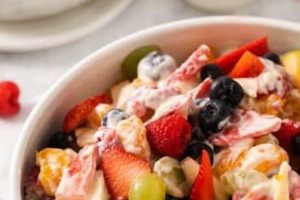
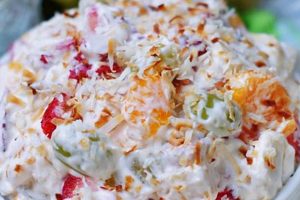
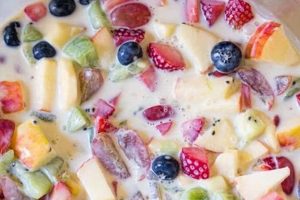
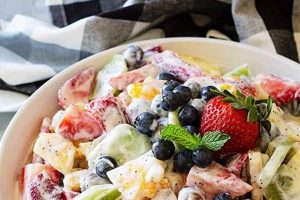
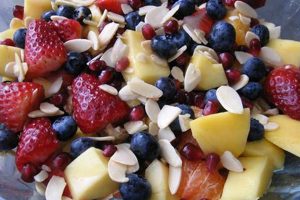
A refreshing and flavorful combination of seasonal fruits, a cold-weather fruit medley offers a vibrant alternative to heavier desserts and provides essential vitamins and nutrients often scarce during colder months. Citrus fruits like oranges and grapefruits, readily available in winter, provide vitamin C, while apples and pears offer fiber and antioxidants. A simple example could include segments of grapefruit and orange combined with diced apple, pear, and pomegranate seeds, perhaps enhanced with a light honey-lime dressing.
Such recipes highlight the importance of adapting to seasonal produce availability, ensuring optimal flavor and nutritional value. Historically, preserving the harvest through drying or other methods limited fresh fruit options in winter. Modern transportation and storage techniques now provide access to a broader range, yet embracing seasonal eating still offers both economic and environmental advantages. Winter fruit salads also offer a welcome contrast to the rich, often heavier foods traditionally consumed during the colder months, promoting a balanced and healthy diet.
This exploration will further delve into specific seasonal fruit combinations, suitable dressings, and tips for preparing and presenting attractive and flavorful winter fruit salads, offering a wealth of options for both everyday enjoyment and festive occasions.
Tips for Creating Winter Fruit Salads
Successfully composing a winter fruit salad involves thoughtful selection and preparation. The following tips will guide the creation of a balanced and flavorful dish.
Tip 1: Embrace Seasonal Variety: Select fruits at peak ripeness during the winter months. Consider citrus fruits (oranges, grapefruits, mandarins), pome fruits (apples, pears), and additions like pomegranate seeds or dried cranberries.
Tip 2: Balance Flavors and Textures: Combine tart and sweet flavors, as well as soft and crisp textures, for a more complex and enjoyable experience. A tart grapefruit paired with a sweet pear offers a pleasant contrast.
Tip 3: Prevent Browning: To prevent enzymatic browning of cut fruits like apples and pears, toss them with a bit of lemon juice. This maintains visual appeal and freshness.
Tip 4: Enhance with Spices: Warm spices like cinnamon, nutmeg, or ginger can complement the flavors of winter fruits. A sprinkle of cinnamon on a pear and apple salad adds depth.
Tip 5: Consider Dressings Carefully: Opt for light dressings that enhance the natural fruit flavors rather than overpowering them. A light honey-lime dressing or a simple citrus vinaigrette works well.
Tip 6: Prepare Just Before Serving: To maintain optimal texture and prevent excess moisture, prepare the fruit salad shortly before serving. This ensures a fresh and appealing presentation.
Tip 7: Add Nuts and Seeds for Crunch: Toasted nuts or seeds, such as walnuts, pecans, or pumpkin seeds, add a welcome textural element and enhance nutritional value.
Tip 8: Garnishing Touches: Fresh mint leaves, a sprinkle of pomegranate seeds, or a dusting of powdered sugar can elevate the presentation.
By following these guidelines, one can consistently create delicious and visually appealing winter fruit salads offering both nutritional benefits and culinary enjoyment.
The following section will explore specific recipe examples incorporating these tips.
1. Seasonal Winter Fruits
Seasonal winter fruits form the foundation of a successful winter fruit salad recipe. The availability of specific fruits during the colder months directly influences recipe development and flavor profiles. Citrus fruits, such as oranges, grapefruits, mandarins, and pomelos, reach peak ripeness during winter, offering a burst of vibrant flavor and essential vitamins. Pome fruits like apples and pears, readily available in various varieties throughout winter, provide textural contrast and subtle sweetness. Persimmons, with their unique texture and flavor, and pomegranates, offering juicy arils with a tart-sweet profile, further enhance the diversity of a winter fruit salad. This reliance on seasonal produce ensures optimal flavor, nutritional value, and supports sustainable agricultural practices.
Consider the impact of using in-season citrus fruits. A winter fruit salad featuring oranges and grapefruits offers not only a refreshing taste but also a significant dose of Vitamin C, crucial during cold and flu season. The inclusion of pears and apples contributes fiber and antioxidants. A combination of these fruits, perhaps enhanced with a sprinkle of pomegranate arils, creates a balanced and nutritionally rich salad distinctly suited for the winter months. Conversely, attempting a winter fruit salad using fruits like berries or melons, which are not in season, would result in a less flavorful and potentially more expensive dish. The flavor profile of out-of-season fruits is often suboptimal, impacting the overall quality of the salad.
Understanding the role of seasonal winter fruits is paramount for creating a successful winter fruit salad. This knowledge allows for the creation of flavorful, nutritious, and cost-effective recipes that embrace the unique offerings of each season. The availability of specific fruits dictates the potential flavor combinations and nutritional benefits, ultimately shaping the character of a truly seasonal winter fruit salad.
2. Balanced Flavor Profiles

Balanced flavor profiles are essential for a successful winter fruit salad. Winter fruits offer a diverse range of flavor characteristics, from the tartness of citrus fruits like grapefruit and oranges to the subtle sweetness of pears and apples. A well-composed winter fruit salad strategically combines these flavors to create a harmonious and enjoyable sensory experience. The interplay of tart and sweet, along with the potential addition of other flavor dimensions like spicy or savory, elevates the salad beyond a simple mix of fruits to a complex and nuanced dish. For example, the sharpness of grapefruit can be balanced by the sweetness of ripe pear, while a sprinkle of cinnamon adds a warming spice note that complements both. Ignoring flavor balance can result in a salad that is overly sweet, excessively tart, or simply one-dimensional in its taste. A salad composed solely of citrus fruits might be overwhelmingly tart, while a salad dominated by sweet fruits might lack the refreshing contrast that a balanced flavor profile provides.
Achieving flavor balance requires careful consideration of the chosen fruits and any additional ingredients. A recipe might call for a specific ratio of tart to sweet fruits, or it might suggest incorporating ingredients with contrasting flavors, such as a tart dressing to balance sweeter fruits. Understanding the inherent sweetness or tartness of different winter fruits is crucial in this process. For instance, a very tart apple variety might require pairing with a sweeter fruit or a honey-based dressing to achieve balance. The addition of ingredients like nuts, seeds, or spices further influences the flavor profile and requires careful integration to maintain overall balance. Toasted pecans, for example, can provide a nutty counterpoint to sweet fruits, while a sprinkle of ginger can add a warm, spicy note that complements the sweetness of pears or apples.
Flavor balance directly impacts the palatability and overall enjoyment of a winter fruit salad. A well-balanced salad offers a more complex and satisfying culinary experience. It provides a refreshing contrast between different flavor notes and prevents any single flavor from dominating. This balance is key to creating a fruit salad that is not only delicious but also encourages appreciation of the diverse flavors available during the winter months. This understanding allows for the creation of winter fruit salads that are both refreshing and satisfying, showcasing the unique and diverse flavors of seasonal produce.
3. Textural Variety
Textural variety significantly contributes to the overall enjoyment of a winter fruit salad. A combination of crisp, soft, and juicy elements creates a more dynamic and satisfying sensory experience. The contrast between a crisp apple slice and a juicy orange segment, for instance, offers a more interesting textural interplay than a salad composed solely of soft fruits. This variety prevents monotony and enhances the perception of flavor complexity. Consider the difference between a salad with uniformly soft fruits and one that incorporates contrasting textures. The former might feel bland and monotonous, while the latter offers a more stimulating and enjoyable eating experience. Adding components like chopped nuts or toasted seeds introduces a welcome crunch, further amplifying textural complexity. Ignoring textural variety results in a less engaging culinary experience, limiting the potential of the winter fruit salad.
Achieving optimal textural variety involves intentional selection and preparation of ingredients. Including fruits with distinct textures, such as crisp apples or pears alongside juicy citrus segments and pomegranate arils, provides a foundation for textural contrast. Preparation techniques also play a role. Dicing fruits into different sizes or incorporating thin slices alongside larger chunks further diversifies the textural experience. Adding elements like toasted nuts or seeds provides a crunchy contrast to the softer fruits. A winter fruit salad featuring diced apples, segmented oranges, pomegranate arils, and chopped walnuts exemplifies the potential of textural layering. The crisp apple, juicy orange, and crunchy walnut complement each other, creating a more engaging and satisfying culinary experience than a salad with uniform texture.
Textural variety is an essential component of a well-composed winter fruit salad. It elevates the sensory experience beyond simple flavor and contributes to a more dynamic and enjoyable dish. Strategic selection of ingredients and thoughtful preparation techniques allow for the creation of winter fruit salads that offer a delightful interplay of textures, enhancing the overall culinary experience and showcasing the diverse possibilities of seasonal winter produce. Understanding the role of textural variety allows for the creation of fruit salads that are not only flavorful but also texturally stimulating, maximizing enjoyment and culinary satisfaction.
4. Preventative Measures (Browning)
Enzymatic browning, a common occurrence in cut fruits, presents a significant challenge when preparing fruit salads, especially those featuring winter fruits like apples and pears. This browning, caused by the enzyme polyphenol oxidase reacting with oxygen, results in unappealing discoloration and potential flavor changes, impacting both the aesthetic appeal and overall quality of the salad. In a winter fruit salad recipe, where visual appeal contributes significantly to the enjoyment of the dish, preventing browning becomes a crucial step. For example, a winter fruit salad featuring sliced apples and pears can quickly develop brown spots if left untreated, diminishing its freshness and visual appeal. This effect is particularly noticeable in lighter-colored fruits, impacting the overall presentation of the salad.
Several preventative measures can effectively mitigate enzymatic browning. A common and readily available solution involves coating cut fruit surfaces with an acidic substance, such as lemon juice. The lowered pH inhibits enzyme activity, slowing down or preventing discoloration. Other acidic solutions, like a mixture of ascorbic acid and water or commercially available anti-browning products, offer similar protection. Soaking cut fruit in a saltwater solution provides another effective barrier against oxygen, though it can subtly alter the flavor of delicate fruits. Blanching, a brief immersion in boiling water, deactivates the enzyme, but this method is less suitable for raw fruit salads. Choosing specific apple or pear varieties known for slower browning rates offers a preventative approach during ingredient selection. For instance, incorporating ‘Honeycrisp’ apples, which exhibit slower browning compared to ‘Granny Smith’ apples, contributes to maintaining the salad’s fresh appearance. Practical implementation requires considering the specific fruit variety and overall recipe requirements.
Implementing effective browning prevention techniques ensures the visual appeal and maintains the quality of winter fruit salads. This proactive approach preserves the fresh appearance of the fruit, enhancing its attractiveness and preventing undesirable flavor alterations. Understanding the causes of enzymatic browning and applying suitable preventative measures ensures that the final product retains its intended visual appeal and delivers an enjoyable culinary experience. Ultimately, addressing browning contributes significantly to a successful and visually appealing winter fruit salad, highlighting the importance of these preventative measures in recipe development.
5. Complementary Additions

Complementary additions play a crucial role in enhancing the flavor, texture, and overall appeal of winter fruit salads. These additions, ranging from nuts and seeds to spices and herbs, elevate the salad beyond a simple combination of fruits, creating a more complex and nuanced culinary experience. The careful selection and incorporation of complementary additions contribute significantly to the success of a winter fruit salad recipe. For instance, toasted pecans or walnuts introduce a welcome crunch and nutty depth, while a sprinkle of cinnamon or nutmeg adds warmth and complexity. Fresh herbs like mint provide a refreshing counterpoint to the sweetness of the fruit, while a drizzle of honey or maple syrup enhances the natural sweetness and adds a touch of richness. The absence of such additions can result in a salad that, while refreshing, might lack depth and complexity. A fruit salad composed solely of winter fruits might be pleasant, but the strategic inclusion of complementary additions elevates it to a more sophisticated and satisfying dish.
The choice of complementary additions should consider the specific fruits used in the salad and the desired flavor profile. For a citrus-based salad, additions like toasted almonds and a sprinkle of cardamom can complement the tartness of the fruit. A salad featuring pears and apples might benefit from the inclusion of crumbled blue cheese and a drizzle of honey. The quantity of these additions also matters. Too much of a dominant ingredient, such as a strongly flavored spice or cheese, can overpower the delicate flavors of the fruit. A judicious approach ensures that the complementary additions enhance, rather than mask, the natural flavors of the winter fruits. Consider a winter fruit salad with segments of orange and grapefruit paired with crumbled feta cheese and a sprinkle of chopped mint. The salty tang of the feta complements the citrus, while the mint adds a refreshing herbal note, creating a balanced and flavorful combination. Without these additions, the salad would be less complex and less satisfying.
Understanding the role and impact of complementary additions is essential for developing successful winter fruit salad recipes. These additions contribute significantly to the overall flavor, texture, and aroma of the salad, elevating it from a simple mix of fruits to a more sophisticated and enjoyable dish. The strategic incorporation of complementary ingredients allows for creativity and customization, enabling the development of unique and flavorful winter fruit salads tailored to individual preferences. This understanding allows for a deeper appreciation of the culinary possibilities offered by winter fruits and the potential to create truly exceptional seasonal dishes.
6. Presentation and Serving

Presentation and serving significantly impact the perceived quality and enjoyment of a winter fruit salad. Visual appeal enhances the sensory experience, influencing how flavors are perceived and overall satisfaction. A thoughtfully presented salad elevates the dining experience, transforming a simple dish into a visually appealing culinary creation. Consider the difference between a haphazardly tossed salad and one artfully arranged. The former might be perceived as less appealing, even if the ingredients are identical, while the latter invites enjoyment and appreciation. Serving temperature also plays a crucial role. A chilled winter fruit salad offers a refreshing contrast to heavier winter meals, enhancing its appeal. Room temperature serving, conversely, might diminish the refreshing qualities, particularly for salads featuring citrus fruits. Practical applications include arranging fruit slices in a visually appealing pattern, using contrasting colors to create visual interest, and garnishing with fresh herbs or a dusting of powdered sugar. Serving in chilled bowls or glasses further enhances the refreshing experience.
Several factors influence optimal presentation and serving. The choice of serving vessel significantly impacts visual appeal. A clear glass bowl showcases the vibrant colors and textures of the fruit, while individual portions in elegant glasses elevate the presentation for special occasions. Garnishes, such as fresh mint sprigs, edible flowers, or a sprinkle of pomegranate arils, add a touch of elegance and enhance visual interest. The arrangement of the fruit itself contributes to the aesthetic appeal. Consider arranging fruit slices in a radiating pattern or creating a layered effect with different colors and textures. The timing of preparation also plays a role. Preparing the salad too far in advance can lead to undesirable changes in texture and appearance, particularly with fruits prone to browning. Serving the salad immediately after preparation ensures optimal freshness and visual appeal. For a festive occasion, a winter fruit salad served in a carved-out pineapple half, garnished with fresh mint and a light dusting of powdered sugar, creates a visually striking centerpiece. Conversely, serving the same salad in a plain bowl without any attention to arrangement or garnish diminishes its perceived value.
Attention to presentation and serving elevates the winter fruit salad from a simple dish to a more refined and enjoyable culinary experience. Visual appeal enhances the perception of flavor and contributes significantly to overall satisfaction. Understanding the impact of presentation and incorporating appropriate serving techniques, such as strategic use of serving vessels, garnishes, and timing, maximizes the enjoyment of the winter fruit salad. This attention to detail transforms a simple combination of fruits into a visually appealing and satisfying culinary creation, showcasing the inherent beauty and flavors of seasonal winter produce.
Frequently Asked Questions
This section addresses common inquiries regarding winter fruit salad preparation and offers practical solutions for optimal results.
Question 1: How can browning be prevented in winter fruit salads?
Enzymatic browning in fruits like apples and pears can be mitigated by coating cut surfaces with an acidic solution, such as lemon juice or a mixture of ascorbic acid and water. Alternatively, submerging cut fruit in a saltwater solution briefly can also prevent oxidation.
Question 2: What are suitable dressings for winter fruit salads?
Light dressings that complement, rather than overpower, the natural fruit flavors are recommended. A simple citrus vinaigrette, a light honey-lime dressing, or a sprinkle of cinnamon and ginger offer suitable options.
Question 3: Which fruits are optimal for winter fruit salads?
Seasonal winter fruits like citrus fruits (oranges, grapefruits, mandarins), pome fruits (apples, pears), pomegranates, and persimmons provide optimal flavor and nutritional value.
Question 4: How can textural variety be achieved in a winter fruit salad?
Incorporating fruits with varying textures creates a more dynamic experience. Combining crisp apples with juicy citrus segments and adding elements like toasted nuts or seeds provides contrasting textural elements.
Question 5: How long can a winter fruit salad be stored?
For optimal quality, winter fruit salads are best consumed shortly after preparation. If storage is necessary, refrigerate in an airtight container for up to 24 hours, noting that some textural changes may occur.
Question 6: Can frozen fruit be used in winter fruit salads?
While fresh fruit is generally preferred, frozen fruits can be incorporated. Thaw frozen fruit completely and drain excess liquid before adding to the salad to prevent a watery consistency. Certain fruits, such as berries, may lose some of their texture when frozen and thawed.
Addressing these frequently asked questions provides a comprehensive understanding of winter fruit salad preparation and empowers culinary exploration with seasonal ingredients.
The following section will offer several example recipes demonstrating these principles in practice.
Conclusion
Exploration of optimal winter fruit salad composition necessitates consideration of seasonal fruit availability, flavor profile balance, textural variety, browning prevention techniques, complementary ingredient incorporation, and impactful presentation. Prioritizing seasonal fruits ensures peak flavor and nutritional value, aligning with sustainable consumption practices. Balancing contrasting flavors and textures provides a dynamic sensory experience. Preventative measures, such as the application of acidic solutions, maintain visual appeal and prevent undesirable enzymatic browning. Strategic incorporation of nuts, spices, or herbs enhances complexity and depth. Finally, thoughtful presentation and timely serving elevate perceived value and overall enjoyment.
Culinary creativity thrives within the constraints of seasonal availability. Embracing the unique offerings of winter fruits allows for the creation of vibrant and healthful dishes that celebrate the season’s bounty. Further exploration of regional and cultural variations in winter fruit preparation promises to expand culinary horizons and deepen appreciation for the diverse applications of seasonal produce.