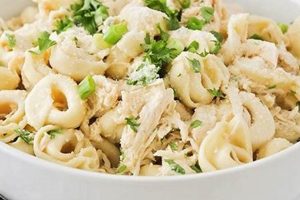
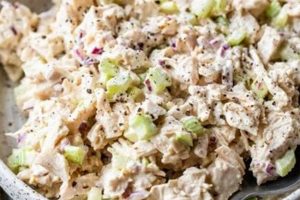
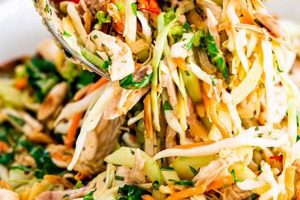
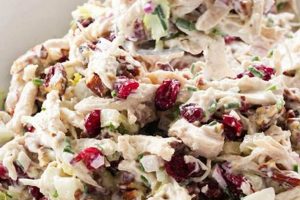
A chilled pasta dish incorporates cooked poultry, typically diced or shredded, combined with mayonnaise-based dressing and often includes additional ingredients like celery, onion, grapes, or nuts. Variations can utilize different pasta shapes, dressings, and complementary components. An example might feature rotini pasta, shredded chicken breast, celery, red onion, and a dressing made with mayonnaise, Dijon mustard, and lemon juice.
This type of dish offers a convenient and versatile meal option, suitable for picnics, potlucks, or quick lunches. Its adaptable nature allows for customization based on dietary preferences and ingredient availability. Historically, such combinations of protein, vegetables, and creamy dressings have been appreciated for their balance of flavors and textures, evolving from simple salads to more elaborate pasta-based presentations.
Further exploration of this culinary concept will cover variations on the classic preparation, nutritional information, tips for ingredient selection and storage, and instructions for creating this dish from scratch.
Tips for Preparing Chicken Salad Pasta
Optimizing the preparation process ensures a flavorful and satisfying dish. Careful consideration of ingredients and techniques contributes significantly to the overall quality.
Tip 1: Pasta Selection: Opt for short, sturdy pasta shapes that hold their form well and effectively capture the dressing. Rotini, fusilli, and farfalle are excellent choices. Avoid long, thin noodles, which can become tangled and difficult to manage.
Tip 2: Chicken Preparation: Utilize cooked chicken, either roasted, poached, or grilled. Ensure the chicken is cooled completely before incorporating it into the salad to prevent the mayonnaise-based dressing from becoming overly thin.
Tip 3: Enhancing Flavor: Incorporating fresh herbs, such as dill, parsley, or chives, elevates the flavor profile. A touch of lemon zest or a dash of Dijon mustard can also add brightness and complexity.
Tip 4: Balancing Textures: Consider adding textural contrast with ingredients like chopped celery, red onion, grapes, or toasted nuts. These additions create a more dynamic and engaging culinary experience.
Tip 5: Dressing Consistency: The dressing should be creamy and cohesive, coating the pasta and other ingredients evenly. Adjust the amount of mayonnaise as needed to achieve the desired consistency.
Tip 6: Chilling Time: Allow the pasta salad to chill for at least 30 minutes before serving. This allows the flavors to meld and enhances the overall enjoyment.
Tip 7: Storage: Store leftover pasta salad in an airtight container in the refrigerator for up to three days. Discard any salad that has been left at room temperature for more than two hours.
By following these guidelines, one can achieve a well-balanced and flavorful pasta salad that is both satisfying and visually appealing. Attention to detail in each step ensures optimal results.
These preparation suggestions contribute to a successful culinary outcome, demonstrating the potential for creating a simple yet elegant dish.
1. Chicken

Chicken plays a central role in chicken salad pasta recipes, providing the primary protein source and influencing the overall flavor profile. Understanding the nuances of chicken selection and preparation is essential for a successful dish.
- Type of Chicken
Different chicken types offer varying textures and flavors. Boneless, skinless breasts are commonly used for their leanness and ease of shredding. Dark meat, such as thighs, provides richer flavor and moisture. Rotisserie chicken offers convenience and a pre-cooked option.
- Cooking Methods
The cooking method significantly impacts the final taste and texture. Poaching results in tender, flavorful chicken, while grilling imparts a smoky char. Baking or roasting provides a versatile approach, allowing for customization with herbs and spices.
- Flavor Enhancements
Seasoning the chicken before or after cooking elevates the overall dish. Simple seasonings like salt, pepper, and garlic powder provide a foundational flavor base. More complex spice blends or marinades can add depth and complexity.
- Texture Considerations
The chicken’s texture contributes to the final dish’s appeal. Shredding the chicken creates a delicate texture that blends well with the other ingredients. Cubing the chicken provides a more substantial bite. The chosen texture should complement the pasta shape and other components.
The chosen chicken type, cooking method, flavor enhancements, and textural considerations directly impact the overall quality and enjoyment of a chicken salad pasta recipe. A thoughtful approach to these elements ensures a well-balanced and satisfying culinary experience.
2. Pasta
Pasta selection significantly influences the overall success of a chicken salad pasta recipe. The pasta’s shape, size, and cooking method affect the dish’s texture, flavor absorption, and aesthetic appeal. Choosing the right pasta is crucial for creating a harmonious balance of ingredients.
- Shape and Size
Different pasta shapes offer varying textural experiences and dressing-holding capabilities. Small, sturdy shapes like rotini, fusilli, and farfalle effectively capture the dressing and maintain their structure. Larger shapes, such as penne or rigatoni, can also work well, while long, thin pastas like spaghetti or linguine are generally less suitable due to their tendency to clump and become difficult to manage within the salad context.
- Cooking Method
Properly cooked pasta is essential for achieving the desired texture. Overcooked pasta becomes mushy and loses its ability to hold its shape, while undercooked pasta remains firm and unappetizing. Following package instructions for cooking time ensures optimal results. Rinsing the cooked pasta with cold water after draining helps to stop the cooking process and maintain a firm texture, particularly beneficial for pasta salads served chilled.
- Pasta Variety
Classic semolina pasta is the most common choice, providing a neutral flavor that complements the other ingredients. Whole wheat pasta offers a nutritional boost and a slightly nutty flavor. Gluten-free pasta options are also available for those with dietary restrictions. The chosen pasta variety should align with personal preferences and dietary needs.
- Pasta-to-Ingredient Ratio
The balance between pasta and other ingredients is crucial for a well-rounded chicken salad pasta. Too much pasta can result in a dry, bland dish, while too little may leave the salad feeling incomplete. A balanced ratio ensures that each component contributes effectively to the overall flavor and texture.
The interplay between pasta selection and the overall composition of the dish is key to a successful chicken salad pasta recipe. Thoughtful consideration of shape, cooking method, variety, and proportion ensures a harmonious blend of flavors, textures, and visual appeal.
3. Salad Dressing
Salad dressing functions as a unifying element within chicken salad pasta recipes, binding the individual components and contributing significantly to the overall flavor profile. The dressing’s consistency, flavor components, and interaction with other ingredients directly influence the final dish’s quality. A well-chosen dressing complements the chicken and pasta, creating a harmonious balance of tastes and textures. Classic mayonnaise-based dressings provide a creamy, rich foundation, while vinaigrette-style dressings offer a lighter, tangier alternative. For instance, a Dijon mustard and lemon juice-enhanced mayonnaise dressing provides a sharp contrast to the richness of the chicken, while a Greek yogurt-based dressing offers a lighter, tangier flavor profile. The dressing’s ability to coat the pasta and other ingredients evenly ensures a cohesive and flavorful experience with each bite.
Beyond simply binding ingredients, salad dressing contributes significantly to the sensory experience of the dish. The dressing’s flavor profile can enhance or detract from the overall enjoyment. A creamy dressing adds richness and moisture, balancing potentially drier ingredients like chicken breast. Conversely, a lighter dressing can highlight the flavors of fresh vegetables and herbs. The interplay of these flavors and textures determines the final dish’s complexity and satisfaction. Consider the contrasting textures and flavors in a chicken salad pasta recipe with a creamy, herb-infused dressing, crunchy celery, sweet grapes, and savory chicken. The dressing harmonizes these elements, creating a multi-dimensional culinary experience. Improperly balanced dressing can result in a bland or overly rich dish, highlighting the critical role dressing plays in the recipe’s success.
Careful consideration of salad dressing selection is essential for achieving a balanced and flavorful chicken salad pasta. Factors such as the dressing’s consistency, acidity, sweetness, and complementary flavors must be evaluated in relation to other recipe components. Achieving the desired balance is crucial for transforming individual ingredients into a cohesive and satisfying culinary creation. Challenges may arise in achieving the ideal balance of flavors and textures. An overly thick dressing can overwhelm the other ingredients, while a thin dressing may fail to adequately coat the pasta and other components. Addressing these challenges requires careful attention to ingredient ratios and flavor pairings. Understanding the integral role of salad dressing is paramount to mastering chicken salad pasta recipes and creating a dish that is both flavorful and aesthetically pleasing.
4. Added Ingredients
Added ingredients represent a pivotal aspect of chicken salad pasta recipes, contributing significantly to flavor complexity, textural contrast, and overall nutritional value. These additions move the dish beyond a simple combination of chicken, pasta, and dressing, transforming it into a multi-dimensional culinary experience. The strategic incorporation of various ingredients allows for personalized variations and caters to a broader range of palates and dietary preferences.
Consider the impact of incorporating ingredients like grapes, celery, and walnuts. Grapes introduce a burst of sweetness and a juicy texture that contrasts with the savory chicken and creamy dressing. Celery adds a refreshing crunch and a slightly bitter note that balances the richness of the other components. Walnuts contribute a satisfying nuttiness and healthy fats, enhancing both the flavor and nutritional profile. These additions are not merely decorative; they play a crucial role in shaping the overall sensory experience.
The choice of added ingredients also allows for customization based on seasonal availability and individual preferences. Spring variations might include fresh herbs like dill or chives, while summer versions could feature seasonal vegetables such as bell peppers or cucumbers. Dried cranberries or apricots can add a touch of sweetness and chewiness during the fall and winter months. This adaptability ensures that chicken salad pasta remains a versatile and appealing dish year-round. Beyond flavor and texture, added ingredients can enhance the nutritional value of the dish. Incorporating ingredients like chopped vegetables or legumes increases the fiber and vitamin content, aligning with healthier eating habits. Understanding the interplay of these elements allows for the creation of a dish that is both delicious and nutritionally balanced.
A deep understanding of the role of added ingredients is essential for mastering chicken salad pasta recipes. It allows for creativity and customization, ensuring that each iteration offers a unique and satisfying experience. The careful selection and balance of these ingredients contribute to the dish’s overall appeal, making it a versatile and adaptable option for various occasions and dietary preferences. Challenges may arise in balancing the flavors and textures of various added ingredients, necessitating careful consideration of their individual characteristics and how they interact within the overall composition. However, successful integration of these components elevates the dish, demonstrating the transformative power of thoughtfully chosen additions.
5. Preparation Method
The preparation method employed significantly influences the final outcome of a chicken salad pasta recipe. Distinct approaches impact not only the dish’s flavor and texture but also its food safety and overall presentation. Understanding these nuances is crucial for consistently achieving desirable results.
- Ingredient Order and Combination
The sequence in which ingredients are combined impacts the final dish. For instance, adding the dressing to the pasta before the chicken and other components ensures even coating and prevents the chicken from becoming overly saturated. Conversely, incorporating more delicate ingredients, such as herbs, towards the end prevents them from wilting or losing their vibrancy. The order of operations contributes directly to the final presentation and the even distribution of flavors.
- Chicken Incorporation
The method of incorporating chicken, whether diced, shredded, or left in larger pieces, influences both texture and flavor distribution. Smaller pieces distribute more evenly throughout the salad, while larger pieces offer a more substantial bite. Pre-cooked versus freshly cooked chicken also presents choices regarding flavor intensity and moisture content. These decisions contribute to the overall balance and complexity of the dish.
- Chilling and Resting Time
Chilling the prepared salad allows the flavors to meld and develop depth. This resting period is essential for optimal flavor integration. Sufficient chilling also enhances food safety by maintaining the salad at a safe temperature, especially crucial for mayonnaise-based dressings. The duration of chilling influences the final balance of flavors.
- Food Safety Practices
Adhering to proper food safety protocols throughout the preparation process is paramount. This includes using clean utensils and surfaces, ensuring the chicken is cooked to a safe internal temperature, and refrigerating the salad promptly. Neglecting these practices can lead to foodborne illnesses and compromise the dish’s quality. Diligence in food safety ensures a safe and enjoyable culinary experience.
Each facet of the preparation method contributes to the final quality and enjoyment of chicken salad pasta. A systematic approach, encompassing careful ingredient incorporation, mindful chilling practices, and stringent adherence to food safety guidelines, ensures a successful and satisfying culinary outcome. Variations in method can lead to noticeable differences in the final product, highlighting the importance of understanding these nuances for consistent success.
Frequently Asked Questions
This section addresses common inquiries regarding chicken salad pasta recipes, offering concise and informative responses to facilitate a deeper understanding of this versatile dish.
Question 1: What type of pasta is best suited for chicken salad?
Short, sturdy pasta shapes like rotini, fusilli, farfalle, and penne hold their shape well and effectively capture the dressing. Avoid long, thin noodles, which tend to clump together.
Question 2: Can rotisserie chicken be used in chicken salad pasta?
Rotisserie chicken offers a convenient and flavorful option. Ensure it is cooled completely before incorporating it to prevent the dressing from thinning.
Question 3: How long can chicken salad pasta be stored in the refrigerator?
Properly stored in an airtight container, chicken salad pasta can be refrigerated for up to three days. Discard any salad left at room temperature for more than two hours.
Question 4: What are some healthy additions to boost the nutritional value?
Chopped vegetables like bell peppers, cucumbers, or shredded carrots add fiber and vitamins. Consider incorporating legumes or pulses for added protein and nutrients.
Question 5: Can the dressing be made ahead of time?
Dressing can be prepared in advance and stored separately in the refrigerator. This allows the flavors to meld. Combine with the other ingredients shortly before serving.
Question 6: How can one prevent the pasta salad from becoming watery?
Ensure the pasta is cooked al dente and cooled completely before combining it with the other ingredients. Avoid overly watery vegetables and use a well-balanced dressing that is not too thin.
Addressing these common questions provides a comprehensive understanding of chicken salad pasta preparation, storage, and customization. Careful consideration of these factors ensures optimal culinary results.
The following section will offer a selection of popular chicken salad pasta recipe variations.
Chicken Salad Pasta Recipe
Chicken salad pasta recipes offer a versatile and adaptable culinary canvas. Exploration of core componentschicken, pasta, dressing, and added ingredientsreveals the potential for diverse flavor profiles and textural experiences. Methodical preparation, encompassing ingredient selection, combination, and chilling, ensures optimal results. Adherence to food safety guidelines guarantees both quality and enjoyment. Addressing common inquiries provides a foundation for informed culinary choices.
Culinary innovation thrives on adaptation and exploration. Chicken salad pasta recipes provide a framework for creative expression, allowing for personalized variations based on individual preferences and seasonal ingredients. Continued exploration of flavor combinations and preparation techniques promises further evolution of this classic dish.