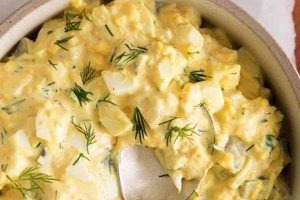
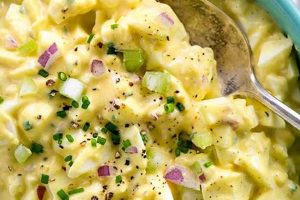
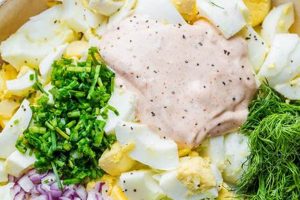
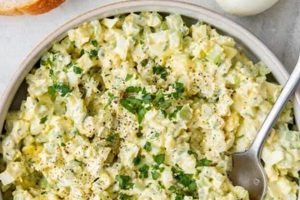
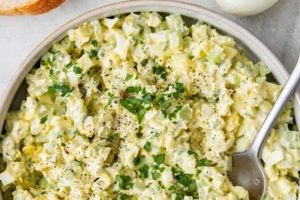
A superior egg salad hinges on several key elements: perfectly cooked eggs, a balanced blend of creamy and tangy ingredients, and carefully selected seasonings. For instance, achieving a smooth, creamy texture often involves mashing some of the yolks while leaving others coarsely chopped for textural variation. Mayonnaise serves as the foundational binding agent, but its richness can be offset by the addition of acidic components like vinegar or lemon juice, along with flavorful additions like mustard, chives, or celery.
This seemingly simple dish offers notable versatility and convenience. It can be enjoyed as a standalone snack, a filling for sandwiches, or a component of more elaborate dishes. Its adaptability allows for variations in ingredients and flavors, catering to diverse palates. Historically, egg salad has served as an economical and satisfying meal option, utilizing readily available ingredients. Its continued popularity speaks to its enduring appeal as a quick, easy, and customizable dish.
This exploration will delve into the nuances of crafting a truly exceptional egg salad, covering topics such as egg cooking techniques, optimal ingredient ratios, flavor profiles, and creative serving suggestions. Further insights into variations and adaptations will empower readers to elevate their egg salad game.
Tips for Exceptional Egg Salad
Achieving egg salad excellence relies on attention to detail and a few key techniques. These guidelines offer practical advice for elevating this classic dish.
Tip 1: Perfect Egg Cooking: Overcooked yolks result in a dry, chalky texture. Aim for a firm yet creamy yolk by gently simmering eggs for 8-10 minutes, followed by an immediate ice bath to halt cooking.
Tip 2: Precise Chopping: Uniformly chopped eggs ensure a pleasing consistency. A dedicated egg slicer offers speed and precision, while hand chopping allows for greater control over size and texture.
Tip 3: Balanced Flavor Profile: Mayonnaise is essential, but its richness should be balanced with acidity. Lemon juice, vinegar, or a touch of Dijon mustard add brightness and complexity.
Tip 4: Freshness Matters: Utilize the freshest ingredients possible. High-quality mayonnaise, recently chopped herbs, and crisp vegetables contribute significantly to the overall flavor.
Tip 5: Seasoning is Key: Salt and freshly ground black pepper are fundamental. Experimenting with other seasonings, such as paprika, cayenne pepper, or onion powder, can add depth and intrigue.
Tip 6: Textural Variety: A combination of mashed and chopped eggs creates a more interesting texture. Consider adding finely diced celery or red onion for a contrasting crunch.
Tip 7: Proper Chilling: Allowing the egg salad to chill for at least 30 minutes allows the flavors to meld and the texture to firm up.
By focusing on these core elements, one can consistently produce egg salad that is both flavorful and satisfying. These tips offer a pathway to achieving truly remarkable results.
This detailed exploration provides a solid foundation for crafting exceptional egg salad. The following section will offer additional insights and address common queries.
1. Fresh, High-Quality Eggs

The foundation of any exceptional egg salad rests upon the quality of the eggs themselves. Fresh, high-quality eggs contribute significantly to both flavor and texture. Fresh eggs possess a delicate, clean flavor that allows other ingredients to shine, whereas older eggs can impart a sulfurous taste that detracts from the overall experience. The proteins in fresher eggs also coagulate more effectively, resulting in a firmer, more appealing texture. Conversely, older eggs may yield a watery, less desirable consistency. For instance, using farm-fresh eggs, compared to those that have been stored for extended periods, results in a noticeably richer, creamier, and more flavorful egg salad. The difference is particularly pronounced in simpler recipes where the egg flavor is more prominent.
The impact of egg quality extends beyond taste and texture. Fresher eggs bind better with other ingredients, leading to a more cohesive and satisfying mixture. This enhanced binding ability contributes to a smoother, less watery consistency, which is crucial for a visually appealing and palatable egg salad. Consider the scenario of preparing egg salad sandwiches: the filling made with fresh eggs holds its shape better, preventing soggy bread and creating a more enjoyable eating experience. Using older eggs in this context could lead to a less appealing sandwich with a watery, potentially unpleasant texture.
Prioritizing fresh, high-quality eggs is a non-negotiable aspect of creating a superior egg salad. While seemingly a minor detail, the choice of eggs significantly influences the final outcome. The difference between an average egg salad and a truly exceptional one often comes down to the freshness and quality of this core ingredient. Discerning palates can readily detect the nuanced differences in flavor and texture, underscoring the importance of this fundamental element. This emphasis on quality ingredients reinforces the notion that simplicity, executed with precision and care, is the key to culinary excellence.
2. Balanced Seasoning
Balanced seasoning is paramount in achieving a great egg salad recipe. The inherent richness of eggs, particularly the yolks, necessitates a careful balance of salt, pepper, and other complementary spices to prevent blandness and enhance the overall flavor profile. Over-salting can mask the subtle nuances of the eggs and other ingredients, while under-seasoning results in a lackluster dish that fails to satisfy. A harmonious blend of seasonings elevates the egg salad from simple to exceptional. Consider the interplay between salt and acid. A touch of acidity, from vinegar or lemon juice, brightens the richness of the mayonnaise and eggs, while salt enhances the inherent flavors of both. The synergy between these elements is crucial for a well-rounded flavor experience.
Real-world examples illustrate the importance of balanced seasoning. Imagine an egg salad seasoned solely with salt. The flavor profile would be one-dimensional, potentially overly salty and lacking depth. Now, consider the same egg salad with a balanced blend of salt, black pepper, a hint of Dijon mustard, and a dash of paprika. The complexity of flavors is immediately apparent; the pepper adds a subtle bite, the mustard provides a tangy complexity, and the paprika contributes a smoky warmth. This balanced approach results in a far more nuanced and satisfying final product. Another example lies in the use of fresh herbs. Dill, chives, or tarragon, used sparingly, introduce a fresh, herbaceous element that complements the richness of the eggs without overpowering the other flavors. This delicate balance is the hallmark of a truly great egg salad.
Understanding the significance of balanced seasoning empowers one to create truly exceptional egg salad. It allows for control over the final flavor profile, enabling customization based on personal preference. The practical application of this knowledge transforms the simple act of seasoning into a culinary art. Mastering this aspect is crucial for achieving an egg salad that transcends the ordinary. This precision in seasoning not only enhances the immediate flavor experience but also contributes to the overall enjoyment and appreciation of the dish. It is this meticulous attention to detail that distinguishes a great egg salad from a merely adequate one.
3. Optimal Mayonnaise-to-Egg Ratio
The mayonnaise-to-egg ratio significantly influences the final quality of egg salad. Too much mayonnaise results in a gloppy, overly rich mixture that obscures the delicate flavor of the eggs. Conversely, too little mayonnaise leads to a dry, crumbly texture that lacks the desired creaminess. The optimal ratio hinges on achieving a balance where the mayonnaise binds the ingredients together while allowing the flavors of the eggs and other components to shine through. This balance is crucial for a palatable and enjoyable egg salad. Consider the textural impact: sufficient mayonnaise creates a smooth, creamy consistency that coats the palate, while insufficient mayonnaise results in a dry, unpleasant mouthfeel. This balance affects not only the taste but also the overall sensory experience.
Practical examples illustrate the importance of this ratio. Imagine an egg salad drowning in mayonnaise. The flavor of the eggs is lost, the texture is heavy, and the overall impression is one of excessive richness. Contrast this with an egg salad made with a carefully measured amount of mayonnaise. The eggs retain their distinct flavor, the texture is creamy yet light, and each bite offers a balanced combination of ingredients. Another example lies in the application of egg salad as a sandwich filling. An optimal mayonnaise-to-egg ratio ensures the filling is spreadable without being overly greasy, contributing to a structurally sound and satisfying sandwich. Too much mayonnaise would result in a soggy sandwich, while too little would create a dry, crumbly filling that falls apart.
Understanding the optimal mayonnaise-to-egg ratio empowers one to consistently create exceptional egg salad. This knowledge translates into practical control over texture and flavor, allowing for customization based on individual preferences. Mastering this seemingly minor detail elevates egg salad from a simple dish to a culinary creation. The ability to achieve the desired consistency and flavor profile, time after time, underscores the significance of this often-overlooked aspect. This precision and attention to detail are hallmarks of culinary expertise, transforming a basic recipe into a consistently satisfying and enjoyable experience.
4. Textural Complexity
Textural complexity distinguishes exceptional egg salad from the mundane. A monotonous, uniformly smooth consistency offers limited sensory engagement. Conversely, a thoughtfully constructed interplay of textures elevates the eating experience. This complexity arises from the strategic combination of varying particle sizes and ingredient additions, transforming a simple mixture into a multi-dimensional culinary creation.
- Egg Particle Size Variation
Varying the size of chopped egg pieces introduces a fundamental layer of textural complexity. A combination of coarsely chopped whites and finely minced yolks creates a dynamic mouthfeel. Some recipes advocate for a completely smooth, mashed yolk mixture, while others incorporate larger chunks of both whites and yolks. The choice influences the overall perception of the salad, ranging from creamy and delicate to substantial and hearty. This contrast in textures prevents the egg salad from becoming monotonous, ensuring a more engaging experience with each bite.
- Crunchy Element Incorporation
The addition of crunchy elements provides a stark contrast to the soft, creamy base of the egg salad. Finely diced celery, red onion, or chopped water chestnuts introduce a satisfying snap, disrupting the uniformity of the texture and adding a refreshing element. The interplay between the creamy egg mixture and the crisp vegetables elevates the egg salad beyond a simple protein delivery system, transforming it into a more complex and engaging culinary experience. These crunchy additions also contribute to the overall sensory experience by offering an auditory componentthe satisfying sound of the crunch further enhances enjoyment.
- Herb and Spice Integration
While not strictly textural in themselves, herbs and spices contribute to the perceived texture of egg salad. Finely chopped fresh herbs, like dill or chives, introduce a subtle textural variation, while spices like paprika or cayenne pepper offer a nuanced interplay with the smooth base. These additions, while primarily contributing to the flavor profile, also interact with the existing textural elements to create a more complex and well-rounded sensory experience. For example, the delicate texture of fresh dill provides a subtle contrast to the smooth egg mixture, while the slight grittiness of paprika offers a barely perceptible textural nuance.
- Bread or Cracker Pairing
The choice of bread or crackers for serving further influences the overall textural experience. A crusty baguette offers a robust counterpoint to the creamy egg salad, while a soft, buttery croissant provides a complementary richness. Crackers, ranging from delicate water crackers to hearty multigrain varieties, offer a spectrum of textural possibilities. This interaction between the egg salad and its accompanying vessel plays a significant role in the overall sensory perception. The contrasting textures create a dynamic interplay that elevates the simple act of eating egg salad into a more complex and satisfying experience.
These facets of textural complexity, when thoughtfully combined, transform egg salad from a basic dish into a culinary delight. The interplay of textures engages multiple senses, making each bite a more satisfying experience. This attention to textural detail elevates egg salad from mere sustenance to a dish worthy of appreciation.
5. Complementary Additions

Complementary additions distinguish a truly great egg salad recipe from a merely adequate one. These additions, while not essential to the core structure of the dish, contribute nuanced layers of flavor, texture, and visual appeal. Strategic incorporation of complementary ingredients elevates the sensory experience, transforming egg salad from simple fare into a culinary delight. The following facets explore the role and impact of these additions.
- Fresh Herbs
Fresh herbs introduce a bright, vibrant dimension to egg salad. Dill, chives, parsley, and tarragon offer distinct flavor profiles that complement the richness of the eggs and mayonnaise. Finely chopped chives provide a subtle oniony flavor, while dill imparts a refreshing, slightly tangy note. Parsley contributes a clean, herbaceous flavor, while tarragon offers a unique anise-like essence. The choice of herb depends on personal preference and the desired flavor profile. For example, dill pairs well with a classic egg salad, while tarragon complements a more complex, Dijon-infused version.
- Spices and Seasonings
Beyond the foundational salt and pepper, spices and seasonings introduce depth and complexity. Paprika adds a smoky warmth, while cayenne pepper contributes a subtle heat. Dry mustard powder provides a pungent, earthy note, while onion powder adds a savory depth. The judicious use of these ingredients can significantly enhance the overall flavor profile. For instance, a dash of smoked paprika elevates a classic egg salad, while a pinch of cayenne pepper adds a welcome kick. These additions cater to individual preferences, allowing for customization and creativity.
- Textural Enhancements
Complementary additions can also contribute textural complexity. Finely diced celery or red onion provides a satisfying crunch, contrasting with the creamy base of the egg salad. Chopped pickles or capers introduce a tangy, briny element, while crumbled bacon adds a smoky, savory dimension. These textural variations elevate the eating experience, making each bite more engaging. For example, the crispness of celery complements the smoothness of the egg mixture, while the salty crunch of bacon adds a welcome textural and flavor contrast.
- Acidic Components
A touch of acidity brightens the richness of the mayonnaise and eggs. Lemon juice, vinegar, or a squeeze of pickle relish adds a tangy counterpoint to the creamy base. This acidic element balances the richness, preventing the egg salad from becoming overly heavy or cloying. The choice of acidic component depends on the desired flavor profile. Lemon juice adds a clean, citrusy brightness, while vinegar provides a sharper tang. Pickle relish contributes a sweet and tangy complexity. These acidic additions contribute to a more balanced and refreshing final product.
These complementary additions, when thoughtfully incorporated, transform egg salad from a simple dish into a culinary creation. The interplay of flavors, textures, and aromas creates a more complex and satisfying sensory experience. By understanding the role and impact of these additions, one can elevate egg salad to a new level of culinary excellence. This careful consideration of complementary ingredients showcases a deep appreciation for the nuances of flavor and texture, demonstrating that even a seemingly simple dish can benefit from thoughtful attention to detail.
Frequently Asked Questions
This section addresses common inquiries regarding the preparation and enjoyment of exceptional egg salad.
Question 1: How can one prevent overly watery egg salad?
Excess moisture often stems from overcooked yolks or insufficient draining of the cooked eggs. Employing perfectly cooked eggs and meticulous draining mitigates this issue. Incorporating a small amount of finely diced celery can also absorb excess moisture and add a pleasant crunch.
Question 2: What is the best method for cooking eggs for egg salad?
Simmering eggs for 8-10 minutes, followed by an immediate ice bath, yields yolks with a firm yet creamy texture, ideal for egg salad. Overcooking results in dry, crumbly yolks, while undercooking leads to a less desirable texture and potential food safety concerns.
Question 3: How long can egg salad be safely stored?
Properly stored in an airtight container in the refrigerator, egg salad typically remains safe for consumption for up to 3-5 days. However, quality begins to deteriorate after the first two days. It is crucial to observe proper food safety practices to minimize the risk of spoilage.
Question 4: Can egg salad be frozen?
Freezing egg salad is generally not recommended. The mayonnaise-based dressing separates upon thawing, resulting in a less desirable texture. The delicate flavors of the eggs and other ingredients can also be negatively impacted by freezing.
Question 5: What are some creative variations on the classic egg salad recipe?
Numerous variations exist, catering to diverse palates. Incorporating curry powder, chutney, or avocado creates unique flavor profiles. Adding chopped bacon, smoked salmon, or roasted red peppers introduces additional textural and flavor dimensions.
Question 6: How can one achieve a smoother, creamier texture in egg salad?
Thoroughly mashing the yolks, or using a food processor for a portion of the eggs, creates a smoother, creamier base. The addition of a small amount of sour cream or Greek yogurt can also contribute to a creamier consistency.
Addressing these common inquiries provides a deeper understanding of the nuances of egg salad preparation. These insights empower individuals to create consistently exceptional results.
The following section will offer concluding remarks and a summary of key takeaways.
Conclusion
This exploration has delved into the essential elements that contribute to a truly exceptional egg salad. From the foundational importance of fresh, high-quality eggs to the nuanced interplay of balanced seasoning, optimal mayonnaise-to-egg ratio, textural complexity, and complementary additions, each component plays a crucial role in achieving culinary excellence. The significance of precise egg cooking techniques and meticulous attention to detail has been underscored, highlighting the transformative impact of these seemingly minor aspects. Addressing common inquiries further clarifies potential challenges and empowers informed decision-making throughout the preparation process.
Mastery of egg salad preparation extends beyond mere sustenance; it represents a culinary achievement grounded in understanding and precision. The pursuit of the perfect egg salad embodies a dedication to culinary principles applicable far beyond this seemingly simple dish. This exploration serves as a guide, empowering individuals to elevate their egg salad creations from ordinary to extraordinary. The potential for continued refinement and personalized adaptations ensures that the journey toward egg salad perfection remains an ongoing and rewarding culinary endeavor.