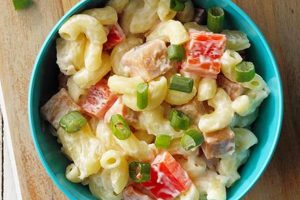
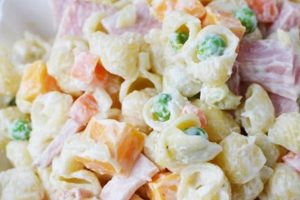
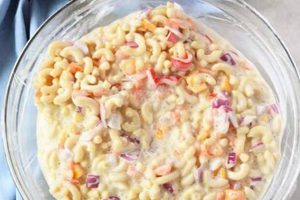
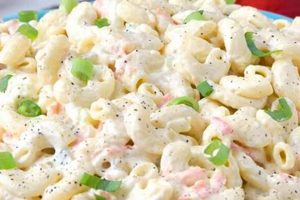
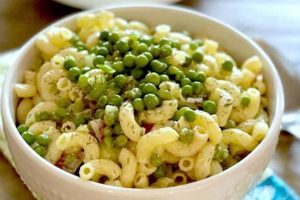
A chilled pasta salad typically features cooked elbow macaroni, sweet peas, and a creamy dressing, often mayonnaise-based. Common additions include celery, onion, hard-boiled eggs, and various seasonings like mustard, relish, or vinegar. Variations exist, incorporating different vegetables, cheeses, proteins, and dressing styles, offering a versatile dish adaptable to diverse tastes and dietary preferences.
This type of dish offers a convenient and refreshing meal, especially suitable for picnics, potlucks, and warm-weather gatherings. Its adaptability allows for adjustments to cater to specific dietary needs, such as using gluten-free pasta or vegan mayonnaise. As a relatively inexpensive and simple dish to prepare, it has become a popular staple in many cultures, evolving from simpler pasta salads that gained popularity with the rise of refrigeration and commercially prepared mayonnaise.
The following sections will delve into specific ingredient choices, detailed preparation instructions, tips for achieving optimal flavor and texture, and suggestions for variations and serving recommendations.
Tips for a Superior Macaroni Salad
Achieving a well-balanced and flavorful macaroni salad involves attention to detail in ingredient selection and preparation techniques. The following tips offer guidance for creating a dish that stands out.
Tip 1: Pasta Perfection: Cook pasta al dente for optimal texture. Overcooked pasta becomes mushy in the salad. Rinse cooked pasta under cold water to stop the cooking process and maintain firmness.
Tip 2: Vegetable Vibrancy: Use fresh, crisp vegetables. Frozen peas should be thawed and drained thoroughly. Blanching vegetables like celery and carrots briefly enhances their color and retains crispness.
Tip 3: Dressing Dynamics: A balanced dressing is key. Combine mayonnaise with complementary flavors like Dijon mustard, sweet pickle relish, or apple cider vinegar. Taste and adjust seasonings as needed.
Tip 4: Flavor Infusion: Enhance the flavor profile with fresh herbs like dill, parsley, or chives. Incorporating finely diced red onion or shallot adds a subtle sharpness.
Tip 5: Chill Out: Chilling the salad for at least an hour allows the flavors to meld. This enhances the overall taste experience.
Tip 6: Customization Considerations: Adapt the recipe to personal preferences by adding ingredients like hard-boiled eggs, crumbled bacon, shredded cheese, or different protein sources like diced ham or cooked chicken.
Tip 7: Presentation Matters: Serve the salad in an attractive bowl. Garnish with fresh herbs or a sprinkle of paprika for an appealing visual presentation.
By following these tips, one can elevate a simple macaroni salad from ordinary to extraordinary. Attention to these details ensures a delightful culinary experience.
These tips provide a foundation for creating a successful macaroni salad. The concluding section will offer variations and serving suggestions to further enhance enjoyment of this versatile dish.
1. Ingredient Quality

Ingredient quality significantly impacts the overall flavor, texture, and visual appeal of macaroni salad with peas. Selecting superior ingredients elevates this seemingly simple dish from ordinary to extraordinary. Attention to ingredient quality ensures a more satisfying culinary experience.
- Freshness of Produce:
Fresh peas, crisp celery, and vibrant onions contribute significantly to both flavor and texture. Wilted or aged produce can impart off-flavors and detract from the salad’s overall appeal. For instance, using fresh, bright green peas as opposed to frozen ones that have been thawed and refrozen, results in a noticeable difference in sweetness and texture. Freshly chopped celery offers a satisfying crunch, while onions that are not overly mature provide a balanced sharpness.
- Type of Pasta:
While elbow macaroni is traditional, other pasta shapes like shells or rotini can be used. High-quality pasta made from durum wheat holds its shape better after cooking and provides a more pleasing texture. The choice of pasta impacts both the visual presentation and the mouthfeel of the salad.
- Mayonnaise Selection:
Mayonnaise forms the base of the dressing, influencing the salad’s overall richness and flavor. Using a high-quality mayonnaise made with real eggs and oil, rather than one with artificial ingredients, contributes a more authentic and satisfying flavor profile. The consistency of the mayonnaise also affects the final texture of the salad.
- Seasoning and Flavor Enhancers:
Fresh herbs, spices, and other flavor enhancers like mustard or vinegar play a vital role in balancing the sweetness of the peas and creating a complex flavor profile. Using fresh herbs instead of dried ones elevates the flavor, while high-quality spices contribute depth and complexity. The balance of sweet, salty, sour, and savory elements is crucial for a well-rounded flavor profile.
The careful selection of each ingredient, from the pasta to the vegetables and seasonings, contributes to the overall success of the macaroni salad. Prioritizing quality ingredients ensures a more flavorful, visually appealing, and texturally satisfying dish, elevating a simple picnic staple to a culinary delight. This attention to detail transforms a basic recipe into a memorable dining experience.
2. Dressing Consistency

Dressing consistency plays a crucial role in the overall success of a macaroni salad with peas. The texture and flavor distribution depend heavily on the dressing’s ability to adhere properly to the pasta and other ingredients. An ideal consistency ensures each component is adequately coated, contributing to a harmonious and flavorful dish. A poorly balanced dressing can result in a dry, bland salad or one that is overly saturated and unappetizing.
- Emulsification and Stability:
A stable emulsion is essential for preventing the dressing from separating into its constituent parts (oil and water). A broken emulsion can lead to a greasy, unappealing texture and uneven flavor distribution. Proper emulsification techniques, such as whisking ingredients vigorously or using an emulsifying agent like egg yolk, ensure a smooth and cohesive dressing that clings well to the pasta.
- Viscosity and Coating Ability:
The viscosity of the dressing dictates its ability to coat the pasta and vegetables evenly. A dressing that is too thin will not adhere properly, resulting in a watery salad with diluted flavor. Conversely, a dressing that is too thick may clump and not distribute evenly, leaving some parts of the salad under-dressed. The right viscosity allows the dressing to cling lightly to the ingredients, ensuring optimal flavor delivery in each bite.
- Ingredient Incorporation:
The consistency of the dressing affects how well other ingredients, such as herbs, spices, and relish, are incorporated and distributed throughout the salad. A smooth, well-emulsified dressing suspends these ingredients evenly, ensuring a balanced flavor in every mouthful. A separated or overly thick dressing may cause these additions to sink to the bottom or clump together, resulting in an uneven flavor profile.
- Flavor Delivery and Palatability:
The dressing’s consistency directly impacts how the flavors are perceived and enjoyed. A properly emulsified and balanced dressing delivers a harmonious blend of flavors in each bite. The right consistency enhances the overall palatability by ensuring that the dressing complements the other ingredients without overpowering them or creating an unpleasant texture.
Achieving the right dressing consistency is paramount to a successful macaroni salad with peas. A balanced emulsion, appropriate viscosity, and even distribution of ingredients contribute significantly to the overall flavor, texture, and enjoyment of the dish. By understanding and controlling these factors, one can create a macaroni salad that is both delicious and visually appealing.
3. Pasta Texture
Pasta texture significantly influences the overall enjoyment of macaroni salad with peas. The ideal texture contributes to a pleasant mouthfeel and complements the other ingredients. Understanding the factors affecting pasta texture allows for optimization of the dish, ensuring a satisfying culinary experience.
- Doneness and Bite:
Cooking pasta al dente, meaning “to the tooth” in Italian, is crucial. Al dente pasta offers a slight resistance when bitten, providing a textural contrast to the creamy dressing and other ingredients. Overcooked pasta becomes mushy and absorbs too much dressing, resulting in a heavy, less appealing salad. Undercooked pasta, conversely, can be too firm and detract from the overall enjoyment. Properly cooked pasta contributes a pleasant chewiness to the salad.
- Pasta Shape and Surface Area:
While elbow macaroni is traditional, other pasta shapes can be used. The shape influences how the dressing adheres and how the pasta interacts with the other ingredients. Shapes with more surface area, such as shells or rotini, tend to hold more dressing, while smoother shapes like ditalini offer a different textural experience. The choice of pasta shape affects both the visual presentation and the mouthfeel of the salad.
- Cooling and Water Absorption:
Rinsing the cooked pasta under cold water stops the cooking process and removes excess starch, preventing the pasta from sticking together. This step also helps maintain the desired al dente texture and prevents the salad from becoming overly starchy. Proper cooling ensures the pasta maintains its structural integrity and contributes to a more pleasant texture.
- Interaction with Dressing:
The pasta’s texture influences how well it absorbs and interacts with the dressing. Overcooked pasta absorbs excessive dressing, resulting in a heavy and less flavorful salad. Al dente pasta, with its firmer structure, maintains a distinct texture even when coated with dressing. This balance ensures that the pasta remains a key textural component of the salad.
By considering these facets of pasta texture, one can create a macaroni salad with peas that offers a delightful sensory experience. Properly cooked and cooled pasta, combined with a well-balanced dressing, creates a harmonious blend of flavors and textures, elevating this simple dish to a new level of culinary enjoyment. Attention to pasta texture contributes significantly to the overall success and palatability of the salad.
4. Flavor Balance
Flavor balance is paramount in a successful macaroni salad with peas recipe. The inherent sweetness of peas necessitates a careful interplay of complementary and contrasting flavors to prevent an overly saccharine result. A harmonious blend of sweet, salty, sour, and savory elements elevates this simple dish, transforming it from mundane to memorable. This balance prevents any single flavor from dominating, ensuring a complex and enjoyable taste experience. For instance, the sweetness of peas can be offset by the tang of vinegar or pickle relish, while the richness of mayonnaise is balanced by the savory notes of mustard or onion. The interplay of these flavors creates a dynamic and satisfying profile.
Achieving optimal flavor balance requires careful consideration of ingredient proportions and the interplay of various taste components. The creamy richness of mayonnaise, while essential for texture and mouthfeel, can easily overpower the other flavors if used excessively. Similarly, an overabundance of sweet peas can create an unbalanced profile. Therefore, precise measurements and thoughtful ingredient combinations are essential. The addition of salty elements, such as salt itself or ingredients like bacon or ham, can further enhance the flavor profile by providing a counterpoint to the sweetness and acidity. The interplay of these seemingly disparate flavors contributes to the overall complexity and enjoyment of the dish.
A well-balanced macaroni salad with peas offers a complex and satisfying culinary experience. The sweetness of the peas is complemented and contrasted by the tangy acidity, creamy richness, and savory notes of the other ingredients. This careful orchestration of flavors ensures that no single element dominates, creating a harmonious and enjoyable dish. Understanding the importance of flavor balance allows for informed ingredient selection and precise adjustments, ultimately resulting in a more satisfying culinary outcome. This balance elevates the dish beyond a simple side and transforms it into a memorable culinary experience.
5. Chilling Time
Chilling time is a crucial element in a macaroni salad with peas recipe, significantly impacting the final flavor profile and overall quality. This period of refrigeration allows the flavors of the various componentspasta, vegetables, and dressingto meld and harmonize. The initially distinct tastes of each ingredient merge, creating a more unified and complex flavor profile. Without sufficient chilling time, the salad may taste disjointed, with the individual flavors remaining separate and less nuanced. For example, the sweetness of the peas might not fully integrate with the tanginess of the dressing, and the overall taste experience would be less balanced and harmonious.
Furthermore, chilling allows the pasta to absorb some of the dressing, enhancing its flavor and preventing it from becoming dry. The lower temperature also firms the pasta, contributing to a more desirable texture. This is particularly important in macaroni salads, where the pasta is often served cold. The chilling process also enhances the crispness of the vegetables, such as celery and onions, maintaining their textural integrity and contributing to a more refreshing salad. Insufficient chilling can result in the vegetables becoming limp and losing their desirable crunch.
In summary, adequate chilling time is not merely a matter of temperature preference, but a critical step that significantly impacts the flavor development and textural quality of macaroni salad with peas. This allows for a more balanced, nuanced flavor profile and enhances the overall culinary experience. Neglecting this crucial step can compromise the intended harmony of flavors and textures, resulting in a less satisfying dish. The practical significance of understanding the role of chilling time is paramount for achieving the desired outcome: a refreshing, flavorful, and well-balanced macaroni salad.
Frequently Asked Questions
This section addresses common inquiries regarding macaroni salad with peas, offering clarity and practical guidance for optimal preparation and enjoyment.
Question 1: Can frozen peas be used?
Frozen peas are acceptable; however, they should be fully thawed and drained before adding to the salad. Excess moisture from frozen peas can dilute the dressing and compromise the final texture.
Question 2: How long can macaroni salad be stored?
Properly stored in an airtight container in the refrigerator, macaroni salad typically lasts for three to five days. Spoilage signs include a sour odor or changes in texture.
Question 3: What can be substituted for mayonnaise?
Plain Greek yogurt, sour cream, or a combination of the two can be used as healthier alternatives to mayonnaise, impacting the overall flavor and richness.
Question 4: How can one prevent the salad from becoming watery?
Ensuring vegetables are well-drained and using al dente pasta helps prevent excess moisture. Additionally, adding the dressing gradually allows for better control over the salad’s consistency.
Question 5: Can other vegetables be added?
Macaroni salad is versatile, and other vegetables like chopped bell peppers, shredded carrots, or diced cucumbers can be incorporated to enhance flavor and nutritional value.
Question 6: How can the flavor profile be customized?
Adding different herbs, spices, or other flavor enhancers like Dijon mustard, apple cider vinegar, or hot sauce allows for customization based on individual preferences.
Addressing these common questions provides a clearer understanding of the nuances of macaroni salad preparation and storage. Careful consideration of these points contributes to a more successful and enjoyable culinary experience.
The following section will offer variations on the classic recipe, expanding culinary horizons and providing inspiration for customized creations.
Macaroni Salad with Peas Recipe
This exploration of macaroni salad with peas recipes has highlighted the critical elements contributing to a successful outcome. From the importance of fresh, high-quality ingredients and proper pasta texture to the delicate balance of flavors and the crucial role of chilling time, each aspect contributes significantly to the final product. Proper dressing consistency ensures even flavor distribution and optimal texture, while ingredient selection allows for customization and adaptation to individual preferences. Attention to these details elevates this seemingly simple dish from ordinary fare to a culinary delight.
Macaroni salad with peas, while seemingly straightforward, offers a canvas for culinary creativity. Understanding the interplay of ingredients, textures, and flavors empowers one to create a dish that is not only satisfying but also reflects individual preferences and culinary artistry. Further experimentation with ingredient combinations and flavor profiles promises continued enjoyment and exploration of this versatile and adaptable recipe.