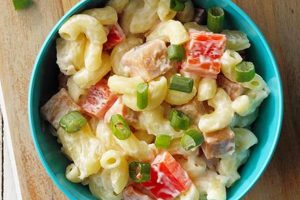
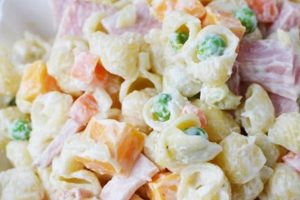
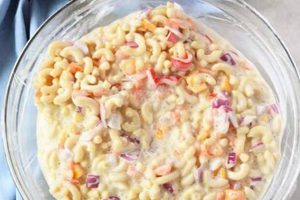
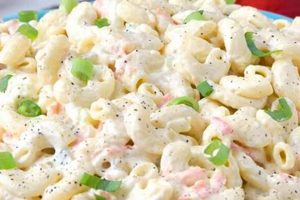
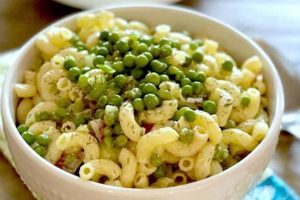
A chilled pasta salad typically features cooked elbow macaroni, cubed ham, and a creamy dressing, often mayonnaise-based. Common additions include vegetables such as celery, onion, and bell peppers, along with seasonings like mustard, relish, and vinegar for a sweet and tangy flavor profile. Variations can incorporate different cheeses, hard-boiled eggs, or other protein sources alongside or in place of ham.
This dish offers a convenient and satisfying option for potlucks, picnics, and barbecues due to its make-ahead nature and portability. Its versatility allows for customization based on dietary preferences and seasonal ingredients. Historically, pasta salads gained popularity in the mid-20th century as refrigeration became more common, making chilled dishes practical and appealing. The combination of savory ham, creamy dressing, and crisp vegetables offers a balanced flavor and textural experience.
The following sections will explore various aspects of preparing this classic dish, including choosing the right ingredients, mastering the cooking process, and exploring creative variations to suit diverse tastes and occasions. Guidance on storage and serving suggestions will also be provided.
Tips for a Superior Macaroni Salad
Achieving a well-balanced and flavorful macaroni salad requires attention to detail throughout the preparation process. The following tips offer guidance for optimal results.
Tip 1: Cook Pasta Al Dente: Slightly firm pasta holds its shape better in the salad and prevents a mushy texture. Follow package directions, reducing cooking time by a minute or two for optimal firmness.
Tip 2: Chill Ingredients Thoroughly: Using chilled pasta and other ingredients helps the dressing adhere properly and prevents it from becoming watery. Chill cooked pasta under cold running water until completely cooled.
Tip 3: Balance Flavors in the Dressing: The dressing serves as the foundation of the salad’s flavor profile. A balance of creamy, tangy, and savory elements is crucial. Consider using a combination of mayonnaise, vinegar, mustard, and seasonings.
Tip 4: Dice Ingredients Uniformly: Uniformly sized ingredients ensure even distribution of flavors and textures throughout the salad. Aim for bite-sized pieces that complement the macaroni.
Tip 5: Add Ham Strategically: Incorporating ham after the pasta and vegetables are dressed prevents the ham from absorbing too much dressing and becoming overly salty.
Tip 6: Enhance with Fresh Herbs: Fresh herbs such as parsley, chives, or dill can elevate the salad’s flavor profile. Add them just before serving for optimal brightness and aroma.
Tip 7: Allow Flavors to Meld: Allowing the salad to chill for at least 30 minutes before serving allows the flavors to meld and develop fully.
By following these tips, one can create a macaroni salad that showcases the harmonious blend of textures and flavors, resulting in a satisfying and refreshing culinary experience.
These preparation tips contribute to a successful outcome. The following section concludes with serving suggestions and storage recommendations.
1. Elbow Macaroni

Elbow macaroni forms the foundational ingredient in classic macaroni salad recipes incorporating ham. Its unique shape and texture contribute significantly to the overall success of the dish. Understanding its properties and how it interacts with other components is crucial for achieving optimal results.
- Shape and Texture:
The curved, hollow shape of elbow macaroni effectively captures the creamy dressing, ensuring even coating and flavor distribution. Its relatively small size and smooth surface provide a pleasant mouthfeel while allowing other ingredients to shine. This shape also facilitates even cooking and prevents clumping, crucial for a well-balanced salad.
- Starch Content:
Elbow macaroni, like other pasta varieties, releases starch during cooking. This starch thickens the dressing slightly and helps bind the salad ingredients together. Properly cooked, slightly firm (al dente) pasta contributes the right amount of starch without making the salad gummy. Overcooked pasta, however, releases excessive starch, leading to a less desirable, sticky texture.
- Flavor Absorption:
While elbow macaroni’s primary role is textural, it also absorbs flavors from the dressing and other ingredients. This absorption enhances the overall cohesion of the salad and prevents individual components from tasting isolated. Choosing high-quality pasta ensures optimal flavor absorption and contributes to a more satisfying culinary experience.
- Visual Appeal:
Elbow macaroni’s consistent size and shape create a visually appealing base for the salad. Its off-white color provides a neutral backdrop that allows the vibrant hues of the other ingredients, such as ham, vegetables, and herbs, to stand out. This visual appeal enhances the overall presentation and makes the salad more enticing.
The interplay of these facetsshape, texture, starch content, flavor absorption, and visual appealestablishes elbow macaroni as the ideal pasta choice for macaroni salad. Its characteristics contribute significantly to the dish’s overall harmony of flavor, texture, and presentation, making it a staple in this classic recipe.
2. Cubed Ham

Cubed ham plays a crucial role in macaroni salad, contributing a savory depth and satisfying texture that complements the other ingredients. Its preparation and incorporation significantly influence the overall flavor profile and enjoyment of the dish. Understanding the nuances of using cubed ham enhances the final product.
- Flavor Profile:
Ham’s inherent saltiness and smokiness provide a savory counterpoint to the creamy dressing and often sweeter vegetable components. The specific type of ham usedhoney-cured, smoked, or black forestintroduces subtle flavor variations that can be tailored to individual preferences. The cubing process maximizes surface area, allowing the ham’s flavor to permeate the salad more effectively.
- Textural Contribution:
Cubed ham adds a substantial, meaty texture that contrasts with the softness of the pasta and the creaminess of the dressing. The size of the cubes influences this textural interplay; smaller cubes offer a more integrated experience, while larger cubes provide more pronounced bites of ham. The firmness of the ham also contributes to the overall mouthfeel.
- Distribution and Integration:
Even distribution of cubed ham throughout the salad ensures consistent flavor and texture in each bite. Adding the ham after the pasta and vegetables are dressed prevents it from absorbing excessive dressing and becoming overly salty. This strategic incorporation maintains the ham’s distinct flavor and prevents it from dominating the other components.
- Quality and Sourcing:
The quality of the ham directly impacts the overall quality of the salad. High-quality ham, whether from a local butcher or a reputable brand, typically offers a richer flavor and firmer texture. Choosing ham with minimal added nitrates and preservatives contributes to a healthier and more flavorful dish.
The careful consideration of these factorsflavor profile, textural contribution, distribution, and qualityelevates cubed ham from a simple ingredient to a defining component of a well-executed macaroni salad. The interplay of these elements creates a balanced and satisfying dish that highlights the complementary nature of ham, pasta, vegetables, and dressing.
3. Mayonnaise-based dressing

Mayonnaise-based dressing forms the backbone of a successful macaroni salad recipe with ham, binding the ingredients and contributing a crucial creamy, tangy element. This dressing not only coats the pasta and other components, facilitating flavor adhesion, but also provides a textural counterpoint to the firmer ham and vegetables. The emulsification of oil and egg yolks in mayonnaise creates a rich, smooth texture that complements the chewiness of the pasta and the saltiness of the ham. The inherent tanginess of mayonnaise, derived from vinegar or lemon juice, balances the richness and prevents the salad from becoming overly heavy. For instance, a dressing made with classic mayonnaise, yellow mustard, and apple cider vinegar provides a balanced flavor profile that enhances, rather than masks, the taste of the ham and other ingredients.
Variations within mayonnaise-based dressings further contribute to the overall complexity of the macaroni salad. Incorporating ingredients like Dijon mustard adds a nuanced sharpness, while sweet pickle relish introduces a touch of sweetness and textural contrast. The ratio of these components influences the overall flavor profile, allowing for customization based on individual preferences. For example, a dressing with a higher proportion of Dijon mustard caters to those who prefer a more assertive, tangy flavor, whereas a dressing emphasizing sweet pickle relish offers a milder, sweeter profile. The choice of mayonnaise itself also plays a role; using a full-fat mayonnaise results in a richer, creamier dressing compared to a low-fat alternative. These subtle adjustments allow for a wide range of flavor profiles within the broader category of mayonnaise-based dressings.
Understanding the role and potential of mayonnaise-based dressings is essential for creating a well-balanced and flavorful macaroni salad with ham. The dressing’s ability to unify disparate ingredients, contribute essential flavor and texture, and offer a platform for customization underscores its significance in this classic dish. Challenges can arise from using excessive dressing, which can lead to a soggy salad, or an improperly balanced dressing that overwhelms the other flavors. Careful consideration of ingredient ratios and mindful selection of complementary flavors within the dressing ensures a harmonious and satisfying final product. This attention to detail elevates the macaroni salad from a simple side dish to a culinary expression of balanced flavors and textures.
4. Complementary Vegetables

Complementary vegetables contribute significantly to the texture, flavor, and visual appeal of macaroni salad incorporating ham. These additions provide crucial contrasts to the richness of the mayonnaise-based dressing and the saltiness of the ham, creating a balanced and more complex flavor profile. The textural diversity introduced by crisp vegetables, such as celery, red onion, and bell peppers, prevents the salad from becoming monotonous and adds a refreshing element. These vegetables also introduce subtle sweetness and acidity, further balancing the overall flavor composition. For example, the slight bitterness of celery complements the sweetness of the ham and the tanginess of the dressing, while the sharp bite of red onion adds a piquant note. Bell peppers, available in various colors, contribute both visual appeal and a mild sweetness.
The choice of complementary vegetables can be tailored to individual preferences and seasonal availability. Carrots, for example, offer a subtly sweet and earthy flavor, while chopped pickles introduce a tangy, briny element. During summer months, fresh corn kernels provide a burst of sweetness and a vibrant yellow hue. Blanched green beans contribute a crisp texture and a slightly vegetal flavor. These variations allow for customization while maintaining the fundamental principle of balancing flavors and textures within the salad. Considering the interplay between the chosen vegetables and the other componentsham, pasta, and dressingis crucial for achieving a harmonious final product. Overly strong or bitter vegetables can overwhelm the delicate balance, while insufficient quantities may fail to provide the necessary contrast.
Careful selection and preparation of complementary vegetables are essential for a well-rounded macaroni salad. Dicing vegetables into uniform, bite-sized pieces ensures even distribution and prevents any single ingredient from dominating the flavor or texture. Blanching certain vegetables, such as green beans, helps retain their vibrant color and crisp texture while mitigating any raw or overly vegetal flavors. Ultimately, the inclusion of complementary vegetables elevates the macaroni salad from a simple combination of ingredients to a more complex and satisfying dish. This understanding allows for greater control over the final product and enables the creation of a macaroni salad tailored to specific tastes and occasions.
5. Flavorful Seasonings
Flavorful seasonings are essential for elevating a macaroni salad recipe with ham beyond a simple combination of ingredients. They provide depth, complexity, and balance, transforming the dish into a cohesive and satisfying culinary experience. The judicious use of seasonings enhances the inherent flavors of the ham, vegetables, and dressing, creating a symphony of tastes that tantalize the palate.
- Balancing Salt and Acidity
Achieving a harmonious balance between salt and acidity is paramount in a well-seasoned macaroni salad. The saltiness of the ham often necessitates a counterbalancing acidity to prevent the dish from becoming overly savory. Vinegar, whether white wine, apple cider, or red wine, provides the necessary tartness to cut through the richness of the mayonnaise and complement the ham’s saltiness. A touch of lemon juice can also brighten the flavors and add a refreshing citrus note. Careful tasting and adjustment are crucial to ensure the proper balance, preventing either the salt or acid from dominating the flavor profile.
- Enhancing Savory Notes
Ground black pepper provides a subtle heat and enhances the savory notes of the ham, while a pinch of smoked paprika can amplify the smoky flavors. Dried mustard powder adds a touch of pungency, further deepening the complexity of the salad. The measured use of these seasonings prevents them from overpowering the other flavors, instead working synergistically to create a well-rounded savory profile. For instance, a combination of black pepper, smoked paprika, and a pinch of garlic powder can elevate the ham’s flavor without masking the other ingredients.
- Introducing Aromatic Complexity
Fresh herbs, such as dill, parsley, or chives, contribute a bright, aromatic dimension to the macaroni salad. These herbs introduce a fresh element that complements the richness of the other ingredients. Dill, with its slightly tangy and anise-like flavor, pairs particularly well with ham. Parsley offers a clean, herbaceous note, while chives provide a subtle onion flavor. Adding these herbs just before serving preserves their vibrant flavors and aromas.
- Building Flavor Layers
Building flavor layers involves incorporating seasonings at different stages of the preparation process. For example, adding a pinch of salt to the pasta cooking water seasons the pasta itself, while incorporating seasonings into the dressing infuses the entire salad with flavor. A final sprinkle of fresh herbs just before serving adds a finishing touch of brightness and aroma. This layered approach ensures that the seasonings are evenly distributed and contribute to a more complex and nuanced flavor profile.
The careful selection and application of flavorful seasonings elevate the macaroni salad with ham from a simple side dish to a more sophisticated and satisfying culinary creation. The interplay of salt, acid, savory notes, and aromatic complexity creates a balanced and harmonious flavor profile that enhances the enjoyment of this classic dish. This nuanced approach to seasoning transforms the individual components into a cohesive whole, showcasing the potential of simple ingredients to create a truly memorable culinary experience.
Frequently Asked Questions
This section addresses common inquiries regarding macaroni salad preparation, focusing on achieving optimal results and addressing potential challenges.
Question 1: How can one prevent macaroni salad from becoming watery?
Excess moisture can stem from several sources: not draining the pasta thoroughly, using watery vegetables, or overdressing the salad. Ensure pasta is well-drained and chilled before combining with other ingredients. Pat vegetables dry with a paper towel if necessary. Add dressing gradually, mixing thoroughly, and only add more if needed to achieve the desired consistency.
Question 2: What is the best way to store macaroni salad?
Store the salad in an airtight container in the refrigerator for up to three days. For optimal food safety, do not leave it at room temperature for more than two hours.
Question 3: Can other types of pasta be used in macaroni salad?
While elbow macaroni is traditional, other small pasta shapes like rotini, ditalini, or shells can be substituted. Adjust cooking times according to package directions.
Question 4: How can the flavor profile be adjusted to personal preferences?
The dressing offers the greatest opportunity for customization. Adjusting the ratios of mayonnaise, mustard, vinegar, and other seasonings allows for a range of flavor profiles, from tangy to sweet. Experimenting with different types of ham and incorporating various vegetables further personalizes the salad.
Question 5: Can macaroni salad be made ahead of time for events?
Macaroni salad is ideal for make-ahead preparation. It can be prepared a day or two in advance and stored in the refrigerator, allowing the flavors to meld. Add fresh herbs just before serving for optimal brightness.
Question 6: What are some common mistakes to avoid when making macaroni salad?
Overcooking the pasta, using excessive dressing, and not chilling ingredients thoroughly are common pitfalls. Adhering to the recommended cooking times, adding dressing gradually, and ensuring all components are well-chilled contribute to a more successful outcome. Additionally, neglecting to season adequately can lead to a bland salad; ensure both the pasta cooking water and the dressing are properly seasoned.
Addressing these common points of concern allows for a greater understanding of the nuances of macaroni salad preparation and helps ensure a successful and enjoyable culinary experience.
This concludes the FAQ section. The following section offers a collection of recipe variations.
Macaroni Salad Recipe with Ham
This exploration of macaroni salad recipes incorporating ham has highlighted the essential components and techniques that contribute to a successful outcome. From the foundational elements of elbow macaroni, cubed ham, and mayonnaise-based dressing to the crucial roles of complementary vegetables and flavorful seasonings, each aspect contributes to the dish’s overall balance and appeal. The importance of proper pasta cooking, ingredient chilling, and strategic ham incorporation has been emphasized. Addressing potential challenges, such as preventing excess moisture and achieving optimal flavor balance, further ensures a positive culinary experience. The versatility of macaroni salad, demonstrated through variations in dressings, vegetable additions, and seasoning choices, allows for customization based on individual preferences and dietary considerations.
Macaroni salad recipes featuring ham represent a timeless culinary tradition, offering a versatile and satisfying dish suitable for various occasions. Continued exploration of flavor profiles, ingredient combinations, and presentation styles ensures the enduring relevance and enjoyment of this classic recipe. Careful attention to detail and a thoughtful approach to ingredient selection and preparation elevate macaroni salad beyond a simple side dish, transforming it into a culinary expression of balance, flavor, and texture. This understanding empowers culinary enthusiasts to create personalized versions of this classic dish, ensuring its continued presence and enjoyment for generations to come.