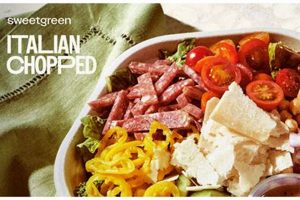
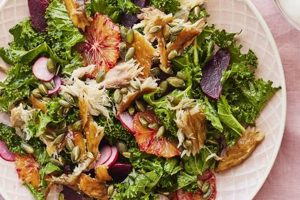
Farfalle, often called “bow ties” due to their distinctive shape, form the basis of a versatile salad adaptable to diverse palates and occasions. These pasta salads typically incorporate fresh vegetables, cheeses, proteins, and a flavorful dressing, offering a complete and satisfying meal or side dish. A simple example combines cooked farfalle, cherry tomatoes, chopped cucumber, mozzarella pearls, and a light vinaigrette.
The popularity of these salads stems from their convenience, nutritional value, and adaptability. They are ideal for picnics, potlucks, and quick weeknight meals. The pasta provides carbohydrates for energy, while the addition of vegetables and protein creates a balanced and nutritious dish. Furthermore, the shape of the pasta holds onto dressings effectively, ensuring a flavorful experience. Historically, pasta salads became popular as refrigeration technology advanced, allowing for the safe storage and consumption of cold pasta dishes.
This article will delve into variations on this culinary theme, exploring different ingredient combinations, dressing options, and tips for achieving the perfect texture and flavor balance in farfalle-based salads.
Tips for Crafting Exceptional Farfalle Salads
Achieving a well-balanced and flavorful farfalle salad involves attention to detail in ingredient selection, preparation, and assembly. These tips offer guidance for creating a dish that is both visually appealing and delicious.
Tip 1: Cook the Pasta Al Dente: Cooking the farfalle until just firm to the bite is crucial for preventing a mushy texture in the final salad. Follow package directions, reducing the cooking time slightly for optimal firmness.
Tip 2: Rinse and Dry the Pasta: Rinsing the cooked pasta under cold water stops the cooking process and removes excess starch. Thoroughly drying the pasta prevents the dressing from becoming diluted.
Tip 3: Choose Fresh, High-Quality Ingredients: The success of any salad hinges on the quality of its components. Opt for fresh, vibrant vegetables, flavorful cheeses, and high-quality proteins.
Tip 4: Balance Flavors and Textures: Consider a variety of flavors and textures when selecting ingredients. Combine creamy cheeses with crisp vegetables, and incorporate both sweet and savory elements.
Tip 5: Dress the Salad Just Before Serving: To prevent the salad from becoming soggy, add the dressing shortly before serving. This ensures that the pasta and vegetables retain their optimal texture.
Tip 6: Don’t Overcrowd the Salad: Use a large bowl to ensure that the ingredients have room to breathe and the dressing can coat everything evenly. Overcrowding can lead to a compressed and less appealing salad.
Tip 7: Garnish Thoughtfully: A simple garnish can elevate the presentation of the salad. Consider fresh herbs, a sprinkle of cheese, or a drizzle of olive oil.
By following these tips, one can consistently create flavorful and visually appealing farfalle salads suitable for any occasion. Attention to detail in each step, from pasta preparation to ingredient selection, ensures a satisfying culinary experience.
These guidelines provide a solid foundation for exploring the diverse world of farfalle salad recipes. The following section will offer specific examples of variations, showcasing the versatility of this popular dish.
1. Pasta Cooking

Proper pasta cooking forms the foundation of any successful bow tie salad recipe. The texture of the pasta significantly influences the final dish’s overall enjoyment, affecting how the pasta absorbs the dressing and interacts with other ingredients. Overcooked pasta results in a mushy, unappetizing salad, while undercooked pasta can be tough and unpleasant. Mastering the art of cooking farfalle to the perfect “al dente” texture is essential for a delightful culinary experience.
- Timing and Texture
Cooking time directly impacts the pasta’s final texture. Adhering to package instructions provides a baseline, but minor adjustments may be necessary depending on the specific brand and cooking method. The “al dente” texture, meaning “to the tooth” in Italian, describes pasta that is firm to the bite but not hard. This texture allows the pasta to hold its shape in the salad and absorb the dressing without becoming soggy. Overcooking leads to a loss of structural integrity, while undercooking results in a chewy, unpleasant texture.
- Water Quantity and Salting
Using ample water ensures even cooking and prevents the pasta from sticking together. Adding salt to the boiling water not only seasons the pasta itself but also enhances its texture by strengthening the gluten structure. Insufficient water can lead to unevenly cooked pasta, while neglecting to salt the water can result in bland and less flavorful pasta.
- Cooling and Rinsing
After cooking, immediately rinsing the pasta under cold water stops the cooking process and removes excess starch. This step prevents the pasta from continuing to cook from residual heat and helps maintain the desired “al dente” texture. Thorough rinsing also prevents the pasta from sticking together in the salad. Proper drying after rinsing ensures that the dressing adheres well and is not diluted.
- Impact on Dressing Absorption
The pasta’s texture directly influences how well it absorbs the dressing. Perfectly cooked, al dente pasta provides a slightly porous surface, allowing the dressing to cling effectively and distribute flavor throughout the salad. Overcooked pasta, however, tends to absorb excessive dressing, leading to a soggy and less appealing salad.
These interconnected facets of pasta cooking demonstrate the crucial role this step plays in achieving a well-balanced and enjoyable bow tie salad. By carefully considering timing, water quantity, rinsing, and the impact on dressing absorption, one can ensure that the pasta serves as a perfect foundation for the other ingredients and flavors in the salad.
2. Ingredient Selection

Ingredient selection significantly impacts the flavor profile, nutritional value, and overall appeal of bow tie salad recipes. Thoughtful choices create a harmonious blend of tastes and textures, transforming a simple pasta salad into a culinary delight. Conversely, careless selection can result in a bland or unbalanced dish. The interplay of various componentsvegetables, proteins, cheeses, and other additionsdetermines the salad’s final character. For example, a Mediterranean-inspired salad might incorporate Kalamata olives, feta cheese, artichoke hearts, and sun-dried tomatoes, offering a distinctly savory and briny flavor profile. This contrasts sharply with a lighter, summery salad featuring fresh berries, goat cheese, and candied pecans, which delivers a sweeter and more delicate taste.
The choice of ingredients extends beyond mere flavor combinations; it also affects the salad’s nutritional balance. Incorporating a variety of colorful vegetables, such as bell peppers, spinach, and carrots, boosts the vitamin and mineral content. Adding lean proteins like grilled chicken or chickpeas contributes to satiety and provides essential amino acids. Consideration of dietary restrictions and preferences further influences ingredient selection. A vegan option might substitute tofu for cheese and utilize a plant-based dressing, while a gluten-free version would necessitate gluten-free pasta. The adaptability of bow tie salad recipes allows for customization based on individual needs and preferences.
Successful ingredient selection hinges on achieving balance. Balancing flavors involves considering the interplay of sweet, sour, salty, bitter, and umami tastes. Balancing textures requires incorporating a mix of crunchy, creamy, and chewy elements. For instance, the crispness of cucumber complements the creaminess of avocado, while the chewiness of sun-dried tomatoes adds another layer of textural interest. A well-balanced bow tie salad offers a complex and satisfying sensory experience. The ultimate goal is to create a cohesive and harmonious dish where each ingredient contributes to the overall enjoyment.
3. Dressing Choice

Dressing choice represents a pivotal element in bow tie salad recipes, significantly influencing the final dish’s overall flavor profile and enjoyment. The dressing serves not merely as a condiment but as a unifying component, binding the diverse ingredients and creating a cohesive culinary experience. A thoughtfully selected dressing complements and enhances the other flavors present, while a poorly chosen one can overwhelm or clash, diminishing the salad’s appeal. Understanding the interplay between dressing and other ingredients is crucial for creating a well-balanced and delicious bow tie salad.
- Flavor Compatibility
The dressing’s flavor profile must harmonize with the other ingredients in the salad. A light vinaigrette complements delicate flavors like fresh vegetables and herbs, while a creamy dressing pairs well with richer ingredients like roasted vegetables or grilled chicken. For instance, a lemon vinaigrette enhances the brightness of a salad featuring cherry tomatoes and basil, whereas a creamy ranch dressing complements a salad with roasted vegetables and bacon. Careful consideration of flavor compatibility ensures a balanced and enjoyable final product.
- Texture and Consistency
The dressing’s texture and consistency contribute to the overall sensory experience of the salad. A light vinaigrette offers a refreshing contrast to the firmer textures of pasta and vegetables, while a creamy dressing adds a richness and coats the ingredients more thoroughly. The choice between a thin vinaigrette and a thicker, creamier dressing depends on the specific ingredients and desired outcome. A thicker dressing might weigh down lighter ingredients, while a thin vinaigrette may not adequately coat denser components. Achieving the correct balance enhances the salad’s textural appeal.
- Acidity and Sweetness
Balancing acidity and sweetness within the dressing is essential for creating a complex and nuanced flavor profile. A touch of sweetness can balance the sharpness of vinegar or citrus juice, while a hint of acidity can cut through the richness of creamy dressings. A classic balsamic vinaigrette exemplifies this balance, combining the tangy sweetness of balsamic vinegar with the richness of olive oil. Achieving the right balance prevents the dressing from being overly sweet or excessively tart.
- Ingredient Incorporation
Some dressings incorporate additional ingredients that contribute to both flavor and texture. Examples include herbs, spices, chopped vegetables, or crumbled cheese. These additions can further enhance the dressing’s complexity and complement the other ingredients in the salad. A pesto dressing, for instance, incorporates basil, pine nuts, and parmesan cheese, adding layers of flavor and texture. Such additions require careful consideration to ensure they complement rather than overpower the salad’s overall flavor profile.
By carefully considering these facets of dressing choiceflavor compatibility, texture and consistency, acidity and sweetness, and ingredient incorporationone can elevate a simple bow tie salad from ordinary to extraordinary. The dressing acts as the conductor of the culinary orchestra, bringing together the individual instrumentsthe ingredientsto create a harmonious and flavorful symphony. The right dressing choice transforms a collection of ingredients into a cohesive and satisfying dish.
4. Flavor Balance
Flavor balance represents a cornerstone of successful bow tie salad recipes, impacting overall enjoyment and palatability. Achieving this balance involves a careful interplay of five fundamental tastes: sweet, sour, salty, bitter, and umami. A harmonious blend of these tastes prevents any single flavor from dominating, creating a complex and nuanced culinary experience. Consider a classic Italian bow tie salad: the sweetness of sun-dried tomatoes, the acidity of the vinaigrette, the saltiness of olives and Parmesan cheese, and the subtle bitterness of arugula combine to create a balanced and flavorful whole. Disproportionate representation of any one taste can detract from the overall enjoyment; excessive sweetness can be cloying, while unchecked acidity can be jarring. This delicate balance elevates the dish beyond a simple combination of ingredients, transforming it into a cohesive and satisfying culinary creation.
The practical application of this understanding lies in the intentional selection and combination of ingredients. Each component contributes to the overall flavor profile, requiring careful consideration of its individual taste contribution. For instance, incorporating roasted vegetables adds a depth of sweetness and umami, while the addition of feta cheese provides saltiness and a subtle tang. The dressing plays a crucial role in balancing these flavors, often providing acidity to counterbalance sweetness or richness. A lemon vinaigrette, for example, brightens a salad with roasted vegetables and feta, preventing it from becoming overly heavy. Understanding these flavor dynamics empowers one to create bow tie salads that are not merely palatable but genuinely enjoyable.
Mastery of flavor balance requires more than simply including a representative of each taste. The intensity of each flavor, the quantities used, and the interactions between ingredients all contribute to the final outcome. The crispness of fresh vegetables provides textural contrast, further enhancing the interplay of flavors. Achieving perfect balance often involves subtle adjustments and experimentation, but the resulting complexity and depth of flavor make the effort worthwhile. This principle underscores the importance of viewing a bow tie salad not as a mere collection of ingredients, but as a carefully orchestrated composition of flavors, each playing a distinct yet harmonious role in the overall culinary experience. Challenges may arise from variations in ingredient quality or personal taste preferences, necessitating further adjustments and refinements to achieve the desired balance. This dynamic nature emphasizes the importance of continuous learning and adaptation in the pursuit of culinary excellence.
5. Texture Variety

Texture variety significantly contributes to the overall enjoyment of bow tie salad recipes. A successful salad engages not only the palate but also the sense of touch, creating a more dynamic and satisfying culinary experience. The interplay of contrasting textures adds depth and complexity, preventing the salad from feeling monotonous. Consider the contrast between the smooth, firm bow tie pasta and the crisp snap of fresh vegetables like bell peppers or cucumbers. This interplay stimulates the senses and elevates the eating experience. A salad consisting solely of soft ingredients can feel heavy and unappealing, while one lacking textural variation can seem one-dimensional. The incorporation of crunchy elements, such as toasted nuts or croutons, provides a pleasing counterpoint to softer ingredients like cheese or cooked vegetables. This textural diversity keeps the palate engaged and interested throughout the meal.
Several practical applications demonstrate the importance of texture variety in bow tie salad recipes. Adding blanched or roasted vegetables introduces a tender yet slightly firm texture that complements the pasta and other raw vegetables. Incorporating protein elements, such as grilled chicken or chickpeas, offers a more substantial chewiness. Even the choice of cheese impacts texture: crumbled feta provides a salty, crumbly contrast, while creamy mozzarella offers a soft, smooth texture. These choices demonstrate the wide range of textural possibilities available when crafting a bow tie salad. Balancing these elements ensures a multi-faceted sensory experience. For instance, a salad featuring grilled chicken, roasted vegetables, crumbled feta, and fresh herbs offers a diverse range of textures, creating a more satisfying and enjoyable meal.
Understanding the role of texture variety empowers one to create bow tie salads that are both flavorful and texturally interesting. This principle allows for greater creativity in recipe development and elevates the dish beyond a simple combination of ingredients. Challenges may arise when balancing contrasting textures without compromising flavor balance or creating an overly complex dish. This highlights the importance of considering both taste and texture when selecting ingredients, aiming for a harmonious interplay that maximizes enjoyment. The goal is not simply to include a variety of textures but to integrate them thoughtfully, ensuring they complement each other and contribute to a well-rounded sensory experience. This attention to detail transforms a simple bow tie salad into a more complex and satisfying culinary creation.
6. Presentation

Presentation plays a crucial role in the overall perception and enjoyment of bow tie salad recipes. While flavor and texture undoubtedly contribute significantly to the culinary experience, visual appeal enhances the diner’s anticipation and appreciation. A well-presented salad appears more appetizing, inviting consumption and potentially even enhancing perceived flavor. This aspect extends beyond mere aesthetics; it reflects the care and attention to detail invested in the dish’s creation, elevating it from a simple meal to a more considered culinary offering. The following facets explore the key components of effective salad presentation, emphasizing their impact on the overall dining experience.
- Color and Contrast
Visual appeal begins with the strategic use of color. A vibrant and varied color palette stimulates appetite and creates a sense of freshness. Incorporating a mix of colorful vegetables, such as red tomatoes, green spinach, orange carrots, and purple cabbage, transforms a simple salad into a visually striking dish. Furthermore, contrasting colors create visual interest and prevent the salad from appearing monotonous. The intentional arrangement of different colored ingredients enhances the overall aesthetic and encourages enjoyment. For example, arranging slices of avocado alongside bright red cherry tomatoes and deep green spinach creates a visually dynamic and appetizing presentation.
- Height and Dimension
Creating height and dimension adds visual interest and prevents the salad from appearing flat and uninspired. Rather than simply tossing all ingredients together, consider layering or strategically placing elements to create a more dynamic composition. Mounding the salad slightly in the center of the serving dish or using a cookie cutter to create a defined shape adds a touch of elegance. Incorporating taller elements, like sprigs of fresh herbs or whole cherry tomatoes, adds verticality and draws the eye upward. This attention to height and dimension transforms a simple salad into a more visually appealing and sophisticated dish.
- Garnishes and Finishing Touches
Garnishes provide the final flourish, adding a touch of elegance and enhancing the overall visual appeal. A simple sprinkle of chopped fresh herbs, a drizzle of olive oil, or a scattering of toasted nuts elevates the presentation and hints at the flavors within. The garnish should complement the salad’s ingredients and flavors, not overpower them. For example, a sprinkle of chopped parsley complements a Mediterranean-inspired salad, while a drizzle of balsamic glaze enhances the sweetness of a salad with roasted vegetables. These finishing touches demonstrate attention to detail and elevate the dining experience.
- Serving Vessel and Context
The choice of serving vessel also influences the overall presentation. A simple white bowl provides a neutral backdrop that allows the colors of the salad to shine, while a more decorative bowl can add a touch of elegance. The size and shape of the bowl should complement the salad’s volume and composition. Furthermore, the context in which the salad is served plays a role in presentation. A casual picnic calls for a more rustic presentation, while a formal dinner party warrants a more refined approach. Considering these contextual factors ensures that the presentation aligns with the overall dining experience.
These facets of presentation demonstrate that the visual appeal of a bow tie salad enhances the overall dining experience. By considering color and contrast, height and dimension, garnishes, and the serving context, one can elevate a simple salad from merely palatable to truly enjoyable. This attention to presentation reflects a deeper appreciation for the culinary arts, transforming a simple meal into a more aesthetically pleasing and satisfying experience. It demonstrates that culinary excellence extends beyond flavor and texture, encompassing the visual realm as well.
Frequently Asked Questions about Bow Tie Pasta Salads
This section addresses common inquiries regarding the preparation and enjoyment of bow tie pasta salads, offering practical guidance and clarifying potential misconceptions.
Question 1: How can one prevent bow tie pasta salad from becoming soggy?
Sogginess often results from overdressing or dressing the salad too far in advance. Dress the salad shortly before serving. Ensure the pasta is well-drained after cooking and rinsing. Consider using a lighter dressing or adding less dressing overall.
Question 2: What are suitable protein additions for bow tie pasta salad?
Versatile protein options include grilled chicken, shrimp, chickpeas, white beans, or cubed tofu. The choice depends on flavor preferences and dietary needs. Ensure proteins are cooked thoroughly and cooled before adding to the salad.
Question 3: Can bow tie pasta salad be prepared in advance?
While the pasta and other ingredients can be prepared ahead of time, it is recommended to combine them and add the dressing shortly before serving to prevent sogginess. Store prepared components separately and combine just before serving.
Question 4: What are some flavorful dressing alternatives to traditional vinaigrette?
Alternatives include pesto, creamy dressings based on yogurt or buttermilk, or a simple lemon-herb dressing. The choice depends on the other salad ingredients and desired flavor profile.
Question 5: How can one adapt bow tie pasta salad for specific dietary needs?
Adaptations include using gluten-free pasta for gluten intolerance, substituting plant-based proteins and cheeses for vegan diets, or adjusting dressing ingredients to accommodate allergies or sensitivities. Careful ingredient selection ensures inclusivity.
Question 6: What storage methods are recommended for leftover bow tie pasta salad?
Store leftover salad in an airtight container in the refrigerator for up to three days. Consume promptly to maintain optimal flavor and texture. Discard any salad left at room temperature for more than two hours.
Understanding these key aspects ensures the successful preparation and enjoyment of bow tie pasta salads, adapting them to various tastes and dietary needs.
The following section will provide several specific recipe examples to further illustrate the versatility and appeal of bow tie pasta salads.
Bow Tie Salad Recipes
Exploration of bow tie salad recipes reveals a versatile culinary form adaptable to diverse palates and occasions. Careful attention to pasta cooking, ingredient selection, dressing choice, flavor balance, texture variety, and presentation elevates these salads from simple meals to culinary creations. Understanding the interplay of these elements allows for customization based on individual preferences and dietary needs. From classic Italian combinations to innovative flavor profiles, the possibilities within this seemingly simple dish are vast.
Bow tie salad recipes offer a canvas for culinary expression. The adaptability of this dish encourages exploration and creativity, allowing for continuous refinement and personalization. The principles discussed herein provide a foundation for crafting not just satisfying meals, but memorable dining experiences. Continued exploration of flavor combinations and presentation techniques promises further evolution and enjoyment of this versatile culinary form.