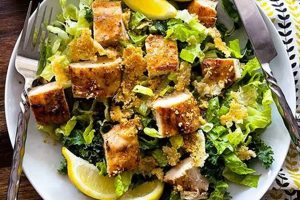
A dish featuring chicken breast cooked on a grill and intended as a key ingredient in salads offers a lean protein source with a smoky char. This preparation method can enhance the overall flavor profile of the salad, adding depth and complexity compared to other protein options. A simple example involves marinating the chicken in herbs and spices before grilling to medium-internal temperature, then slicing or dicing it for inclusion in the salad.
Including such a prepared protein offers several nutritional advantages. Grilled chicken is a valuable source of protein, crucial for muscle building and satiety. Grilling, as opposed to frying, minimizes added fats, contributing to a healthier meal. The versatility of this ingredient allows for incorporation into a wide variety of salad styles, from light and refreshing summer salads to more robust and hearty winter options. This adaptability contributes to the enduring popularity of this preparation across diverse culinary traditions.
The following sections will delve deeper into specific aspects of creating flavorful and nutritious salads with grilled chicken. Topics covered include marinade recipes, grilling techniques, and suggested salad pairings to maximize both taste and nutritional value.
Tips for Grilled Chicken Breast Salad
Optimizing the preparation of grilled chicken breast significantly enhances its suitability for salads. These tips offer guidance for achieving flavorful and texturally appealing results.
Tip 1: Marinades Enhance Flavor: Marinating the chicken for at least 30 minutes, and ideally up to several hours, imparts deeper flavor and helps retain moisture during grilling. Effective marinades often incorporate acidic components (vinegar, citrus juice) to tenderize the meat, along with oils, herbs, and spices.
Tip 2: Consistent Thickness Ensures Even Cooking: Pounding chicken breasts to a uniform thickness prevents overcooking thinner sections while thicker areas remain undercooked. This promotes consistent texture and optimal food safety.
Tip 3: Moderate Heat Prevents Burning: Grilling over medium heat allows the chicken to cook thoroughly without charring excessively. High heat can result in a burnt exterior and an undercooked interior.
Tip 4: Internal Temperature Verification Ensures Doneness: Using a meat thermometer provides accurate assessment of doneness. Chicken breast should reach an internal temperature of 165F (74C) to eliminate food safety risks.
Tip 5: Resting Allows for Juice Retention: Allowing the cooked chicken to rest for a few minutes before slicing or dicing allows the juices to redistribute, resulting in a more tender and flavorful final product.
Tip 6: Consider Slicing Techniques: Thinly slicing grilled chicken against the grain enhances tenderness and allows it to distribute more evenly throughout the salad.
Tip 7: Complementary Salad Pairings Elevate the Dish: The choice of salad ingredients should complement the smoky flavor of the grilled chicken. Consider pairings such as crisp romaine lettuce, crunchy vegetables, creamy avocado, or tangy cheeses.
By implementing these strategies, one can consistently produce flavorful, tender, and safe grilled chicken breast ideally suited for a wide variety of salads. This attention to detail elevates a simple salad to a satisfying and nutritious meal.
The concluding section will offer a variety of recipe ideas showcasing the versatility of grilled chicken in salads.
1. Marination

Marination plays a crucial role in the preparation of grilled chicken breast for salads, impacting both flavor and texture. The process involves submerging the chicken in a seasoned liquid mixture, allowing the flavors to penetrate the meat and the chemical components of the marinade to tenderize the muscle fibers. This enhances the overall palatability of the chicken, particularly when grilling, a cooking method that can sometimes result in dryness. A simple marinade of olive oil, lemon juice, garlic, and herbs, for example, can significantly elevate the flavor profile of grilled chicken, adding brightness and complexity to the final salad.
The effectiveness of a marinade hinges on its components and duration of application. Acidic ingredients, such as vinegar or citrus juice, denature proteins, leading to tenderization. Oils help distribute flavors and retain moisture during grilling. Herbs, spices, and aromatics like garlic and ginger infuse the chicken with distinctive tastes and aromas. The duration of marination depends on the ingredients’ potency and the thickness of the chicken breast. While 30 minutes can impart noticeable flavor enhancement, marinating for several hours, or even overnight, allows for deeper penetration and greater tenderization. Over-marination with highly acidic marinades, however, can result in an undesirable mushy texture.
Understanding the function and impact of marination enables the creation of superior grilled chicken salads. The marinade not only contributes directly to the chicken’s flavor but also influences the overall balance of the salad. A brightly flavored marinade, for example, might pair well with fresh, crisp vegetables and a light vinaigrette, whereas a more robust marinade might complement heartier greens and a creamy dressing. Careful consideration of marination techniques elevates the dish beyond simply grilled chicken atop greens to a well-integrated and flavorful culinary experience.
2. Grilling Technique

Grilling technique significantly influences the outcome of grilled chicken breast intended for salads. Achieving optimal results requires attention to heat management, cooking time, and manipulation of the chicken during the grilling process. Proper grilling ensures the chicken is cooked thoroughly, retains moisture, and develops desirable surface char, enhancing both flavor and texture within the salad context.
- Heat Control
Maintaining consistent heat is crucial for even cooking and preventing burning. Medium heat allows the chicken to cook through without charring excessively before the interior reaches a safe temperature. Adjusting the grill’s vents or moving the chicken to a cooler zone allows for finer control, especially for thicker breasts. Consistent heat ensures a palatable texture and minimizes the risk of undercooked portions within the salad.
- Cooking Time
Cooking time depends on the thickness of the chicken breast and the grill’s temperature. Overcooking results in dry, stringy meat, detracting from the salad’s overall quality. Frequent checking with a meat thermometer is crucial. The chicken is ready to be removed from the grill once it reaches an internal temperature of 165F (74C). This ensures both food safety and optimal texture for the salad.
- Chicken Positioning and Manipulation
Proper positioning and occasional turning prevent sticking and promote even cooking. Starting with the presentation side down allows for attractive sear marks. Rotating the chicken ensures all sides are exposed to the heat source, promoting even cooking and preventing one side from becoming overly charred while the other remains undercooked. This careful manipulation contributes to the visual appeal and uniform texture of the chicken within the salad.
- Resting Period
Allowing the grilled chicken to rest after cooking, before slicing, allows the internal juices to redistribute. This results in a more tender and flavorful product. Resting also makes the chicken easier to slice cleanly, which enhances its presentation in the salad. A resting period of 5-10 minutes is typically sufficient.
Mastery of these grilling techniques produces succulent and flavorful chicken breast perfectly suited for salads. The resulting texture and taste elevate the salad beyond a simple combination of ingredients to a carefully crafted dish where the grilled chicken plays a starring role.
3. Chicken Doneness
Chicken doneness is paramount when preparing grilled chicken breast for salads. Undercooked chicken presents significant food safety risks, while overcooked chicken results in a dry, unpleasant texture that detracts from the salad’s overall quality. Achieving the proper doneness ensures both a safe and palatable culinary experience.
- Food Safety
Consuming undercooked chicken can lead to foodborne illnesses due to the presence of harmful bacteria like Salmonella or Campylobacter. Ensuring the chicken reaches a safe internal temperature eliminates this risk. A meat thermometer provides the most accurate assessment, confirming the chicken has reached the recommended 165F (74C) throughout.
- Texture Optimization
Chicken cooked to the correct internal temperature exhibits a moist, tender texture. Overcooking, however, leads to dryness and stringiness, making the chicken less appealing within the salad. Proper doneness ensures the chicken contributes a desirable texture, complementing the other salad components.
- Visual Cues
While visual cues can offer some indication of doneness, they are not reliable indicators of internal temperature and should not be solely relied upon. Changes in color, from pink to white, and the clarity of exuded juices offer some clues but are insufficient to guarantee safety. A meat thermometer remains the most dependable method for assessing doneness.
- Carryover Cooking
Residual heat within the chicken causes the internal temperature to continue rising after removal from the grill. This phenomenon, known as carryover cooking, necessitates removing the chicken slightly before it reaches the target temperature to prevent overcooking. Accounting for carryover cooking ensures the chicken achieves the desired doneness while resting.
Precise assessment of chicken doneness is essential for creating a safe and enjoyable grilled chicken salad. A reliable meat thermometer provides the most accurate measure, ensuring the chicken reaches a safe internal temperature while retaining a desirable texture. This attention to detail elevates the salad experience, transforming it from a potential health hazard to a delightful and nutritious meal.
4. Salad Composition

Salad composition is a critical factor in the overall success of a grilled chicken breast salad. The interplay of various ingredients, including greens, vegetables, additional proteins, and dressings, significantly impacts the final flavor profile, textural complexity, and nutritional value. A well-composed salad complements and enhances the grilled chicken, creating a harmonious and satisfying dish.
- Greens Selection
The choice of greens establishes the salad’s foundation, providing a base for the other ingredients. Robust greens like kale or spinach offer a hearty texture and pair well with bolder flavors, while delicate greens like butter lettuce or romaine provide a crisp, refreshing counterpoint. The greens’ flavor profile should complement the grilled chicken and other chosen ingredients. For example, peppery arugula might pair well with a lemon-herb marinated chicken, while spinach could complement a balsamic-glazed chicken.
- Vegetable Incorporation
Vegetables contribute essential nutrients, textures, and flavors to the salad. A variety of textures, from crunchy cucumbers and bell peppers to juicy tomatoes and soft avocado, adds complexity and interest. Consider the vegetables’ flavor profiles and how they interact with the grilled chicken and chosen dressing. Roasted vegetables can provide a caramelized sweetness, while raw vegetables offer a fresh, crisp element. A Greek salad, for example, combines tomatoes, cucumbers, onions, and olives with grilled chicken, creating a medley of Mediterranean flavors.
- Complementary Components
Beyond vegetables, various components can further enhance the salad. Nuts and seeds add crunch and healthy fats. Cheese provides creaminess and salty notes. Dried fruits offer sweetness and chewiness. These additions should complement the grilled chicken and other salad elements, creating a balanced and nuanced flavor profile. For instance, crumbled feta cheese and toasted walnuts can complement a grilled chicken salad with Mediterranean flavors, while dried cranberries and sunflower seeds can enhance a salad with a balsamic vinaigrette.
- Dressing Selection
The dressing ties the salad together, adding moisture, flavor, and acidity. The dressing should complement both the grilled chicken and the other salad components. A light vinaigrette might pair well with delicate greens and a lemon-herb marinated chicken, while a creamy ranch dressing might complement heartier greens and a barbecue-glazed chicken. The dressing’s intensity should balance the other flavors, enhancing rather than overpowering them.
Careful consideration of salad composition maximizes the potential of grilled chicken breast as a salad ingredient. The interplay of greens, vegetables, complementary components, and dressing elevates the dish beyond a simple combination of ingredients. A thoughtfully composed salad enhances the grilled chicken’s flavor profile, creating a harmonious and satisfying culinary experience. By strategically choosing components that complement both the chicken and each other, a simple grilled chicken salad transforms into a balanced and flavorful meal.
5. Flavor Balance

Flavor balance is crucial in a grilled chicken breast salad recipe. It determines the overall palatability and enjoyment of the dish. A balanced salad avoids extremes in any single flavor profile, preventing any one element from overpowering the others. This involves careful consideration of the chicken’s marinade or seasoning, the salad’s components, and the dressing. A harmonious blend of flavors elevates the salad beyond a simple sum of its parts, creating a cohesive and satisfying culinary experience. For instance, a salad with overly sweet grilled chicken, combined with sweet fruits and a sweet dressing, would lack balance. Conversely, a salad with intensely savory chicken, bitter greens, and a sharp vinaigrette might also prove unbalanced. The goal is to create a symphony of flavors where each element complements and enhances the others.
Achieving flavor balance requires an understanding of the various taste profiles present in the salad: sweetness, saltiness, sourness, bitterness, and umami. The grilled chicken often contributes a savory, slightly smoky element, depending on the marinade and grilling technique. The salad components introduce a range of flavors and textures, from the sweetness of fruits like berries or dried cranberries to the bitterness of greens like arugula or radicchio. The dressing further adds to the flavor profile, introducing acidity, sweetness, or creaminess. A successful salad balances these elements, ensuring no single taste dominates. For example, a grilled chicken salad featuring a sweet and smoky barbecue-glazed chicken might benefit from the addition of tangy pickled onions and a creamy, slightly tart dressing to balance the sweetness and smokiness.
Understanding flavor balance allows for strategic ingredient selection and preparation techniques to create a well-rounded salad. Marinades and seasonings for the grilled chicken should complement the intended salad components. If using a sweet marinade, the salad might incorporate tart or bitter elements for contrast. Similarly, if the chicken has a strong savory flavor, the salad might include sweeter fruits or vegetables to balance the profile. The ultimate goal is a harmonious blend where the grilled chicken integrates seamlessly with the other salad components, creating a delicious and satisfying whole. This approach elevates the grilled chicken salad from a basic meal to a nuanced culinary creation.
6. Nutritional Value

Nutritional value represents a significant consideration when incorporating grilled chicken breast into a salad recipe. Grilled chicken breast offers a lean protein source, essential for muscle building, tissue repair, and satiety. It provides a substantial amount of protein with relatively few calories and minimal fat, particularly when compared to other protein sources commonly used in salads, such as fried chicken or cheese. This makes it a favorable choice for individuals seeking to manage weight or maintain a healthy diet. Furthermore, chicken provides essential micronutrients like niacin, selenium, and vitamin B6, contributing to overall health. The nutritional profile of the complete salad, however, depends heavily on the other incorporated ingredients. For example, a salad rich in leafy greens, colorful vegetables, and a light vinaigrette, combined with grilled chicken, offers a nutrient-dense meal packed with vitamins, minerals, and antioxidants. Conversely, a salad with limited vegetables, excessive cheese, croutons, and a heavy, creamy dressing, even with grilled chicken, may be less nutritionally balanced.
The method of preparation further influences the nutritional value. Grilling, compared to frying, minimizes added fats and preserves the inherent nutritional content of the chicken. Excessive charring, however, can create potentially harmful compounds. Therefore, careful grilling techniques, such as using moderate heat and avoiding direct flames, are recommended. Moreover, the marinade’s composition can impact the nutritional profile. Marinades high in sodium or sugar can diminish the overall health benefits. Opting for marinades based on herbs, spices, and low-sodium ingredients preserves the nutritional integrity of the grilled chicken. A lemon-herb marinade, for example, adds flavor without contributing excessive sodium or sugar. Similarly, selecting nutrient-rich salad components further enhances the overall nutritional value. Incorporating a variety of colorful vegetables, such as bell peppers, tomatoes, and spinach, provides a wider range of vitamins, minerals, and antioxidants, maximizing the health benefits of the salad.
Understanding the nutritional implications of each ingredient within a grilled chicken salad allows for informed choices that maximize health benefits. Prioritizing lean protein, nutrient-rich vegetables, and minimally processed ingredients contributes to a balanced and nutritious meal. Careful grilling techniques and marinade selection further enhance the nutritional value. This holistic approach transforms a simple salad into a powerful tool for promoting health and well-being, demonstrating the practical significance of understanding nutritional value in recipe development.
Frequently Asked Questions
This section addresses common inquiries regarding the utilization of grilled chicken breast in salad recipes, offering practical guidance for optimal preparation and flavor maximization.
Question 1: How can dryness be prevented when grilling chicken breast?
Dryness can be mitigated through several techniques: marinating the chicken for at least 30 minutes helps retain moisture, pounding the breast to a uniform thickness ensures even cooking, grilling over medium heat prevents rapid moisture loss, and allowing the chicken to rest after grilling allows juices to redistribute.
Question 2: What are effective marinade options for enhancing flavor?
Effective marinades often incorporate an acidic component (vinegar, citrus juice), oil, and flavorings (herbs, spices, garlic). Examples include lemon-herb, honey-mustard, or balsamic vinaigrette-based marinades. Experimentation with various flavor combinations allows for customized taste profiles.
Question 3: How is chicken doneness accurately determined?
A meat thermometer provides the most accurate assessment of doneness. Chicken breast should reach an internal temperature of 165F (74C) to ensure both safety and optimal texture. Visual cues, such as color change, are not reliable indicators of internal temperature.
Question 4: What salad ingredients pair well with grilled chicken?
A wide range of ingredients complement grilled chicken. Crisp romaine lettuce, crunchy vegetables (cucumber, bell peppers), creamy avocado, or tangy cheeses (feta, goat) offer contrasting textures and flavors. The specific marinade used influences ideal pairings.
Question 5: How can sodium content be minimized in grilled chicken salads?
Sodium content can be minimized by using low-sodium or homemade marinades, avoiding pre-seasoned or processed ingredients, and choosing fresh vegetables over canned or pickled varieties. Careful attention to ingredient selection contributes to a healthier meal.
Question 6: Can grilled chicken breast be prepared in advance for salads?
Grilled chicken can be prepared in advance and stored in the refrigerator for up to 3-4 days. Proper storage in airtight containers helps maintain freshness and flavor. Allowing the chicken to cool completely before refrigeration helps prevent bacterial growth.
By addressing these frequently asked questions, one gains valuable insights into optimizing grilled chicken salad preparation. Attention to detail in each step ensures a flavorful, safe, and nutritious culinary experience.
The following section will provide several specific recipe ideas showcasing the versatility and adaptability of grilled chicken breast in salad preparations.
Grilled Chicken Breast for Salad Recipe
Preparation of grilled chicken breast for salad requires careful consideration of several factors. Marination technique, grilling methodology, assessment of doneness, salad composition, flavor balance, and nutritional value all contribute significantly to the final outcome. Attention to these elements ensures a safe, flavorful, and nutritious meal. From marinade selection to ingredient pairings, each step plays a crucial role in maximizing the culinary potential of this versatile protein source.
Mastery of these culinary techniques allows for the creation of diverse and satisfying salads featuring grilled chicken breast. This knowledge empowers individuals to elevate simple salads to flavorful and nutritious meals, contributing to a healthier and more enjoyable dining experience. Further exploration of flavor profiles and ingredient combinations offers boundless opportunities for culinary creativity within this adaptable framework. The potential for customization within the grilled chicken salad paradigm remains vast and invites continued exploration.