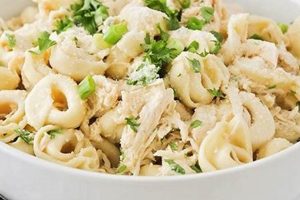
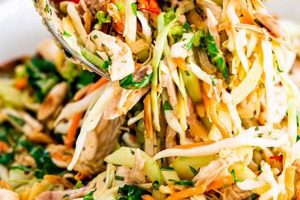
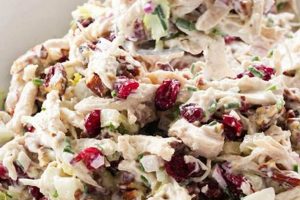
A pasta-based dish incorporates elements traditionally found in a club sandwich typically chicken, bacon, lettuce, and tomato combined with a creamy dressing, often mayonnaise-based. Variations may include cheese, avocado, or other vegetables, adapting to personal preference and seasonal availability.
This dish offers a convenient and satisfying meal option, suitable for picnics, potlucks, or quick lunches. The combination of protein from the chicken and bacon, along with the fresh vegetables and carbohydrates from the pasta, creates a nutritionally balanced meal. Its adaptable nature allows for endless variations, making it a versatile choice for diverse palates. Historically, pasta salads gained popularity as a make-ahead dish, ideal for entertaining or packed lunches. The integration of club sandwich ingredients represents a contemporary twist on this classic, providing a familiar yet novel culinary experience.
The following sections will explore ingredient selection, preparation techniques, dressing variations, and serving suggestions to create a delectable and memorable dish.
Tips for a Successful Preparation
Optimizing ingredient selection and preparation techniques ensures a flavorful and satisfying culinary experience.
Tip 1: Pasta Selection: Opt for short, sturdy pasta shapes like rotini, farfalle, or penne. These hold their shape well and capture the dressing effectively. Avoid long, thin noodles, which can become tangled and clump together.
Tip 2: Chicken Preparation: Rotisserie chicken offers a convenient and flavorful option. Alternatively, grilling or pan-frying chicken breasts seasoned with herbs and spices adds depth of flavor. Ensure the chicken is cooked thoroughly and cooled before adding to the salad.
Tip 3: Bacon Enhancement: Crispy bacon provides a textural and flavorful contrast. Baking bacon on a wire rack ensures even crispness. Crumble the bacon into bite-sized pieces for optimal distribution throughout the salad.
Tip 4: Vegetable Freshness: Utilize crisp, fresh vegetables. Ripe tomatoes, crunchy lettuce (such as romaine or iceberg), and finely diced red onion contribute both flavor and visual appeal.
Tip 5: Dressing Customization: A classic mayonnaise-based dressing provides a creamy, tangy base. Incorporating buttermilk, Dijon mustard, or herbs such as dill or chives enhances the flavor profile. Adjust seasonings to taste.
Tip 6: Chilling for Flavor Development: Allow the salad to chill in the refrigerator for at least 30 minutes before serving. This allows the flavors to meld and enhances the overall taste experience.
Tip 7: Ingredient Incorporation: Add the more delicate ingredients, such as lettuce and tomatoes, just before serving to prevent them from becoming soggy. This maintains their texture and fresh appearance.
Careful attention to these details ensures a balanced and delicious pasta salad.
By following these guidelines, one can create a dish that is both visually appealing and satisfying to the palate.
1. Pasta (shape and cook)

Pasta selection and cooking method significantly influence the final quality. Appropriate choices enhance the dish’s texture, flavor absorption, and overall appeal. Careful consideration of these factors ensures a successful outcome.
- Shape and Texture:
Short, robust pasta shapes, such as rotini, farfalle (bowtie), or penne, are ideal. Their structure effectively captures the dressing and ingredients, preventing the salad from becoming watery. Conversely, long, thin pasta like spaghetti or linguine tends to clump and become unwieldy in a salad context.
- Cooking Method:
Cooking pasta al dente is crucial. Overcooked pasta becomes mushy and absorbs less dressing, while undercooked pasta remains firm and unappetizing. Following package directions and testing for firmness ensures optimal texture. Rinsing the cooked pasta with cold water stops the cooking process and helps maintain a firm texture, preventing sticking.
- Flavor Absorption:
The pasta’s ability to absorb the dressing contributes significantly to the overall flavor profile. Properly cooked pasta, with its slightly porous surface, readily absorbs the dressing, creating a cohesive and flavorful dish. Overcooked pasta, however, tends to become saturated and less receptive to flavor infusion.
- Visual Appeal:
The shape and texture of the pasta contribute to the visual appeal. A mix of colors and shapes adds visual interest. For example, tri-color rotini can enhance the presentation. The pasta should hold its shape and not appear overly soft or broken.
The interplay between pasta shape, cooking method, and its ability to absorb flavor and maintain structural integrity directly impacts the overall enjoyment. Properly chosen and cooked pasta forms a foundation for a well-balanced and flavorful chicken club pasta salad.
2. Chicken (cooked, diced)

Chicken serves as a primary protein source and contributes significantly to the overall flavor profile of the chicken club pasta salad. Proper cooking and preparation methods are essential for maximizing its contribution to the dish. The following facets highlight key considerations related to the chicken component.
- Cooking Methods:
Various cooking methods, including grilling, baking, poaching, or using pre-cooked rotisserie chicken, offer distinct flavor profiles and textures. Grilling imparts a smoky char, while baking results in a tender, juicy texture. Poaching yields a leaner, milder flavor. Rotisserie chicken provides convenience. The chosen method influences the overall taste and experience.
- Dicing Technique:
Dicing the chicken into bite-sized pieces ensures even distribution throughout the salad and facilitates ease of consumption. Uniformly sized pieces also contribute to a visually appealing presentation. Overly large pieces can disrupt the balance and make the salad difficult to eat, while excessively small pieces may become lost among the other ingredients.
- Seasoning and Flavor Enhancement:
Strategic seasoning enhances the chicken’s flavor and complements the other ingredients. Simple seasonings, such as salt, pepper, and garlic powder, offer a classic flavor profile. Alternatively, more complex spice blends, such as paprika, cumin, or oregano, can add depth and complexity. Marination prior to cooking further infuses flavor.
- Food Safety:
Ensuring the chicken reaches a safe internal temperature of 165F (74C) is paramount for food safety. Proper handling and storage practices prevent bacterial contamination. Thoroughly chilling cooked chicken before adding it to the salad helps maintain food safety and prevents spoilage.
The proper preparation of the chicken, including cooking method, dicing technique, and seasoning, contributes significantly to the success of the chicken club pasta salad. Attention to these details ensures both a flavorful and safe culinary experience.
3. Bacon (crispy, crumbled)

Bacon contributes a distinctive smoky flavor and satisfying textural element crucial to a successful chicken club pasta salad. Crispiness is paramount; properly cooked bacon provides a pleasant contrast to the softer pasta and other ingredients. Crumbling the bacon ensures even distribution of flavor and texture throughout the dish, preventing large, chewy pieces and facilitating easier mixing and serving. The rendering of fat during cooking also infuses the bacon with concentrated flavor and contributes to the overall richness of the salad. If bacon lacks crispness, it becomes flabby and imparts less flavor, detracting from the intended balance. Conversely, overly crisp bacon can be difficult to chew and crumble evenly.
Consider the impact of bacon texture on other salad components. Crispy bacon maintains its texture even when coated with dressing, providing a satisfying crunch. In contrast, limp bacon absorbs dressing and becomes soggy, negatively affecting the salad’s overall texture and potentially making the dish less appealing. The interplay between the bacon’s crispness and the creamy dressing creates a balance of contrasting texturesa defining characteristic of a successful chicken club pasta salad. Examples of bacon preparation methods that yield optimal crispness include baking on a wire rack in the oven or pan-frying in small batches, allowing adequate space for even cooking.
Achieving optimal bacon texture enhances the sensory experience of the chicken club pasta salad. The crispness offers a textural counterpoint to the other ingredients, contributing a satisfying mouthfeel. Furthermore, the rendered bacon fat enhances the flavor profile of the dressing and other components. Difficulties arise when balancing the crispness with even crumbling for distribution. Overcooking leads to brittleness and challenges in achieving desirable crumble size, while undercooking results in a chewy, less flavorful outcome. Mastering bacon preparation is essential for achieving the desired textural and flavor contribution to the chicken club pasta salad.
4. Tomato (diced)
Diced tomatoes contribute essential flavor, color, and texture to a chicken club pasta salad. Their acidity provides a refreshing counterpoint to the richness of the mayonnaise-based dressing and the savory elements of chicken and bacon. Beyond flavor, diced tomatoes introduce a vibrant red hue, enhancing the salad’s visual appeal. Furthermore, their juicy texture offers a pleasant contrast to the pasta and other ingredients. The size of the dice influences both the aesthetic presentation and the eating experience. Smaller dice distributes tomato flavor more evenly throughout the salad, while larger dice provides more pronounced bursts of tomato flavor with each bite.
The inclusion of tomatoes exemplifies the adaptation of the classic club sandwich into salad form. Traditional club sandwiches feature sliced tomatoes, layered alongside other fillings. In the pasta salad context, dicing allows for even distribution and integration with the other components, ensuring a balanced flavor profile in each bite. The structural integrity of the tomato pieces is crucial; overly ripe or poorly handled tomatoes can release excess moisture, leading to a watery salad. Choosing firm, ripe tomatoes and dicing them just before incorporating them into the salad mitigates this risk and maintains textural integrity. Specific tomato varieties, such as Roma or cherry tomatoes, offer different flavor profiles and textures, influencing the overall culinary experience.
Optimal integration of diced tomatoes requires consideration of their impact on the final product. Balancing their acidity with other flavor components, such as the richness of the dressing, is crucial for achieving a harmonious flavor profile. The visual contribution of the bright red tomato pieces enhances the overall presentation of the salad, making it more appetizing. Challenges associated with incorporating diced tomatoes include potential moisture release and maintaining their structural integrity throughout storage and serving. Addressing these factors through careful selection, proper handling, and timely incorporation ensures the diced tomatoes contribute positively to the overall quality and enjoyment of the chicken club pasta salad.
5. Lettuce (chopped)

Chopped lettuce introduces a refreshing crispness and subtle vegetal note essential to a well-balanced chicken club pasta salad. Its inclusion mirrors the traditional club sandwich, where lettuce provides textural contrast to the other fillings. Crisphead lettuce varieties, such as iceberg or romaine, are preferred for their ability to retain texture and avoid wilting when combined with the other ingredients and dressing. The chopping process itself influences the final result. Coarsely chopped lettuce offers a more substantial bite, while finely chopped lettuce distributes more evenly throughout the salad. The structural integrity of the lettuce contributes significantly to the overall eating experience. Soggy lettuce detracts from the salad’s appeal, highlighting the importance of proper handling and timing. Adding the chopped lettuce just before serving helps maintain its crispness and prevents it from becoming waterlogged by the dressing or other ingredients.
The choice of lettuce and its preparation directly impact the sensory experience of the pasta salad. Iceberg lettuce offers a neutral flavor and substantial crunch, while romaine contributes a slightly more pronounced vegetal flavor. Other lettuce varieties, such as butter lettuce or green leaf lettuce, may wilt more readily and are less suitable for this application. Consider the interplay between the lettuce and the dressing. While the dressing adds flavor and moisture, excessive dressing can overwhelm the delicate lettuce, compromising its textural contribution. Practical examples include using pre-washed and bagged lettuce for convenience, ensuring thorough drying to prevent sogginess, and storing the chopped lettuce separately until just before serving to maintain optimal crispness.
In summary, chopped lettuce constitutes a vital component of the chicken club pasta salad, providing textural contrast, visual appeal, and a refreshing element. Careful selection of lettuce variety, proper chopping technique, and strategic timing of incorporation ensure the lettuce contributes positively to the overall quality and enjoyment of the dish. Challenges associated with lettuce in pasta salad center around maintaining its crispness and preventing wilting. Addressing these concerns through appropriate preparation techniques ensures the lettuce enhances the overall culinary experience.
6. Dressing (creamy, flavorful)
The dressing serves as a unifying element in a chicken club pasta salad recipe, binding the diverse ingredients and contributing significantly to the overall flavor profile. A creamy, flavorful dressing complements the savory chicken and bacon, the fresh vegetables, and the pasta, creating a cohesive culinary experience. Classic choices include mayonnaise-based dressings, often enhanced with buttermilk, sour cream, or yogurt for added tang and creaminess. Flavorful additions, such as Dijon mustard, herbs, spices, or a touch of sweetness, further elevate the dressing’s complexity and complement the other ingredients. The dressing’s consistency plays a crucial role; it should be thick enough to coat the ingredients without being overly heavy or causing the salad to become soggy. A balanced flavor profile, neither too bland nor overpowering, ensures the dressing enhances the other components without masking their individual contributions.
The choice of dressing directly impacts the overall quality and enjoyment of the chicken club pasta salad. For instance, a ranch-style dressing, with its herbaceous notes, complements the chicken and vegetables. A honey mustard dressing adds a touch of sweetness and tang. A creamy avocado dressing provides a richer, more decadent flavor profile. Real-life examples include using a classic buttermilk ranch dressing for a traditional flavor, or opting for a lighter vinaigrette for a healthier option. The quantity of dressing also plays a crucial role. Too little dressing results in a dry, less flavorful salad, while too much dressing can overwhelm the other ingredients and make the salad heavy. Finding the right balance ensures optimal flavor and texture.
Understanding the role of the dressing in a chicken club pasta salad recipe is essential for creating a successful dish. A well-chosen and properly balanced dressing elevates the individual ingredients, creating a harmonious and flavorful whole. Challenges include achieving the desired consistency, balancing flavor profiles, and avoiding excess moisture. Addressing these factors through careful ingredient selection and preparation techniques ensures the dressing contributes positively to the overall sensory experience. The dressing acts as the bridge connecting the individual components, transforming them into a unified and satisfying culinary creation.
7. Seasoning (balanced)
Balanced seasoning distinguishes a bland chicken club pasta salad from a flavorful one. It elevates the inherent flavors of the ingredientschicken, bacon, vegetables, and pastawithout overpowering any single component. Careful consideration of seasoning choices and their proportions ensures a harmonious and enjoyable culinary experience. This exploration delves into the multifaceted aspects of seasoning within the context of this specific recipe.
- Salt and Pepper Foundation:
Salt and freshly ground black pepper form the foundational seasoning elements, enhancing the overall flavor profile. Salt amplifies the inherent flavors of the other ingredients, while pepper adds a subtle bite. The quantity of salt used depends on the saltiness of other components, like bacon and cheese, if included. Too much salt can overpower the dish, while too little leaves it tasting flat. Real-life examples include using kosher salt for its clean flavor and coarser texture, or opting for freshly cracked black pepper for its enhanced aroma and flavor impact. Proper salt and pepper balance provides a neutral backdrop for other seasonings to shine.
- Herbaceous Enhancements:
Fresh herbs introduce aromatic complexity and freshness. Dill, chives, parsley, and tarragon complement the creamy dressing and vegetables. Dried herbs, used sparingly, offer an alternative when fresh herbs are unavailable. The choice of herbs depends on personal preference and the overall flavor profile desired. For example, dill adds a bright, slightly tangy note, while chives offer a mild onion flavor. Incorporating herbs elevates the salad beyond basic seasoning, contributing layers of flavor and aroma.
- Spice Integration:
Spices like paprika, garlic powder, onion powder, or a pinch of cayenne pepper add depth and warmth. Smoked paprika imparts a smoky dimension, complementing the bacon. Garlic and onion powders provide savory notes. Cayenne pepper introduces a touch of heat. The quantity and combination of spices should be carefully calibrated to avoid overpowering the other flavors. For example, a small amount of smoked paprika enhances the bacon’s smokiness without making the salad taste solely of smoke.
- Acidic Balance:
A touch of acidity, from lemon juice or vinegar, brightens the flavors and balances the richness of the mayonnaise-based dressing. This acidity also helps to preserve the salad’s freshness. The amount of acid used should be judicious, as too much can make the salad taste sour. A squeeze of fresh lemon juice just before serving provides a vibrant lift to the overall flavor profile, creating a more dynamic and balanced taste experience. This acidic component is especially important in salads with creamy dressings, as it cuts through the richness and adds brightness.
Achieving balanced seasoning in a chicken club pasta salad involves a nuanced understanding of how different flavor components interact. It requires careful consideration of the inherent saltiness and flavors of the ingredients, the choice of herbs and spices, and the balancing effect of acidity. The ultimate goal is to create a harmonious flavor profile where each ingredient contributes to the overall experience without dominating the palate. This interplay of flavors transforms a simple combination of ingredients into a complex and satisfying culinary creation.
Frequently Asked Questions
This section addresses common inquiries regarding the preparation and enjoyment of chicken club pasta salad.
Question 1: What type of pasta works best?
Short, sturdy pasta shapes like rotini, farfalle, or penne hold their shape well and capture the dressing effectively. Avoid long, thin noodles, which tend to clump.
Question 2: Can rotisserie chicken be used?
Rotisserie chicken offers a convenient and flavorful option. Ensure it is properly shredded or diced before incorporating it into the salad.
Question 3: How can bacon crispness be maximized?
Baking bacon on a wire rack in the oven yields optimal crispness and even cooking. Pan-frying in small batches also achieves good results. Ensure the bacon is thoroughly cooled and crumbled before adding to the salad.
Question 4: What type of dressing is recommended?
Classic mayonnaise-based dressings, often enhanced with buttermilk or sour cream, work well. Flavor variations, such as ranch, honey mustard, or avocado, can be explored based on preference.
Question 5: How long can the salad be stored?
Properly stored in an airtight container in the refrigerator, the salad can be enjoyed for up to three days. The lettuce may lose some crispness over time.
Question 6: Can the recipe be adapted for dietary restrictions?
The recipe is adaptable. Gluten-free pasta can be substituted for traditional pasta. Vegetarian variations can omit the chicken and bacon, incorporating alternative protein sources such as chickpeas or tofu. Dressing adjustments, such as using a vinaigrette instead of a mayonnaise-based dressing, can accommodate lower-fat preferences.
Addressing these common inquiries facilitates successful preparation and enjoyment of chicken club pasta salad. Careful attention to ingredient selection, preparation methods, and storage guidelines ensures a satisfying culinary experience.
The following section provides a comprehensive recipe guide incorporating the insights discussed above.
Chicken Club Pasta Salad Recipe
Exploration of this dish reveals a compelling intersection of classic elements and contemporary adaptation. Analysis of core componentspasta, chicken, bacon, tomato, lettuce, dressing, and seasoningunderscores the importance of ingredient selection and preparation techniques. Optimal pasta shape and cooking method ensure proper texture and flavor absorption. Chicken preparation methods influence overall taste and contribute essential protein. Achieving bacon crispness enhances textural contrast and flavor delivery. Properly diced tomatoes contribute color, acidity, and a refreshing element. Crisp lettuce adds textural complexity. The dressing unifies the dish, balancing flavors and textures. Judicious seasoning elevates inherent flavors, creating a harmonious profile. Addressing frequently asked questions clarifies preparation techniques and storage guidelines.
Culinary creations, like the chicken club pasta salad, offer opportunities for continuous refinement and personalized interpretation. Understanding foundational principles allows for confident experimentation and adaptation, empowering individuals to elevate everyday meals into memorable culinary experiences. This exploration serves as a guide, enabling informed decisions and inspiring creativity within the realm of culinary practice. Consideration of these principles contributes not only to a successful dish but also to a deeper appreciation of the interplay between ingredients, techniques, and the art of culinary expression.