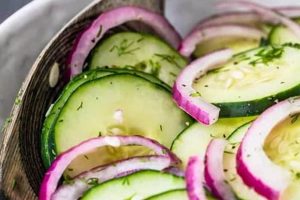
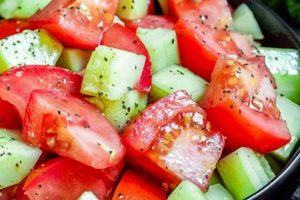
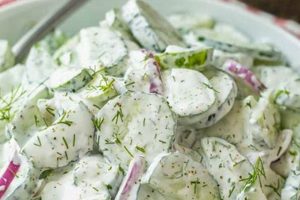
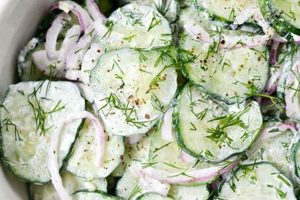
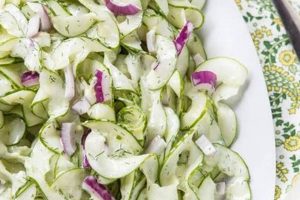
A refreshing and flavorful dish, typically composed of thinly sliced cucumbers combined with complementary ingredients such as onions, vinegar, herbs, and spices. Variations can include creamy dressings, different types of vinegar, or additions like tomatoes and peppers, creating a wide array of flavor profiles to suit diverse palates. An example includes a simple vinegar-based salad with thinly sliced red onion and fresh dill, while a richer version might feature a sour cream or yogurt-based dressing with chopped fresh chives.
Such salads offer a light and healthy option, often served as a side dish or part of a larger meal. The high water content of cucumbers contributes to hydration, while the added ingredients provide essential vitamins and minerals. Historically, cucumbers have been cultivated and consumed for thousands of years, and their incorporation into salads likely evolved as culinary practices developed. These salads remain a popular choice across various cultures, appreciated for their crisp texture, refreshing qualities, and versatility.
The following sections will delve into the key components of crafting exceptional cucumber salads, encompassing the selection of optimal ingredients, mastering various preparation techniques, and exploring diverse flavor combinations to elevate this culinary staple.
Tips for an Exceptional Cucumber Salad
Creating a truly delightful cucumber salad involves attention to detail and a thoughtful approach to ingredient selection and preparation. The following tips offer guidance in crafting a salad that stands out.
Tip 1: Choose the Right Cucumber: Opt for firm cucumbers with smooth skin. English or Persian cucumbers are ideal due to their thinner skin and smaller seeds. Avoid waxed cucumbers for salads.
Tip 2: Slice Thinly and Evenly: Uniformly thin slices ensure even flavor distribution and a pleasant texture. A mandoline slicer or sharp knife can achieve this.
Tip 3: Salt and Drain Excess Moisture: Salting the sliced cucumbers draws out excess water, preventing a watery salad. Allow the salted cucumbers to sit for at least 15 minutes before thoroughly patting them dry.
Tip 4: Elevate with Fresh Herbs: Incorporating fresh herbs like dill, mint, or chives adds depth and complexity. Choose herbs that complement the other ingredients.
Tip 5: Explore Vinegar Variety: Experiment with different types of vinegar, such as white wine vinegar, rice vinegar, or apple cider vinegar. Each imparts a unique nuance to the flavor profile.
Tip 6: Balance Sweet and Sour: A touch of sweetness, such as a small amount of sugar or a drizzle of honey, can balance the acidity of the vinegar, creating a more harmonious flavor.
Tip 7: Consider Textural Contrast: Adding thinly sliced red onion, chopped nuts, or toasted sesame seeds introduces textural elements that enhance the overall sensory experience.
Tip 8: Chill Before Serving: Chilling the salad for at least 30 minutes allows the flavors to meld and enhances the refreshing quality of the dish.
By following these tips, one can achieve a crisp, flavorful, and visually appealing cucumber salad that complements any meal.
These techniques provide a foundation for crafting delightful variations, limited only by culinary imagination. The following section will offer some concluding thoughts on the art of cucumber salad preparation.
1. Fresh, Crisp Cucumbers

The foundation of any successful cucumber salad lies in the quality of the cucumbers themselves. Fresh, crisp cucumbers provide the necessary texture and flavor that define this dish. Without this crucial element, the salad can become watery, limp, and lacking in vibrancy. The following facets explore the importance of cucumber freshness and crispness in achieving a truly exceptional salad.
- Optimal Cucumber Selection
Selecting the right cucumbers is paramount. Look for firm cucumbers with smooth, unblemished skin. Avoid those with soft spots, wrinkles, or yellowing. English or Persian cucumbers are often preferred for their thinner skin and smaller seeds. The variety chosen impacts the overall flavor and texture of the salad.
- Storage and Handling
Proper storage maintains cucumber freshness. Refrigerate cucumbers promptly after purchase and store them in a crisper drawer to maintain optimal humidity. Avoid storing them near ethylene-producing fruits like bananas or apples, as this can accelerate ripening and spoilage. Handle cucumbers gently to prevent bruising.
- Preparation Techniques
Careful preparation techniques further enhance crispness. Slicing cucumbers thinly and evenly ensures a pleasant texture and allows for even flavor absorption. Salting and draining excess moisture is crucial for preventing a watery salad. This step draws out excess water from the cucumber cells, maintaining the desired crispness.
- Impact on Overall Flavor and Texture
The freshness and crispness of the cucumbers directly impact the final dish. Crisp cucumbers provide a refreshing crunch, while fresh cucumbers contribute a clean, subtly sweet flavor. These qualities contrast beautifully with other ingredients, such as tangy dressings or pungent herbs, creating a balanced and enjoyable sensory experience.
The emphasis on fresh, crisp cucumbers underscores their pivotal role in a good cucumber salad recipe. By prioritizing cucumber quality and employing proper handling and preparation techniques, one ensures a delightful culinary experience that showcases the refreshing simplicity of this classic dish.
2. Thin, even slices
Thin, even slices are integral to a successful cucumber salad, impacting texture, flavor absorption, and overall aesthetic appeal. Slice thickness directly influences the sensory experience. Thin slices offer a delicate, almost melt-in-the-mouth texture, contrasting with the potential toughness of thicker cuts. Uniformity ensures a consistent texture throughout the salad, avoiding an uneven mix of crunchy and soft pieces. This consistency contributes to a more refined and enjoyable culinary experience.
Beyond texture, thin slices maximize flavor absorption. The increased surface area allows the dressing and other ingredients to penetrate the cucumber more effectively, resulting in a more flavorful and well-integrated salad. A classic example is a cucumber salad with a rice vinegar dressing. Thinly sliced cucumbers readily absorb the tangy vinegar, distributing the flavor evenly throughout each bite. Conversely, thicker slices may have a bland interior, with the flavor concentrated only on the surface. This highlights the practical significance of thin slicing for optimal flavor infusion.
Furthermore, thin slices enhance the salad’s visual appeal. Uniformity creates a sense of elegance and precision, transforming a simple salad into a visually appealing dish. Consider a cucumber salad garnished with fresh herbs. Thinly sliced cucumbers provide a delicate backdrop that showcases the vibrant green herbs, creating a visually harmonious and appetizing presentation. This attention to detail elevates the dining experience, demonstrating the broader significance of thin slices beyond mere functionality.
3. Balanced Flavor Profile
A balanced flavor profile is paramount in a successful cucumber salad. It distinguishes a truly exceptional salad from a mediocre one. The delicate flavor of cucumbers necessitates careful consideration of complementary ingredients and seasonings to avoid overpowering the primary ingredient while simultaneously preventing blandness. A well-balanced cucumber salad offers a harmonious blend of flavors, creating a refreshing and enjoyable culinary experience.
- Interplay of Sweet, Sour, and Salty
The interplay of sweet, sour, and salty elements forms the foundation of a balanced flavor profile. The subtle sweetness of cucumbers can be enhanced by a touch of sugar or a drizzle of honey. Acidity from vinegar, such as rice vinegar or apple cider vinegar, provides the necessary tang, while a pinch of salt enhances the overall flavor and balances the other elements. The precise ratio of these elements depends on the specific recipe and desired outcome, but the goal remains a harmonious blend where no single flavor dominates.
- Role of Aromatics and Herbs
Aromatics, such as onions or garlic, add depth and complexity. Fresh herbs, like dill, mint, or chives, contribute brightness and freshness. These ingredients enhance the overall flavor profile without overpowering the delicate cucumber flavor. For instance, thinly sliced red onion adds a pungent bite that complements the cool cucumber, while fresh dill provides an herbaceous counterpoint. The judicious use of aromatics and herbs elevates the salad from simple to sophisticated.
- Influence of Dressings and Marinades
Dressings and marinades play a crucial role in flavor development. A simple vinaigrette, made with oil and vinegar, provides a light and tangy base. Creamy dressings, based on yogurt or sour cream, offer a richer, more decadent experience. The choice of dressing significantly impacts the final flavor profile. A sesame-ginger dressing adds an Asian-inspired twist, while a creamy dill dressing complements the cucumbers subtle sweetness. The dressing acts as a unifying element, binding the ingredients together and delivering a cohesive flavor experience.
- Impact on Palatability and Enjoyment
Ultimately, a balanced flavor profile enhances palatability and overall enjoyment. A well-executed cucumber salad offers a refreshing and satisfying experience. The harmonious blend of flavors tantalizes the taste buds, leaving a lasting impression. A bland salad, lacking in balance, can be uninspiring, while an overly assertive flavor profile can detract from the cucumber’s delicate nature. Therefore, achieving a balance is crucial for maximizing culinary enjoyment.
The pursuit of a balanced flavor profile is essential for crafting an exceptional cucumber salad. It requires a nuanced understanding of flavor interactions and a thoughtful approach to ingredient selection and proportion. By carefully balancing sweet, sour, salty, aromatic, and herbal notes, one can create a truly memorable culinary experience that showcases the refreshing simplicity of this classic dish.
4. Complementary Ingredients
Complementary ingredients are essential for elevating a cucumber salad from simple to exceptional. The subtle flavor of cucumbers provides a neutral canvas, allowing for a wide range of flavor pairings. Thoughtful selection of these complementary ingredients enhances the cucumber’s inherent qualities, creating a multi-dimensional flavor profile and a more satisfying culinary experience. The interplay of textures and flavors adds depth and complexity, transforming the salad into a cohesive and balanced dish.
Several categories of complementary ingredients contribute to a successful cucumber salad. Aromatic ingredients, such as red onion or shallots, provide a pungent counterpoint to the cucumber’s mildness. Fresh herbs, including dill, mint, and chives, introduce bright, herbaceous notes that enhance the salad’s refreshing quality. Ingredients like tomatoes, bell peppers, or radishes, introduce textural and flavor contrasts. A simple cucumber and tomato salad exemplifies this principle, with the tomato’s juicy sweetness balancing the cucumber’s cool crispness. Similarly, feta cheese or crumbled goat cheese add creamy, salty notes that complement the cucumbers delicate flavor. Finally, toasted nuts or seeds contribute satisfying crunch and nutty flavors.
Understanding the role of complementary ingredients is crucial for achieving a well-balanced and flavorful cucumber salad. These ingredients not only enhance the cucumber’s natural flavor but also provide textural variety and visual appeal. A salad consisting solely of sliced cucumbers, while refreshing, lacks the complexity and depth that complementary ingredients provide. Careful consideration of flavor pairings and textural contrasts ensures a more dynamic and enjoyable culinary creation, transforming a simple side dish into a star element.
5. Proper Seasoning
Proper seasoning is fundamental to a good cucumber salad recipe. It elevates the inherent flavors of the cucumbers and other ingredients, transforming a bland dish into a vibrant culinary experience. Seasoning is not merely an afterthought; it is an integral part of the recipe development process, requiring careful consideration and precise execution. Understanding the nuances of seasoning allows one to maximize the flavor potential of this deceptively simple dish.
- Salt’s Role Beyond Flavor Enhancement
Salt plays a crucial role in cucumber salad preparation, extending beyond mere flavor enhancement. It draws out excess moisture from the cucumbers, preventing a watery salad and maintaining a desirable crisp texture. Furthermore, salt amplifies the perception of other flavors, allowing the subtle sweetness of cucumbers and the tanginess of vinegar to shine through. This osmotic process and flavor enhancement are crucial for achieving a balanced and texturally pleasing salad.
- Balancing Acidity and Sweetness
Balancing acidity and sweetness is essential for a harmonious flavor profile. The acidity from vinegar or citrus juice requires careful balancing with a touch of sweetness, often from sugar or honey. This interplay creates a dynamic tension that prevents the salad from being overly tart or cloyingly sweet. Achieving this balance is key to a refreshing and palatable cucumber salad.
- Enhancing Aromatics and Herbs
Proper seasoning enhances the impact of aromatic ingredients and fresh herbs. Black pepper adds a subtle bite, while a pinch of red pepper flakes introduces a touch of heat. Freshly ground spices, such as coriander or cumin, can add depth and complexity. These additions complement the other ingredients, creating a layered and nuanced flavor profile.
- Timing and Technique Considerations
The timing and technique of seasoning are crucial. Salting the cucumbers in advance allows for proper moisture extraction. Adding seasonings gradually, tasting throughout the process, allows for precise flavor adjustments. This iterative approach ensures a balanced and well-seasoned final product, avoiding over- or under-seasoning. It also allows for adjustments based on the specific ingredients used and individual preferences.
Proper seasoning is integral to a good cucumber salad recipe. It is not a single action but rather a series of deliberate steps that contribute to the final flavor and texture of the dish. By understanding the role of salt, balancing acidity and sweetness, enhancing aromatics and herbs, and employing proper timing and techniques, one can transform simple ingredients into a complex and flavorful culinary creation.
6. Appropriate Chilling Time
Appropriate chilling time is a crucial element in achieving a truly exceptional cucumber salad. While seemingly a minor detail, the duration and temperature of chilling significantly impact the final flavor, texture, and overall enjoyment of the dish. Chilling allows the flavors of the various ingredients to meld and harmonize, creating a more cohesive and complex flavor profile. Furthermore, it enhances the refreshing qualities of the salad, making it a particularly appealing dish in warmer weather. Understanding the optimal chilling time is essential for maximizing the culinary potential of a cucumber salad.
- Flavor Development
Chilling allows the flavors of the cucumbers, dressing, and other ingredients to meld and deepen. This fusion of flavors creates a more nuanced and complex taste profile compared to a freshly made, unchilled salad. The chilling process allows the dressing to permeate the cucumber slices, ensuring a consistent flavor throughout. For instance, in a cucumber salad with dill and vinegar, chilling allows the herbaceous dill and tangy vinegar to fully integrate with the cucumber’s subtle sweetness, resulting in a more harmonious and flavorful experience.
- Texture Enhancement
Chilling enhances the crispness and texture of the cucumbers. Cold temperatures firm up the cucumber’s cell structure, creating a more satisfying crunch. This crispness contrasts pleasantly with other ingredients, such as creamy dressings or soft herbs, adding a textural dimension to the salad. A chilled cucumber salad retains its structural integrity better than a room-temperature salad, which can become limp and watery over time. This textural contrast is key to a truly enjoyable cucumber salad experience.
- Optimal Temperature and Duration
The optimal chilling time for a cucumber salad typically ranges from 30 minutes to an hour. This timeframe allows sufficient time for flavor development and texture enhancement without compromising the cucumbers’ crispness or causing them to become overly chilled. Over-chilling can dull the flavors and make the cucumbers unpleasantly cold. Refrigeration at a temperature between 35-40F (2-4C) is ideal. This temperature range preserves the cucumbers’ freshness and crispness while allowing for optimal flavor melding.
- Impact on Overall Enjoyment
Appropriate chilling directly impacts the overall enjoyment of the cucumber salad. A properly chilled salad offers a refreshing, crisp, and flavorful experience, particularly appealing on a warm day. The melding of flavors and enhanced texture create a more satisfying and complete sensory experience. Conversely, a salad that is not chilled sufficiently can be bland and lackluster, failing to fully showcase the potential of the ingredients. Thus, chilling is a crucial final step that transforms a simple mixture of ingredients into a truly delightful culinary creation.
Appropriate chilling time is more than just a practical step; it is a crucial element that elevates a good cucumber salad recipe to excellence. By allowing the flavors to meld, enhancing the texture, and maximizing the refreshing qualities, proper chilling transforms a simple preparation into a truly delightful and satisfying culinary experience.
7. Visually Appealing Presentation
Visually appealing presentation elevates a good cucumber salad recipe from merely palatable to a truly enjoyable dining experience. While flavor and texture are paramount, visual appeal enhances the perceived freshness and quality of the dish, stimulating appetite and adding an element of sophistication. A well-presented salad engages multiple senses, contributing to a more satisfying culinary experience. This section explores the facets of visually appealing presentation and their connection to a successful cucumber salad.
- Color and Contrast
Color and contrast play a significant role in visual appeal. The vibrant green of cucumbers can be enhanced by incorporating ingredients with contrasting colors, such as red onions, bright red tomatoes, or orange bell peppers. Fresh herbs, like deep green dill or vibrant mint, further enhance the visual interest. Consider a cucumber salad with feta cheese and kalamata olives. The white cheese and dark purple olives create a striking contrast against the green cucumbers, making the salad more visually engaging.
- Arrangement and Plating
Thoughtful arrangement and plating techniques transform a simple cucumber salad into an elegant dish. Instead of simply tossing the ingredients together, consider arranging them in an aesthetically pleasing manner. Fanning cucumber slices, creating layers of different ingredients, or using a cookie cutter to shape the cucumbers can elevate the presentation. A cucumber salad served in individual ramekins or on a bed of lettuce leaves appears more refined than one simply piled onto a plate. These small details demonstrate care and attention, enhancing the perceived value of the dish.
- Garnishes and Finishing Touches
Garnishes and finishing touches add a final layer of visual appeal. A sprinkle of fresh herbs, a drizzle of olive oil, a scattering of toasted sesame seeds, or a dusting of paprika can significantly enhance the presentation. These elements not only add visual interest but also hint at the flavors to come, stimulating appetite and anticipation. A simple garnish of fresh dill sprigs on a cucumber and dill salad elevates the dish, making it appear more polished and inviting.
- Impact on Perceived Freshness and Quality
Visually appealing presentation enhances the perceived freshness and quality of the salad. A vibrant, well-arranged salad suggests that fresh, high-quality ingredients were used and that care was taken in its preparation. This perception influences the diner’s overall enjoyment, as a visually appealing dish is often perceived as more flavorful and satisfying. Conversely, a haphazardly presented salad can detract from the dining experience, even if the flavors are well-balanced. Thus, visual appeal plays a crucial role in the overall culinary experience, enhancing the enjoyment of a good cucumber salad recipe.
Visually appealing presentation is an integral component of a truly successful cucumber salad. By considering color and contrast, employing thoughtful arrangement and plating techniques, and adding appropriate garnishes, one elevates the dish from simple to sophisticated. This attention to detail enhances the perceived freshness and quality of the salad, contributing to a more enjoyable and satisfying dining experience. While flavor remains paramount, visual appeal adds another layer of enjoyment, transforming a simple cucumber salad into a culinary delight.
Frequently Asked Questions
This section addresses common inquiries regarding cucumber salad preparation, offering practical solutions and clarifying potential points of confusion. Understanding these frequently asked questions facilitates a more informed approach, enabling culinary enthusiasts of all levels to achieve optimal results.
Question 1: How can one prevent a watery cucumber salad?
Excess moisture from cucumbers can lead to a watery salad. Salting the sliced cucumbers and allowing them to sit for 15-30 minutes draws out excess water. Thoroughly patting the cucumbers dry with a paper towel before adding the remaining ingredients is essential.
Question 2: What type of cucumber is best suited for salads?
English or Persian cucumbers are generally preferred for salads due to their thinner skin and smaller seeds. Traditional cucumbers can also be used, but peeling and seeding them may be desirable. Waxed cucumbers should be avoided as the wax can interfere with flavor absorption.
Question 3: How long can cucumber salad be stored?
Cucumber salad is best consumed fresh, but it can be stored in an airtight container in the refrigerator for up to two days. However, the texture may soften slightly over time. It is advisable to add any crunchy elements, like nuts or croutons, just before serving to maintain optimal texture.
Question 4: What can be used as a substitute for vinegar in a cucumber salad dressing?
Lemon or lime juice can be used as a substitute for vinegar, providing a similar acidic element while imparting a citrusy flavor. The amount used may need to be adjusted to achieve the desired level of tartness.
Question 5: Can other vegetables be added to a cucumber salad?
Cucumber salad welcomes a variety of additional vegetables. Tomatoes, red onion, bell peppers, and radishes are common additions that contribute flavor, texture, and visual appeal. The choice of additional vegetables depends on personal preference and desired flavor profile.
Question 6: How can one enhance the flavor of a simple cucumber salad?
Fresh herbs, such as dill, mint, or chives, significantly enhance the flavor of cucumber salad. Aromatic spices, like freshly ground black pepper or a pinch of red pepper flakes, add complexity. A small amount of sugar or honey can balance the acidity of the vinegar, creating a more rounded flavor profile.
By addressing these common queries, individuals can approach cucumber salad preparation with greater confidence, ensuring a successful and satisfying culinary outcome.
The following section provides a collection of diverse cucumber salad recipes, catering to a variety of tastes and preferences. These recipes will further illustrate the versatility of this classic dish and inspire culinary exploration.
A good cucumber salad recipe
Crafting a good cucumber salad recipe involves a nuanced understanding of ingredient selection, preparation techniques, and flavor balancing. From selecting crisp, fresh cucumbers to employing appropriate chilling times, each step contributes to the final product’s overall quality. Thin, even slices maximize flavor absorption and contribute to a pleasing texture. A balanced flavor profile, achieved through the interplay of sweet, sour, and salty elements, is essential for a harmonious culinary experience. Complementary ingredients, such as fresh herbs and aromatics, further enhance the salad’s complexity. Proper seasoning elevates the inherent flavors, while appropriate chilling allows these flavors to meld and deepen. Finally, attention to visual presentation transforms a simple side dish into an aesthetically pleasing culinary creation.
The pursuit of a good cucumber salad recipe represents a journey of culinary exploration, where seemingly simple ingredients can be transformed into a refreshing and delightful dish. Attention to detail and a thoughtful approach to preparation elevate this humble salad to a culinary experience that satisfies both the palate and the eye. This exploration encourages further experimentation with flavors and ingredients, empowering culinary enthusiasts to create their own signature cucumber salad variations and discover the endless possibilities within this classic dish.