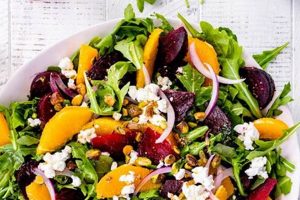
These visually appealing and often portable dishes involve arranging distinct ingredients in layers within a clear container, typically a jar or trifle bowl. This method allows for individual components, such as dressings, crunchy elements, and softer vegetables, to remain separate until consumption, preventing sogginess and preserving flavors. A classic example features a bed of dressing topped with hearty vegetables, grains, proteins, and often a final layer of lighter greens or herbs.
The layered approach offers several advantages. It facilitates portion control and makes these salads ideal for meal prepping. Furthermore, the presentation is aesthetically pleasing, making them suitable for potlucks or picnics. Historically, similar preparation techniques have been utilized for preserving fresh produce and creating convenient, on-the-go meals, particularly in agricultural communities. The modern iteration emphasizes both visual appeal and practicality, aligning with current trends in healthy eating and meal planning.
This article will delve into creating delectable and visually striking layered salads, exploring various ingredient combinations, assembly techniques, and tips for optimal storage and transport. Recipes suitable for diverse dietary needs and preferences will be provided.
Tips for Creating Layered Salads
Creating a successful layered salad involves more than simply stacking ingredients. These tips ensure optimal flavor, texture, and presentation.
Tip 1: Choose the Right Container: Select a clear, airtight container. Wide-mouthed jars or trifle bowls work well, allowing for easy layering and visibility of the colorful ingredients. The container’s size should be appropriate for individual portions or intended servings.
Tip 2: Layer Strategically: Place the dressing at the bottom to prevent delicate greens from wilting. Heartier vegetables and grains form the next layer, followed by proteins, cheeses, and lighter ingredients like nuts or seeds. Leafy greens are placed at the top to maintain their freshness.
Tip 3: Consider Ingredient Density: Dense ingredients at the bottom provide a stable base. Lighter, more delicate items should be layered towards the top to prevent crushing. This also creates an appealing visual gradient.
Tip 4: Maximize Texture Variety: Incorporate a range of textures, from crunchy vegetables and nuts to creamy cheeses and tender greens. This adds interest and prevents the salad from becoming monotonous.
Tip 5: Don’t Overfill: Leave some headspace in the container to allow for easy mixing when ready to eat. Overfilling can compress ingredients and make them difficult to combine.
Tip 6: Refrigerate for Optimal Flavor: Chilling enhances flavors and maintains ingredient freshness. Store layered salads in the refrigerator for up to 24 hours before consuming.
Tip 7: Pack Smart for Transport: If transporting, ensure the container is sealed tightly to prevent leakage. Consider packing individual components separately and assembling just before serving if necessary.
By following these guidelines, one can ensure a visually appealing and flavorful layered salad experience. Proper layering techniques preserve ingredient freshness and contribute to a satisfying combination of textures and tastes.
The provided information serves as a comprehensive guide to creating layered salads. Experimentation with diverse ingredients and flavor profiles is encouraged.
1. Ingredient Selection
Ingredient selection is paramount in layered salad recipes, directly impacting the final product’s flavor, texture, visual appeal, and overall success. Careful consideration of individual components ensures a harmonious blend of tastes and prevents undesirable outcomes, such as sogginess or ingredient degradation. This process extends beyond simply choosing preferred items; it requires a strategic approach that considers the interaction of different elements within the layered structure.
For instance, robust, dense vegetables like chopped carrots, bell peppers, or cucumbers form a solid foundation, capable of supporting heavier layers and withstanding the weight of dressings without becoming waterlogged. Delicate leafy greens, such as spinach or romaine lettuce, are best positioned near the top, minimizing their exposure to moisture and preserving their crispness. Proteins, like grilled chicken or chickpeas, can be strategically placed to create visually distinct layers and distribute flavor throughout the salad. Grains, like quinoa or couscous, add textural complexity and absorb excess dressing, contributing to structural integrity.
The selection process also necessitates careful consideration of flavor profiles. A balance of sweet, savory, acidic, and spicy elements creates a more complex and enjoyable culinary experience. Combining contrasting textures, such as crunchy nuts, creamy avocados, and juicy tomatoes, elevates the sensory appeal. Moreover, the visual impact of varied colors and shapes contributes to the overall aesthetic, making the salad more inviting. Understanding these factors allows for the creation of layered salads that are not only visually appealing but also offer a balanced and satisfying nutritional profile. Failure to consider ingredient compatibility can result in a less appealing and potentially less palatable outcome.
2. Layering Technique

Layering technique is fundamental to successful layered salad recipes. It dictates not only the final presentation but also the preservation of individual ingredient integrity and the overall eating experience. A well-executed layering strategy prevents sogginess, maintains distinct flavors, and ensures a balanced combination of textures in each bite. Understanding the principles behind effective layering is essential for creating salads that are both visually appealing and palatable.
- Density Management
Density management involves strategically arranging ingredients based on their weight and moisture content. Denser items, like grains or hearty vegetables, form the base, providing stability and absorbing excess dressing. Lighter, more delicate components, such as leafy greens or crunchy toppings, are placed towards the top, preventing them from being crushed or becoming soggy. This technique preserves texture and ensures each ingredient remains distinct until consumption. For example, placing a bed of quinoa at the bottom of a jar, followed by roasted vegetables, and topping with spinach ensures the spinach remains crisp and the quinoa absorbs the dressing’s flavors without becoming mushy.
- Flavor Distribution
Flavor distribution aims to create a balanced taste experience in every bite. Strong-flavored ingredients, like cheeses or marinated proteins, can be strategically positioned to complement milder components. Distributing ingredients evenly throughout the layers prevents pockets of intense flavor and ensures a harmonious blend of tastes. For example, layering crumbled feta cheese between layers of vegetables and grains distributes its salty tang throughout the salad, rather than concentrating it in one area.
- Visual Appeal
Visual appeal plays a significant role in the enjoyment of layered salads. Contrasting colors and textures create an aesthetically pleasing presentation. Ingredients can be arranged to showcase their vibrant hues and create a visually striking effect. For instance, alternating layers of brightly colored vegetables, such as red peppers, yellow corn, and green cucumbers, creates a visually appealing and appetizing salad.
- Ingredient Compatibility
Ingredient compatibility considers how different ingredients interact within the layered structure. Certain ingredients, when placed in direct contact, can cause undesirable reactions, such as discoloration or flavor transfer. Separating incompatible ingredients with neutral layers prevents these issues. For example, separating avocado from acidic ingredients like tomatoes prevents browning and maintains the avocado’s fresh green color.
By considering these facets of layering technique, one can elevate layered salads from simple meals to culinary creations that are both visually stunning and gastronomically satisfying. Mastering these techniques ensures each bite offers a balanced combination of flavors, textures, and colors, maximizing the enjoyment of these versatile and convenient dishes.
3. Container Choice

Container choice significantly influences the practicality, aesthetic appeal, and overall success of layered salads. The container functions as more than mere storage; it plays a crucial role in ingredient preservation, portion control, and presentation. Selecting the appropriate container enhances the layered salad experience, impacting both its visual appeal and ease of consumption. The following facets highlight the key considerations in container selection.
- Material
Container material affects food safety, durability, and aesthetic presentation. Glass containers offer clarity, showcasing the vibrant layers of the salad, and are inert, preventing chemical interactions with acidic ingredients. Plastic containers provide lightweight portability but may retain odors or stains. Stainless steel options offer durability and temperature retention, suitable for salads requiring specific temperature control. The choice of material aligns with the intended use and desired presentation.
- Size and Shape
Size and shape determine portioning and practicality. Individual-sized jars are ideal for meal prepping and portion control, promoting balanced eating habits. Larger bowls or jars cater to family-style servings or shared meals. Wide-mouthed containers facilitate layering and access to ingredients, while taller, narrower containers enhance the visual impact of layered components. The size and shape should align with the intended serving size and desired presentation style.
- Closure Mechanism
The closure mechanism impacts ingredient preservation and portability. Airtight seals prevent leakage and maintain ingredient freshness, crucial for transporting layered salads. Secure lids prevent spills and maintain the structural integrity of the layers. Easy-to-open and close mechanisms enhance user convenience, particularly for on-the-go consumption. The closure mechanism should prioritize leak prevention and ease of access.
- Aesthetics
Container aesthetics contribute to the overall presentation and visual appeal. Clear containers showcase the vibrant colors and textures of the layered ingredients, enhancing their attractiveness. Decorative jars or bowls elevate the presentation, making them suitable for special occasions or potlucks. The aesthetic of the container should complement the salad’s visual appeal and the intended serving context. A simple, clear jar suits everyday meals, while a more ornate container elevates the presentation for special occasions. Ultimately, the container choice reflects personal preference and desired visual impact.
These factors demonstrate that container choice is integral to the success of layered salad recipes. Selecting the appropriate container enhances both the visual appeal and the practical functionality of these versatile dishes. Careful consideration of material, size, closure, and aesthetics ensures optimal ingredient preservation, portion control, and a visually pleasing presentation, ultimately elevating the overall dining experience.
4. Flavor Combinations

Flavor combinations are integral to successful layered salad recipes, impacting palatability and overall enjoyment. Strategic flavor pairings elevate these salads beyond simple meal components to culinary experiences. Understanding how different flavor profiles interact within the layered structure is crucial for creating balanced and satisfying dishes. The interplay of sweet, sour, salty, bitter, and umami elements creates depth and complexity, enhancing the sensory experience. Furthermore, flavor combinations influence the perceived freshness and desirability of the salad.
Consider a layered salad featuring grilled chicken, roasted sweet potatoes, goat cheese, and pecans. The sweetness of the roasted sweet potatoes complements the savory chicken and tangy goat cheese. The pecans provide a contrasting nutty flavor and crunchy texture, enhancing the overall sensory experience. This combination demonstrates how complementary flavors create a harmonious and balanced dish. Alternatively, a layered salad with citrus segments, avocado, black beans, and a cilantro-lime dressing showcases a different flavor profile. The bright citrus notes balance the creamy avocado and earthy black beans, while the cilantro-lime dressing adds a zesty kick. These examples illustrate how diverse flavor combinations can cater to various palates and culinary preferences.
Effective flavor combinations consider not only the individual ingredients but also their interaction within the layered structure. The order of layers influences how flavors meld and develop over time. For instance, placing a vinaigrette at the bottom allows its flavors to permeate the layers above, creating a more cohesive flavor profile. Additionally, separating contrasting flavors with neutral layers prevents undesirable flavor clashes. Mastering flavor combinations in layered salads requires an understanding of complementary and contrasting flavors, ingredient compatibility, and the impact of layering order on flavor development. This knowledge enables the creation of layered salads that are both visually appealing and gastronomically satisfying, showcasing the versatility and potential of this culinary approach.
5. Storage and Transport

Storage and transport are critical considerations for layered salad recipes, directly impacting food safety, quality, and overall enjoyment. Proper techniques maintain ingredient freshness, prevent spoilage, and preserve the intended layered presentation, crucial for salads prepared in advance or transported to different locations. Understanding these aspects ensures that layered salads remain appealing and palatable, whether consumed immediately or after a period of storage.
- Container Selection
Container selection significantly influences the success of storing and transporting layered salads. Airtight containers prevent leakage and maintain ingredient freshness by limiting exposure to air and moisture. Durable materials, such as glass or high-quality plastic, protect the salad from damage during transport. Appropriately sized containers prevent ingredient compression and maintain the desired layered presentation. For instance, using individual-sized jars for single servings ensures portion control and prevents cross-contamination during transport to work or school.
- Temperature Control
Temperature control is paramount for preserving food safety and quality. Layered salads containing perishable ingredients, such as meat, poultry, or dairy products, require refrigeration to prevent bacterial growth. Maintaining a consistent cold temperature during storage and transport is essential. Using insulated bags or coolers with ice packs helps maintain the desired temperature, particularly during warmer months or extended transport times. This prevents spoilage and ensures food safety, especially during picnics or outdoor events.
- Layering Strategy
Layering strategy affects ingredient integrity during storage and transport. Placing heartier ingredients at the bottom provides a stable base, preventing delicate components from being crushed. Separating ingredients with differing moisture contents prevents sogginess. For example, placing a layer of croutons between the dressing and lettuce prevents the lettuce from wilting during storage. Strategic layering maintains the desired texture and presentation of each ingredient.
- Transport Techniques
Transport techniques influence the structural integrity of layered salads. Securing containers upright during transport prevents layers from shifting and mixing prematurely. Using a carrier or bag designed for food transport provides additional stability and protection. Careful handling during transport minimizes jostling, preserving the layered presentation. For instance, transporting a layered salad in a dedicated lunch bag with a secure compartment prevents spillage and maintains the intended visual appeal.
These facets of storage and transport demonstrate their importance in preserving the quality and presentation of layered salads. Implementing these strategies ensures food safety, maintains ingredient freshness, and preserves the intended layered structure, maximizing enjoyment regardless of consumption timing or location. By prioritizing these considerations, individuals can create layered salads that are not only visually appealing but also safe and palatable, whether enjoyed immediately or after a period of storage and transport.
Frequently Asked Questions
This section addresses common inquiries regarding layered salads, providing concise and informative responses to clarify potential uncertainties and enhance understanding of this culinary approach.
Question 1: What is the primary advantage of layering salad ingredients?
Layering prevents premature mixing of ingredients, particularly dressings and delicate components like leafy greens, preserving their texture and preventing sogginess. This is especially beneficial for make-ahead salads.
Question 2: What types of containers are most suitable for layered salads?
Clear glass jars or containers with airtight lids are recommended. Glass offers visibility of the layers, while airtight seals maintain freshness and prevent leakage during storage and transport.
Question 3: How long can a layered salad be stored in the refrigerator?
Most layered salads can be safely refrigerated for up to 24 hours. However, salads containing highly perishable ingredients like cooked chicken or fish should be consumed within a shorter timeframe.
Question 4: Can layered salads be frozen?
Freezing is generally not recommended for layered salads, as it can negatively impact the texture and quality of many ingredients, particularly leafy greens and vegetables. Thawing can also lead to excess moisture and a less appealing final product.
Question 5: What are some key considerations for layering ingredients effectively?
Consider ingredient density, placing heavier items like grains or proteins at the bottom and lighter, more delicate components towards the top. Also, consider flavor and texture combinations for a balanced and enjoyable experience.
Question 6: Are there specific dressings best suited for layered salads?
Thicker dressings, like vinaigrettes or creamy dressings, tend to hold their form better and are less likely to seep into other layers compared to thinner, watery dressings. However, the best choice depends on the specific ingredients and desired flavor profile.
Understanding these aspects optimizes the layered salad experience, ensuring both visual appeal and palatable results. Experimentation with ingredients and layering techniques is encouraged to discover preferred combinations and maximize the benefits of this versatile salad preparation method.
For further exploration, the subsequent sections will delve into specific layered salad recipes, showcasing diverse flavor combinations and ingredient pairings.
Conclusion
Layered salad recipes offer a practical and aesthetically pleasing approach to salad preparation. This method prioritizes ingredient integrity and flavor preservation through strategic layering techniques. Careful consideration of container choice, ingredient selection, and flavor combinations contributes to the overall success of these versatile dishes. Proper storage and transport techniques further enhance the layered salad experience, ensuring optimal quality and presentation, regardless of consumption timing or location. This comprehensive exploration has highlighted the key principles and benefits of this approach, providing a foundation for creating visually appealing and flavorful layered salads.
The layered salad methodology represents a significant advancement in salad preparation, offering a dynamic interplay of flavors, textures, and visual appeal. This approach encourages culinary creativity and customization, allowing for diverse ingredient combinations tailored to individual preferences and dietary needs. Exploration and experimentation with layered salad construction promise continued culinary innovation and enjoyment, transforming the simple salad into a sophisticated and satisfying culinary experience.