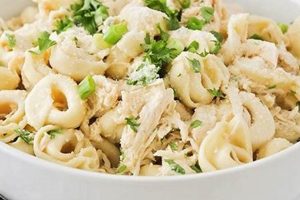
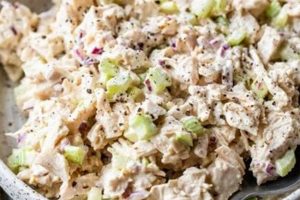
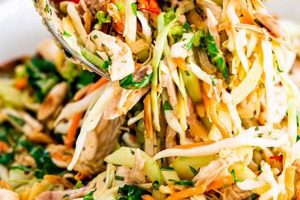
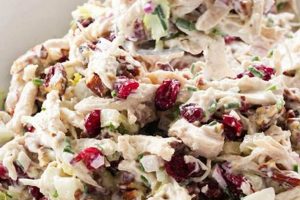
A celery-free chicken salad offers a simplified approach to this classic dish, catering to those who dislike celery’s flavor or texture. Such recipes typically involve cooked chicken, mayonnaise, and a variety of other ingredients like onion, grapes, or apples, offering a customizable base. For example, one might combine shredded chicken with mayonnaise, diced red onion, and dried cranberries for a sweet and savory version.
Omitting celery broadens the appeal of chicken salad, making it accessible to a wider range of palates. This adaptation allows for greater flexibility in flavor profiles, encouraging experimentation with alternative ingredients and seasonings. Historically, chicken salad emerged as a way to utilize leftover cooked chicken, and variations without celery likely arose as cooks adapted the recipe to available ingredients and personal preferences. This adaptability contributes to the dish’s continued popularity.
This exploration will delve into various celery-free chicken salad recipes, offering detailed instructions and ingredient lists. It will also examine different techniques for preparing the chicken and incorporating diverse flavor combinations, allowing readers to discover their preferred version of this versatile dish.
Tips for Celery-Free Chicken Salad
Creating a delicious chicken salad without celery requires attention to flavor balance and texture. The following tips offer guidance for achieving optimal results.
Tip 1: Chicken Selection: Using high-quality cooked chicken is paramount. Rotisserie chicken offers convenience, while poaching or baking chicken breasts allows for greater control over seasoning.
Tip 2: Enhancing Texture: To compensate for the absence of celery’s crunch, consider incorporating chopped apples, grapes, walnuts, or water chestnuts.
Tip 3: Balancing Flavors: A blend of sweet and savory elements creates a well-rounded flavor profile. Dried cranberries, chopped red onion, or a touch of Dijon mustard can achieve this.
Tip 4: Mayonnaise Alternatives: While mayonnaise is traditional, Greek yogurt or avocado can be substituted for a lighter, healthier option.
Tip 5: Seasoning Considerations: Fresh herbs like dill, parsley, or chives add brightness. Salt, pepper, and paprika provide depth of flavor.
Tip 6: Proper Chilling: Allowing the chicken salad to chill for at least 30 minutes allows the flavors to meld and enhances the overall experience.
Tip 7: Serving Suggestions: Chicken salad can be served on bread, crackers, lettuce cups, or as a filling for croissants or wraps.
By following these tips, one can create a flavorful and satisfying chicken salad that doesn’t rely on celery for its appeal.
These practical tips provide a foundation for crafting a personalized celery-free chicken salad. The following section will offer specific recipe examples to further inspire culinary creativity.
1. Simple Ingredients
The ease of a celery-free chicken salad recipe hinges significantly on the simplicity of its ingredients. Accessibility and minimal processing contribute to quicker preparation and a focus on fresh flavors. This emphasis on simplicity allows for variations and caters to a broad range of culinary skills and preferences.
- Cooked Chicken:
Pre-cooked chicken, whether rotisserie, baked, or poached, forms the foundation of an easy recipe. This eliminates the need for lengthy cooking processes, contributing to the overall simplicity. Using readily available cooked chicken significantly reduces preparation time.
- Mayonnaise or Alternatives:
Mayonnaise serves as the classic binding agent, providing creaminess and flavor. However, Greek yogurt or avocado offer healthier, equally convenient alternatives. These readily available ingredients require no further preparation.
- Fresh Produce:
Incorporating readily available fresh produce like grapes, apples, or red onion adds flavor and texture without requiring complex preparation techniques. These ingredients offer a straightforward way to enhance the salad’s appeal.
- Pantry Staples:
Simple seasonings like salt, pepper, and dried herbs provide essential flavor enhancements. These readily available ingredients require no pre-preparation, further simplifying the recipe. Using pantry staples ensures accessibility and minimizes the need for specialized ingredients.
By focusing on these readily available, minimally processed ingredients, creating a delicious and easy chicken salad without celery becomes achievable for anyone, regardless of culinary expertise. This approach emphasizes fresh flavors and quick preparation, making it a practical and appealing meal option.
2. Quick Preparation

Quick preparation is a defining characteristic of an easy chicken salad recipe without celery. The ability to assemble the salad swiftly contributes significantly to its convenience, making it an attractive option for busy individuals or those seeking a simple meal. This speed is achieved through several factors, primarily the use of pre-cooked chicken and readily available ingredients requiring minimal processing, such as chopped grapes, pre-sliced almonds, or canned fruits. For instance, utilizing rotisserie chicken eliminates the time-consuming process of cooking and shredding chicken breast. Similarly, opting for pre-chopped onions or dried cranberries reduces preparation time considerably. This emphasis on speed transforms what might be a multi-step process into a quick assembly, ideal for a fast lunch or a last-minute dish.
The impact of quick preparation extends beyond mere convenience. It allows for spontaneous meal creation, reducing reliance on extensive planning. This is particularly beneficial for impromptu gatherings or when time constraints limit elaborate cooking. Furthermore, a quickly prepared chicken salad can be easily adapted to individual preferences. One might quickly add a dash of hot sauce for a spicy kick or incorporate fresh herbs for a brighter flavor profile. This adaptability, facilitated by the speed of assembly, increases the recipe’s versatility and appeal. Consider a scenario where unexpected guests arrive. A celery-free chicken salad can be assembled in minutes, offering a fresh and flavorful dish without requiring extensive effort.
In conclusion, the quick preparation aspect of a celery-free chicken salad recipe is central to its classification as “easy.” This characteristic enhances its convenience, promotes adaptability, and allows for spontaneous meal creation. While variations exist in terms of specific ingredients and flavor profiles, the underlying principle of rapid assembly remains consistent, contributing significantly to the dish’s practicality and enduring popularity. This understanding empowers individuals to create satisfying meals efficiently, aligning with the demand for convenient yet flavorful culinary solutions.
3. Celery-Free Alternatives

Celery-free alternatives play a pivotal role in achieving an “easy chicken salad recipe without celery.” The absence of celery necessitates substitutes that maintain textural complexity and contribute desirable flavors. These alternatives impact both the ease of preparation and the overall sensory experience of the dish. For example, grapes offer a juicy sweetness and satisfying pop, while chopped apples contribute a crisp tartness. Water chestnuts provide a delicate crunch, mimicking celery’s texture while adding a subtle sweetness. Red onion introduces a sharp bite, balancing the richness of the mayonnaise and chicken. These alternatives simplify the recipe by often requiring minimal preparation, aligning with the “easy” aspect. They simultaneously ensure a flavorful and texturally interesting outcome despite the omission of celery.
The selection of celery-free alternatives influences the overall flavor profile. Apples and grapes introduce sweetness, suitable for those who prefer a less savory salad. Red onion, on the other hand, adds a pungent note, complementing bolder flavors. Nuts, such as almonds or walnuts, contribute richness and satisfying crunch. The choice of alternative, therefore, allows for customization based on individual preferences. Practical applications include incorporating chopped grapes for a quick and easy sweetness boost or using water chestnuts for a delicate crunch similar to celery. Understanding the role of each alternative empowers recipe adaptation and personalized flavor combinations. This flexibility expands the appeal of chicken salad beyond traditional recipes, making it accessible to a wider range of palates and dietary preferences.
In summary, celery-free alternatives are essential components of an easy chicken salad recipe. They compensate for the missing texture and flavor of celery, contributing to both ease of preparation and the final culinary result. The selection of these alternatives directly impacts the salad’s flavor profile, offering opportunities for customization and ensuring a satisfying dish despite the absence of celery. This understanding is crucial for achieving a successful and flavorful celery-free chicken salad. Challenges may arise in achieving the precise desired texture, but careful selection and combination of alternatives can overcome this. The integration of these alternatives expands the culinary possibilities of chicken salad, promoting versatility and continued enjoyment of this classic dish.
4. Versatile Flavor Combinations
Versatile flavor combinations are integral to the appeal of an easy chicken salad recipe without celery. The absence of celery, a dominant flavor in traditional preparations, opens opportunities for wider culinary exploration. This versatility contributes significantly to the “easy” aspect by allowing for adaptable recipes utilizing readily available ingredients and accommodating diverse preferences.
- Sweet and Savory Balance
Balancing sweet and savory elements is crucial for a well-rounded flavor profile. Incorporating ingredients like dried cranberries, chopped grapes, or apples provides sweetness, while Dijon mustard, red onion, or a sprinkle of black pepper introduce savory notes. This interplay creates depth and complexity. For instance, the sweetness of dried cranberries complements the savory tang of Dijon mustard, enhancing the overall experience. This balance ensures the salad is neither overly sweet nor bland, appealing to a broader range of palates.
- Herbal Accents
Fresh herbs contribute brightness and aromatic complexity. Dill, parsley, chives, and tarragon offer distinct flavor profiles, elevating the salad beyond basic ingredients. A sprinkle of fresh dill adds a refreshing herbal note, while chives introduce a subtle onion flavor. These additions require minimal effort yet significantly impact the final product, aligning with the “easy” preparation concept. Fresh herbs provide a simple yet effective way to personalize the flavor profile.
- Textural Contrasts
Varying textures create a more engaging culinary experience. The absence of celery’s crunch can be compensated for by incorporating chopped nuts, water chestnuts, or seeds. Toasted slivered almonds provide a satisfying crunch and nutty flavor, while sunflower seeds offer a subtle earthiness and textural contrast. These additions not only enhance the sensory experience but also contribute to the overall nutritional value. The interplay of textures adds depth and prevents the salad from becoming monotonous.
- Spice Integration
Integrating spices allows for customized heat levels and flavor dimensions. A pinch of cayenne pepper adds a fiery kick, while curry powder introduces warmth and complexity. Smoked paprika contributes a smoky depth, while a touch of cumin adds an earthy note. These spice additions can be adjusted to individual preferences, making the recipe highly adaptable. A small amount of spice can significantly alter the flavor profile without requiring complex preparation steps, further emphasizing the ease of the recipe.
These versatile flavor combinations demonstrate the adaptability of a celery-free chicken salad. The ability to incorporate various sweet, savory, herbal, textural, and spicy elements ensures a customizable experience, aligning with diverse dietary preferences and culinary goals. This adaptability is central to the “easy” nature of the recipe, as it allows for substitutions and additions based on readily available ingredients and individual tastes, ultimately contributing to a more satisfying and personalized culinary outcome.
5. Adaptable to Dietary Needs
Adaptability to dietary needs represents a significant advantage of the celery-free chicken salad. This characteristic enhances its accessibility, broadening its appeal beyond individuals with specific celery aversions. The foundational recipe, devoid of celery, readily accommodates modifications that address various dietary restrictions and preferences, further solidifying its categorization as “easy.” Consider the substitution of mayonnaise with Greek yogurt or avocado. This simple alteration reduces fat content while maintaining the creamy texture, catering to those following lower-fat or dairy-free diets. Similarly, incorporating gluten-free bread or crackers transforms the dish into a gluten-free meal option. This adaptability is rooted in the recipe’s simplicity, allowing for ingredient swaps without compromising flavor or ease of preparation.
The practical significance of this dietary adaptability is substantial. It allows individuals with diverse dietary needs to enjoy a classic dish without complex modifications. For those managing diabetes, portion control and ingredient selection, such as opting for whole-wheat bread and limiting added sugars, allow for integration into a balanced meal plan. Individuals with food sensitivities or allergies can substitute ingredients with suitable alternatives, ensuring a safe and enjoyable meal. For example, substituting grapes with chopped apples caters to individuals with fructose intolerance. This adaptability empowers individuals to personalize the recipe, fostering inclusivity and expanding culinary possibilities.
In conclusion, the adaptability of the celery-free chicken salad to dietary needs is a key element of its ease and overall appeal. This characteristic allows for ingredient substitutions that address diverse dietary restrictions and preferences without sacrificing flavor or simplicity. The ability to cater to various needs, from gluten-free to low-fat diets, expands the accessibility of this classic dish, making it a versatile and practical meal option for a wider audience. While challenges may arise in finding suitable ingredient replacements for certain dietary restrictions, the foundational simplicity of the recipe provides a strong base for customization and adaptation. This understanding fosters greater inclusivity and underscores the practical value of the celery-free chicken salad in contemporary culinary practices.
Frequently Asked Questions
This section addresses common inquiries regarding easy chicken salad recipes without celery, offering concise and informative responses.
Question 1: What can be used as a replacement for celery in chicken salad?
Several alternatives provide similar texture and flavor profiles. Chopped apples, grapes, water chestnuts, or chopped walnuts offer varying degrees of sweetness and crunch. Red onion provides a more pungent alternative.
Question 2: How can the creaminess of chicken salad be adjusted without using excessive mayonnaise?
Greek yogurt or mashed avocado offer healthier alternatives to mayonnaise, contributing creaminess while reducing fat content. These options also introduce subtle flavor variations.
Question 3: What seasonings enhance a celery-free chicken salad?
Fresh herbs like dill, parsley, and chives add brightness. Dried herbs, such as thyme or oregano, offer deeper, more savory notes. Salt, pepper, and paprika provide foundational seasoning.
Question 4: How can one ensure a safe food handling process when preparing chicken salad?
Thoroughly chill all ingredients before combining. Maintain proper refrigeration temperatures for both prepared chicken and the finished salad. Consume the salad within a reasonable timeframe, typically within 3-5 days.
Question 5: Can canned chicken be used in a celery-free chicken salad recipe?
While canned chicken offers convenience, it often possesses a different texture and flavor profile compared to freshly cooked or rotisserie chicken. Adjusting seasonings may be necessary to optimize the final result.
Question 6: How can one prevent a celery-free chicken salad from becoming watery?
Ensure all ingredients, especially fruits and vegetables, are adequately drained before incorporating them into the salad. Avoid overmixing, as this can release excess moisture from the ingredients.
Understanding these common inquiries helps ensure a successful outcome when preparing a celery-free chicken salad. Careful ingredient selection, proper food handling, and attention to flavor combinations contribute to a satisfying and flavorful result.
This FAQ section provides a foundation for creating a personalized celery-free chicken salad experience. The following section will offer a concluding summary and suggestions for further exploration.
Conclusion
Exploration of “easy chicken salad recipe without celery” reveals a versatile and adaptable dish. Emphasis on simplified ingredients, rapid preparation, and celery alternatives allows for convenient meal creation. Flavor versatility, achieved through diverse ingredient combinations and seasonings, caters to a broad range of palates. Adaptability to various dietary needs, from gluten-free to low-fat modifications, expands accessibility. Focus on food safety and proper handling techniques ensures a wholesome and enjoyable culinary experience.
The absence of celery, rather than a limitation, presents an opportunity for culinary innovation within the chicken salad domain. Exploration of alternative ingredients and flavor profiles expands the possibilities of this classic dish, encouraging personalized interpretations and continued culinary evolution. This adaptability ensures the enduring relevance of chicken salad in contemporary cuisine.