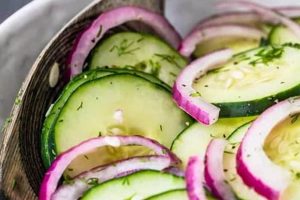
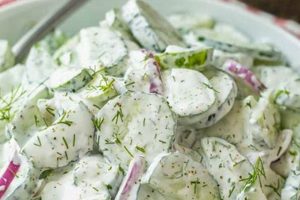
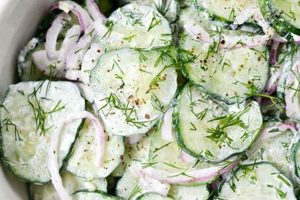
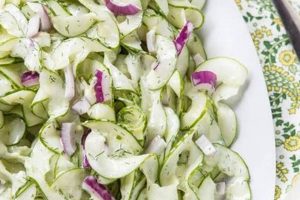
A refreshing and light dish, this type of salad typically combines crab meat, cucumber, and a complementary dressing. Variations may include other vegetables, herbs, or spices, offering a range of flavor profiles from tangy and savory to sweet and spicy. An example might feature lump crab meat, diced English cucumber, thinly sliced red onion, fresh dill, and a lemon-vinaigrette dressing. The ingredients can be tossed together for a simple preparation or layered for a more elegant presentation.
This salad offers a healthy and flavorful meal option. Crab provides a good source of protein and omega-3 fatty acids, while cucumber contributes hydration and essential vitamins. Its versatility allows it to serve as a light lunch, a refreshing appetizer, or a side dish to complement a main course. Historically, the combination of seafood and fresh produce has been a staple in coastal cuisines worldwide, showcasing readily available local ingredients.
The following sections will delve into specific variations, offer detailed preparation instructions, and explore the nutritional benefits of this culinary creation. Guidance on ingredient selection, preparation techniques, and presentation tips will also be provided.
Tips for a Superior Crab and Cucumber Salad
Achieving optimal flavor and texture requires attention to detail throughout the preparation process. The following tips offer guidance for creating a truly exceptional dish.
Tip 1: Crab Selection: Opt for high-quality crab meat, such as lump or jumbo lump, for the best flavor and texture. Avoid using canned crab, as it can be watery and lack flavor. Freshly cooked and picked crab meat is ideal.
Tip 2: Cucumber Preparation: English cucumbers are recommended due to their thin skin and minimal seeds. For a crisper salad, consider peeling the cucumber and removing the seeds before dicing. Salting the diced cucumber and allowing it to drain for a short period can also remove excess moisture.
Tip 3: Dressing Choices: A light and tangy dressing complements the delicate flavors of crab and cucumber. Lemon vinaigrette, a simple mixture of lemon juice, olive oil, and seasonings, is a classic choice. Aioli or a light mayonnaise-based dressing can also be used for a richer flavor.
Tip 4: Fresh Herbs: Incorporating fresh herbs elevates the salad’s flavor profile. Dill, mint, and chives pair particularly well with crab and cucumber. Ensure herbs are finely chopped to distribute their flavor evenly.
Tip 5: Balancing Flavors: Consider adding a touch of acidity or sweetness to balance the overall flavor. A squeeze of lime juice or a pinch of sugar can enhance the other ingredients. A small amount of finely diced red onion can also add a subtle sharpness.
Tip 6: Chilling Time: Allowing the salad to chill for at least 30 minutes before serving allows the flavors to meld and the cucumbers to become more crisp. Avoid chilling for extended periods, as this can cause the cucumbers to become watery.
Tip 7: Presentation: Consider the visual appeal of the salad. Serve the salad on chilled plates, garnished with fresh herbs or a sprinkle of paprika. Layering the ingredients can create an elegant presentation.
By following these guidelines, one can elevate a simple crab and cucumber salad into a culinary masterpiece. Careful attention to ingredient selection, preparation, and presentation ensures a delightful dining experience.
The following section will offer a selection of recipe variations to inspire culinary creativity and cater to diverse palates.
1. Fresh, High-Quality Crab

Fresh, high-quality crab forms the cornerstone of a successful cucumber crab salad. Its delicate, sweet flavor and firm texture provide a marked contrast to the cool, crisp cucumber, creating a balanced and enjoyable sensory experience. Using inferior crab, such as canned or heavily processed varieties, often results in a watery, fishy salad that lacks the nuanced flavor profile characteristic of the dish. The inherent sweetness of fresh crab allows for a wider range of complementary ingredients and dressings. For example, a simple lemon vinaigrette enhances the natural sweetness without masking it, whereas a heavier, more assertive dressing might be required to compensate for the lackluster flavor of lower-quality crab. This underscores the importance of prioritizing fresh crab as a primary ingredient.
The impact of fresh crab extends beyond flavor. Texture plays a crucial role in the overall enjoyment of the salad. High-quality crab meat offers a pleasant, slightly flaky texture that holds its shape well when mixed with other ingredients. This contrasts with the mushy consistency often found in canned or poorly handled crab, which can detract from the desired textural contrast between the crab and cucumber. Consider the difference between a salad featuring succulent lumps of fresh crab meat and one made with shredded, pre-packaged crab. The former offers a more substantial and satisfying bite, enhancing the dining experience. This textural integrity also allows the salad to maintain its appeal even after being dressed and chilled.
Prioritizing fresh, high-quality crab not only elevates the immediate sensory experience but also ensures a more enjoyable and rewarding culinary endeavor. While the convenience of pre-packaged options may be tempting, the resulting compromise in flavor and texture ultimately detracts from the potential of the dish. Investing in premium crab meat allows the inherent qualities of this ingredient to shine, resulting in a cucumber crab salad that truly exemplifies the harmonious interplay of fresh, high-quality ingredients. This principle applies to other ingredients as well, underscoring the importance of sourcing the best possible components for optimal results.
2. Crisp Cucumbers

Crisp cucumbers are essential for a successful cucumber crab salad recipe. Their refreshing coolness and satisfying crunch provide a textural counterpoint to the delicate crab meat, creating a harmonious balance. Beyond texture, the subtle flavor of cucumber complements the sweetness of the crab without overpowering it, allowing the other ingredients to shine. The following facets explore the significance of cucumber crispness in this culinary context.
- Textural Contrast
Cucumber crispness offers a crucial textural contrast to the soft, flaky crab meat. This interplay of textures elevates the salad from a simple mixture of ingredients to a multi-sensory experience. Imagine biting into a salad where the cucumber is limp and watery; the overall enjoyment diminishes significantly. A crisp cucumber, however, provides a satisfying crunch that complements the tender crab, creating a dynamic and enjoyable mouthfeel.
- Flavor Balance
The mild, slightly sweet flavor of cucumber provides a refreshing backdrop for the delicate sweetness of the crab. It acts as a palate cleanser, preventing the richness of the crab from becoming overwhelming. This subtle flavor profile also allows other ingredients, such as herbs and spices, to contribute to the overall flavor composition without clashing. An overly strong cucumber flavor, on the other hand, could mask the delicate nuances of the crab and other components.
- Visual Appeal
The vibrant green color and firm texture of crisp cucumbers contribute significantly to the salad’s visual appeal. A salad with crisp, evenly sliced cucumbers presents a more attractive and appetizing appearance compared to one with wilted or unevenly cut pieces. This visual freshness enhances the dining experience, making the salad more enticing and enjoyable. Consider the difference between a salad garnished with bright, crisp cucumber slices and one with dull, limp pieces. The visual difference is substantial.
- Maintaining Freshness
Crisp cucumbers are a sign of freshness. Their firm texture indicates proper handling and storage, ensuring optimal flavor and quality. In a cucumber crab salad, this freshness is paramount, as the delicate flavors of both crab and cucumber are easily compromised by wilting or spoilage. A salad made with crisp cucumbers suggests a carefully prepared dish with attention to detail and quality ingredients, further enhancing the perceived value of the culinary creation.
The crispness of cucumbers is therefore not merely a desirable characteristic but a fundamental element in a successful cucumber crab salad recipe. It contributes to the texture, flavor balance, visual appeal, and overall perception of freshness, elevating the dish from a simple combination of ingredients to a carefully crafted culinary experience. This attention to detail, applied to all components of the recipe, ultimately determines the success and enjoyment of the final product.
3. Balanced Dressing
A balanced dressing is paramount in a cucumber crab salad recipe. It serves as the unifying element, harmonizing the distinct flavors of crab and cucumber while contributing its own nuanced characteristics. A well-executed dressing enhances the inherent qualities of the ingredients without overpowering them, creating a cohesive and flavorful culinary experience. The following facets explore the components and implications of a balanced dressing in this specific culinary context.
- Acidity
Acidity provides brightness and cuts through the richness of the crab. A touch of lemon or lime juice enlivens the palate and balances the sweetness of both the crab and cucumber. Too much acidity, however, can make the salad taste sour and mask the delicate flavors of the core ingredients. Consider a lemon vinaigrette where the tartness of the lemon complements the sweetness of the crab without overwhelming it.
- Richness
A balanced dressing often incorporates an element of richness to complement the delicate texture of the crab. This can be achieved through the use of olive oil, aioli, or a touch of mayonnaise. The richness adds a creamy texture and enhances the mouthfeel of the salad. However, an excessively rich dressing can make the salad feel heavy and greasy, detracting from the refreshing nature of the dish. A small amount of high-quality olive oil, for instance, adds a subtle richness without overwhelming the other flavors.
- Seasoning
Proper seasoning is essential for a balanced dressing. Salt and pepper enhance the overall flavor profile, while other seasonings, such as herbs and spices, can add complexity and depth. Fresh dill, for example, complements the flavor of crab beautifully, while a pinch of cayenne pepper can add a subtle kick. Over-seasoning, however, can mask the delicate flavors of the crab and cucumber. A judicious use of seasonings is key to achieving a balanced and harmonious flavor profile.
- Cohesion
A balanced dressing binds the ingredients together, both literally and figuratively. It coats the crab and cucumber, distributing flavor evenly throughout the salad. Furthermore, it creates a cohesive culinary experience by harmonizing the different flavor profiles and textures. A well-balanced dressing elevates the individual components while creating a unified and satisfying whole. Imagine a salad where the dressing pools at the bottom of the bowl; the flavors are disjointed, and the experience is less satisfying.
A balanced dressing is therefore not merely a condiment but an integral component of a successful cucumber crab salad recipe. It plays a crucial role in flavor, texture, and overall cohesion, elevating the dish from a simple mixture of ingredients to a carefully orchestrated culinary composition. The interplay of acidity, richness, and seasoning creates a harmonious backdrop for the delicate flavors of crab and cucumber, ensuring a delightful and refreshing culinary experience. Achieving this balance requires careful consideration of each element and its impact on the overall composition of the salad.
4. Complementary Herbs
The judicious use of herbs elevates cucumber crab salad from agreeable to exceptional. Fresh herbs contribute aromatic complexity and nuanced flavor dimensions, enhancing the inherent qualities of the primary ingredients. Careful selection and application are essential; the goal is to complement, not overpower, the delicate balance of crab and cucumber.
- Dill
Dill’s subtly sweet, slightly anise-like flavor pairs seamlessly with crab. Its feathery fronds offer a delicate textural element, and its vibrant green hue enhances the salad’s visual appeal. A classic pairing, dill enhances the natural sweetness of the crab without masking its delicate flavor. Overuse, however, can introduce a soapy note, so moderation is crucial.
- Mint
Mint provides a refreshing counterpoint to the richness of the crab. Its cooling properties enhance the cucumber’s refreshing qualities, creating a vibrant and invigorating flavor profile. Spearmint or peppermint offer distinct nuances; spearmint tends to be milder, while peppermint delivers a more pronounced menthol note. A small amount of finely chopped mint can brighten the salad considerably.
- Chives
Chives offer a delicate onion flavor that adds a subtle savory dimension to the salad. Their fine texture blends seamlessly with the other ingredients, contributing a gentle piquancy without overpowering the delicate crab. Chives provide a subtle lift to the overall flavor profile, enhancing the other herbs and seasonings present.
- Parsley
Parsley, while often overlooked, can provide a fresh, slightly peppery note that complements both crab and cucumber. Flat-leaf parsley is generally preferred in salads due to its milder flavor and broader leaves, which offer a more substantial textural presence than curly parsley. Used sparingly, parsley contributes a subtle herbaceous note that rounds out the flavor profile.
The selection and application of herbs significantly influence the final character of cucumber crab salad. Each herb offers unique qualities that, when thoughtfully combined, elevate the dish from simple to sophisticated. The interplay of these aromatic components creates a symphony of flavors that complements and enhances the primary ingredients, resulting in a truly exceptional culinary experience. Consideration should be given to the intensity of each herb and its impact on the overall balance of the salad.
5. Proper Chilling
Proper chilling is a crucial step in preparing cucumber crab salad. It directly impacts the final dish’s texture, flavor, and overall enjoyment. Insufficient chilling fails to meld the flavors, while excessive chilling compromises texture and can lead to a watery salad. Understanding the nuances of chilling is essential for achieving optimal results.
- Temperature Control
Maintaining a consistent, cool temperature throughout the chilling process is vital. Ideal refrigeration temperature hovers between 35-40F (2-4C). This temperature range slows bacterial growth while preserving the ingredients’ freshness. Fluctuations in temperature can negatively impact both flavor and texture. For example, storing the salad in a warmer section of the refrigerator can accelerate spoilage, while freezing can damage the delicate cucumber cells, resulting in a mushy texture upon thawing. Consistent temperature ensures the salad remains palatable and safe to consume.
- Chilling Duration
Chilling duration significantly influences the final product. Thirty minutes to an hour allows flavors to meld and the salad to reach an optimal temperature without compromising the cucumber’s texture. Over-chilling, particularly beyond two hours, draws excess moisture from the cucumbers, resulting in a watery salad. Conversely, insufficient chilling prevents the flavors from marrying harmoniously. This time frame provides sufficient opportunity for the flavors to develop without compromising the integrity of the ingredients.
- Container Selection
Proper container selection contributes to maintaining optimal chilling conditions. An airtight container prevents the salad from absorbing odors from other foods in the refrigerator and minimizes moisture loss. The size of the container should be appropriate for the quantity of salad; too large a container introduces excess air, which can accelerate oxidation and affect flavor. Conversely, an overly packed container can bruise delicate ingredients. Appropriate container selection contributes to preserving the salad’s quality and extending its shelf life.
- Serving Temperature
While thorough chilling is essential, the ideal serving temperature for cucumber crab salad is slightly above refrigerator temperature. Allowing the salad to sit at room temperature for 10-15 minutes before serving allows the flavors to fully express themselves. Serving directly from the refrigerator can mute the delicate flavors and make the salad feel excessively cold. This brief warming period enhances the sensory experience.
Proper chilling is integral to a successful cucumber crab salad recipe. It is not merely a matter of refrigeration but a nuanced process requiring attention to temperature, duration, container selection, and serving temperature. These factors, when carefully considered, contribute significantly to the overall enjoyment of the dish. Mastery of these elements ensures the salad reaches its full potential, offering a refreshing, flavorful, and texturally satisfying culinary experience.
Frequently Asked Questions
This section addresses common inquiries regarding the preparation and enjoyment of cucumber crab salad. Clarity on these points ensures a more informed and successful culinary experience.
Question 1: What type of crab meat is best suited for this salad?
Lump or jumbo lump crab meat is recommended for its superior flavor and texture. While other crab varieties can be used, these options offer the most desirable characteristics for this application.
Question 2: Can canned crab be used?
While canned crab offers convenience, its texture and flavor are often inferior to fresh crab meat. If using canned crab, ensure it is thoroughly drained to minimize excess moisture.
Question 3: How can one ensure crisp cucumbers in the salad?
Opt for English cucumbers, known for their thin skin and minimal seeds. Salting and draining diced cucumbers before adding them to the salad helps remove excess moisture and maintain crispness. Additionally, chilling the salad for an appropriate duration, avoiding over-chilling, is crucial.
Question 4: What dressings complement cucumber crab salad?
Light and tangy dressings, such as lemon vinaigrette or aioli, are often preferred. The dressing should complement, not overpower, the delicate flavors of crab and cucumber. Avoid heavy, creamy dressings that can mask the subtle nuances of the ingredients.
Question 5: How long can cucumber crab salad be stored?
Ideally, cucumber crab salad should be consumed within 24 hours of preparation. Proper storage in an airtight container in the refrigerator is crucial for maintaining freshness and quality. Beyond 24 hours, the texture and flavor may begin to deteriorate.
Question 6: Can this salad be prepared in advance?
While the salad can be assembled a few hours in advance, it’s generally recommended to add the dressing just before serving to prevent the cucumbers from becoming soggy. This preserves the desired textural contrast between the crab and cucumber.
Understanding these key aspects contributes to a more informed approach to preparation and ensures optimal enjoyment of this refreshing and flavorful dish.
The subsequent section provides a selection of recommended recipes for exploring variations on this classic culinary creation.
Cucumber Crab Salad Recipe
Exploration of cucumber crab salad recipes reveals a dish reliant on fresh, high-quality ingredients and careful preparation. Emphasis on premium crab meat, crisp cucumbers, a balanced dressing, and complementary herbs yields optimal flavor and textural complexity. Proper chilling techniques further enhance the final product, preserving freshness and allowing flavors to meld harmoniously. From ingredient selection to serving temperature, each step contributes significantly to the overall culinary experience.
This exploration underscores the potential of simple ingredients transformed through thoughtful preparation. Cucumber crab salad, while seemingly straightforward, offers a canvas for culinary creativity and a testament to the transformative power of fresh, seasonal components. Further experimentation with variations in ingredients and techniques promises continued culinary discovery and enjoyment.