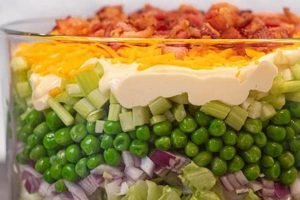
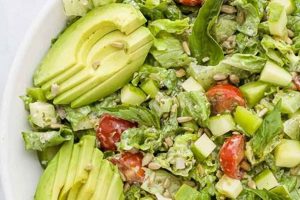
This classic layered salad typically features a base of lettuce, followed by layers of diced tomatoes, onions, shredded cheese, crumbled bacon, peas, and a mayonnaise-based dressing. Variations exist, substituting or adding ingredients like black olives, hard-boiled eggs, or different types of beans. A defining characteristic is its construction in distinct layers, creating an attractive presentation and offering diverse flavors and textures in each bite.
The layered presentation makes this dish visually appealing, suitable for potlucks, barbecues, and holiday gatherings. Its customizable nature allows for adaptations based on dietary preferences and ingredient availability. The salad’s origins can be traced back to mid-20th century American cuisine, where it gained popularity as a convenient and crowd-pleasing dish. Its enduring appeal lies in the balance of creamy, crunchy, and savory elements, complemented by the refreshing crispness of the vegetables.
The following sections will delve into specific recipe variations, offer tips for successful layering, and explore the nutritional aspects of this popular dish. Guidance will also be provided on ingredient selection, storage, and serving suggestions.
Tips for Layered Salad Success
Creating a visually appealing and flavorful layered salad requires attention to detail and a few key techniques. These tips will help ensure a successful outcome, whether preparing a classic version or experimenting with variations.
Tip 1: Ingredient Preparation: Proper preparation is crucial. Chop vegetables uniformly for even layering and optimal aesthetic appeal. Thoroughly drain canned ingredients to prevent excess moisture from seeping into other layers.
Tip 2: Layer Order: The order of ingredients impacts both flavor and structural integrity. Heavier ingredients, such as beans or hard-boiled eggs, should be placed towards the bottom, while lighter, more delicate ingredients like lettuce should be placed near the top.
Tip 3: Even Distribution: Spread each ingredient evenly across the surface to create uniform layers and consistent flavor throughout the salad. This ensures each bite contains a balanced combination of ingredients.
Tip 4: Dressing Application: The dressing is typically added as the final layer or served separately. If layered, spread it evenly to coat the topmost ingredients. This helps maintain the salad’s structure and prevents sogginess.
Tip 5: Chilling Time: Allowing the salad to chill in the refrigerator for at least two hours, or preferably overnight, allows the flavors to meld and the layers to settle. This also enhances the overall texture and taste experience.
Tip 6: Serving Considerations: Use a clear glass bowl to showcase the distinct layers. Serve chilled for optimal flavor and freshness. Provide serving utensils appropriate for scooping through the layers.
Tip 7: Ingredient Variations: Explore variations using different cheeses, beans, or vegetables based on personal preference and dietary needs. This allows for customized flavor profiles and increased nutritional value.
By following these guidelines, one can create a visually stunning and delicious layered salad suitable for any occasion. Attention to detail, from ingredient preparation to chilling time, ensures a satisfying culinary experience.
This section has explored key techniques for creating successful layered salads. The following concluding remarks will offer final thoughts and suggestions for further exploration.
1. Ingredient Quality

Ingredient quality significantly impacts the overall success of a seven-layer salad. Subpar ingredients can detract from the flavor, texture, and overall enjoyment of the dish. Conversely, high-quality, fresh ingredients elevate the salad from simple to exceptional. This section explores the facets of ingredient quality and their implications.
- Freshness
Freshness is paramount. Wilted lettuce, mealy tomatoes, or soft onions can compromise the salad’s texture and flavor. Prioritizing fresh, crisp produce ensures a vibrant and enjoyable eating experience. For example, using freshly picked lettuce provides a crisp base, while ripe, juicy tomatoes contribute a burst of flavor.
- Ripeness
Selecting ingredients at their peak ripeness ensures optimal flavor and texture. Underripe tomatoes lack sweetness and acidity, while overripe ones can be mushy. Properly ripened produce contributes significantly to the salad’s overall taste. Avocados, for example, should be slightly soft to the touch but not overly ripe.
- Sourcing
The source of ingredients can influence their quality. Locally sourced, seasonal produce often offers superior flavor and nutritional value compared to out-of-season alternatives. Supporting local farmers markets or growers can contribute to a more flavorful and sustainable salad. Using farm-fresh eggs, for instance, can enhance the flavor and richness of the dressing.
- Preparation
Proper handling and preparation techniques further enhance ingredient quality. Washing produce thoroughly removes dirt and debris, while careful chopping ensures uniform pieces and prevents bruising. Proper storage also maintains freshness and prevents spoilage. Storing chopped vegetables in airtight containers, for example, helps preserve their crispness.
By prioritizing ingredient quality through attention to freshness, ripeness, sourcing, and preparation, one elevates the seven-layer salad from ordinary to extraordinary. The resulting salad offers a superior sensory experience, showcasing the vibrant flavors and textures of carefully selected ingredients.
2. Layering Technique

Layering technique is fundamental to the construction and success of a seven-layer salad. More than just an aesthetic consideration, proper layering directly impacts the salad’s structural integrity, flavor distribution, and overall presentation. This section explores the crucial facets of layering technique and their implications for creating a visually appealing and enjoyable salad.
- Ingredient Density
Ingredient density dictates layering order. Denser ingredients, such as beans or shredded cheese, form a stable base at the bottom of the salad. Lighter ingredients, like lettuce or chopped tomatoes, are placed towards the top. This prevents heavier ingredients from crushing more delicate components and maintains the salad’s structure. For example, a layer of refried beans at the base provides a sturdy foundation, while a layer of crushed tortilla chips adds a contrasting texture in the middle, topped by lighter ingredients like lettuce and salsa.
- Moisture Content
Managing moisture content is essential for preventing a soggy salad. Ingredients with high moisture content, like tomatoes, should be placed above less absorbent layers. This prevents excess moisture from seeping down and compromising the integrity of the salad. For instance, placing a layer of diced tomatoes above a layer of cheese prevents the cheese from becoming watery.
- Visual Contrast
Layering offers an opportunity to create visual contrast. Alternating colors and textures enhances the salad’s aesthetic appeal. This visual element adds to the overall dining experience. For instance, a layer of vibrant green lettuce contrasts visually with a layer of bright red tomatoes, followed by a layer of creamy white cheese.
- Flavor Distribution
Strategic layering influences flavor distribution. Distributing flavorful ingredients throughout the salad ensures each bite offers a balanced taste experience. This prevents pockets of intense flavor and promotes a harmonious blend of tastes. For example, layering bacon bits between layers of vegetables distributes the smoky flavor evenly throughout the salad.
Effective layering technique elevates the seven-layer salad from a simple combination of ingredients to a carefully constructed culinary creation. By considering ingredient density, moisture content, visual contrast, and flavor distribution, one can create a visually appealing, structurally sound, and flavorful salad that is sure to impress. The interplay of these factors contributes significantly to the overall enjoyment and success of this classic dish.
3. Flavor Combinations
Flavor combinations are central to the appeal of a seven-layer salad. The interplay of tastes and textures creates a complex and satisfying sensory experience. Understanding the principles of flavor pairing allows for the creation of a well-balanced and delicious salad. This section explores key flavor combinations and their impact on the overall taste profile of a seven-layer salad.
- Complementary Flavors
Complementary flavors, such as the creamy richness of avocado paired with the bright acidity of tomatoes, create a balanced and harmonious taste experience. This interplay of contrasting flavors enhances the overall enjoyment of the salad. The savory notes of bacon complement the sweetness of corn, adding another layer of complexity.
- Textural Contrast
Textural contrast is as crucial as flavor combinations. The crispness of lettuce provides a refreshing counterpoint to the creaminess of the dressing, while the crunch of tortilla chips adds a satisfying textural element. The combination of soft, crunchy, and creamy textures enhances the overall sensory experience.
- Balancing Intensity
Balancing flavor intensity prevents any single ingredient from overpowering the others. The mildness of lettuce and tomatoes balances the stronger flavors of onions and cheese. This creates a harmonious blend where each ingredient contributes to the overall taste profile without dominating it.
- Seasonality
Utilizing seasonal ingredients can enhance the flavor combinations. Summer salads might feature fresh corn and ripe tomatoes, while autumn variations could incorporate roasted squash and cranberries. Adapting the ingredients to the season ensures peak flavor and freshness.
Successful flavor combinations in a seven-layer salad rely on a careful balance of complementary tastes, contrasting textures, and appropriate flavor intensity. Utilizing seasonal ingredients further enhances the taste experience, creating a vibrant and delicious salad that showcases the interplay of flavors and textures. Careful consideration of these elements elevates the salad from a simple combination of ingredients to a well-balanced and enjoyable culinary creation.
4. Dressing Choice

Dressing choice significantly impacts the overall flavor profile and textural experience of a seven-layer salad. The dressing acts as a unifying element, binding the diverse ingredients and contributing to the salad’s overall cohesion. A well-chosen dressing complements the existing flavors while adding its own distinct character. An inappropriate dressing, however, can clash with the other ingredients, overpowering their flavors or creating an undesirable textural inconsistency. For example, a creamy, tangy dressing based on mayonnaise or sour cream complements the fresh vegetables and savory elements commonly found in a seven-layer salad. Conversely, a vinaigrette-style dressing might not provide the same cohesive effect, potentially creating a watery consistency and clashing with the creamy textures of other ingredients.
The dressing’s texture also plays a crucial role. A thick, creamy dressing effectively coats the ingredients, creating a luscious mouthfeel and contributing to the salad’s layered structure. A thinner dressing might not adhere well to the ingredients, leading to a less satisfying textural experience and potentially causing the layers to separate. Consider a classic seven-layer salad with a creamy dressing. The dressing clings to the ingredients, creating a cohesive whole and contributing to the rich, satisfying mouthfeel. A thinner dressing might run through the layers, diluting the flavors and compromising the structural integrity of the salad.
Strategic dressing selection involves considering the interplay of flavors and textures within the salad. A dressing should complement, not overpower, the existing flavors. It should also contribute to the desired textural outcome, enhancing rather than detracting from the overall sensory experience. Challenges can arise when a dressing’s intensity clashes with the delicate flavors of fresh vegetables or when its texture creates an imbalance. Successfully navigating these considerations requires careful evaluation of the salad’s composition and the characteristics of the chosen dressing, ensuring a harmonious and enjoyable culinary outcome.
5. Visual Appeal
Visual appeal constitutes a significant component of seven-layer salad recipes. The inherent layered construction offers an opportunity to create an aesthetically pleasing dish, enhancing the dining experience. This visual appeal stems from the deliberate arrangement of distinct layers, each showcasing different colors and textures. The contrast between vibrant greens, reds, yellows, and whites, coupled with the textural variations of crunchy vegetables, creamy dressings, and protein components, creates a visually engaging presentation. Consider a classic seven-layer salad: the layered arrangement allows the individual components, such as lettuce, tomatoes, onions, cheese, bacon, peas, and dressing, to remain distinct, resulting in a visually appealing presentation. This layered approach contributes to the dish’s popularity, particularly for gatherings and potlucks where presentation plays a key role.
This visual appeal serves several practical purposes. It elevates the perceived value of the dish, making it more enticing and appetizing. This is particularly relevant in social settings where food presentation contributes to the overall ambiance. Furthermore, the visual distinction of layers allows individuals to discern the ingredients, catering to dietary preferences and encouraging a balanced intake of different components. For instance, someone avoiding onions can easily identify and omit that layer, while someone seeking more protein can focus on the layers containing meat or beans. This clear visualization of ingredients promotes informed food choices and contributes to a more satisfying dining experience.
Successfully achieving visual appeal in a seven-layer salad requires careful consideration of color, texture, and ingredient arrangement. Challenges can include maintaining distinct layers, preventing ingredient bleed-through, and ensuring even distribution across the serving dish. Addressing these challenges necessitates careful ingredient preparation, strategic layering techniques, and an understanding of how different ingredients interact visually. Ultimately, the visual appeal of a seven-layer salad enhances its overall impact, transforming a simple combination of ingredients into a visually stunning and appetizing culinary creation.
6. Freshness

Freshness is paramount in seven-layer salad recipes, directly impacting the overall flavor, texture, and enjoyment of the dish. Unlike some dishes where ingredients can be cooked or processed to mask imperfections, the layered nature of this salad showcases the individual components, highlighting their freshness or lack thereof. This emphasis on fresh ingredients contributes significantly to the salad’s appeal, making it a popular choice for occasions where quality and vibrant flavors are desired. This section will explore the multifaceted nature of freshness and its implications for seven-layer salad recipes.
- Produce Quality
The foundation of a seven-layer salad rests upon the quality of its produce components. Crisp lettuce, firm tomatoes, and vibrant onions contribute to both the visual appeal and the textural satisfaction of the salad. Wilted lettuce or mushy tomatoes detract significantly from the overall experience. Selecting produce at its peak ripeness and storing it correctly are crucial for maintaining optimal freshness. For example, lettuce should be crisp and vibrant green, while tomatoes should be firm and juicy. Compromised produce quality undermines the salad’s freshness and overall appeal.
- Ingredient Preparation Timing
The timing of ingredient preparation plays a crucial role in preserving freshness. Chopping vegetables too far in advance can lead to oxidation and loss of crispness. Ideally, vegetables should be chopped shortly before assembling the salad to maximize their freshness and vibrancy. For example, if onions are chopped hours before assembly, their pungent aroma can become overwhelming and their texture can soften. Strategic timing of ingredient preparation is essential for maintaining optimal freshness and preserving the desired flavors and textures.
- Dressing Application
The timing of dressing application impacts the salad’s overall freshness. Adding the dressing too early can cause the vegetables to wilt and become soggy. To maintain optimal freshness and crispness, the dressing is typically added just before serving or served on the side. This prevents the vegetables from sitting in the dressing for extended periods, preserving their texture and preventing premature wilting. Consider a scenario where the dressing is added several hours before serving. The lettuce and other vegetables would absorb the dressing, resulting in a soggy, less appealing salad.
- Storage and Serving Temperature
Proper storage and serving temperature are crucial for maintaining the salad’s freshness and preventing bacterial growth. Seven-layer salads are best served chilled, and any leftovers should be refrigerated promptly. Maintaining a consistent cold temperature inhibits bacterial growth and preserves the freshness of the ingredients. Leaving the salad at room temperature for extended periods can compromise its safety and quality, potentially leading to spoilage and foodborne illness. Maintaining the appropriate temperature is essential for both food safety and optimal enjoyment of the salad’s fresh flavors.
Freshness in seven-layer salad recipes is not merely a desirable attribute; it is a defining characteristic that elevates the dish from ordinary to exceptional. The interplay of fresh, high-quality produce, strategic ingredient preparation, careful dressing application, and proper storage practices contributes to a vibrant, flavorful, and texturally satisfying salad. Compromising on freshness diminishes the salad’s overall quality and appeal. Therefore, prioritizing freshness is essential for creating a truly enjoyable and memorable culinary experience.
Frequently Asked Questions
This section addresses common inquiries regarding seven-layer salads, offering concise and informative responses to clarify potential uncertainties and provide practical guidance.
Question 1: Can a seven-layer salad be prepared a day in advance?
Yes, preparing the salad a day in advance is often recommended. This allows the flavors to meld and enhances the overall taste. However, the dressing should be added just before serving to prevent the salad from becoming soggy.
Question 2: What are suitable substitutions for common ingredients?
Ingredient substitutions offer flexibility. Black beans can replace kidney beans, cheddar cheese can substitute for Monterey Jack, and Greek yogurt can replace sour cream in the dressing for a healthier alternative.
Question 3: How can one prevent the layers from mixing?
Maintaining distinct layers requires careful assembly. Spreading each ingredient evenly and avoiding pressing down on the layers helps prevent them from blending together.
Question 4: What is the best way to store leftover seven-layer salad?
Leftover salad should be stored in an airtight container in the refrigerator for up to three days. Consume within this timeframe for optimal quality and food safety.
Question 5: Can different types of lettuce be used?
While iceberg lettuce is traditional, other varieties like romaine or butter lettuce offer variations in flavor and texture. The choice of lettuce depends on individual preference.
Question 6: Is it necessary to chill the salad before serving?
Chilling enhances the flavors and textures. Refrigerating the salad for at least two hours before serving is recommended for optimal enjoyment.
This FAQ section has provided answers to common queries regarding seven-layer salads. Understanding these points allows for greater success in preparing and enjoying this versatile dish.
The following section will offer concluding thoughts and recipe variations for further exploration.
Conclusion
Exploration of seven-layer salad recipes reveals a dish offering versatility and adaptability. Emphasis on fresh, quality ingredients, strategic layering techniques, and balanced flavor combinations contributes to the salad’s enduring appeal. Proper ingredient preparation, dressing selection, and storage practices ensure optimal flavor, texture, and food safety. Visual appeal enhances the dining experience, while adherence to established culinary principles guarantees consistent and satisfying results.
Seven-layer salad recipes represent more than a simple combination of ingredients; they embody a culinary tradition emphasizing freshness, flavor, and visual presentation. Continued exploration of variations and adaptations ensures this classic dish remains a relevant and enjoyable culinary staple for generations to come. Careful attention to detail and a commitment to quality ingredients elevate the seven-layer salad from a commonplace side dish to a memorable culinary centerpiece.