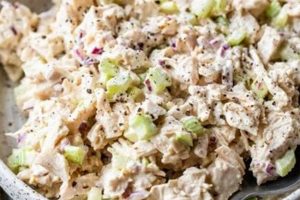
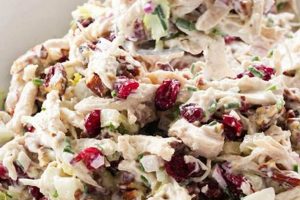
A simple, budget-friendly dish, this type of salad combines cooked chicken from a can with mayonnaise and other ingredients to create a flavorful and convenient meal. Common additions include celery, onion, grapes, nuts, and seasonings. Variations range from classic preparations to those incorporating diverse flavors and textures.
Utilizing canned chicken offers a significant advantage in terms of preparation time and shelf life. This makes the dish a practical choice for quick lunches, picnics, or potlucks. Historically, canned foods, including chicken, gained popularity due to increased accessibility and convenience, becoming a pantry staple. This convenience contributed to the rise of dishes like this salad as a quick and easy meal option.
The following sections will explore various aspects of creating this dish, including ingredient selection, preparation techniques, and serving suggestions, offering a comprehensive guide to crafting a delicious and satisfying meal.
Tips for Preparing Canned Chicken Salad
Optimizing canned chicken salad involves attention to detail and thoughtful ingredient selection. These tips offer guidance for elevating this convenient dish.
Tip 1: Drain the Chicken Thoroughly: Excess liquid from the can will dilute the salad’s flavor and create a watery consistency. Thorough draining ensures a richer, more flavorful outcome.
Tip 2: Enhance Texture with Chopped Ingredients: Finely diced celery, onion, and other vegetables add textural complexity, counteracting the softness of the canned chicken.
Tip 3: Explore Flavor Combinations: Consider incorporating ingredients like grapes, dried cranberries, apples, or nuts to introduce sweetness and contrasting textures. Herbs and spices, such as dill, chives, or curry powder, can further elevate the flavor profile.
Tip 4: Balance Mayonnaise Usage: Mayonnaise serves as the binding agent, but excessive amounts can lead to a heavy, overly rich salad. Start with a smaller quantity and add more as needed to achieve the desired consistency.
Tip 5: Seasoning is Key: Salt and pepper are essential, but experimenting with additional seasonings like paprika, garlic powder, or onion powder can significantly enhance the overall flavor.
Tip 6: Chill Before Serving: Chilling allows the flavors to meld and enhances the salad’s refreshing qualities. Aim for at least 30 minutes of refrigeration before serving.
Tip 7: Consider Bread Choices: Serve the salad on various breads, crackers, or lettuce cups for different presentations. Croissants, whole-wheat bread, and crisp lettuce leaves offer diverse textural and flavor pairings.
By following these tips, one can transform canned chicken salad into a flavorful and satisfying meal or snack. Careful ingredient selection and attention to preparation techniques are essential for achieving optimal results.
The following section will offer variations on this versatile dish, demonstrating its adaptability and potential for culinary exploration.
1. Ingredient Selection
Ingredient selection significantly impacts the final quality and flavor profile of chicken salad made with canned chicken. Thoughtful choices elevate this convenient dish beyond basic fare.
- Chicken Quality
While convenience is a primary advantage of using canned chicken, variations in quality exist. Opting for higher-quality canned chicken, often labeled as “all-white meat” or packed in water rather than oil, results in a cleaner flavor and improved texture. Draining the chicken thoroughly is essential to prevent a watery salad. Comparison shopping allows for evaluation of sodium content and other additives.
- Mayonnaise Selection
Mayonnaise acts as the binding agent and contributes significantly to the overall flavor. Traditional mayonnaise offers a classic taste, while variations like light mayonnaise or Greek yogurt offer lower-fat alternatives. Other options include flavored mayonnaises or aioli, providing opportunities for flavor experimentation. The amount used directly impacts the salad’s richness and consistency.
- Fresh Produce
Fresh produce introduces texture, color, and flavor complexity. Common additions include celery, onion, and bell peppers, offering crispness and contrasting flavors. The quality and freshness of these ingredients contribute significantly to the overall sensory experience. Thorough washing and proper storage are crucial for food safety and optimal flavor.
- Flavor Enhancers
Flavor enhancers elevate the salad beyond the basic combination of chicken and mayonnaise. Incorporating ingredients like grapes, dried cranberries, apples, or nuts introduces sweetness and textural variety. Herbs and spices, such as dill, chives, curry powder, or paprika, add depth and complexity to the flavor profile. Careful balancing of these elements prevents any single flavor from overpowering the others.
Consideration of these ingredient choices elevates canned chicken salad from a simple convenience item to a flavorful and satisfying meal. The interplay of these components contributes to a well-balanced and enjoyable culinary experience.
2. Texture

Texture plays a vital role in the overall enjoyment of chicken salad made with canned chicken. The inherent softness of canned chicken necessitates the incorporation of ingredients that provide contrasting textures. This contrast prevents a monotonous, paste-like consistency and creates a more satisfying sensory experience. The interplay of textures contributes significantly to the perceived freshness and quality of the salad.
Consider the addition of finely diced celery and onion. These vegetables offer a crisp, refreshing counterpoint to the soft chicken. Similarly, incorporating chopped nuts, such as almonds or walnuts, introduces a satisfying crunch. Even the inclusion of ingredients like grapes or dried cranberries offers a textural variation, providing bursts of juiciness against the creamy base of the salad. Ignoring textural balance can lead to a dish that feels heavy and unappetizing, highlighting the crucial role of textural contrast in achieving a well-rounded and enjoyable salad.
Achieving textural balance requires careful consideration of ingredient sizes and proportions. Overly large chunks of vegetables can disrupt the cohesion of the salad, while excessively small pieces may become lost in the mixture. The goal is to create a harmonious blend of textures that complement each other, enhancing the overall eating experience. Mastering this balance elevates canned chicken salad from a simple convenience food to a dish offering complexity and culinary satisfaction.
3. Flavor Balance

Flavor balance is paramount in a successful chicken salad utilizing canned chicken. The inherent mildness of canned chicken provides a neutral canvas, necessitating the careful integration of other ingredients to create a harmonious and flavorful profile. This balance hinges on the interplay of savory, acidic, sweet, and salty elements. Without this careful orchestration, the salad risks being bland or, conversely, overwhelmed by a single dominant flavor.
Consider the role of acidity. Ingredients like lemon juice or vinegar provide brightness and cut through the richness of the mayonnaise, preventing the salad from feeling heavy. A touch of sweetness, perhaps from chopped grapes or dried cranberries, adds complexity and complements the savory notes of the chicken. The judicious use of salt enhances the other flavors without becoming overpowering. A real-life example of this balance can be seen in classic recipes that often incorporate a combination of celery for subtle bitterness, onion for pungency, and mayonnaise for richness, all balanced by a touch of lemon juice and salt.
Achieving this balance requires an understanding of how different flavors interact and the impact of ingredient proportions. Too much mayonnaise can mask the other flavors, while insufficient acidity can result in a bland, one-dimensional salad. The practical significance of understanding flavor balance lies in the ability to create a chicken salad that is not only palatable but also enjoyable and satisfying. This understanding empowers one to adjust recipes according to personal preferences and available ingredients, consistently producing a delicious and well-balanced dish.
4. Preparation Method
Preparation method significantly influences the final quality and safety of chicken salad made with canned chicken. While the inherent convenience of canned chicken simplifies the process, attention to specific techniques ensures optimal results. The preparation method encompasses several key stages, each contributing to the overall success of the dish. These stages include draining the chicken, combining ingredients, and chilling the salad. Neglecting these steps can lead to a watery, bland, or even unsafe final product.
Draining the canned chicken thoroughly is crucial. Excess liquid dilutes the flavor and compromises the texture of the salad. This seemingly simple step has a direct impact on the final outcome. For instance, a salad made with improperly drained chicken will be watery and lack the desired creamy consistency. Subsequently, combining ingredients in the correct order and manner is equally important. Incorporating the mayonnaise gradually allows for better control of the salad’s consistency. Overmixing can result in a dense, heavy texture, while undermixing can leave the ingredients unevenly distributed. Finally, chilling the prepared salad allows the flavors to meld and enhances food safety. Chilling for at least 30 minutes before serving is recommended to allow the flavors to fully develop.
Understanding the nuances of the preparation method, from draining to chilling, is essential for consistently producing a high-quality and safe chicken salad using canned chicken. This understanding empowers one to control the final product’s texture, flavor, and safety. The practical application of these techniques transforms a simple combination of ingredients into a delicious and satisfying dish. This methodical approach ensures that the convenience of canned chicken does not compromise the quality of the final product.
5. Serving Suggestions
Serving suggestions transform canned chicken salad from a basic preparation into a versatile culinary component. The manner of presentation significantly influences the perceived value and enjoyment of this dish. Thoughtful consideration of serving options extends beyond mere convenience, impacting flavor perception and overall dining experience. Serving suggestions bridge the gap between a simple mixture and a satisfying meal, expanding its potential beyond a basic lunch or snack.
Consider the classic presentation: a sandwich. The choice of bread significantly impacts the final flavor profile. A buttery croissant complements the creamy salad, while whole-wheat bread offers a more wholesome option. Alternatively, serving the salad on crackers provides a lighter, more casual approach. Beyond sandwiches and crackers, lettuce cups offer a low-carbohydrate, refreshing alternative. These varied presentations demonstrate the adaptability of canned chicken salad, transforming it into a versatile ingredient suitable for diverse occasions and dietary preferences. A practical example of this versatility can be seen in catered events, where chicken salad might be served in elegant pastry shells or as a filling for tea sandwiches.
Effective serving suggestions elevate canned chicken salad, demonstrating its adaptability and potential for creative presentation. The choice of accompanying elements, whether bread, crackers, or vegetables, contributes significantly to the overall culinary experience. Understanding these serving options allows for customization and enhances the enjoyment of this convenient and adaptable dish, transforming it from a simple staple into a versatile culinary creation.
6. Nutritional Value

Nutritional value represents a significant consideration when evaluating chicken salad made with canned chicken. While convenient, the nutritional profile can vary significantly depending on ingredient choices and preparation methods. Understanding this profile allows for informed decisions regarding its role within a balanced diet. This involves considering the protein content, fat content, sodium levels, and the contributions of additional ingredients like vegetables and dressings. Cause-and-effect relationships exist between these components and overall health outcomes. For example, opting for chicken packed in water rather than oil significantly reduces fat content, impacting caloric intake and potential health implications.
The protein content of canned chicken contributes to satiety and muscle maintenance. However, mayonnaise, a common ingredient, often adds significant fat and calories. Balancing these components is key to achieving a nutritionally sound meal. Adding fresh vegetables like celery and onions boosts fiber and micronutrient intake, enriching the nutritional profile. Sodium content, often elevated in canned products, warrants attention, especially for individuals monitoring sodium intake. A real-life example of this nutritional interplay can be observed when comparing a salad made with light mayonnaise and abundant vegetables to one made with full-fat mayonnaise and limited vegetables. The former offers a more nutrient-dense and lower-calorie option.
Practical application of this nutritional understanding empowers individuals to modify recipes for optimal health benefits. Choosing leaner protein options, incorporating a variety of fresh produce, and controlling portion sizes contribute to a balanced approach. Challenges arise when balancing convenience with nutritional goals. Over-reliance on canned chicken salad without considering its nutritional composition can lead to dietary imbalances. Therefore, a thorough understanding of the nutritional value of this dish is crucial for integrating it effectively within a balanced and health-conscious dietary plan.
Frequently Asked Questions
This section addresses common inquiries regarding the preparation and consumption of chicken salad made with canned chicken.
Question 1: How can one reduce the sodium content in canned chicken salad?
Opting for low-sodium or no-salt-added canned chicken significantly reduces overall sodium content. Rinsing the chicken under cold water before use can further reduce sodium, though some flavor may be lost. Additionally, minimizing added salt during preparation and using fresh herbs and spices for flavor enhancement contribute to sodium reduction.
Question 2: What are suitable alternatives to mayonnaise in canned chicken salad?
Plain Greek yogurt or avocado offer healthier alternatives to mayonnaise, reducing fat and calorie content while maintaining a creamy texture. These alternatives also provide additional nutritional benefits. Hummus can also be used for a different flavor profile and added protein.
Question 3: How long can canned chicken salad be stored safely?
Properly stored in an airtight container in the refrigerator, canned chicken salad typically remains safe for consumption for three to five days. Factors influencing shelf life include the freshness of ingredients and storage temperature. Always discard the salad if any signs of spoilage, such as off-odors or discoloration, are present.
Question 4: Can canned chicken salad be frozen?
Freezing canned chicken salad is generally not recommended. Mayonnaise-based dressings separate and become watery upon thawing, negatively impacting texture and flavor. Freezing also affects the texture of the chicken and other ingredients, resulting in a less desirable final product.
Question 5: How can one enhance the flavor of canned chicken salad beyond basic seasonings?
Incorporating fresh herbs like dill, parsley, or chives adds brightness and complexity. Spices such as curry powder, paprika, or garlic powder introduce depth of flavor. The addition of dried fruits or nuts provides sweetness and textural contrast, further enhancing the flavor profile.
Question 6: What are some creative ways to serve canned chicken salad beyond sandwiches?
Consider using canned chicken salad as a filling for lettuce wraps, bell peppers, or tomatoes. It can also be served as a dip with crackers, vegetables, or pita bread. Incorporating it into a croissant or puff pastry creates a more elegant appetizer. It can also be used as a topping for baked potatoes or mixed greens.
Understanding these frequently asked questions provides valuable insights into maximizing the quality, safety, and enjoyment of chicken salad prepared with canned chicken. Thoughtful consideration of these points ensures a successful and satisfying culinary experience.
The following section will provide a sample recipe for a classic canned chicken salad.
Chicken Salad with Canned Chicken Recipe
Exploration of this simple dish reveals its surprising versatility and adaptability. From ingredient selection to preparation methods and serving suggestions, each element contributes to the final product. Careful consideration of texture and flavor balance elevates canned chicken salad beyond basic convenience food, transforming it into a satisfying and customizable meal. Nutritional considerations highlight the importance of ingredient choices and portion control in maximizing health benefits. Addressing frequently asked questions provides practical guidance for optimizing preparation and storage, ensuring both safety and enjoyment.
Canned chicken salad offers a canvas for culinary creativity, adaptable to individual preferences and dietary needs. Its convenience should not overshadow its potential for delivering a flavorful and nutritious meal. Further exploration of variations and flavor combinations allows for continuous refinement and personalization, demonstrating the enduring appeal of this classic dish.