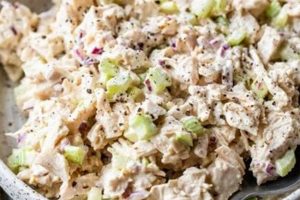
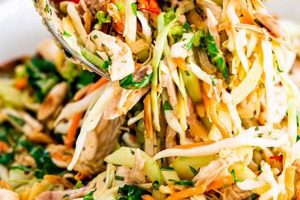
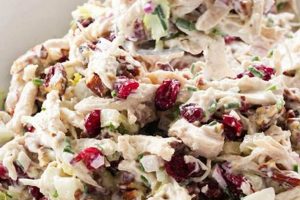
A combination of cooked chicken, mayonnaise, and seasonings, often including celery and onion, can be enhanced with the sweet-tart flavor and chewy texture of dried cranberries. This dish is typically served cold, often as a sandwich filling, salad topping, or appetizer spread.
The blend of savory chicken, creamy mayonnaise, and tangy cranberries offers a complex flavor profile appreciated by many. The addition of dried fruit adds a nutritional boost, providing antioxidants and fiber. This adaptable dish can be customized with various ingredients and seasonings, making it suitable for diverse palates and dietary needs. Its versatility also extends to its presentation, allowing for elegant or casual settings. Historically, chicken salad became popular in the mid-19th century, evolving alongside refrigeration technology and evolving culinary tastes. The incorporation of ingredients like dried cranberries reflects more recent trends towards incorporating fruits and sweeter elements into savory dishes.
This exploration will delve into various aspects of preparing and enjoying this dish, including choosing the right ingredients, exploring different variations, and offering tips for presentation and serving.
Tips for Crafting Excellent Chicken Salad with Dried Cranberries
Achieving optimal flavor and texture requires attention to several key preparation details.
Tip 1: Chicken Selection: Opting for high-quality cooked chicken, whether roasted, poached, or grilled, significantly impacts the final result. Avoid pre-cooked, processed chicken for best flavor.
Tip 2: Mayonnaise Quality: Using a good quality mayonnaise is essential for flavor and texture. Consider experimenting with different types, such as olive oil or avocado oil-based mayonnaise, for subtle flavor variations.
Tip 3: Cranberry Preparation: While not strictly necessary, plumping dried cranberries by briefly soaking them in warm water or juice (orange or apple) before adding them to the salad can enhance their texture and flavor.
Tip 4: Balancing Sweetness and Tartness: The inherent sweetness of dried cranberries can be balanced with acidic elements. A squeeze of lemon juice or a touch of apple cider vinegar can achieve this balance.
Tip 5: Enhancing Texture: Adding textural complexity can elevate the salad. Consider incorporating chopped celery, red onion, walnuts, or pecans.
Tip 6: Seasoning Considerations: Freshly ground black pepper, a pinch of salt, and herbs like dill, tarragon, or chives can enhance the overall flavor profile. Experiment to find preferred combinations.
Tip 7: Chilling Time: Allowing the salad to chill for at least 30 minutes before serving allows the flavors to meld and the salad to firm up, improving both taste and presentation.
By following these tips, one can create a chicken salad with dried cranberries that offers a delightful balance of flavors and textures.
These preparatory steps contribute to a superior culinary experience, setting the stage for an enjoyable meal.
1. High-Quality Chicken

High-quality chicken serves as the foundation of a successful chicken salad with dried cranberries. It provides the primary protein source and significantly influences the overall flavor and texture of the dish. Chicken that exhibits desirable characteristics like moistness, tenderness, and a robust, clean flavor elevates the final product. Conversely, chicken that is dry, stringy, or bland can detract significantly from the overall enjoyment, regardless of other high-quality ingredients. The impact of chicken quality becomes particularly pronounced when the salad is served cold, as nuances in texture and flavor become more noticeable.
Consider the difference between using freshly roasted chicken breast versus pre-cooked, processed chicken commonly found in supermarkets. The roasted chicken offers a depth of flavor and a pleasing texture that complements the other ingredients. It readily absorbs the flavors of the dressing and seasonings, contributing to a more cohesive and satisfying salad. Pre-cooked chicken, on the other hand, often lacks distinct flavor and tends to have a less desirable, sometimes rubbery, texture, which can negatively impact the overall quality of the chicken salad. Choosing free-range or organic chicken further enhances the flavor profile, offering a richer, more nuanced taste experience.
Investing in high-quality chicken provides a significant return in the final dish. The superior flavor and texture justify the added cost or effort required to obtain it. This careful selection ensures that the chicken salad, particularly one enhanced with the bright, sweet-tart flavor of dried cranberries, becomes a truly enjoyable culinary experience. It forms the bedrock upon which the other flavors and textures build, creating a harmonious and balanced dish.
2. Mayonnaise Choice

Mayonnaise serves as the unifying element in chicken salad, binding the ingredients and contributing significantly to the overall flavor and texture. The choice of mayonnaise significantly impacts the final result of a chicken salad recipe featuring dried cranberries. This seemingly simple ingredient plays a crucial role in balancing the sweet-tartness of the cranberries with the savory chicken, influencing the creaminess, tanginess, and overall palatability of the salad.
Different types of mayonnaise offer distinct flavor profiles and textures. Standard mayonnaise, typically made with soybean oil, provides a neutral base that allows the other ingredients to shine. However, opting for a mayonnaise made with olive oil introduces a subtle fruitiness and a richer mouthfeel. Avocado oil mayonnaise contributes a mild, buttery flavor, while a mayonnaise with added lemon or lime juice provides a brighter, tangier dimension. The fat content also plays a role; full-fat mayonnaise creates a luxurious, creamy texture, while reduced-fat versions offer a lighter consistency but may compromise the overall richness of the salad. For example, using a Dijon mustard mayonnaise can introduce a subtle sharpness that complements the cranberries, while a roasted garlic mayonnaise adds a savory depth. These nuanced flavors interact with the sweetness of the cranberries, creating a more complex and enjoyable flavor profile. Using a plain mayonnaise might not provide the same depth and could result in a blander salad, particularly if the chicken itself is not strongly flavored.
Careful consideration of mayonnaise choice allows for customization and elevates the chicken salad beyond a simple combination of ingredients. Understanding the interplay between the mayonnaise, chicken, and cranberries empowers one to create a dish that perfectly balances sweetness, acidity, and richness. Experimentation with different mayonnaise varieties unlocks the potential for unique and personalized variations on this classic recipe. The selected mayonnaise should complement, not overpower, the other ingredients, contributing to a balanced and harmonious flavor profile.
3. Cranberry Preparation
Cranberry preparation plays a crucial role in the overall success of a chicken salad recipe incorporating dried cranberries. While seemingly a minor detail, the treatment of these dried fruits significantly influences the final texture, flavor, and overall enjoyment of the dish. Proper preparation maximizes the cranberries’ contribution to the salad, ensuring they complement rather than detract from the other components.
- Hydration
Dried cranberries often benefit from rehydration before inclusion in chicken salad. Soaking the cranberries in warm liquid, such as water, juice, or even liquor, for a short period plumps them, resulting in a more tender and flavorful ingredient. This process also helps distribute the cranberry flavor more evenly throughout the salad. A simple soak in warm water for 15-20 minutes significantly improves texture. Using orange juice or apple cider adds a complementary flavor dimension. For a more adult twist, a brief soak in Grand Marnier or another fruit-flavored liqueur can introduce a unique aromatic note.
- Chopping
The size of the cranberries impacts both texture and visual appeal. Leaving them whole provides distinct bursts of flavor and a chewy texture. Chopping them coarsely creates a more integrated texture where the cranberry flavor melds more seamlessly with the other ingredients. Finely chopped cranberries, while less visually prominent, provide a consistent flavor throughout each bite. The choice depends on personal preference and the desired textural complexity of the salad. For a chunkier salad, whole or coarsely chopped cranberries are suitable. For a smoother, more refined texture, finely chopped cranberries are preferable.
- Flavor Infusion
Beyond simple rehydration, cranberries can be infused with additional flavors. Soaking them in spiced liquids, such as warm water with cinnamon and cloves, imparts warmth and complexity. Alternatively, combining the rehydrated cranberries with a small amount of citrus zest adds brightness and enhances their natural tartness. These flavor infusions, while subtle, contribute layers of complexity to the final dish, enhancing the interplay between the cranberries and other ingredients. For example, cranberries infused with orange zest pair exceptionally well with a chicken salad that incorporates pecans and a citrus-based dressing.
- Quantity
The quantity of cranberries used impacts the overall balance of flavors. Too few, and their contribution is lost. Too many, and they can overpower the other ingredients, resulting in an excessively sweet or tart salad. Careful consideration of the desired balance between the chicken, mayonnaise, and other components helps determine the appropriate amount of cranberries. A typical guideline is to use roughly equal parts chopped cranberries to chopped celery or other vegetables for a balanced flavor profile.
These facets of cranberry preparation contribute significantly to the overall quality and enjoyment of the chicken salad. Attention to these details elevates the dish from simple to sophisticated, highlighting the complex interplay of flavors and textures. By understanding the impact of hydration, chopping, flavor infusion, and quantity, one can create a chicken salad with dried cranberries that offers a truly balanced and satisfying culinary experience.
4. Flavor Balance
Flavor balance is paramount in a successful chicken salad recipe incorporating dried cranberries. This dish presents a unique challenge: harmonizing the savory notes of chicken and mayonnaise with the pronounced sweet-tartness of dried cranberries. Achieving this balance requires careful consideration of each ingredient and its contribution to the overall flavor profile. A well-balanced chicken salad avoids extremes, ensuring no single flavor dominates, instead offering a complex and nuanced taste experience.
- Acidity
Acidity plays a crucial role in balancing the sweetness of the dried cranberries. Ingredients like lemon juice, vinegar, or even a touch of Dijon mustard provide the necessary tartness to counteract the sweetness, preventing the salad from becoming cloying. The sharpness of the acid also brightens the other flavors, making them more pronounced. For instance, a squeeze of fresh lemon juice not only balances the sweetness but also enhances the savory notes of the chicken and the richness of the mayonnaise.
- Savory Elements
The savory foundation of the chicken salad provides a necessary counterpoint to the sweet and tart elements. The chicken itself, along with ingredients like celery, onion, and herbs, contribute savory notes. The choice of chickenroasted, poached, or grilledinfluences the overall flavor profile. Additionally, incorporating savory spices like black pepper, onion powder, or garlic powder further enhances this dimension, preventing the sweetness of the cranberries from dominating. Using roasted chicken, with its inherent depth of flavor, provides a stronger savory base than plain boiled chicken.
- Sweetness Modulation
While dried cranberries provide sweetness, the level of sweetness can be further modulated. The type of cranberries used sweetened or unsweetenedinfluences the overall sweetness. Additionally, incorporating other sweet elements, such as diced apples or grapes, can add complexity to the sweet profile while tempering the concentrated sweetness of the cranberries alone. Using a combination of dried cranberries and diced apple, for example, offers a broader spectrum of sweetness and introduces textural variation.
- Umami Considerations
Umami, the savory, meaty flavor, adds depth and complexity to chicken salad. Ingredients like toasted nuts, such as walnuts or pecans, contribute umami notes. Alternatively, incorporating a small amount of crumbled bacon or a dash of Worcestershire sauce provides a savory richness that balances the sweetness and acidity. Adding toasted pecans, for example, introduces both umami and textural contrast, enhancing the overall sensory experience.
These elements of flavor balance work in concert to create a harmonious and enjoyable chicken salad incorporating dried cranberries. Careful attention to acidity, savory components, sweetness modulation, and umami allows for a nuanced flavor profile where no single element dominates. This delicate balance ensures that the chicken salad offers a complex and satisfying taste experience, highlighting the unique interplay between the sweet, tart, and savory components.
5. Textural Elements

Textural elements contribute significantly to the enjoyment of chicken salad incorporating dried cranberries. This dish benefits from a variety of textures, creating a more engaging and satisfying sensory experience. The interplay of textures elevates the salad beyond a simple combination of ingredients, offering a dynamic contrast that enhances each bite. Consider the inherent textures present: tender chicken, creamy mayonnaise, and chewy cranberries. These existing textures provide a foundation upon which further textural complexity can be built.
Introducing additional textural elements enhances the overall experience. Crunchy components, such as chopped celery, water chestnuts, or toasted nuts, provide a stark contrast to the softer elements. These additions create a dynamic interplay between soft and crisp, enhancing the perceived freshness and preventing a monotonous texture. The choice of nutswalnuts, pecans, or almondsintroduces subtle flavor variations alongside textural differences. Similarly, incorporating diced apple or grapes introduces a juicy burst, contrasting with the chewiness of the cranberries and the creaminess of the mayonnaise. The size of these additions matters; coarsely chopped ingredients provide more pronounced textural contrast than finely diced components. For example, coarsely chopped celery offers a more assertive crunch than finely diced celery, while whole cranberries provide a more distinct chewiness compared to finely chopped cranberries.
Understanding the impact of textural elements allows for deliberate manipulation of the sensory experience. A salad composed solely of finely diced ingredients will offer a uniform, almost paste-like texture, lacking the dynamism and interest of a salad with varied textural components. The strategic incorporation of contrasting textures elevates the dish, making it more appealing and enjoyable. This careful consideration of textural elements demonstrates an attention to detail that transforms a simple chicken salad with dried cranberries into a culinary experience that engages all the senses. Balancing these textural elements not only improves the taste but also enhances the visual appeal of the dish, contributing to a more satisfying overall meal.
6. Seasoning
Seasoning is essential for maximizing the flavor potential of a chicken salad recipe that includes dried cranberries. It provides depth, complexity, and balance, transforming a simple combination of ingredients into a cohesive and flavorful dish. The inherent sweetness of the cranberries and the richness of the mayonnaise require careful seasoning to prevent the salad from becoming overly sweet or bland. Seasoning bridges the gap between individual ingredients, creating a unified flavor profile.
Consider the impact of salt. It enhances the savory notes of the chicken and acts as a flavor enhancer for the other ingredients. Freshly ground black pepper adds a subtle bite, contrasting with the sweetness of the cranberries. The choice of herbs significantly influences the overall flavor profile. Dill, with its bright, slightly tangy notes, complements the cranberries beautifully. Tarragon offers a subtle anise flavor that adds complexity. Chives contribute a mild onion flavor that enhances the savory dimension. The quantity of each seasoning requires careful consideration. Over-seasoning can easily overpower the delicate flavors, while under-seasoning results in a bland and uninspired salad. For instance, adding a pinch of cayenne pepper introduces a touch of heat that balances the sweetness and adds another layer of complexity. A small amount of smoked paprika enhances the savory notes and provides a subtle smoky aroma. The interplay of these seasonings creates a dynamic flavor profile that elevates the dish.
Effective seasoning requires a nuanced understanding of flavor interactions and balance. The goal is not simply to add flavor but to enhance and unify the existing flavors of the ingredients. The sweetness of the cranberries, the savory notes of the chicken, the richness of the mayonnaise, and the chosen herbs and spices must work in harmony. Achieving this balance requires careful experimentation and attention to detail. The practical significance of this understanding lies in the ability to create a chicken salad with dried cranberries that is not only flavorful but also balanced and nuanced. A well-seasoned salad offers a more satisfying and enjoyable culinary experience, demonstrating a mastery of flavor principles and a commitment to culinary excellence.
7. Chilling Time
Chilling time is a crucial, yet often overlooked, element in preparing chicken salad with dried cranberries. This seemingly simple step significantly impacts the final flavor and texture of the dish. Allowing adequate chilling timeideally a minimum of 30 minutes, and preferably longerallows the flavors of the various components to meld and harmonize. The dried cranberries absorb moisture from the mayonnaise, plumping further and distributing their sweet-tart flavor throughout the salad. Simultaneously, the chicken absorbs the flavors of the dressing and seasonings, resulting in a more cohesive and flavorful final product. Furthermore, chilling firms the texture of the salad, making it easier to handle and serve, whether as a sandwich filling, in lettuce cups, or as a cracker topping. A freshly made salad, while palatable, lacks the depth and complexity of a chilled salad. The flavors are often disjointed, and the texture can be loose and less appealing.
Consider a scenario where two identical chicken salads are prepared, one chilled and one served immediately. The chilled salad will exhibit a more balanced flavor profile, with the sweetness of the cranberries, the savory notes of the chicken, and the tanginess of the dressing seamlessly integrated. The texture will be firmer and more manageable. The unchilled salad, in contrast, will likely taste less harmonious, with the individual flavors competing rather than complementing each other. The texture may be looser and less appealing. This difference highlights the transformative power of chilling time. Furthermore, chilling allows the flavors to mature and deepen. The initial brightness of the ingredients mellows, resulting in a more nuanced and complex flavor profile. This is particularly noticeable with ingredients like onions and herbs, which can sometimes be overly pungent when raw but mellow significantly after chilling.
The practical significance of understanding the importance of chilling time lies in the ability to consistently produce high-quality chicken salad. By incorporating this simple step, one ensures that the final product achieves its full flavor potential and exhibits the desired texture. This attention to detail elevates the dish from a simple combination of ingredients to a carefully crafted culinary creation. Neglecting this step compromises the final result, regardless of the quality of the other ingredients. Therefore, chilling time should be viewed not as an optional afterthought but as an integral component of a successful chicken salad recipe with dried cranberries. It represents a fundamental understanding of flavor development and texture enhancement, crucial for achieving culinary excellence.
Frequently Asked Questions
This section addresses common inquiries regarding chicken salad recipes incorporating dried cranberries, offering concise and informative responses.
Question 1: Can frozen chicken be used for this recipe?
While frozen chicken can be used, thawing and cooking it properly beforehand is crucial. Thawing should occur slowly in the refrigerator to maintain optimal texture and minimize bacterial growth. The chicken should then be cooked to an internal temperature of 165F (74C) to ensure food safety. However, freshly cooked chicken generally yields superior flavor and texture in chicken salad.
Question 2: How long can chicken salad with dried cranberries be stored?
Properly stored in an airtight container in the refrigerator, this salad typically lasts for 3-5 days. Visual inspection and smell are the best indicators of spoilage. Discard the salad if any off-odors or discoloration appear.
Question 3: What can be substituted for mayonnaise if dietary restrictions exist?
Greek yogurt, plain or blended with avocado, offers a healthier alternative to mayonnaise, providing a similar creamy texture with a tangy flavor. Alternatively, mashed avocado can be used for a richer, more decadent option. These substitutions alter the flavor profile but still create a palatable salad.
Question 4: How can one prevent the salad from becoming too watery?
Excess moisture can stem from several sources, including watery vegetables or over-hydrated cranberries. Ensuring vegetables are adequately drained and not over-soaked, along with using appropriately plumped, not soggy, cranberries, minimizes excess moisture. Adjusting the mayonnaise quantity also helps achieve the desired consistency.
Question 5: Can other dried fruits be used in addition to, or instead of, cranberries?
Dried fruits like apricots, cherries, or golden raisins offer interesting alternatives or complements to cranberries. Consider the sweetness and tartness of each fruit and how it will interact with other ingredients. Adjusting seasoning or adding acidity may be necessary to maintain flavor balance.
Question 6: What are some suitable serving suggestions beyond sandwiches?
Chicken salad with dried cranberries provides a versatile filling for lettuce wraps, a topping for baked potatoes, or a component in stuffed avocados. It can also serve as a dip with crackers, vegetables, or pita chips. These alternatives offer diverse presentation options suitable for various occasions.
Addressing these common queries provides further clarity regarding preparation, storage, and customization of chicken salad incorporating dried cranberries.
This information serves as a comprehensive guide, equipping individuals with the knowledge necessary to create and enjoy a delicious and satisfying culinary experience.
Conclusion
Exploration of this culinary combination reveals the importance of ingredient selection, preparation techniques, and flavor balancing. High-quality chicken, appropriate mayonnaise choice, proper cranberry preparation, and balanced seasoning contribute significantly to the final product. Attention to textural elements and adequate chilling time further enhance the dish, offering a more complex and satisfying sensory experience. Addressing frequently asked questions clarifies common concerns regarding ingredient substitution, storage, and serving suggestions, providing practical guidance for culinary success.
The synthesis of these elements transforms a simple list of ingredients into a cohesive and enjoyable dish. Culinary exploration of such seemingly straightforward recipes underscores the significant impact of thoughtful preparation and attention to detail. This approach elevates everyday meals, enriching culinary experiences and fostering an appreciation for the art of food preparation.