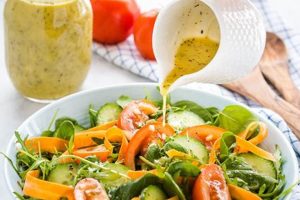
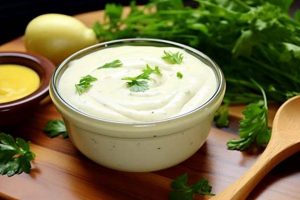
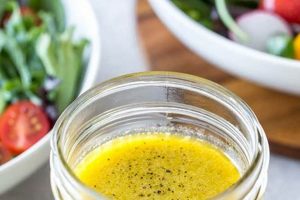
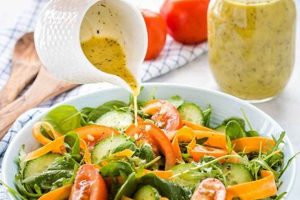
A blend of balsamic vinegar, oil, and often other seasonings creates a tangy, slightly sweet emulsion used to enhance the flavor of salads and other dishes. A classic preparation might include extra virgin olive oil, Dijon mustard, honey, and minced garlic, whisked together until emulsified.
This type of dressing offers a versatile and flavorful addition to a wide range of culinary creations. The balance of sweet and acidic notes in balsamic vinegar complements diverse ingredients, from leafy greens and fresh vegetables to grilled meats and roasted vegetables. Its historical roots can be traced back to Modena, Italy, where balsamic vinegar originated, adding a touch of culinary heritage to contemporary cuisine. The ability to customize the dressing with various herbs, spices, and sweeteners allows for a personalized culinary experience.
The following sections will explore the nuances of ingredient selection, proportional balance, and emulsion techniques essential for crafting a perfect dressing. Variations and creative adaptations will also be discussed to inspire culinary exploration.
Tips for Crafting an Excellent Balsamic Vinaigrette
Achieving a well-balanced and flavorful emulsion requires attention to detail and an understanding of the interplay of ingredients. These tips offer guidance for creating a superior dressing.
Tip 1: Quality Ingredients Matter: Opt for high-quality balsamic vinegar, preferably aged. Extra virgin olive oil with a robust flavor profile enhances the overall taste. Freshly ground black pepper and high-quality salt are also essential.
Tip 2: Balance is Key: Strive for a harmonious balance between the acidity of the vinegar and the richness of the oil. Adjust the ratio to personal preference, typically starting with a 3:1 ratio of oil to vinegar.
Tip 3: Emulsification Technique: Proper emulsification creates a stable and creamy dressing. Whisk the ingredients vigorously or use a blender to combine them thoroughly. A slow, steady stream of oil added to the vinegar while whisking promotes a stable emulsion.
Tip 4: Flavor Enhancements: Experiment with Dijon mustard, honey, maple syrup, or a touch of sweetness to balance the acidity. Minced garlic, shallots, or herbs like thyme or oregano add depth and complexity.
Tip 5: Taste and Adjust: Taste the dressing throughout the preparation process and adjust seasonings as needed. Small adjustments can significantly impact the final flavor profile.
Tip 6: Storage: Store leftover dressing in an airtight container in the refrigerator for up to one week. Shake well before serving as separation may occur.
Tip 7: Freshness is Paramount: Utilize fresh ingredients whenever possible. Fresh herbs and spices contribute a brighter, more vibrant flavor to the dressing.
By following these guidelines, one can consistently create a delicious and versatile dressing that elevates a variety of dishes. Careful attention to ingredient quality, balance, and technique ensures a consistently satisfying culinary experience.
These insights provide a foundation for creating a truly exceptional dressing, enhancing culinary creations and inspiring further exploration of flavor combinations.
1. High-quality balsamic vinegar

High-quality balsamic vinegar forms the foundation of a superior balsamic vinaigrette. Its complexity and depth of flavor directly influence the final character of the dressing. While standard balsamic vinegar offers a basic level of acidity, higher-quality versions, often aged for extended periods, contribute nuanced sweetness, subtle woodsy notes, and a desirable viscosity. This translates to a more pronounced and refined taste experience. For example, a vinaigrette crafted with a 12-year-aged balsamic will possess a richer, more complex flavor profile compared to one made with a standard commercial-grade vinegar. The concentrated flavor allows for a smaller quantity to be used, maximizing impact while maintaining balance within the emulsion.
The impact of balsamic quality extends beyond mere taste. A well-aged balsamic contributes a desirable viscosity that aids in emulsification, creating a smoother, more stable dressing. This viscosity also allows the dressing to cling to salad ingredients more effectively, ensuring a more even distribution of flavor. Furthermore, the depth of flavor provided by high-quality balsamic allows for greater flexibility in incorporating additional ingredients. The inherent sweetness can balance stronger flavors like garlic or Dijon mustard, resulting in a more harmonious final product. Investing in premium balsamic elevates the entire culinary experience, transforming a simple vinaigrette into a nuanced expression of flavor.
Understanding the crucial role of high-quality balsamic vinegar in crafting a remarkable vinaigrette enables informed ingredient selection. The cost differential between standard and premium balsamic is often justified by the significant improvement in overall flavor and texture. While experimentation with various balsamic types can be beneficial, prioritizing quality ultimately ensures a more rewarding culinary outcome, reflecting the nuanced artistry possible within the seemingly simple preparation of a balsamic vinaigrette.
2. Fresh extra virgin olive oil
Extra virgin olive oil constitutes a critical element within a balsamic vinaigrette, contributing significantly to both flavor and texture. Its inherent characteristics interact dynamically with the balsamic vinegar, impacting the emulsion’s overall quality and sensory experience. Selecting the appropriate olive oil is as crucial as choosing a high-quality balsamic vinegar; both are essential for achieving a well-balanced and nuanced dressing.
- Flavor Profile
Extra virgin olive oils exhibit a wide range of flavor profiles, from peppery and robust to delicate and fruity. These nuances influence the final taste of the vinaigrette. For example, a robust Tuscan olive oil might complement a strong, aged balsamic, while a milder oil might be preferred with a lighter vinegar. The interplay between the oil’s inherent flavors and the vinegar’s acidity creates a complex tapestry of taste sensations within the final dressing.
- Acidity and Fruitiness
The acidity and fruitiness levels within the olive oil play a crucial role in balancing the balsamic’s tartness. An oil with pronounced fruitiness can temper a sharp vinegar, creating a more harmonious blend. Conversely, an oil with higher acidity might enhance the vinaigrette’s brightness, lending a sharper, more vibrant flavor profile. Careful consideration of these elements allows for fine-tuning the dressing’s balance and overall taste experience.
- Emulsification Properties
Extra virgin olive oil possesses natural emulsifying properties, contributing to the vinaigrette’s stability. The oil’s viscosity and chemical composition help bind with the vinegar, creating a cohesive emulsion that resists separation. This characteristic is vital for both the texture and visual appeal of the dressing. A stable emulsion ensures even distribution of flavor across the salad and prevents an oily, unappetizing appearance.
- Freshness and Quality
Freshness is paramount when selecting olive oil for a vinaigrette. Over time, olive oil can oxidize, developing off-flavors that detract from the delicate balance of the dressing. Opting for high-quality, fresh extra virgin olive oil maximizes the oil’s inherent positive attributes, ensuring a vibrant and flavorful vinaigrette. Freshly pressed oil often exhibits brighter, more pronounced flavors that contribute significantly to the final dressing’s sensory experience.
The selection of extra virgin olive oil directly impacts the overall success of a balsamic vinaigrette. Careful consideration of flavor profiles, acidity levels, and freshness ensures a well-balanced and flavorful dressing. Harmonizing the chosen olive oil with the balsamic vinegar elevates the vinaigrette beyond a simple condiment, transforming it into a nuanced culinary creation that enhances the dining experience. The synergy between these two key components determines the ultimate flavor profile and textural quality of the vinaigrette, demonstrating the profound impact of ingredient selection on culinary artistry.
3. Balanced acidity and richness
Balanced acidity and richness represent the cornerstone of a successful balsamic vinaigrette. The interplay between these two elements dictates the overall sensory experience, influencing how the dressing complements the accompanying ingredients. Acidity, primarily derived from the balsamic vinegar, provides brightness and sharpness, stimulating the palate. Richness, contributed by the olive oil and potentially other ingredients like honey or mustard, delivers a smooth, mouth-coating sensation that tempers the acidity. The dynamic tension between these contrasting yet complementary sensations creates a complex and harmonious flavor profile. A vinaigrette lacking sufficient acidity can taste flat and overly oily, while excessive acidity can be overpowering and unpleasant. Conversely, insufficient richness can result in a thin, watery dressing that fails to cling to the salad components, while excessive richness can make the dressing heavy and cloying. The delicate balance between these two qualities is paramount for achieving a dressing that is both flavorful and palatable.
Consider, for instance, a salad featuring bitter greens like arugula. A vinaigrette with pronounced acidity can cut through the bitterness, while the richness of the olive oil provides a textural counterpoint. In contrast, a salad with sweeter ingredients like roasted vegetables might benefit from a slightly less acidic vinaigrette, allowing the sweetness of the vegetables to shine through. The richness of the dressing can further enhance the vegetables by providing a complementary textural element. These examples demonstrate the practical significance of understanding the balance between acidity and richness when crafting a balsamic vinaigrette tailored to specific ingredients. Achieving this balance requires careful consideration of the other components within the dressing, as well as the characteristics of the dish it accompanies. The ratio of oil to vinegar, the presence of additional ingredients like sweeteners or emulsifiers, and even the age and quality of the balsamic vinegar can all impact the final balance of acidity and richness.
Mastering the interplay of acidity and richness within a balsamic vinaigrette is crucial for culinary success. It transforms a simple mixture of oil and vinegar into a nuanced condiment capable of elevating a wide range of dishes. This understanding enables informed ingredient selection, precise adjustments during preparation, and ultimately, a more satisfying and flavorful culinary experience. The ability to tailor the balance of acidity and richness to complement specific ingredients unlocks the true potential of a balsamic vinaigrette, demonstrating the profound impact of these seemingly simple elements on the overall culinary composition.
4. Proper emulsification technique

Proper emulsification is crucial for creating a successful balsamic vinaigrette. It transforms the individual componentsoil and vinegarinto a homogenous, stable mixture. A well-emulsified dressing exhibits a smooth, creamy texture and clings effectively to salad ingredients, ensuring even flavor distribution. Without proper emulsification, the oil and vinegar separate, resulting in a greasy, unappetizing appearance and uneven flavor.
- Temporary vs. Permanent Emulsions
Balsamic vinaigrette is typically a temporary emulsion, meaning the oil and vinegar eventually separate. However, proper technique maximizes the emulsion’s stability, delaying separation and enhancing the overall dining experience. Permanent emulsions, like mayonnaise, utilize emulsifying agents to create a lasting bond between the oil and vinegar, a characteristic not typically sought in a balsamic vinaigrette.
- Whisking Method
Whisking is the most common method for emulsifying a balsamic vinaigrette. Slow, steady whisking while gradually drizzling the oil into the vinegar allows the two liquids to combine effectively, creating small droplets of oil dispersed throughout the vinegar. Continuous whisking creates shear forces that break down the oil into smaller particles, promoting a more stable and homogenous emulsion.
- Blender Method
A blender offers a quicker and more efficient method, particularly for larger volumes. The high-speed rotation of the blender blades rapidly disperses the oil into tiny droplets, creating a very stable emulsion. However, over-blending can sometimes result in a thicker, more viscous dressing, which may not be desirable for all applications.
- Emulsifying Agents (Optional)
While not strictly necessary, emulsifying agents such as Dijon mustard, honey, or egg yolk can enhance the stability and texture of a balsamic vinaigrette. These ingredients contain molecules that bind to both oil and water, facilitating a more thorough and lasting emulsion. The addition of such agents can also contribute to the flavor profile and overall complexity of the dressing.
Effective emulsification techniques are essential for achieving a desirable texture and flavor distribution in a balsamic vinaigrette. Understanding the principles behind temporary emulsions, mastering the whisking or blending method, and considering the judicious use of emulsifying agents allows for greater control over the final product. A well-emulsified dressing enhances the overall sensory experience, ensuring the flavors meld harmoniously and coat the salad ingredients evenly, elevating a simple mixture of oil and vinegar into a truly delightful culinary creation.
5. Complementary Seasonings

Complementary seasonings play a pivotal role in elevating a balsamic vinaigrette from a simple mixture of oil and vinegar to a nuanced and flavorful dressing. These additions introduce complexity, depth, and balance, transforming the foundational elements into a harmonious culinary creation. A judicious selection of seasonings can personalize the vinaigrette, tailoring it to specific ingredients or desired flavor profiles. Careful consideration must be given to the interplay of flavors, ensuring that the seasonings complement, rather than overpower, the core components of the balsamic and olive oil.
- Herbs
Fresh herbs contribute vibrancy and aromatic complexity to a balsamic vinaigrette. Classic choices include oregano, thyme, rosemary, and basil. The inherent flavors of these herbs can be used strategically to complement specific salad ingredients. For example, rosemary might pair well with roasted vegetables, while basil complements tomatoes and mozzarella. Dried herbs can also be used, but offer a less pronounced flavor and may require a longer steeping time to fully infuse the dressing.
- Spices
Ground spices, such as black pepper, garlic powder, or onion powder, add depth and warmth to a balsamic vinaigrette. A pinch of red pepper flakes introduces a touch of heat, while smoked paprika adds a smoky dimension. The intensity of these spices should be carefully modulated to avoid overpowering the delicate balance of the dressing. Freshly ground spices generally offer a more vibrant and nuanced flavor compared to pre-ground options.
- Sweeteners
Sweeteners, such as honey, maple syrup, or a pinch of sugar, balance the acidity of the balsamic vinegar and add a touch of sweetness. The type and quantity of sweetener influence the overall flavor profile of the vinaigrette. Honey imparts a floral sweetness, while maple syrup adds a subtle caramel note. The sweetness should complement the other flavors, creating a harmonious balance rather than an overly sweet dressing.
- Other Flavor Enhancers
Other ingredients, such as Dijon mustard, minced garlic, or grated shallots, contribute complexity and depth to the vinaigrette. Dijon mustard adds a tangy complexity, while garlic and shallots offer pungent, savory notes. These ingredients can be used individually or in combination to create unique flavor profiles tailored to specific preferences and accompanying dishes.
The strategic incorporation of complementary seasonings significantly enhances the complexity and depth of a balsamic vinaigrette. The interplay of herbs, spices, sweeteners, and other flavor enhancers elevates the dressing from a simple condiment to a nuanced culinary element capable of enhancing a wide range of dishes. Understanding the characteristics of various seasonings and their interaction with the core ingredients allows for customized flavor profiles, transforming a basic vinaigrette into a personalized culinary expression.
6. Taste and adjust accordingly

The concept of “taste and adjust accordingly” is integral to crafting a successful balsamic vinaigrette. It represents an iterative process of evaluation and refinement, ensuring the final product achieves a harmonious balance of flavors. A recipe serves as a guide, but individual palates and ingredient variations necessitate adjustments tailored to specific circumstances. The dynamic interplay of acidity, sweetness, richness, and aromatic complexity requires ongoing assessment and modification throughout the preparation process. The initial combination of balsamic vinegar and olive oil establishes a foundation, but the subsequent incorporation of seasonings and flavor enhancers demands careful monitoring and adjustment.
Consider, for example, a balsamic vinaigrette intended for a salad featuring ripe strawberries and creamy goat cheese. The sweetness of the berries and cheese necessitates a vinaigrette with balanced acidity. An initial tasting might reveal excessive sharpness from the balsamic vinegar. Adjusting by incorporating a touch of honey or maple syrup tempers the acidity, creating a more harmonious pairing with the sweet salad components. Similarly, if the vinaigrette lacks sufficient complexity, a pinch of freshly ground black pepper or a few drops of Dijon mustard can enhance the flavor profile. These adjustments, guided by continuous tasting, ensure the dressing complements, rather than clashes with, the other ingredients in the dish.
This iterative process of tasting and adjusting underscores the crucial role of sensory evaluation in culinary practice. It moves beyond a strict adherence to prescribed measurements and embraces the nuances of individual ingredients and personal preferences. The ability to critically assess flavor profiles and make informed adjustments distinguishes a competent cook from a truly skilled culinary artist. Mastering this aspect of food preparation empowers individuals to create balsamic vinaigrettes tailored to specific dishes and individual tastes, elevating the simple combination of oil and vinegar to a personalized culinary expression.
Frequently Asked Questions
The following addresses common inquiries regarding balsamic vinaigrette preparation and utilization.
Question 1: What is the ideal ratio of oil to vinegar in a balsamic vinaigrette?
While a 3:1 ratio of oil to vinegar is a common starting point, the optimal balance depends on individual preference and the specific balsamic vinegar used. Aged balsamic vinegars often possess a more pronounced sweetness, allowing for a lower oil-to-vinegar ratio. Experimentation and tasting are encouraged to determine the ideal balance.
Question 2: How can separation in a balsamic vinaigrette be prevented?
Balsamic vinaigrette is inherently a temporary emulsion, meaning separation is inevitable. However, vigorous whisking or blending during preparation creates a more stable emulsion, delaying separation. Adding a small amount of Dijon mustard or honey can also enhance emulsification and stability.
Question 3: Can balsamic vinaigrette be made ahead of time?
While best served fresh, balsamic vinaigrette can be prepared up to a week in advance and stored in an airtight container in the refrigerator. Shake well before serving to re-emulsify the mixture.
Question 4: What types of salads pair best with balsamic vinaigrette?
Balsamic vinaigrette complements a wide range of salads, from simple green salads to those featuring roasted vegetables, grilled meats, or cheeses. Its versatility allows for pairing with diverse flavor profiles and textures.
Question 5: Can other oils be used besides olive oil?
While extra virgin olive oil is traditional, other oils like avocado oil or grapeseed oil can be substituted. However, the flavor profile of the vinaigrette will be affected by the choice of oil. Consider the oil’s flavor characteristics when making substitutions.
Question 6: How can the sweetness of a balsamic vinaigrette be adjusted?
Honey, maple syrup, or a small amount of sugar can be added to adjust the sweetness of a balsamic vinaigrette. Start with a small amount and taste, adding more until the desired level of sweetness is achieved.
These responses provide foundational knowledge for creating and enjoying a versatile balsamic vinaigrette. Experimentation and adaptation are encouraged to discover personalized flavor profiles and pairings.
This concludes the frequently asked questions section. The subsequent sections will delve into specific recipe variations and offer advanced techniques for crafting a truly exceptional balsamic vinaigrette.
Conclusion
Exploration of balsamic vinaigrette salad dressing recipes reveals a deceptively complex interplay of ingredients and techniques. From the selection of high-quality balsamic vinegar and extra virgin olive oil to the careful balance of acidity, richness, and complementary seasonings, each element contributes significantly to the final product. Proper emulsification techniques ensure a desirable texture and consistent flavor distribution. The iterative process of tasting and adjusting allows for personalized flavor profiles tailored to specific dishes and individual palates.
Mastery of balsamic vinaigrette preparation represents a valuable addition to any culinary repertoire. Its versatility, adaptable to a wide array of ingredients and flavor profiles, offers endless opportunities for creative exploration. Continued experimentation and refinement promise increasingly nuanced and rewarding culinary experiences, transforming a simple mixture of oil and vinegar into a true culinary masterpiece.