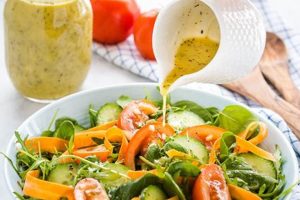
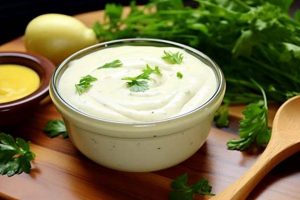
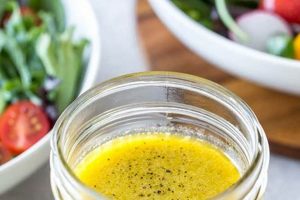
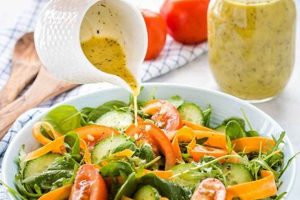
A simple emulsion of acid and fat, typically using ingredients like red wine vinegar, balsamic vinegar, or apple cider vinegar combined with extra virgin olive oil, forms the foundation of a versatile culinary staple. Often enhanced with seasonings such as salt, pepper, herbs, and spices, this mixture provides a flavorful coating for various greens and vegetables. A classic example includes a 3:1 ratio of oil to vinegar, whisked together with Dijon mustard, minced garlic, and a touch of honey.
This fundamental dressing offers numerous advantages. Its ease of preparation makes it a convenient choice for home cooks, while its adaptability allows for endless variations to complement diverse palates and cuisines. Furthermore, the individual components contribute potential health benefits, with olive oil offering healthy fats and vinegar potentially aiding in blood sugar regulation. Its historical roots can be traced back to ancient civilizations who recognized the preservative qualities of vinegar and the rich flavor of olive oil, combining them for both culinary and medicinal purposes.
The following sections will explore specific variations, offering detailed instructions, tips for ingredient selection, and techniques for achieving optimal emulsification. Further discussion will cover the scientific principles behind emulsification, storage recommendations, and creative ways to adapt this basic dressing to suit a range of salads and dishes.
Tips for Crafting Exceptional Vinaigrettes
Achieving a well-balanced and flavorful emulsion requires attention to detail and an understanding of the underlying principles. These tips offer guidance for elevating simple combinations of oil and acid into culinary masterpieces.
Tip 1: Quality Ingredients Matter: The foundation of any successful dressing lies in the quality of its components. Opt for extra virgin olive oil with a robust flavor profile and a vinegar that complements the intended salad. Consider experimenting with varieties such as champagne vinegar, sherry vinegar, or flavored balsamic vinegars.
Tip 2: Achieve Optimal Emulsification: Proper emulsification prevents the dressing from separating and ensures a smooth, consistent texture. Whisk the vinegar and seasonings together before slowly drizzling in the oil while whisking constantly. Alternatively, a blender or food processor can create a more stable emulsion.
Tip 3: Balance is Key: The ratio of oil to vinegar influences the dressing’s overall flavor and texture. A classic 3:1 ratio of oil to vinegar offers a good starting point, but adjustments can be made to suit personal preferences. Consider the intensity of the vinegar when determining the ideal balance.
Tip 4: Seasoning Enhances Flavor: Salt and freshly ground black pepper are essential seasonings, but don’t hesitate to experiment with additional flavors. Fresh or dried herbs, minced garlic, shallots, Dijon mustard, honey, or maple syrup can add complexity and depth.
Tip 5: Taste and Adjust: Before dressing the salad, taste the emulsion and adjust the seasonings as needed. Additional vinegar, oil, salt, pepper, or other flavorings can be incorporated to achieve the desired balance.
Tip 6: Freshness is Paramount: While some dressings can be stored for short periods, it’s generally recommended to prepare them fresh. The flavors meld and intensify over time, but the emulsion can break down during storage.
Tip 7: Consider the Salad: The ideal dressing complements the other ingredients in the salad. A delicate vinaigrette might be overwhelmed by robust greens, while a heavier dressing may be better suited for heartier vegetables.
By following these guidelines, one can consistently produce flavorful and well-emulsified dressings that enhance the overall dining experience.
The subsequent conclusion will summarize the key principles discussed and offer inspiration for further culinary exploration.
1. Ingredients

The quality and selection of ingredients directly impact the overall flavor profile and success of a vinegar and olive oil salad dressing. Careful consideration of each component allows for a balanced and nuanced final product.
- Oils
The choice of oil significantly influences the dressing’s flavor and texture. Extra virgin olive oil is a common base, offering a fruity and peppery taste. Other oils like avocado, grapeseed, or walnut oil can provide unique flavor profiles and health benefits. The oil’s quality directly affects the final result; high-quality oils contribute to a superior dressing.
- Vinegars
Vinegar provides the acidic element, balancing the richness of the oil. Various vinegars, such as red wine vinegar, balsamic vinegar, apple cider vinegar, or white wine vinegar, offer distinct flavor profiles, ranging from sharp and tangy to sweet and mellow. The vinegar’s acidity level also plays a crucial role in the emulsion’s stability.
- Seasonings
Seasonings enhance the complexity of the dressing. Salt and freshly ground black pepper are fundamental, while additional seasonings like herbs (fresh or dried), spices, garlic, shallots, or mustard can add depth and character. The balance of seasonings is crucial, as overpowering flavors can detract from the overall taste.
- Emulsifiers
Emulsifiers help bind the oil and vinegar, creating a stable and homogenous mixture. Common emulsifiers include Dijon mustard, honey, maple syrup, or egg yolks. The emulsifier’s presence contributes to the dressing’s texture and mouthfeel, preventing separation and ensuring a consistent coating on the salad ingredients.
The interplay of these key ingredients determines the ultimate character of the dressing. Harmonizing the oil, vinegar, seasonings, and emulsifier is essential for creating a balanced and delicious complement to any salad.
2. Proportions
Proportions play a crucial role in determining the balance and overall character of a vinegar and olive oil salad dressing. The ratio of oil to vinegar significantly influences the flavor profile, texture, and mouthfeel of the final emulsion. Understanding these relationships allows for precise control over the dressing’s characteristics and ensures a harmonious complement to the accompanying salad ingredients.
- Classic Vinaigrette Ratio
The standard vinaigrette ratio consists of three parts oil to one part vinegar (3:1). This proportion creates a balanced emulsion with a pleasant balance of richness and acidity. It serves as a versatile foundation, suitable for a wide variety of salads and palates. The 3:1 ratio provides a familiar flavor profile, making it a popular choice for both novice and experienced cooks.
- Variations for Flavor Profiles
While the 3:1 ratio serves as a reliable starting point, deviations can create unique flavor experiences. A higher oil ratio (e.g., 4:1 or 5:1) yields a richer, milder dressing, ideal for delicate greens or robust vegetables. Conversely, increasing the vinegar proportion (e.g., 2:1) results in a sharper, more acidic dressing, well-suited for heartier salads or those requiring a pronounced tang. The specific ratio chosen should reflect the desired balance of richness and acidity.
- Influence of Ingredient Intensity
The intensity of the chosen vinegar and oil also influences the ideal proportions. A strongly flavored vinegar, such as balsamic, may require a higher oil ratio to balance its intensity. Similarly, a mild olive oil may benefit from a lower oil-to-vinegar ratio to prevent a bland dressing. Careful consideration of the individual ingredients’ flavor profiles allows for optimal balance.
- Impact on Emulsification
The ratio of oil to vinegar affects the emulsion’s stability. A higher oil content can create a thicker, more stable emulsion, while a higher vinegar content may result in a thinner, less stable mixture. Proper emulsification techniques, such as whisking or blending, are essential for creating a homogenous dressing regardless of the chosen ratio.
By understanding the interplay between proportions and ingredient characteristics, one can create vinegar and olive oil salad dressings tailored to specific flavor preferences and salad compositions. Mastery of these principles allows for consistent and predictable results, elevating the simple combination of oil and vinegar into a versatile culinary tool.
3. Emulsification
Emulsification is crucial for creating a homogenous and palatable vinegar and olive oil salad dressing. Oil and vinegar naturally separate due to their differing polarities. Emulsification overcomes this by dispersing tiny droplets of one liquid (the dispersed phase, in this case, oil) within another (the continuous phase, vinegar). This process creates a stable mixture, preventing the dressing from separating into distinct layers. The stability of this emulsion contributes significantly to the dressing’s texture, mouthfeel, and ability to coat salad ingredients evenly. Without proper emulsification, the dressing would lack the desired creamy consistency and deliver an uneven distribution of flavor.
Several factors influence the stability and effectiveness of emulsion in salad dressings. Vigorous whisking or blending provides the mechanical energy needed to break down the oil into smaller droplets and disperse them throughout the vinegar. Emulsifying agents, such as Dijon mustard or honey, further stabilize the mixture. These agents contain molecules with both hydrophilic (water-loving) and hydrophobic (oil-loving) properties. This allows them to bridge the gap between the oil and vinegar, preventing the droplets from coalescing and maintaining the emulsion’s stability. The choice of ingredients also plays a role. For instance, a higher proportion of oil to vinegar generally creates a thicker, more stable emulsion compared to a vinegar-heavy dressing.
A practical example of emulsification’s importance can be observed when preparing a simple vinaigrette. If oil and vinegar are simply combined without whisking or the addition of an emulsifier, the mixture will quickly separate. The oil will float on top of the vinegar, resulting in an uneven distribution of flavor and a less appealing texture. However, when the mixture is vigorously whisked or a small amount of Dijon mustard is added, a stable emulsion forms. The dressing becomes creamy, coats the salad ingredients evenly, and delivers a balanced flavor profile. Understanding and applying the principles of emulsification are therefore essential for achieving a successful and enjoyable vinegar and olive oil salad dressing.
4. Seasoning
Seasoning is fundamental to a successful vinegar and olive oil salad dressing recipe. It elevates the simple combination of oil and vinegar, transforming it into a complex and flavorful culinary creation. Careful consideration of seasoning choices and their interplay with other ingredients is essential for achieving a balanced and harmonious final product.
- Salt and Pepper: The Foundation
Salt and freshly ground black pepper serve as the foundational seasonings in virtually all vinegar and olive oil dressings. Salt enhances the inherent flavors of the other ingredients, while pepper adds a subtle bite and complexity. The proper balance of salt and pepper is crucial, as too much can overpower the dressing, while too little can leave it tasting bland. The type of salt used can also subtly influence the final flavor; kosher salt or sea salt are generally preferred over iodized table salt.
- Herbs and Spices: Adding Depth and Complexity
Fresh or dried herbs and spices introduce layers of flavor and aroma to the dressing. Common choices include oregano, thyme, rosemary, basil, dill, parsley, chives, and mint. The selection of herbs should complement the other salad ingredients and the overall flavor profile desired. Spices like paprika, cumin, coriander, and chili flakes can add warmth and complexity. The quantity and combination of herbs and spices should be carefully balanced to avoid overpowering the dressing or clashing with other flavors.
- Aromatic Vegetables: Enhancing Flavor and Texture
Incorporating finely minced or grated aromatic vegetables like garlic, shallots, onions, or ginger can significantly enhance the dressing’s flavor profile. These ingredients add a pungent and savory note that complements the acidity of the vinegar and the richness of the oil. Roasting or caramelizing these vegetables before adding them to the dressing can further deepen their flavor and add a touch of sweetness.
- Sweet and Savory Elements: Balancing Flavors
A touch of sweetness can balance the acidity of the vinegar and create a more rounded flavor profile. Honey, maple syrup, or a pinch of sugar are common additions. Similarly, incorporating savory elements like Dijon mustard, Worcestershire sauce, or soy sauce can add umami and depth. The balance of sweet and savory components is crucial for achieving a harmonious final product.
The interplay of these seasoning elements transforms a simple vinegar and olive oil emulsion into a dynamic and flavorful dressing. Careful consideration of each component’s contribution, their proportions, and their interaction with other ingredients allows for a customized culinary creation that complements a wide range of salads and palates. The art of seasoning lies in achieving a balanced and harmonious flavor profile that enhances the overall dining experience.
5. Flavor Balance
Flavor balance is paramount in a successful vinegar and olive oil salad dressing recipe. It dictates the overall palatability and determines whether the dressing complements or clashes with the other salad components. A well-balanced dressing harmonizes contrasting tastesacidity, sweetness, saltiness, bitterness, and umamicreating a unified and enjoyable culinary experience. A poorly balanced dressing, however, can overpower the other flavors or create an unpleasant discordance.
- Acidity
The primary source of acidity in these dressings is vinegar. The level of acidity must be carefully calibrated to provide a pleasant tang without being overly sour. Different vinegars possess varying levels of acidity; for example, red wine vinegar tends to be sharper than balsamic vinegar. The chosen vinegar’s acidity influences the other ingredient proportions and seasoning choices. Overly acidic dressings can overwhelm delicate greens, while insufficient acidity can result in a bland or oily taste.
- Sweetness
Sweetness acts as a counterpoint to acidity, rounding out the flavor profile and adding depth. Small amounts of honey, maple syrup, or sugar are often incorporated to achieve this balance. The degree of sweetness should complement the other ingredients and the overall flavor profile desired. Excessive sweetness can make the dressing cloying, while insufficient sweetness can leave it tasting too tart.
- Saltiness
Salt is essential for enhancing the other flavors and creating a savory foundation. However, the amount of salt must be judiciously controlled to avoid overpowering the dressing or clashing with the salad’s other components. The salinity level of the chosen ingredients, such as olives or cheeses, must also be considered when determining the appropriate amount of salt to add to the dressing.
- Other Flavor Dimensions
Beyond the core elements of acidity, sweetness, and saltiness, other flavor dimensions contribute to a balanced dressing. Bitterness from ingredients like mustard or certain herbs can add complexity, while umami from ingredients like soy sauce or Worcestershire sauce can provide depth. Incorporating these nuanced flavors requires careful consideration to ensure they harmonize with the overall flavor profile and do not overpower the other components. The balance of these elements contributes significantly to the dressing’s final character.
Achieving flavor balance is a dynamic process that involves careful consideration of each ingredient’s contribution and its interaction with other components. The interplay of acidity, sweetness, saltiness, and other nuanced flavors creates a complex tapestry of taste that elevates a simple vinegar and olive oil emulsion into a sophisticated culinary creation. A well-balanced dressing not only enhances the flavor of the salad but also contributes to a more satisfying and enjoyable dining experience overall.
6. Freshness

Freshness plays a vital role in the quality and flavor of vinegar and olive oil salad dressings. Because these dressings typically rely on minimal processing and few preservatives, the quality of the individual ingredients directly impacts the final product. Freshly squeezed lemon juice, for example, offers a brighter, more vibrant flavor compared to bottled lemon juice. Similarly, freshly harvested herbs provide a more intense aroma and flavor than dried herbs. The degradation of these ingredients over time can lead to a decline in both flavor and overall quality, resulting in a less appealing dressing.
The concept of freshness extends beyond the individual ingredients to encompass the dressing itself. Ideally, vinegar and olive oil dressings are prepared just before serving. This maximizes the flavor and ensures optimal emulsification. While some dressings can be stored for short periods, the delicate balance of flavors can deteriorate over time, and the emulsion may break down. For instance, a dressing containing fresh garlic may develop a harsh flavor if stored for too long, while a dressing with delicate herbs may lose its aromatic vibrancy. Therefore, prioritizing freshly made dressings generally leads to a superior culinary outcome.
Prioritizing fresh ingredients and preparing dressings shortly before consumption significantly enhances the overall dining experience. The vibrant flavors, crisp textures, and balanced aromas contribute to a more satisfying and enjoyable meal. While time constraints may sometimes necessitate the use of pre-made or stored dressings, understanding the crucial role of freshness allows for informed decisions and adjustments to optimize flavor and quality whenever possible. Ultimately, emphasizing freshness underscores a commitment to quality and elevates the simple act of enjoying a salad into a celebration of flavor.
7. Versatility
The versatility of vinegar and olive oil salad dressings lies in their adaptability to a wide range of culinary applications. This adaptability stems from the simplicity of the core ingredients and the ease with which flavors can be modified and enhanced. From a light and tangy vinaigrette to a rich and creamy emulsion, these dressings can be tailored to complement diverse ingredients and cuisines. This section explores the multifaceted nature of this versatility, demonstrating its value in various culinary contexts.
- Adaptability to Diverse Ingredients
Vinegar and olive oil dressings pair well with a wide array of salad ingredients, from delicate leafy greens to robust vegetables, grains, proteins, and cheeses. The dressing’s flavor profile can be adjusted to complement the specific ingredients, creating a harmonious balance. For instance, a light lemon vinaigrette enhances the delicate flavors of a spring mix salad, while a balsamic vinaigrette complements the earthiness of roasted vegetables and grilled meats.
- Customization through Flavor Combinations
The basic formula of oil and vinegar provides a blank canvas for culinary creativity. The addition of herbs, spices, aromatics, and other flavoring agents allows for endless customization. A simple vinaigrette can be transformed with the addition of fresh herbs like basil and oregano, creating a Mediterranean-inspired dressing. Alternatively, incorporating spices like cumin and chili powder yields a Southwestern flair. This adaptability allows cooks to tailor dressings to individual preferences and specific dish requirements.
- Transformation of Texture and Mouthfeel
The texture and mouthfeel of vinegar and olive oil dressings can be modified through the addition of emulsifiers and other ingredients. A classic vinaigrette offers a light and tangy experience, while the incorporation of Dijon mustard or honey creates a creamier, more substantial dressing. Adding ingredients like pureed avocado or roasted red peppers can further enhance the texture and provide additional flavor dimensions. This versatility allows the dressing to play a significant role in the overall sensory experience of the dish.
- Application Beyond Salads
While primarily associated with salads, vinegar and olive oil dressings can be employed in a variety of other culinary applications. They serve as excellent marinades for meat, poultry, and fish, adding flavor and tenderizing the protein. These dressings can also be used as sauces for grilled vegetables, roasted potatoes, or grain bowls. Their versatility extends beyond the traditional salad context, offering a flexible and flavorful addition to a wide range of dishes.
The versatility of vinegar and olive oil dressings contributes significantly to their enduring popularity in kitchens worldwide. Their adaptability to diverse ingredients, customizable flavor profiles, and variable textures make them an indispensable tool for home cooks and professional chefs alike. By understanding the underlying principles of flavor balance and ingredient interaction, one can harness the full potential of these simple yet versatile dressings, elevating everyday meals and creating culinary masterpieces.
Frequently Asked Questions
This section addresses common inquiries regarding vinegar and olive oil salad dressing recipes, providing concise and informative responses.
Question 1: What is the ideal ratio of vinegar to oil in a basic vinaigrette?
A standard vinaigrette typically uses a 3:1 ratio of oil to vinegar. However, this can be adjusted based on personal preference and the specific types of oil and vinegar used. A milder vinegar might benefit from a 2:1 ratio, while a stronger vinegar might require a 4:1 ratio or higher.
Question 2: How can one prevent the dressing from separating?
Vigorous whisking while slowly adding the oil to the vinegar helps create a stable emulsion. Incorporating an emulsifying agent such as Dijon mustard, honey, or egg yolk further stabilizes the mixture and prevents separation.
Question 3: What types of vinegar are best suited for these dressings?
Numerous vinegars can be utilized, each offering unique flavor characteristics. Red wine vinegar, white wine vinegar, balsamic vinegar, apple cider vinegar, and champagne vinegar are popular choices. The specific vinegar selected should complement the other salad ingredients.
Question 4: Beyond salt and pepper, what other seasonings can enhance the dressing’s flavor?
Fresh or dried herbs such as oregano, thyme, basil, and rosemary can significantly enhance the flavor profile. Minced garlic, shallots, or Dijon mustard provide additional complexity. A touch of sweetness from honey or maple syrup can balance the acidity.
Question 5: How long can a homemade vinegar and olive oil dressing be stored?
While best consumed immediately after preparation, most dressings can be stored in an airtight container in the refrigerator for up to a week. However, dressings containing fresh ingredients like garlic or herbs are best consumed within a few days. Always check for spoilage before use.
Question 6: Can these dressings be used for purposes beyond salads?
Absolutely. Vinegar and olive oil dressings can serve as marinades for meats, poultry, and fish. They also function as flavorful sauces for roasted vegetables, grilled meats, or as a base for dipping sauces.
Understanding these fundamental aspects of vinegar and olive oil salad dressing recipes ensures consistent and flavorful results. Experimentation with different ingredients and proportions allows for personalized creations tailored to individual preferences and specific culinary needs.
Further exploration of specific recipes and variations follows in the next section.
Vinegar and Olive Oil Salad Dressing Recipe
Exploration of vinegar and olive oil salad dressing recipes reveals a foundational element of culinary practice. From the careful selection of ingredientshigh-quality oils and vinegarsto the mastery of emulsification techniques, achieving a harmonious balance of flavors is paramount. Proportions dictate the interplay between acidity and richness, while judicious seasoning elevates the simplest combination of oil and vinegar into a dynamic culinary creation. Freshness ensures optimal flavor and texture, highlighting the importance of using quality ingredients and preparing dressings shortly before consumption. The versatility of these emulsions extends beyond salads, showcasing their adaptability as marinades, sauces, and flavor enhancers across diverse cuisines.
Mastery of vinegar and olive oil salad dressing recipes empowers culinary exploration and elevates the everyday meal. Continued experimentation with diverse ingredients, flavor combinations, and techniques promises a journey of gastronomic discovery, enriching culinary experiences and fostering an appreciation for the transformative potential of simple ingredients.