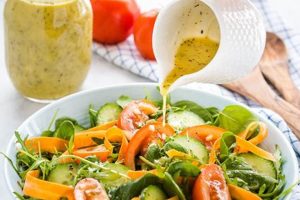
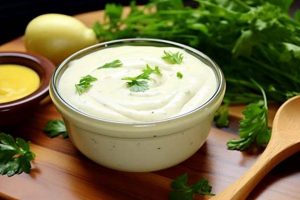
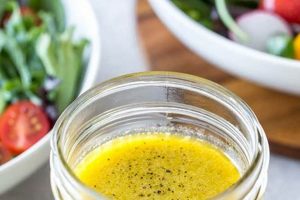
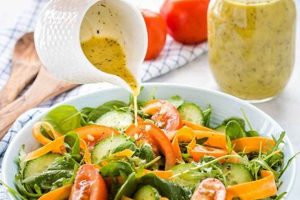
A vibrant and flavorful dish, taco salad combines the crispy crunch of tortilla chips with the savory elements of seasoned ground beef, fresh vegetables, and cheese, all brought together by a tangy, sweet, and slightly spicy Catalina dressing. This dressing, typically made with a base of ketchup, vinegar, and Worcestershire sauce, provides a distinctive character to the salad, differentiating it from other salads with vinaigrette-style dressings.
The appeal of this culinary creation lies in its versatility and customizability. It offers a satisfying meal option, adaptable to individual preferences and dietary needs. Vegetarian versions can easily substitute beans or lentils for the ground meat. The customizable nature of the toppings, ranging from classic lettuce and tomato to more adventurous additions like corn, black olives, or avocado, allows for endless variations. Furthermore, the relative ease and speed of preparation makes it an attractive choice for busy weeknight meals or casual gatherings. Historically, variations of taco salad emerged in the mid-20th century in the United States, reflecting the growing popularity of Mexican-inspired cuisine.
This article will further explore various aspects of creating this popular dish, including detailed recipes for both the salad and the dressing, tips for achieving optimal flavor and texture, and suggestions for creative ingredient combinations and presentation.
Tips for an Exceptional Taco Salad with Catalina Dressing
Elevating a taco salad from satisfactory to exceptional involves careful consideration of ingredient selection, preparation techniques, and flavor balancing. The following tips offer guidance for achieving optimal results.
Tip 1: Ingredient Quality Matters: Opt for fresh, high-quality ingredients whenever possible. Ripe tomatoes, crisp lettuce, and flavorful cheeses contribute significantly to the overall taste experience. Consider using lean ground beef or ground turkey for a healthier option.
Tip 2: Seasoning is Key: Proper seasoning enhances the flavor profile of the ground meat. Beyond standard taco seasoning, consider incorporating spices like cumin, chili powder, or smoked paprika for added depth.
Tip 3: Tortilla Chip Selection: The choice of tortilla chips influences both texture and flavor. While classic corn chips offer a traditional crunch, baked or multigrain chips provide a lighter alternative. Experiment with different flavors to complement the other ingredients.
Tip 4: Homemade Catalina Dressing: While convenient, pre-made Catalina dressings can sometimes lack the vibrant flavor of a homemade version. Preparing the dressing from scratch allows for customized sweetness and tanginess.
Tip 5: Layering for Optimal Crispness: To prevent soggy chips, layer the ingredients strategically. Start with a base of chips, followed by a layer of meat and cheese, and then add the remaining toppings just before serving.
Tip 6: Temperature Control: Serve the salad immediately after assembling to maintain the desired temperature and texture contrasts. Avoid adding hot ingredients directly onto cold ones to prevent wilting or melting.
Tip 7: Garnish for Visual Appeal: A visually appealing presentation enhances the dining experience. Consider garnishing the salad with fresh cilantro, chopped green onions, or a dollop of sour cream or guacamole.
By focusing on these details, one can create a taco salad that is not only delicious but also visually appealing and texturally satisfying. Attention to these elements elevates a simple dish into a memorable culinary experience.
These tips provide a foundation for crafting a superior taco salad experience. The following section will offer concluding thoughts and encourage further exploration of this versatile dish.
1. Crisp Tortilla Chips
Crisp tortilla chips constitute a foundational element of taco salad with Catalina dressing, providing essential textural contrast and acting as a vehicle for the other components. Their structural integrity is crucial; soggy chips compromise the dish’s appeal. The interplay between the crisp chips and the other ingredientsthe seasoned meat, fresh vegetables, creamy cheese, and tangy dressingcreates a multi-sensory experience. Imagine biting into a crisp chip coated in flavorful dressing, followed by the savory meat and the refreshing crunch of lettuce. This textural diversity is a defining characteristic of a successful taco salad.
Several factors influence chip crispness. Stale chips, or those exposed to excessive moisture, lose their desirable texture. Proper storage in an airtight container is vital. Furthermore, the type of chip influences its ability to maintain structural integrity. Thicker chips generally hold up better than thinner varieties, especially when exposed to the moisture of the salad ingredients and dressing. Baked chips offer a lighter alternative to fried chips, but their inherent structure might make them more susceptible to sogginess. Choosing the right chip is, therefore, a critical step in preparing a quality taco salad.
Maintaining chip crispness presents a practical challenge, particularly when preparing the salad in advance. Strategic layering offers a solution. Placing the chips at the bottom of the serving dish, followed by a layer of meat and cheese, creates a barrier against the wetter ingredients, such as tomatoes and dressing. Adding these last, just before serving, helps preserve the desired crunch. This mindful approach to construction ensures an optimal textural experience, highlighting the crucial role of crisp tortilla chips in a well-executed taco salad with Catalina dressing.
2. Seasoned Ground Meat

Seasoned ground meat forms an integral part of taco salad with Catalina dressing, contributing a savory depth that complements the other components. The meat’s flavor profile significantly influences the overall taste experience. A bland, under-seasoned meat base detracts from the vibrancy of the dish, while overly seasoned meat can overwhelm the more delicate flavors of the vegetables and dressing. Achieving a balanced flavor profile requires careful consideration of spice choices and quantities. Classic taco seasoning blends often incorporate cumin, chili powder, and paprika. These spices, when used judiciously, create a savory foundation that harmonizes with the tangy Catalina dressing. Additional spices, such as oregano, garlic powder, or onion powder, can further enhance the meat’s complexity.
The choice of ground meat also impacts the final result. Ground beef, the most common choice, offers a rich, familiar flavor. Leaner ground beef minimizes excessive grease, which can negatively affect the salad’s texture and overall appeal. Ground turkey or chicken provide lighter alternatives, suitable for those seeking lower-fat options. These meats, however, possess milder inherent flavors, requiring careful attention to seasoning to prevent blandness. Vegetarian adaptations might utilize seasoned lentils or crumbled tofu to provide a similar savory element, demonstrating the adaptability of this dish.
Effective seasoning practices extend beyond spice selection. Proper cooking techniques ensure optimal flavor development and texture. Browning the meat thoroughly enhances its savory notes through the Maillard reaction. Draining excess grease prevents a greasy, heavy salad. Furthermore, incorporating the seasonings during the cooking process allows them to meld with the meat, creating a more cohesive flavor profile. These considerations highlight the importance of seasoned ground meat as a critical component in a well-balanced and flavorful taco salad with Catalina dressing. Mastering this element elevates the dish from simple to exceptional, demonstrating a nuanced understanding of flavor dynamics and culinary technique.
3. Fresh, Vibrant Vegetables
Fresh, vibrant vegetables play a crucial role in a successful taco salad with Catalina dressing, contributing not only essential nutrients but also textural and flavor complexity. These elements provide a refreshing counterpoint to the richness of the seasoned meat, the tanginess of the dressing, and the saltiness of the tortilla chips. Consider the crispness of shredded iceberg lettuce, the juiciness of diced tomatoes, the sweetness of chopped bell peppers, and the sharpness of thinly sliced red onions. Each vegetable contributes a distinct textural and flavor dimension, creating a dynamic interplay that elevates the dish beyond a simple combination of ingredients. Without fresh vegetables, the salad risks becoming monotonous and heavy. Their inclusion introduces a refreshing lightness and a broader spectrum of flavors.
The choice of vegetables directly impacts the overall sensory experience. Wilted lettuce or bland, out-of-season tomatoes compromise the salad’s freshness and vibrancy. Opting for high-quality, in-season produce maximizes flavor and textural appeal. Furthermore, the variety of vegetables selected influences the nutritional value and visual appeal of the salad. A diverse mix of colorful vegetables, such as shredded carrots, chopped cucumbers, or black olives, not only enhances the aesthetic presentation but also broadens the nutritional profile. For example, the inclusion of dark leafy greens like spinach or romaine lettuce boosts the vitamin and mineral content. This mindful selection transforms the salad into a more nutritious and visually appealing meal.
Maintaining the freshness and vibrancy of the vegetables requires careful handling and preparation. Washing and drying the vegetables thoroughly prevents excess moisture from compromising the crispness of the tortilla chips. Chopping the vegetables into bite-sized pieces ensures even distribution throughout the salad and facilitates easier consumption. Furthermore, strategic layering within the salad helps preserve the vegetables’ freshness. Placing the more delicate vegetables, such as lettuce and tomatoes, above the denser components, like the meat and cheese, minimizes their exposure to the dressing and helps prevent them from becoming soggy. Attention to these details ensures that the fresh, vibrant vegetables contribute their intended textural and flavor complexity to the overall success of the taco salad with Catalina dressing.
4. Flavorful Cheese Blend

A flavorful cheese blend contributes significantly to the overall balance and complexity of a taco salad with Catalina dressing. Cheese provides a creamy, savory element that complements the tangy dressing and seasoned meat, while also offering textural contrast to the crisp tortilla chips and fresh vegetables. The careful selection and combination of cheeses can elevate this dish from simple to exceptional.
- Melting Properties and Texture
The melting properties of the chosen cheeses influence the texture and mouthfeel of the salad. Cheeses like cheddar, Monterey Jack, and Colby melt readily, creating a smooth, creamy texture that coats the other ingredients. These cheeses also contribute a characteristic mild, slightly tangy flavor that harmonizes with the Catalina dressing. Conversely, cheeses like crumbled cotija or queso fresco offer a different textural experience, providing a salty, crumbly counterpoint to the melted cheeses.
- Flavor Profiles and Intensity
The flavor profiles of the cheeses should complement, not overpower, the other components of the salad. Sharp cheddar provides a robust flavor that balances the tanginess of the Catalina dressing, while milder cheeses like Monterey Jack offer a creamy backdrop for the other flavors to shine. The intensity of the cheese flavors should be considered in relation to the seasoning of the meat and the other toppings. A balanced flavor profile ensures that no single element dominates the overall taste experience.
- Visual Appeal and Presentation
The visual presentation of the cheese contributes to the overall appeal of the salad. A combination of shredded and crumbled cheeses creates visual interest and textural variety. The color of the cheeses can also enhance the presentation. For example, a blend of yellow cheddar and white Monterey Jack provides a visually appealing contrast against the other ingredients. Shredding the cheese finely ensures even distribution throughout the salad, while larger crumbles offer pockets of concentrated flavor.
- Practical Considerations and Storage
Practical considerations, such as pre-shredded versus block cheese, influence the preparation process and the final result. Pre-shredded cheese offers convenience but can sometimes contain cellulose which may affect melting properties. Grating cheese from a block ensures optimal freshness and flavor, but requires additional preparation time. Proper storage of the cheese blend is also crucial for maintaining its quality. Storing the cheese in an airtight container in the refrigerator prevents it from drying out or absorbing unwanted flavors.
The selection and incorporation of a flavorful cheese blend represent a crucial step in creating a well-balanced and satisfying taco salad with Catalina dressing. By considering the melting properties, flavor profiles, visual appeal, and practical considerations, one can elevate this dish from ordinary to extraordinary. A thoughtful approach to cheese selection demonstrates an understanding of the interplay of flavors and textures and contributes significantly to the overall culinary experience.
5. Tangy Catalina Dressing

Tangy Catalina dressing forms the cohesive element in a taco salad recipe featuring Catalina dressing, binding the diverse components and contributing a signature flavor profile. Understanding its characteristics and impact on the overall dish is crucial for a successful culinary outcome. The dressing’s tangy, sweet, and slightly spicy notes complement the savory meat, crisp vegetables, and crunchy tortilla chips, creating a balanced and flavorful experience. This section explores the multifaceted role of Catalina dressing within this specific culinary context.
- Flavor Profile and Balance
Catalina dressing’s characteristic tanginess derives from a combination of vinegar and sweeteners, often including ketchup, sugar, or corn syrup. This sweet-tart balance provides a refreshing contrast to the richness of the seasoned meat and the saltiness of the tortilla chips. The subtle spiciness, often achieved through the addition of Worcestershire sauce or other spices, adds depth and complexity. The dressing’s flavor profile interacts dynamically with the other ingredients, creating a balanced and harmonious whole. For example, the tanginess cuts through the richness of ground beef, while the sweetness complements the fresh vegetables.
- Texture and Consistency
Catalina dressing’s smooth, slightly viscous consistency coats the salad ingredients evenly, ensuring that each bite incorporates its distinct flavor. This texture also contributes to the overall mouthfeel of the dish. A dressing that is too thin fails to adhere properly, resulting in a watery salad. Conversely, a dressing that is too thick can overwhelm the other ingredients. The ideal consistency allows the dressing to cling lightly to the components, enhancing their individual flavors without dominating the overall texture.
- Ingredient Interaction and Synergy
Catalina dressing acts as a bridge between the various ingredients in a taco salad, creating a synergistic relationship between disparate flavors and textures. The tanginess of the dressing enhances the savory notes of the seasoned meat, while the sweetness complements the fresh vegetables. The smooth consistency of the dressing contrasts with the crispness of the tortilla chips, creating a textural interplay that enhances the eating experience. This interplay of contrasting yet complementary elements highlights the crucial role of the dressing in unifying the dish.
- Versatility and Customization
While traditional Catalina dressing provides a solid foundation, its inherent versatility allows for customization to suit individual preferences. Adjusting the proportions of vinegar and sweetener modifies the level of tanginess. Adding spices, such as chili powder or paprika, enhances the complexity and heat. Incorporating ingredients like chopped onions, bell peppers, or olives further personalizes the flavor profile. This adaptability makes Catalina dressing a suitable choice for a wide range of palates and dietary preferences, contributing to its popularity in taco salad recipes.
In conclusion, the tangy Catalina dressing serves not merely as a condiment, but as an essential component that defines the character of a taco salad. Its flavor profile, texture, and interaction with the other ingredients contribute significantly to the overall culinary experience. Understanding these facets provides a deeper appreciation for the role of this versatile dressing in creating a successful and satisfying taco salad.
6. Proper Layering Technique
Proper layering technique is essential for maintaining the desired textural integrity and preventing premature sogginess in a taco salad featuring Catalina dressing. This technique considers the varying densities and moisture content of the ingredients, strategically arranging them to minimize contact between moisture-rich components and the vulnerable tortilla chips. Failure to employ proper layering can result in a compromised dish where the chips become saturated with dressing and vegetable juices, losing their desirable crispness and becoming unappetizingly soft. This structural breakdown detracts significantly from the intended sensory experience, highlighting the practical importance of this seemingly simple technique.
Consider a scenario where a taco salad is assembled with the Catalina dressing poured directly over the tortilla chips. The chips, exposed to the dressing’s moisture, quickly absorb the liquid, losing their structural integrity. Similarly, placing juicy tomatoes directly against the chips accelerates the sogginess process. Conversely, employing proper layering creates protective barriers. A foundation of seasoned ground meat, followed by a layer of cheese, acts as a buffer between the chips and the more moisture-rich elements. Adding the Catalina dressing as the penultimate layer, followed by the fresh vegetables as the final touch, minimizes direct contact between the moisture and the chips. This strategic approach preserves the desired textural contrast between the crispy chips and other ingredients, showcasing the direct impact of layering on the overall dining experience.
Mastering the proper layering technique optimizes the longevity of the salad’s textural appeal. A properly layered salad can maintain its desirable crispness for a longer period, allowing for greater flexibility in serving time. This is particularly crucial when preparing the salad in advance for gatherings or meal prepping. Furthermore, understanding the principles of layering allows for adaptation to various ingredient combinations and salad sizes. Whether preparing individual servings or a large communal salad, the core principle of separating moisture-sensitive components from wetter ingredients remains constant. This adaptability underscores the practical significance of understanding proper layering as a fundamental technique in creating a successful taco salad with Catalina dressing.
Frequently Asked Questions
This section addresses common inquiries regarding the preparation and enjoyment of taco salad with Catalina dressing.
Question 1: Can one prepare taco salad in advance?
Advance preparation is possible, but requires strategic ingredient management. Storing components separatelythe chips, meat, cheese, vegetables, and dressingand combining them just before serving preserves optimal texture and prevents sogginess.
Question 2: What alternatives exist for ground beef?
Ground turkey, chicken, or seasoned lentils offer suitable alternatives to ground beef, catering to different dietary preferences and flavor profiles. These substitutions maintain the savory element while offering variations in taste and fat content.
Question 3: How can excessive grease be minimized when using ground beef?
Selecting lean ground beef and thoroughly draining excess grease after browning minimizes unwanted grease and contributes to a lighter, more palatable salad.
Question 4: Does homemade Catalina dressing offer advantages over store-bought varieties?
Homemade Catalina dressing allows for customized flavor profiles, controlling sweetness, tanginess, and spice levels. Freshly prepared dressing often exhibits a more vibrant flavor compared to commercially produced options.
Question 5: What measures prevent soggy tortilla chips?
Strategic layering, placing the chips at the bottom with a layer of meat and cheese above, creates a barrier against moisture from the dressing and vegetables. Adding these wetter ingredients last, just before serving, further mitigates sogginess.
Question 6: Can other dressings be substituted for Catalina?
While other dressings, such as French, ranch, or thousand island, can be used, they fundamentally alter the flavor profile, moving away from the classic taco salad experience. Catalina dressing provides the characteristic tangy, sweet, and slightly spicy notes that define this dish.
Addressing these common questions provides a more comprehensive understanding of the nuances involved in preparing and enjoying taco salad with Catalina dressing. Careful attention to these details enhances the overall culinary experience.
The next section will offer a selection of recipe variations to inspire culinary exploration and customization.
Taco Salad Recipe Catalina Dressing
This exploration of taco salad recipes featuring Catalina dressing has highlighted the crucial interplay of ingredients, techniques, and flavor profiles that contribute to a successful culinary outcome. From the foundational crispness of tortilla chips to the tangy complexity of the eponymous dressing, each element plays a vital role in the final composition. Proper layering techniques safeguard textural integrity, while the strategic selection of fresh vegetables and a flavorful cheese blend enhances both nutritional value and sensory appeal. The adaptability of the recipe, accommodating variations in meat choices and dressing customizations, further broadens its culinary potential.
Culinary creations, even seemingly simple ones like taco salad, offer a canvas for creativity and personal expression. Understanding the underlying principles of flavor balance, textural contrast, and ingredient synergy empowers one to elevate everyday meals into memorable dining experiences. The continued exploration of flavor combinations and innovative adaptations ensures the enduring appeal of this versatile dish, inviting culinary enthusiasts to experiment and discover their own signature interpretations of the classic taco salad with Catalina dressing.