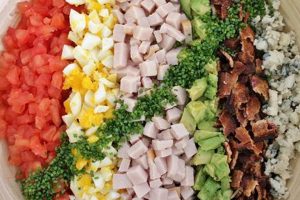
These visually appealing and often portable dishes involve arranging distinct ingredients in horizontal layers within a clear container, typically a glass bowl or jar. Common components include leafy greens, vegetables, proteins like cooked chicken or beans, grains, cheeses, and dressings. A classic example features layers of lettuce, tomatoes, cucumbers, hard-boiled eggs, bacon bits, and crumbled blue cheese, often served with a creamy dressing.
The layered presentation offers several advantages. It allows for individual components to remain crisp and fresh, preventing the sogginess that can occur when ingredients are tossed together. This characteristic also makes them ideal for meal prepping and transport. Furthermore, the vibrant, stratified display enhances the dining experience, making them suitable for both casual gatherings and more formal occasions. Historically, these types of salads gained popularity as a practical and attractive potluck dish, their make-ahead nature and portability contributing to their enduring appeal.
The following sections will delve deeper into specific variations, exploring creative combinations of flavors and textures, offering guidance on ingredient selection, layering techniques, and appropriate dressing choices.
Tips for Creating Layered Salads
Constructing a successful layered salad requires attention to both aesthetics and practicality. The following tips offer guidance on maximizing flavor, texture, and visual appeal.
Tip 1: Choose a suitable container. Clear glass containers showcase the layered presentation. Wide-mouth jars facilitate layering and serving, while straight-sided bowls offer a classic aesthetic.
Tip 2: Consider ingredient density. Denser ingredients, such as grains or beans, should form the base layer for stability. Lighter ingredients, like leafy greens, should be placed near the top.
Tip 3: Maximize visual contrast. Employ a variety of colors and textures to create an appealing presentation. Consider incorporating ingredients like brightly colored bell peppers, deep green spinach, or vibrant cherry tomatoes.
Tip 4: Select complementary flavors. Ensure the chosen ingredients work harmoniously. Balance flavors and textures by incorporating a mix of sweet, savory, crunchy, and creamy elements.
Tip 5: Dress strategically. Creamy dressings are best added just before serving to prevent sogginess. Vinaigrettes can often be layered in, but consider their potential impact on adjacent ingredients.
Tip 6: Prepare ingredients in advance. Pre-chopping vegetables, cooking proteins, and portioning out ingredients streamlines assembly and ensures consistent layers.
Tip 7: Pack components separately for transport. If transporting, consider packing certain ingredients, such as dressings or crunchy toppings, separately to maintain optimal texture and prevent leakage.
By following these guidelines, one can craft layered salads that are not only visually impressive but also offer a delightful balance of flavors and textures. Proper planning and execution are key to achieving a satisfying and aesthetically pleasing result.
These tips provide a solid foundation for creating impressive layered salads. The following section offers specific recipe ideas to further inspire culinary creativity.
1. Ingredient Selection
Ingredient selection is paramount in layered salad construction. Strategic choices determine not only the nutritional value but also the overall flavor profile, textural complexity, and visual appeal. Consideration must be given to the interplay of flavors, densities, and colors to create a harmonious and satisfying dish. For example, a base of hearty grains like quinoa or farro provides a foundation and complements lighter ingredients like leafy greens or shredded vegetables layered above. The inclusion of proteins such as grilled chicken, chickpeas, or lentils contributes satiety and nutritional balance. Adding elements like crumbled cheese, nuts, or seeds introduces textural contrast and additional flavor dimensions. Careful consideration of these elements elevates a simple layered salad from a collection of ingredients to a cohesive culinary creation.
Effective ingredient selection also necessitates an understanding of how components will interact over time. Certain ingredients, particularly those with high water content, may release moisture and affect the texture and flavor of adjacent layers. For instance, juicy tomatoes should be layered strategically to avoid saturating delicate greens. Similarly, creamy dressings should often be added just before serving to prevent sogginess. Employing techniques like layering denser ingredients at the bottom and lighter, more delicate ingredients at the top mitigates these potential issues and ensures an optimal dining experience. Choosing ingredients with complementary flavors further enhances the final product. A salad featuring roasted sweet potatoes, black beans, corn, and a cilantro-lime dressing demonstrates this principle, showcasing the balanced interplay of sweet, savory, and acidic elements.
In summary, thoughtful ingredient selection is the cornerstone of successful layered salad creation. It demands attention to flavor compatibility, textural diversity, visual appeal, and the practical implications of layering different components. By understanding these principles and applying them judiciously, one can craft layered salads that are not only visually stunning but also deliver a satisfying and balanced culinary experience. Mastery of ingredient selection unlocks the full potential of this versatile dish, transforming it from a simple assembly of components into a complex and delightful culinary composition.
2. Visual Appeal

Visual appeal plays a crucial role in the overall success of layered salads. The inherent structure of these salads lends itself to an aesthetically pleasing presentation, transforming a simple meal into a visually engaging culinary creation. A well-constructed layered salad attracts attention and enhances the dining experience, making it as much a feast for the eyes as it is for the palate. Strategic arrangement of ingredients contributes significantly to this visual impact.
- Color Contrast
Vibrant color combinations create a striking visual presentation. Employing a diverse palette of ingredientsdeep green spinach, bright red bell peppers, sunny yellow corn, and rich purple cabbage, for exampleenhances the layered effect and stimulates appetite. The contrast between colors adds depth and dimension, making the salad more visually appealing.
- Textural Variation
Incorporating a variety of textures elevates visual interest. Crunchy nuts, creamy avocado, leafy greens, and plump tomatoes offer contrasting textures that create a dynamic visual landscape within the container. This interplay of textures not only enhances visual appeal but also contributes to a more satisfying sensory experience.
- Ingredient Arrangement
Thoughtful arrangement of ingredients maximizes visual impact. Layering ingredients strategically, considering their size, shape, and color, creates a visually balanced and harmonious composition. This meticulous approach transforms a simple salad into an artistic expression, showcasing the individual components while creating a unified whole.
- Container Choice
The container itself plays a significant role in the overall visual presentation. Clear glass jars or bowls showcase the layered effect, allowing the vibrant colors and textures to shine through. The shape and size of the container can further enhance the visual appeal, contributing to a sense of elegance or rustic charm, depending on the desired aesthetic.
By considering these facets of visual appeal, constructing layered salads becomes an exercise in culinary artistry. The interplay of color, texture, arrangement, and container choice elevates these salads from simple meals to visually captivating culinary creations. This attention to detail enhances the dining experience, making each layered salad a feast for both the eyes and the palate.
3. Flavor Balance

Flavor balance is a critical aspect of successful layered salad recipes. It involves the harmonious integration of different taste profilessweet, sour, salty, bitter, and umamito create a complex and satisfying culinary experience. A well-balanced layered salad avoids dominance by any single flavor, ensuring each component contributes to the overall taste profile without overwhelming the others. This balance prevents monotony and encourages enjoyment of the diverse ingredients.
Achieving flavor balance requires careful consideration of ingredient pairings and their arrangement within the layers. For example, a layer of roasted sweet potatoes can provide sweetness, balanced by the salty tang of feta cheese in the next layer. Arugula’s peppery bite can be offset by the sweetness of dried cranberries or the richness of candied pecans. The strategic placement of ingredients also influences flavor perception. Placing bolder flavors next to milder ones can create contrasting yet complementary tastes within each bite. The interplay of these flavors as one progresses through the layers adds depth and complexity to the overall sensory experience. Understanding the inherent flavors of individual ingredients and how they interact with each other is fundamental to achieving a well-balanced and satisfying layered salad. A salad featuring grilled chicken, roasted vegetables, quinoa, and a lemon-herb vinaigrette demonstrates this principle, showcasing the balance of savory, sweet, earthy, and acidic notes.
Mastery of flavor balance elevates layered salads from simple combinations of ingredients to sophisticated culinary creations. It allows for a more nuanced and enjoyable dining experience, where each bite offers a complex interplay of tastes. This understanding empowers one to create layered salads that are not only visually appealing but also deliver a harmonious and satisfying flavor profile. Challenges may arise when incorporating ingredients with strong or contrasting flavors. However, thoughtful layering and the strategic use of complementary ingredients can mitigate these challenges and enhance the overall balance. Ultimately, achieving flavor balance in layered salads allows for a more dynamic and enjoyable culinary experience, where the individual components work together to create a unified and delicious whole. This principle extends beyond individual recipes and serves as a foundational element in broader culinary practices.
4. Texture Contrast

Texture contrast significantly enhances the sensory experience of layered salads. The interplay of various texturescrispy, creamy, crunchy, chewy, and softcreates a dynamic and satisfying culinary experience. This contrast prevents monotony, stimulating the palate and adding depth to each bite. A layered salad lacking textural variation can feel one-dimensional, whereas the strategic incorporation of contrasting textures elevates the dish to a new level of enjoyment. For instance, a layer of crunchy toasted nuts provides a pleasing counterpoint to the softness of roasted vegetables or the creaminess of goat cheese. The juxtaposition of these textures creates a more engaging and satisfying sensory experience. This principle applies across various culinary traditions, underscoring the importance of textural diversity in creating balanced and enjoyable meals.
Understanding how to achieve textural contrast in layered salads involves careful ingredient selection and layering techniques. Ingredients like croutons, seeds, nuts, and raw vegetables offer crunch, while elements like cooked grains, beans, cheese, and avocado contribute creaminess or softness. Leafy greens provide a fresh, delicate texture, while proteins such as grilled chicken or fish offer a firmer bite. The order in which these ingredients are layered also plays a role. Placing crunchy elements near the top can help them retain their crispness, while softer ingredients can benefit from being layered between sturdier components to prevent them from being compressed. A salad with layers of romaine lettuce, grilled chicken, creamy avocado, crunchy tortilla strips, and a vibrant salsa exemplifies the dynamic interplay of textures. Such variations contribute not only to a more stimulating sensory experience but also to the overall aesthetic appeal of the dish.
In summary, texture contrast serves as a crucial element in layered salad construction. It elevates the dining experience by providing a dynamic interplay of sensations. Successful implementation of this principle requires careful consideration of ingredient selection, layering techniques, and the desired balance of textures. The practical application of this understanding allows for the creation of layered salads that are not only visually appealing but also offer a complex and satisfying textural experience. While achieving textural diversity might present challenges when working with limited ingredients or dietary restrictions, creative solutions, such as using alternative ingredients with similar textural properties or incorporating textural elements through preparation techniques like roasting or toasting, often provide viable solutions.
5. Container Choice

Container choice significantly influences the practicality, presentation, and overall success of layered salads. The container serves not only as a vessel but also as a frame for the culinary creation, impacting both the aesthetic appeal and the functional aspects of serving and transport. Selecting an appropriate container requires consideration of factors such as material, size, shape, and intended use. A well-chosen container enhances the visual appeal, preserves the integrity of the layered components, and facilitates convenient serving and storage.
- Material
Container material impacts food safety, presentation, and durability. Glass containers offer optimal clarity, showcasing the vibrant layers and adding an element of elegance. Plastic containers provide practicality and portability, ideal for transport and casual settings. Materials like stainless steel offer durability and temperature retention but obscure the layered presentation. Choosing the appropriate material depends on the specific needs and priorities of the occasion.
- Size and Shape
Container size and shape must align with the desired portion size and the overall aesthetic. Wide-mouth jars facilitate layering and individual servings, while tall, slender containers emphasize the layered effect. Bowls offer a classic presentation, suitable for sharing and buffet-style serving. The volume of the container should correspond with the intended quantity of salad, ensuring proper fit and minimizing wasted space.
- Functionality
Container functionality encompasses aspects such as airtight seals, ease of transport, and serving convenience. Containers with secure lids prevent leakage and maintain freshness during transport, making them ideal for picnics or potlucks. Wide openings facilitate easy access for serving, while individual-sized containers offer portion control and convenience. Consideration of these functional elements ensures the layered salad remains intact and enjoyable.
- Aesthetics
The container’s aesthetic contributes to the overall presentation and dining experience. Clear glass containers showcase the vibrant layers, creating an enticing visual display. Containers with decorative elements can enhance the presentation for special occasions. The container’s aesthetic should complement the style of the salad and the overall setting, enhancing the visual appeal and creating a cohesive presentation.
Appropriate container selection elevates the layered salad experience, merging practicality and presentation. Choosing a container that effectively showcases the layers, preserves ingredient integrity, and suits the occasion enhances both the visual appeal and the overall enjoyment of the dish. Consideration of material, size, shape, and functionality ensures the container complements the layered salad, transforming it from a simple meal into a visually appealing and convenient culinary creation. This careful consideration ultimately enhances the dining experience.
6. Dressing Selection

Dressing selection significantly impacts the flavor profile, textural integrity, and overall enjoyment of layered salads. Dressings not only contribute flavor but also influence the moisture content and structural stability of the layered components. Careful consideration of dressing type, flavor intensity, and application method ensures the dressing complements rather than compromises the layered structure and intended flavor combinations. A mismatch between dressing and salad ingredients can result in a soggy, unbalanced, or unappetizing dish. For example, a heavy, creamy dressing may not be suitable for a layered salad with delicate greens, as it can cause the greens to wilt and become soggy. A lighter vinaigrette might be a better choice, preserving the crispness of the greens and contributing a complementary flavor. Conversely, a robust, flavorful dressing can enhance a layered salad with heartier ingredients like roasted vegetables or grains. Matching the dressing’s intensity to the ingredients’ flavors ensures a balanced and harmonious culinary experience.
Practical application of dressing selection involves considering the timing and method of application. Creamy dressings are often best applied just before serving to prevent the salad from becoming soggy. This approach maintains the crispness of the ingredients and ensures the dressing doesn’t overwhelm the other flavors. Vinaigrettes, due to their thinner consistency, can sometimes be layered within the salad, but consideration should be given to their potential impact on adjacent ingredients. Certain vinaigrettes may cause delicate ingredients to wilt or discolor over time. Strategic placement of the vinaigrette layer can mitigate these issues. For instance, placing a vinaigrette layer between heartier ingredients like beans and grains can prevent it from directly contacting delicate greens. Alternatively, packing the dressing separately and adding it just before consumption offers maximum control over its distribution and impact on the salad’s texture and flavor.
Effective dressing selection is essential for creating layered salads that are both flavorful and visually appealing. Understanding the interplay between dressing type, ingredient compatibility, and application method allows for precise control over the final product. This knowledge empowers one to create layered salads that are not only delicious but also maintain their structural integrity and aesthetic appeal. Challenges, such as ingredient sensitivities to certain dressings or the need to accommodate dietary restrictions, can often be addressed through creative solutions. For example, substituting a dairy-based dressing with a plant-based alternative or adjusting the acidity of a vinaigrette to accommodate sensitive ingredients allows for greater flexibility and inclusivity in layered salad creation. Ultimately, careful dressing selection enhances the overall dining experience, transforming a simple layered salad into a well-balanced and satisfying culinary creation.
7. Portability
Portability represents a significant advantage of layered salads, contributing to their popularity for various occasions. The structural integrity inherent in the layered format, combined with appropriate container choices, allows these salads to travel well without compromising their visual appeal or flavor balance. Unlike tossed salads, where ingredients mix and dressings can cause sogginess during transport, layered salads maintain their distinct components and textures, ensuring a fresh and appealing meal even after being carried to a different location. This characteristic makes them ideal for picnics, potlucks, workplace lunches, and other situations where a readily prepared meal is desired. For example, a layered salad with a base of grains, followed by roasted vegetables, grilled chicken, and a separate container of dressing can be easily transported and assembled just before consumption, guaranteeing an enjoyable meal away from home. The choice of container plays a crucial role in maximizing portability; airtight lids and secure closures prevent spills and maintain ingredient integrity during travel.
The portability of layered salads extends beyond mere convenience; it offers practical solutions for meal planning and portion control. Individuals can prepare these salads in advance, packing them in individual containers for grab-and-go meals throughout the week. This approach supports healthy eating habits by providing a readily available, nutritious option, reducing reliance on less healthy fast food or convenience items. Furthermore, the layered format allows for customization and portioning based on individual dietary needs and preferences. One might pack a larger portion of protein for a post-workout meal or adjust the vegetable and grain ratios to meet specific dietary guidelines. This flexibility makes layered salads a versatile tool for managing portion sizes and maintaining a balanced diet, particularly for those with busy schedules or specific dietary requirements. The ability to prepare multiple servings simultaneously further enhances their practicality for meal prepping and efficient time management.
In summary, the portability of layered salads offers significant advantages in terms of convenience, meal planning, and dietary management. Their structural integrity, combined with thoughtful container selection, ensures these salads can be easily transported without sacrificing quality or freshness. This characteristic, combined with the potential for customization and portion control, establishes layered salads as a practical and versatile meal option for various lifestyles and dietary needs. While challenges may arise in maintaining the crispness of certain ingredients or preventing leakage during transport, these can be addressed through strategic ingredient selection, proper container choice, and careful packing techniques. The practical benefits of portability significantly contribute to the enduring appeal and versatility of layered salads in contemporary culinary practices.
Frequently Asked Questions
This section addresses common inquiries regarding layered salads, providing concise and informative responses to clarify potential uncertainties and offer practical guidance.
Question 1: How long can a layered salad be stored?
Properly stored layered salads typically last 3-5 days in the refrigerator. However, the shelf life depends on the specific ingredients and the dressing used. Salads with more perishable ingredients, such as cooked chicken or seafood, should be consumed sooner. Storing components separately, particularly the dressing, can extend freshness.
Question 2: What are the best containers for layered salads?
Clear glass jars or straight-sided bowls are ideal for showcasing the layered presentation. Wide-mouth jars facilitate layering and serving, while airtight lids are crucial for maintaining freshness during storage and transport.
Question 3: Can layered salads be frozen?
Freezing is generally not recommended for layered salads. Freezing can negatively impact the texture and flavor of many ingredients, particularly leafy greens and vegetables. Thawing can also lead to excess moisture and a less appealing presentation.
Question 4: How can sogginess be prevented in layered salads?
Sogginess can be prevented by layering denser ingredients at the bottom, adding dressings just before serving, and packing watery ingredients, like tomatoes, separately. Using thicker dressings or vinaigrettes instead of creamy dressings can also help.
Question 5: What are some healthy layered salad options?
Numerous healthy options exist, including salads featuring quinoa or brown rice as a base, lean proteins like grilled chicken or fish, a variety of colorful vegetables, and a light vinaigrette. Nuts, seeds, and dried fruits can add nutritional value and textural complexity.
Question 6: Are layered salads suitable for large gatherings?
Layered salads can be adapted for large gatherings by using larger containers or preparing multiple individual servings. Consider using a trifle bowl for a visually impressive centerpiece or preparing individual jars for ease of serving and portion control.
Understanding these key aspects ensures optimal preparation and enjoyment of layered salads. Proper storage, ingredient selection, and container choice contribute to the overall success of these versatile dishes.
The following section will explore specific layered salad recipes, showcasing the practical application of these principles.
Layered Salad Recipes
Exploration of layered salad recipes reveals a culinary approach emphasizing the interplay of visual appeal, flavor balance, textural contrast, and practicality. Strategic ingredient selection, thoughtful layering techniques, and appropriate container choices contribute significantly to the success of these dishes. Considerations extend beyond mere ingredient combinations, encompassing the impact of dressing selection on both flavor and structural integrity, as well as the inherent portability and adaptability of layered salads for various occasions and dietary needs. Understanding these principles allows for the creation of visually captivating and nutritionally balanced meals suitable for diverse settings, from casual lunches to elegant gatherings.
Layered salad recipes represent a dynamic intersection of culinary art and practical functionality. This approach encourages creative exploration of flavor profiles and textural combinations while offering convenient solutions for meal preparation and transport. Continued experimentation with diverse ingredients, layering techniques, and presentation styles promises further evolution and refinement within this culinary form, solidifying its place as a versatile and enduring element of gastronomic expression.