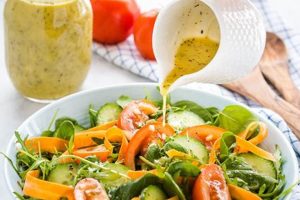
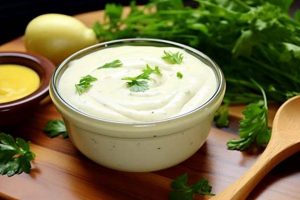
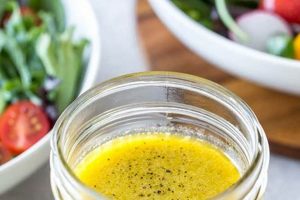
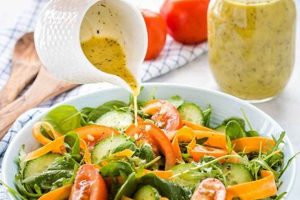
A vibrant and tangy dressing typically combines cranberry sauce, a vinegar such as balsamic or apple cider, oil, and seasonings. A simple emulsion may include just these core components, while more complex versions incorporate Dijon mustard, orange zest, maple syrup, or chopped nuts for added texture and flavor. Such a dressing complements a wide range of salads, particularly those featuring leafy greens, roasted vegetables, nuts, and cheeses.
The sweet-tart profile of this dressing offers a refreshing counterpoint to richer ingredients, making it a popular choice for autumnal and winter meals. Its versatility extends beyond salads, as it can also serve as a marinade for poultry or a glaze for roasted vegetables. The historical use of cranberries in both sweet and savory dishes highlights the enduring appeal of this flavor combination.
Further exploration will cover variations on the basic formula, specific ingredient choices and their impact on the final product, and recommended salad pairings to maximize the culinary experience.
Tips for Crafting Exceptional Cranberry Vinaigrette
Achieving a well-balanced and flavorful cranberry vinaigrette requires attention to detail and an understanding of how different ingredients interact. The following tips offer guidance for creating a dressing that elevates any salad.
Tip 1: Balance Sweetness and Tartness: The cranberry sauce’s sweetness should be balanced by the vinegar’s acidity. Taste and adjust accordingly, adding more vinegar for increased tartness or a touch of sweetener like maple syrup or honey for a milder profile.
Tip 2: Emulsify Thoroughly: Proper emulsification creates a smooth, creamy texture. Whisk the oil into the vinegar mixture slowly and steadily or use a blender for a more stable emulsion.
Tip 3: Consider Oil Choices: Extra virgin olive oil imparts a robust flavor, while lighter oils like grapeseed or avocado oil offer a more neutral base, allowing the cranberry flavor to shine.
Tip 4: Enhance with Aromatics: Shallots, garlic, or orange zest add depth and complexity. Finely mince these additions to ensure even distribution throughout the dressing.
Tip 5: Season Judiciously: Salt and pepper enhance the overall flavor profile. Start with a small amount and adjust to taste, keeping in mind that the saltiness can intensify over time.
Tip 6: Experiment with Textures: Toasted nuts, such as pecans or walnuts, provide a delightful crunch. Seeds like poppy or sesame seeds also offer textural variation.
Tip 7: Make Ahead and Adjust: The vinaigrette can be prepared in advance, allowing the flavors to meld. Re-taste and adjust seasoning before serving, as flavors may change slightly after refrigeration.
By following these guidelines, one can create a cranberry vinaigrette that perfectly complements a variety of dishes, offering a balanced and flavorful experience.
These tips provide a strong foundation for creating exceptional cranberry vinaigrette, enabling culinary exploration and customization.
1. Cranberry Sauce (whole berry)
Whole berry cranberry sauce serves as the foundational flavor component within a cranberry vinaigrette. Its presence contributes not only the characteristic tart-sweet profile but also a desirable textural element. The choice of whole berry over jellied cranberry sauce significantly impacts the final dressing. Jellied sauce, due to its smooth consistency and higher pectin content, tends to create a thicker, less emulsified vinaigrette. Whole berry sauce, with its distinct pieces of fruit, allows for a lighter, more texturally dynamic dressing. For instance, a salad featuring roasted root vegetables and pecans benefits from the textural interplay between the crunchy nuts, soft vegetables, and bursts of cranberry from the dressing. A vinaigrette made with jellied cranberry sauce, in contrast, might coat the ingredients too heavily, obscuring their individual textures.
The quality of the cranberry sauce directly influences the overall quality of the vinaigrette. Homemade cranberry sauce, often featuring fresh cranberries, orange zest, and spices, offers a brighter, more complex flavor profile compared to commercially produced versions. However, high-quality store-bought whole berry cranberry sauce can provide a convenient alternative. When selecting a pre-made sauce, examining the ingredient list is crucial. Opt for sauces with minimal added sugars and preservatives to maintain a balanced flavor in the final dressing. Using a cranberry sauce with excessive sweetness may require adjustments in the vinaigrette’s other components, such as increasing the amount of vinegar to balance the sweetness.
Understanding the role of whole berry cranberry sauce within a cranberry vinaigrette allows for informed ingredient selection and recipe customization. The choice of sauce impacts both the flavor and texture of the final product, emphasizing the importance of this key ingredient. Careful consideration of the cranberry sauce contributes significantly to a well-balanced and flavorful vinaigrette, enhancing the overall culinary experience.
2. Vinaigrette Base (oil, vinegar)

The vinaigrette base, a fundamental element of any vinaigrette, plays a crucial role in determining the overall balance and character of a cranberry vinaigrette salad dressing. This foundational emulsion of oil and vinegar provides the canvas upon which the cranberry’s tart-sweet notes and other complementary flavors are layered. The careful selection and proportioning of these two key components significantly impact the final dressing’s texture, flavor, and stability.
- Oil Selection
The choice of oil contributes significantly to the vinaigrette’s mouthfeel and flavor profile. Extra virgin olive oil, with its robust flavor and slightly peppery finish, adds complexity and richness. Lighter oils, such as grapeseed or avocado oil, offer a more neutral backdrop, allowing the cranberry’s tartness to take center stage. The oil’s viscosity also influences the emulsion’s stability and the dressing’s cling to salad ingredients.
- Vinegar Variety
The vinegar component provides the necessary acidity to balance the cranberry’s sweetness and create a harmonious flavor profile. Apple cider vinegar offers a mild, fruity acidity that complements the cranberry’s natural tartness. Balsamic vinegar introduces a deeper, more complex sweetness and tang. White wine vinegar contributes a sharper, cleaner acidity. The vinegar’s intensity should be considered in relation to the cranberry sauce’s sweetness, aiming for a balanced final product.
- Ratio and Emulsification
The ratio of oil to vinegar directly impacts the vinaigrette’s texture and stability. A classic vinaigrette ratio is typically three parts oil to one part vinegar. However, this can be adjusted based on the desired consistency and the specific ingredients used. Thorough emulsification, whether achieved by vigorous whisking or blending, is essential for creating a smooth, cohesive dressing that doesn’t separate quickly.
- Complementary Flavors within the Base
Beyond the core oil and vinegar, additional ingredients can be incorporated into the base to enhance complexity and depth. A small amount of Dijon mustard acts as an emulsifier and adds a subtle tang. Honey or maple syrup can be used to adjust sweetness levels and create a smoother transition between the tart and sweet notes. Minced shallots or garlic introduce pungent aromatic notes that elevate the overall flavor profile.
Careful consideration of these facets of the vinaigrette base is essential for achieving a well-balanced and flavorful cranberry vinaigrette. The interplay between the selected oil, vinegar, and any additional flavoring agents ultimately determines the dressing’s success in complementing and enhancing the other salad components.
3. Flavor Enhancers (zest, spices)

Flavor enhancers play a pivotal role in elevating cranberry vinaigrette from a simple dressing to a complex and nuanced culinary experience. These additions contribute depth, complexity, and aromatic intrigue, transforming the basic sweet-tart profile of cranberry and vinegar into a more sophisticated and layered flavor composition. Citrus zest, specifically orange zest, offers a bright, aromatic counterpoint to the cranberry’s tartness, creating a balanced flavor profile. The oils within the zest also contribute to the overall aroma of the vinaigrette. Spices, both warm and earthy, provide further complexity. A pinch of ground cinnamon or ginger adds warmth, while a touch of allspice or cloves introduces deeper, more resonant notes. The judicious use of spices can evoke seasonal associations, making the vinaigrette suitable for a variety of occasions. For example, a cranberry vinaigrette featuring orange zest and cinnamon resonates with autumnal flavors, while a version with lime zest and a hint of chili flake offers a brighter, more summery profile.
The selection and application of flavor enhancers requires careful consideration. Freshly grated zest offers the most potent flavor and aroma, as the essential oils are released upon grating. Pre-ground spices, while convenient, may lack the vibrancy of freshly ground counterparts. Adding flavor enhancers directly to the vinaigrette base allows them to infuse the oil and vinegar, distributing the flavor evenly throughout the dressing. The quantity of these additions should be carefully calibrated to avoid overpowering the core cranberry flavor. A light hand ensures that the enhancers complement rather than dominate the overall taste profile. Practical applications include tailoring the flavor profile to complement specific salad ingredients. For instance, a salad featuring roasted butternut squash and pecans benefits from the warmth of cinnamon and ginger in the vinaigrette, while a salad with grilled chicken and avocado might be enhanced by the brighter notes of lime zest and cilantro.
The strategic incorporation of flavor enhancers significantly contributes to the versatility and appeal of cranberry vinaigrette. These additions offer a powerful tool for customization, allowing for the creation of dressings tailored to specific ingredients and occasions. Understanding the interplay between these flavor components and the core ingredients of the vinaigrette allows for a nuanced and balanced flavor profile, enhancing the overall dining experience. The balance achieved through the careful selection and application of flavor enhancers transforms a simple dressing into a sophisticated culinary element.
4. Emulsification Technique

Emulsification, the process of combining two immiscible liquids like oil and vinegar into a stable mixture, is crucial for the texture, flavor, and visual appeal of cranberry vinaigrette. A properly emulsified dressing exhibits a smooth, creamy consistency and resists separation, ensuring a pleasant mouthfeel and even distribution of flavor across the salad. This technique directly impacts the overall quality and enjoyment of the cranberry vinaigrette experience.
- Temporary Emulsification (Whisking)
Whisking vigorously creates a temporary emulsion, where small droplets of oil are dispersed throughout the vinegar. While effective for immediate use, this method requires re-whisking before serving as the mixture tends to separate over time. This technique is suitable for home cooks preparing the vinaigrette just before serving. A simple whisk and bowl suffice, making it a readily accessible method.
- Permanent Emulsification (Blending)
Using a blender or food processor creates a more stable, permanent emulsion. The high-speed blades break down the oil into smaller droplets, allowing for a more thorough integration with the vinegar. This method yields a thicker, creamier dressing that resists separation, ideal for meal prepping or making larger batches. The addition of an emulsifying agent, such as Dijon mustard or a small amount of egg yolk, further enhances the emulsion’s stability.
- Factors Influencing Stability
Several factors influence emulsion stability. The ratio of oil to vinegar plays a key role; a higher proportion of oil generally leads to a thicker, more stable emulsion. The viscosity of the oil also contributes; thicker oils create more stable emulsions than thinner oils. Temperature fluctuations can destabilize an emulsion, hence the recommendation to store vinaigrette at a consistent, cool temperature. The presence of emulsifying agents, such as mustard or honey, helps bind the oil and vinegar together, promoting long-term stability.
- Impact on Sensory Experience
The emulsification technique directly impacts the sensory experience of the cranberry vinaigrette. A well-emulsified dressing coats salad ingredients evenly, ensuring that each bite receives the full flavor profile. A separated dressing, conversely, can lead to uneven flavor distribution and a less enjoyable textural experience. The visual appeal of the dressing is also affected; a smooth, emulsified vinaigrette enhances the presentation of the salad, whereas a separated dressing appears less appetizing. A properly emulsified vinaigrette contributes significantly to the overall enjoyment of the salad, ensuring a harmonious balance of flavor and texture.
The chosen emulsification technique directly influences the quality, stability, and sensory experience of a cranberry vinaigrette. Understanding the nuances of these techniques allows for informed decision-making in the preparation process, contributing to a more satisfying culinary outcome. Selecting the appropriate technique based on individual needs and desired outcomes ensures a well-balanced and enjoyable vinaigrette.
5. Recipe Variations (seasonal)

Seasonal variations represent a key pathway to exploring the versatility of cranberry vinaigrette. Adapting the recipe to incorporate seasonal ingredients allows for an evolving flavor profile that complements the cyclical nature of fresh produce availability. This approach not only enhances the culinary experience but also promotes engagement with seasonal rhythms, fostering a deeper appreciation for the time-sensitive bounty each season offers. Cause and effect relationships between specific seasonal ingredients and the overall flavor profile of the vinaigrette are crucial considerations. For instance, incorporating diced apples and toasted pecans during the autumn months creates a harmonious blend of sweet, tart, and earthy flavors that resonate with the season’s characteristics. Conversely, a spring variation might feature thinly sliced cucumbers, fresh mint, and a lighter vinegar such as white wine vinegar, resulting in a refreshing and vibrant dressing that aligns with the season’s lighter, brighter flavors.
The adaptability of cranberry vinaigrette extends beyond simple ingredient substitutions. Seasonal variations can also involve adjustments to the base recipe itself. During warmer months, a lighter oil, such as grapeseed oil, might be preferred over a more robust extra virgin olive oil. The sweetness level can also be adjusted based on the sweetness of the chosen seasonal fruits. For example, a summer variation incorporating ripe peaches might require less added sweetener than an autumn version featuring tart cranberries alone. Practical examples include incorporating stone fruits like peaches or nectarines during summer, creating a brighter, sweeter vinaigrette that complements grilled fish or chicken. In winter, roasted root vegetables, such as beets or sweet potatoes, pair well with a cranberry vinaigrette featuring warming spices like ginger and cinnamon. These specific applications demonstrate the practical significance of adapting the recipe to seasonal ingredients, enhancing both flavor and the overall culinary experience.
Adapting cranberry vinaigrette to seasonal ingredients offers significant advantages. It maximizes flavor by incorporating produce at its peak ripeness. This approach also promotes culinary creativity, allowing for ongoing exploration and personalization of the basic recipe. Challenges might include sourcing specific ingredients out of season, but careful planning and preservation techniques, such as freezing or pickling, can mitigate these limitations. The adaptability of cranberry vinaigrette ultimately contributes to its versatility as a year-round dressing, highlighting the dynamic interplay between a core recipe and the cyclical availability of fresh produce. This understanding enables a deeper appreciation for seasonal flavors and promotes a more engaged and fulfilling culinary experience.
Frequently Asked Questions
This section addresses common inquiries regarding cranberry vinaigrette preparation and usage.
Question 1: Can jellied cranberry sauce be used in place of whole berry cranberry sauce?
While jellied cranberry sauce can be used, it results in a thicker, less emulsified vinaigrette due to its smooth consistency and higher pectin content. Whole berry cranberry sauce is generally preferred for its textural contribution and lighter consistency.
Question 2: What type of oil is best suited for cranberry vinaigrette?
The choice of oil depends on the desired flavor profile. Extra virgin olive oil provides a robust flavor, while lighter oils like grapeseed or avocado oil offer a more neutral base that allows the cranberry flavor to shine.
Question 3: How can the sweetness of the vinaigrette be adjusted?
The sweetness can be adjusted by adding a touch of honey, maple syrup, or a pinch of sugar. Taste and adjust accordingly to achieve the desired balance between sweet and tart.
Question 4: How long can cranberry vinaigrette be stored?
Stored in an airtight container in the refrigerator, cranberry vinaigrette can typically last for up to one week. The flavors may meld and intensify over time.
Question 5: Can cranberry vinaigrette be used as a marinade?
Yes, cranberry vinaigrette’s sweet-tart profile makes it an excellent marinade for poultry, pork, or even tofu. The acidity helps tenderize the protein while imparting flavor.
Question 6: What types of salads pair well with cranberry vinaigrette?
Cranberry vinaigrette complements salads featuring leafy greens, roasted vegetables, nuts, cheeses, and fruits. It pairs particularly well with fall and winter salads featuring ingredients like butternut squash, kale, and pecans.
Careful consideration of these frequently asked questions ensures optimal preparation and utilization of cranberry vinaigrette, maximizing its culinary potential.
Beyond these frequently asked questions, further exploration of cranberry vinaigrette applications and complementary flavor pairings can enrich culinary experiences.
Conclusion
Exploration of cranberry vinaigrette salad dressing recipes reveals a versatile culinary asset capable of enhancing a wide array of dishes. From the selection of whole berry cranberry sauce to the careful balance of oil and vinegar within the vinaigrette base, each component contributes significantly to the final product. The strategic use of flavor enhancers, proper emulsification techniques, and seasonal adaptations further expand the possibilities, allowing for customized flavor profiles tailored to specific ingredients and occasions. The balance between sweet, tart, and savory notes defines this dressing’s unique character, offering a refreshing counterpoint to richer flavors.
Culinary exploration benefits from a thorough understanding of cranberry vinaigrette’s foundational elements and potential variations. Continued experimentation with ingredients and techniques promises further refinement and personalization of this versatile dressing, enriching culinary experiences and highlighting the dynamic interplay of flavors within the culinary landscape.