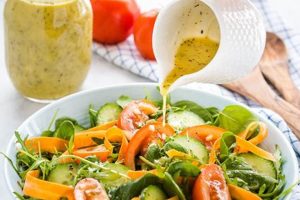
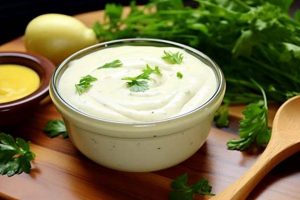
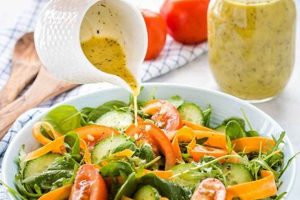
A creamy, tangy, and herbaceous dressing typically combines yogurt, fresh dill, and other complementary ingredients like lemon juice, garlic, and seasonings. This versatile condiment enhances the flavor of various salads, from leafy greens to pasta and potato salads. A simple example includes plain yogurt whisked with chopped fresh dill, minced garlic, a squeeze of lemon juice, salt, and pepper.
Such a dressing offers a refreshing and healthier alternative to heavier, mayonnaise-based options. The probiotic-rich yogurt contributes to gut health, while the fresh dill provides a vibrant flavor and potential antioxidant benefits. While the precise origin is difficult to pinpoint, the combination of yogurt and herbs has a long history in various cuisines, particularly in Mediterranean and Middle Eastern culinary traditions. The increasing popularity of lighter, healthier eating habits has further propelled this style of dressing into the mainstream.
This exploration will delve into variations on this classic dressing, including specific recipes, ingredient substitutions, and complementary salad pairings. Additional topics will cover techniques for maximizing flavor, storage recommendations, and tips for incorporating this dressing into a variety of dishes.
Tips for Crafting Exceptional Yogurt Dill Dressings
Creating a flavorful and well-balanced yogurt dill dressing involves attention to detail and a few key techniques. The following tips offer guidance for achieving optimal results.
Tip 1: Use High-Quality Yogurt: The foundation of a successful dressing lies in the quality of the yogurt. Greek yogurt provides a thicker, creamier texture, while plain whole-milk yogurt offers a lighter consistency. Avoid flavored yogurts, as they can clash with the fresh dill.
Tip 2: Fresh Dill is Essential: Dried dill lacks the vibrant flavor and aroma of fresh dill. Finely chop the fresh dill to maximize its impact.
Tip 3: Balance Acidity: Lemon juice or white wine vinegar provide necessary acidity, balancing the richness of the yogurt. Start with a small amount and adjust to taste.
Tip 4: Enhance with Garlic: Freshly minced or grated garlic adds a pungent depth of flavor. A small clove is typically sufficient, but adjust according to preference.
Tip 5: Seasoning is Key: Salt and freshly ground black pepper are essential for enhancing the overall flavor profile. A pinch of sugar can also help balance the acidity.
Tip 6: Consider Texture: A smooth dressing can be achieved by whisking thoroughly. For a chunkier texture, coarsely chop the dill and incorporate it gently.
Tip 7: Chill for Optimal Flavor: Allowing the dressing to chill in the refrigerator for at least 30 minutes allows the flavors to meld and intensify.
Tip 8: Explore Variations: Experiment with additions like Dijon mustard, honey, or other fresh herbs like chives or parsley for unique flavor profiles.
By following these tips, one can consistently create a delicious and versatile dressing that complements a variety of salads and dishes.
This exploration concludes with a summary of key considerations and suggestions for further experimentation.
1. Ingredients

The quality and combination of ingredients directly impact the flavor, texture, and overall success of a yogurt dill salad dressing recipe. Careful selection and proper handling of each component are essential for achieving a balanced and delicious final product. This section explores key ingredient categories and their contributions.
- Dairy Base
Yogurt serves as the foundation, providing creaminess and tang. Greek yogurt offers a thicker consistency, while plain whole-milk yogurt yields a lighter dressing. The quality of the yogurt significantly influences the final flavor; richer yogurts generally produce more flavorful dressings. The choice between these options depends on the desired texture and overall richness of the dressing.
- Fresh Herbs
Fresh dill is paramount, lending its characteristic bright, herbaceous flavor. The quantity used dictates the intensity of the dill flavor. Other herbs, such as chives, parsley, or mint, can be incorporated to add complexity. The freshness of the herbs is crucial for optimal flavor and aroma. Dried dill can be used in a pinch, but the flavor profile differs significantly.
- Acidic Elements
Acidity balances the richness of the yogurt and brightens the overall flavor. Lemon juice, white wine vinegar, or apple cider vinegar are common choices. The specific acid used can subtly alter the final taste; lemon juice provides a citrusy note, while vinegar offers a sharper tang. The amount of acid should be adjusted to taste, ensuring a harmonious balance.
- Flavor Enhancers
Garlic, shallots, or onions add depth and complexity. Minced garlic is a classic addition, while finely diced shallots offer a milder onion flavor. Other additions, such as Dijon mustard or honey, can further enhance the complexity and create unique flavor profiles. These additions should be used judiciously to avoid overpowering the core dill and yogurt flavors.
The interplay of these ingredient categories determines the final character of the yogurt dill dressing. A well-balanced recipe considers the individual contributions of each component and adjusts quantities to achieve the desired flavor profile. Experimentation with different ingredient combinations can lead to personalized variations and exciting culinary discoveries.
2. Preparation

Proper preparation techniques are crucial for maximizing the flavor and texture of yogurt dill salad dressing. The sequence of steps, handling of ingredients, and attention to detail contribute significantly to the final quality of the dressing. This section outlines essential preparation facets.
- Ingredient Preparation
Properly preparing each ingredient before combining them is essential. This includes washing and drying fresh dill, then finely chopping it to release its aromatic oils and ensure even distribution throughout the dressing. Garlic or shallots should be peeled and minced or finely diced. Measuring ingredients accurately is also critical for achieving the desired balance of flavors.
- Combining Ingredients
The order in which ingredients are combined can influence the emulsification and overall texture of the dressing. Starting with the yogurt base and then gradually incorporating the other ingredients, such as the chopped dill, minced garlic, and acidic element, ensures a smooth and well-combined mixture. Whisking thoroughly helps to emulsify the ingredients and create a creamy consistency.
- Resting and Chilling
Allowing the prepared dressing to rest, preferably chilled, for at least 30 minutes is crucial for flavor development. This resting period allows the flavors to meld and intensify, resulting in a more balanced and nuanced final product. Chilling also helps to firm up the dressing, especially if using a lighter yogurt base.
- Adjusting and Serving
Before serving, tasting and adjusting the seasoning is essential. Additional salt, pepper, or a touch of sweetener can be added to fine-tune the flavor profile according to individual preferences. The dressing can be served chilled or at room temperature, depending on the accompanying dish.
These preparation steps, though seemingly simple, contribute significantly to the overall quality and enjoyment of yogurt dill salad dressing. Careful attention to each stage ensures a flavorful, well-balanced, and texturally appealing dressing that complements a variety of culinary applications.
3. Flavor Profile

The flavor profile of a yogurt dill salad dressing is a complex interplay of several key components, each contributing to the overall sensory experience. Understanding these elements allows for informed recipe adjustments and pairings with complementary dishes. The following facets explore the core flavor characteristics and their impact on the final product.
- Tanginess
The tangy flavor, primarily derived from the yogurt, provides a refreshing counterpoint to other ingredients. The level of tanginess can vary depending on the type of yogurt used; Greek yogurt tends to be tangier than plain yogurt. This characteristic brightness is crucial for balancing the richness of the dressing and preventing it from becoming overly heavy. In the context of a yogurt dill salad dressing recipe, the tanginess is often balanced by the addition of a touch of sweetness or the inherent sweetness of accompanying vegetables.
- Herbaceousness
Fresh dill contributes the dominant herbaceous note, providing a bright, slightly peppery, and distinctly “green” flavor. The quantity of dill used directly impacts the intensity of this characteristic. This herbal element adds complexity and freshness, making the dressing a suitable accompaniment for a variety of salads and dishes. The freshness of the dill is paramount; dried dill lacks the same vibrancy and can result in a duller flavor profile.
- Acidity
Acidity plays a critical role in balancing the richness of the yogurt and brightening the overall flavor profile. Lemon juice, vinegar, or other acidic ingredients provide this necessary sharpness. The type of acid used can introduce subtle nuances; lemon juice imparts a citrusy brightness, while vinegar contributes a more pungent tang. Careful balancing of acidity is crucial to prevent the dressing from becoming overly sour.
- Savory Notes
Ingredients like garlic, shallots, or onion contribute savory undertones, adding depth and complexity to the flavor profile. These elements can be used in varying quantities to achieve the desired level of savory intensity. A small amount of garlic can provide a subtle pungent note, while a larger quantity creates a more assertive flavor. Balancing these savory elements with the other flavor components is essential for a harmonious and well-rounded dressing.
The successful execution of a yogurt dill salad dressing recipe hinges on a careful balance of these flavor components. Understanding how each element contributes to the overall profile allows for informed recipe adjustments and creative exploration, ultimately leading to a dressing that is both flavorful and well-suited to its intended application. Consideration of these facets ensures a dressing that is not only delicious but also complements the flavors of the accompanying dish.
4. Versatility
The versatility of yogurt dill salad dressing lies in its adaptability to a wide range of culinary applications. Its flavor profile, texture, and ease of modification make it a valuable asset in various cuisines and dietary preferences. This adaptability extends beyond salads, encompassing marinades, dips, and sandwich spreads. Exploring this versatility reveals its potential to enhance diverse dishes and accommodate specific dietary needs.
- Salad Applications
The dressing’s tangy and herbaceous character complements various salad compositions, from classic leafy green salads to more robust grain or pasta salads. Its creamy texture clings well to ingredients, ensuring even flavor distribution. Examples include pairing it with a simple cucumber and tomato salad, a Mediterranean salad with olives and feta, or a hearty potato salad. This adaptability allows for customization based on seasonal ingredients and personal preferences.
- Marinade for Proteins
The acidity in yogurt dill dressing tenderizes meats and infuses them with flavor, making it an effective marinade for chicken, fish, or lamb. The yogurt component helps to retain moisture during cooking, resulting in more tender and flavorful proteins. For example, marinating chicken skewers in the dressing before grilling imparts a tangy, herbaceous flavor and ensures the chicken remains moist. This application highlights the dressing’s functionality beyond traditional salad applications.
- Dip for Vegetables and Chips
The dressings creamy texture and refreshing flavor profile make it an excellent dip for raw vegetables like carrots, celery, and cucumber, as well as for pita chips or crackers. The combination of cool yogurt and fresh dill provides a light and flavorful alternative to heavier dips. This versatility extends its use beyond meal accompaniments to snacks and appetizers, adding a healthy and flavorful option.
- Sandwich Spread
Yogurt dill dressing can replace mayonnaise or other creamy spreads in sandwiches and wraps, adding a burst of fresh flavor and moisture. Its tanginess cuts through richer ingredients, creating a balanced and flavorful sandwich experience. For example, using it as a spread in a turkey and cucumber sandwich adds a refreshing counterpoint to the savory meat and crisp cucumber. This application showcases its versatility as a condiment beyond traditional salad settings.
The inherent versatility of yogurt dill salad dressing extends its utility beyond a simple salad topping. Its adaptability as a marinade, dip, and sandwich spread highlights its potential to enhance diverse culinary creations, demonstrating its value as a versatile and flavorful addition to any kitchen.
5. Health Benefits

A yogurt dill salad dressing recipe offers several potential health benefits, primarily stemming from the nutritional properties of its core ingredients: yogurt and dill. Yogurt, particularly if made with live and active cultures, provides probiotics. Probiotics are beneficial bacteria that support gut health by contributing to a balanced gut microbiome. A healthy gut microbiome is increasingly linked to various aspects of overall well-being, including improved digestion, enhanced immune function, and even potential mental health benefits. Dill, while often used in smaller quantities, is a source of antioxidants, vitamins, and minerals. Antioxidants help protect cells from damage caused by free radicals, potentially reducing the risk of chronic diseases. Furthermore, using yogurt-based dressings in place of those made with mayonnaise or other high-fat ingredients reduces overall calorie and fat intake, contributing to weight management efforts. For example, choosing a yogurt dill dressing on a leafy green salad instead of a creamy ranch dressing significantly lowers the fat and calorie content while still providing flavor and satisfaction.
The specific health benefits derived from a yogurt dill dressing depend on the type of yogurt used. Greek yogurt generally contains more protein and less sugar than regular yogurt, contributing to feelings of satiety and potentially supporting muscle growth and maintenance. Choosing plain yogurt over flavored varieties avoids added sugars, further enhancing the nutritional value. The inclusion of fresh dill adds micronutrients like vitamin C and vitamin K, although in relatively small amounts. While dill’s antioxidant properties contribute to overall health, it’s the probiotic content of the yogurt that provides the most significant potential health advantages. Incorporating this type of dressing as part of a balanced diet can contribute to long-term health and well-being, promoting digestive health and supporting overall wellness.
Incorporating a yogurt dill salad dressing recipe into one’s dietary repertoire provides a flavorful and potentially health-enhancing alternative to less nutritious dressing options. While the specific health outcomes vary depending on individual factors and overall dietary patterns, the inclusion of probiotic-rich yogurt and antioxidant-containing dill offers tangible benefits. Choosing this dressing contributes to a more balanced and health-conscious approach to food choices. By understanding these connections, individuals can make informed decisions that support their nutritional goals and overall well-being.
Frequently Asked Questions
This section addresses common inquiries regarding yogurt dill salad dressing recipes, offering concise and informative responses to clarify potential uncertainties and provide practical guidance.
Question 1: What type of yogurt is best suited for this dressing?
Greek yogurt is generally preferred for its thick, creamy texture, but plain whole-milk yogurt provides a lighter alternative. Avoid using flavored yogurts, as they can clash with the fresh dill.
Question 2: Can dried dill be substituted for fresh dill?
While dried dill can be used in a pinch, fresh dill is strongly recommended for its superior flavor and aroma. Dried dill tends to have a less vibrant and more muted flavor profile.
Question 3: How long can the prepared dressing be stored?
Stored in an airtight container in the refrigerator, the dressing typically lasts for up to five days. However, the quality and flavor are best within the first two to three days.
Question 4: How can the tanginess of the dressing be adjusted?
The amount of lemon juice or vinegar controls the tanginess. Start with a small amount and add more to taste, ensuring a balanced flavor profile. A touch of honey or sugar can also help balance the acidity.
Question 5: What are some suitable salad pairings for this dressing?
This dressing complements a variety of salads, including leafy green salads, cucumber and tomato salads, pasta salads, potato salads, and Mediterranean-style salads with olives and feta cheese. It also pairs well with grilled vegetables or roasted chicken.
Question 6: Can this dressing be used for other culinary applications beyond salads?
Yes, the dressing’s versatility extends to its use as a marinade for meats, a dip for vegetables or chips, and a spread for sandwiches and wraps.
Addressing these common inquiries provides clarity regarding the preparation, storage, and application of yogurt dill salad dressing. A thorough understanding of these aspects ensures optimal results and expands culinary possibilities.
The subsequent sections will delve into specific recipe variations and offer additional tips for maximizing flavor and presentation.
Conclusion
Exploration of yogurt dill salad dressing recipes reveals a versatile and flavorful condiment suitable for diverse culinary applications. Emphasis on fresh ingredients, proper preparation techniques, and balanced flavor profiles contributes to a successful outcome. The inherent adaptability of this dressing extends from classic salad applications to marinades, dips, and sandwich spreads, highlighting its broad utility. Nutritional benefits, derived primarily from the probiotic-rich yogurt and antioxidant properties of dill, further enhance its appeal as a health-conscious choice.
Culinary exploration benefits from an understanding of the interplay between core ingredients and their impact on the final flavor profile. Continued experimentation with variations and complementary pairings promises to unlock further culinary potential, enriching gastronomic experiences and promoting healthful food choices.