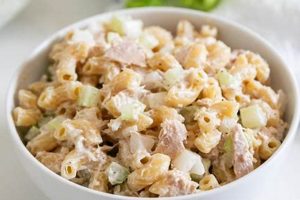
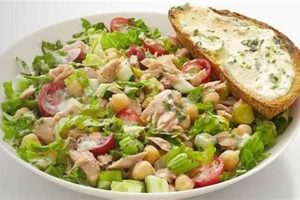
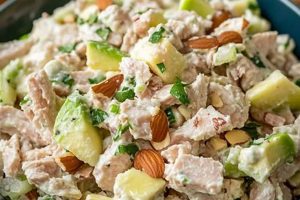
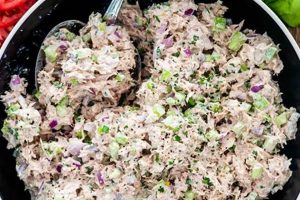
A dish combining cooked macaroni pasta, canned tuna, and a mayonnaise-based dressing, often incorporating additional ingredients like celery, onion, and relish, constitutes a classic comfort food. Variations exist, utilizing different pasta shapes, adding hard-boiled eggs, or incorporating vegetables like peas and carrots.
This simple, adaptable meal offers a balance of protein and carbohydrates, making it suitable for lunches, potlucks, or quick dinners. Its affordability and ease of preparation contribute to its enduring popularity. Historically, the dish’s rise can be linked to the increasing availability of canned tuna and convenience foods in the mid-20th century, becoming a staple in many households and community gatherings.
Further exploration will cover variations, nutritional information, tips for preparation, and creative adaptations of this versatile dish.
Tips for a Superior Macaroni Salad with Tuna
Optimizing ingredient selection and preparation techniques elevates this classic dish from simple to exceptional.
Tip 1: Pasta Perfection: Cook pasta al dente for optimal texture. Overcooked pasta results in a mushy salad. Rinse cooked pasta under cold water to stop the cooking process and maintain firmness.
Tip 2: Tuna Selection: High-quality tuna packed in water or oil enhances flavor. Drain the tuna thoroughly to prevent excess liquid from watering down the salad.
Tip 3: Dressing Dynamics: While mayonnaise forms the base, consider adding a touch of Dijon mustard or lemon juice for a brighter, more complex flavor profile.
Tip 4: Vegetable Variety: Finely diced celery and red onion provide classic crunch and flavor. Experiment with other vegetables like bell peppers or chopped pickles for added interest.
Tip 5: Seasoning Secrets: Salt and freshly ground black pepper are essential. A dash of paprika or celery seed can further enhance the overall flavor.
Tip 6: Chilling Time: Allow the salad to chill for at least 30 minutes before serving. This allows the flavors to meld and the salad to firm up, making it easier to serve.
Tip 7: Presentation Matters: Serve the salad in an attractive bowl, garnished with fresh herbs like parsley or chives, for an appealing presentation.
Attention to these details results in a flavorful, well-balanced, and visually appealing dish.
By following these tips, one can consistently create a macaroni salad with tuna that is both satisfying and memorable.
1. Ingredients

Ingredient selection directly impacts the final quality and character of tuna mac salad. The interplay of individual components contributes to the overall flavor, texture, and nutritional value. For example, using high-quality tuna packed in oil versus tuna packed in water yields a richer, more flavorful salad. Similarly, the type of pasta chosen influences texture; small shapes like elbow macaroni create a classic experience, while larger shapes offer a different mouthfeel. Fresh versus dried herbs introduce variations in flavor intensity and aroma. The choice of mayonnaise, whether classic, light, or flavored, also significantly alters the salad’s profile.
Consider the effect of ingredient variations. Substituting red onion for scallions creates a milder flavor. Adding chopped pickles or hard-boiled eggs introduces textural and flavor complexity. The inclusion of different vegetables, such as bell peppers or celery, contributes not only to flavor and texture but also to nutritional content. Employing fresh herbs, such as dill or parsley, alongside or in place of dried herbs offers a brighter, more nuanced flavor. Each ingredient decision represents an opportunity to tailor the salad to specific preferences and dietary needs.
Understanding the role of each ingredient allows for informed choices leading to a more satisfying culinary outcome. Careful consideration of ingredient quality and the interplay of flavors and textures empowers one to create a tuna mac salad that transcends the ordinary. This knowledge also allows for adaptation and customization, enabling the creation of unique variations while maintaining the fundamental essence of the dish.
2. Preparation
Preparation significantly influences the final quality of tuna mac salad. Methodical procedures ensure optimal flavor development and textural integrity. Consider pasta preparation: cooking time determines texture, impacting the overall dish. Overcooked pasta results in a mushy salad, while undercooked pasta creates an unpleasant firmness. Cooling the pasta rapidly prevents further cooking and maintains the desired texture.
Ingredient preparation also plays a crucial role. Evenly dicing vegetables, such as celery and onion, ensures uniform distribution of flavor and texture throughout the salad. Properly draining canned tuna prevents excess liquid from diluting the dressing and compromising the final consistency. Careful mixing of ingredients combines flavors effectively, creating a cohesive blend rather than isolated pockets of individual components. The timing of dressing incorporation matters; adding dressing too early can lead to a soggy salad, while adding it too late may result in uneven coating.
Effective preparation techniques transform individual ingredients into a harmonious whole. Attention to detail throughout each stagefrom pasta cooking to ingredient preparation and mixingultimately determines the success of the final dish. Consistent application of proper procedures yields a superior tuna mac salad, showcasing the importance of preparation in achieving desired outcomes. Neglecting these steps compromises the overall quality, highlighting the direct correlation between preparation and a satisfying culinary result.
3. Flavor Balance
Flavor balance represents a crucial aspect of a successful tuna mac salad recipe. A harmonious blend of flavors elevates the dish from simple to exceptional. Achieving this balance requires careful consideration of individual components and their interaction within the overall composition. The interplay of savory, acidic, and subtly sweet elements creates a complex and satisfying flavor profile.
- Salt and Acidity
Salt enhances the inherent flavors of the ingredients, while acidity provides brightness and cuts through the richness of the mayonnaise and tuna. Lemon juice or vinegar are common sources of acidity, balancing the creamy and savory notes. For example, a touch of lemon juice brightens the flavor profile, preventing the salad from tasting overly heavy. Proper seasoning with salt amplifies the other flavors, ensuring they are not lost in the richness of the mayonnaise. The interplay between these two elements provides a foundation for flavor complexity.
- Savory Depth
Tuna provides the primary savory element, complemented by supporting ingredients. The quality of tuna significantly impacts the overall flavor. Using tuna packed in oil contributes a richer flavor compared to tuna packed in water. Additional savory notes can be introduced through ingredients like Dijon mustard, Worcestershire sauce, or finely chopped onion, enhancing the depth and complexity. These additions create layers of flavor, moving beyond the basic tuna and mayonnaise combination. The careful layering of savory elements contributes to a more nuanced and satisfying taste experience.
- Sweetness and Texture
Subtle sweetness can balance the savory and acidic components, often achieved through the addition of finely diced celery or sweet pickle relish. These elements offer not only sweetness but also textural contrast, adding a pleasant crunch. The subtle sweetness complements the other flavors without dominating the profile. This interplay of sweetness and texture enhances the overall sensory experience, providing a counterpoint to the creamy and savory elements.
- Freshness and Aromatics
Fresh herbs, like chopped parsley, chives, or dill, contribute brightness and aromatic complexity. These additions enhance the overall freshness of the salad, providing a counterpoint to the richness of the other ingredients. The choice of herbs can subtly influence the final flavor profile. Dill, for example, offers a slightly tangy flavor, while parsley provides a clean, fresh taste. The inclusion of fresh aromatics elevates the salad, transforming it from a simple combination of ingredients into a more complex and nuanced culinary experience.
A well-balanced tuna mac salad engages the palate with a harmonious blend of these flavor components. The interplay of salt, acid, savory depth, sweetness, and fresh aromatics creates a more dynamic and satisfying culinary experience. Careful attention to these elements elevates the dish beyond a simple combination of ingredients, resulting in a flavorful and memorable salad. A successful recipe hinges on achieving this delicate balance, ensuring each element contributes without overpowering the others. This understanding allows for customization and adaptation based on individual preferences, while maintaining the fundamental principles of flavor harmony.
4. Texture
Texture significantly contributes to the overall enjoyment of tuna mac salad. A successful recipe balances contrasting textures, creating a multi-sensory experience. The interplay of creamy, crunchy, and firm elements distinguishes a well-executed salad from a monotonous one. Consider the foundational element: pasta. Properly cooked, al dente pasta provides a firm bite, contrasting with the creamy mayonnaise dressing. Overcooked pasta, however, results in a mushy, unappetizing texture that detracts from the overall experience. This illustrates the direct impact of pasta texture on the final product.
Beyond pasta, the inclusion of vegetables introduces textural variety. Crisp vegetables like celery and red onion offer a satisfying crunch, counterbalancing the softness of the tuna and the creaminess of the dressing. These contrasting textures create a dynamic mouthfeel, enhancing enjoyment. Imagine the difference between a salad with crisp celery and one where the celery has become limp and soggy. The textural contrast disappears, diminishing the overall appeal. This demonstrates the importance of maintaining vegetable crispness.
Achieving textural balance requires careful ingredient selection and preparation. Choosing crisp vegetables, cooking pasta al dente, and incorporating a balanced amount of dressing prevents a uniformly soft or mushy outcome. Attention to these details elevates the sensory experience of consuming tuna mac salad. The interplay of textures adds complexity and interest, transforming a simple dish into a more satisfying culinary experience. Understanding the role of texture allows for informed choices, optimizing both ingredient selection and preparation techniques to achieve the desired outcome: a delicious and texturally appealing tuna mac salad. This knowledge empowers one to create a dish that satisfies not only hunger but also the desire for a multi-sensory culinary experience.
5. Presentation
Presentation, often overlooked, significantly impacts the perceived quality and enjoyment of tuna mac salad. While flavor and texture comprise the core sensory experience, visual appeal enhances the overall impression. Thoughtful presentation elevates this simple dish, transforming it from a casual meal to a more considered culinary creation. Consider the following facets to understand the role of presentation in maximizing the enjoyment of tuna mac salad.
- Serving Dish
The choice of serving vessel influences perception. A plain bowl conveys simplicity, while a decorative platter suggests a more formal occasion. The color and material of the dish can either complement or clash with the salad’s colors. A clear glass bowl showcases the salad’s components, while a brightly colored ceramic bowl adds a vibrant backdrop. Serving individual portions in small bowls or ramekins creates a more elegant presentation, especially suitable for gatherings. The serving dish sets the stage for the dining experience, influencing initial impressions and overall perception.
- Garnishing
Garnishes add visual interest and enhance flavor. Fresh herbs like parsley, chives, or dill provide a pop of color and a fresh aroma. A sprinkle of paprika adds a touch of vibrant color and a hint of smokiness. A few strategically placed cherry tomatoes or black olives introduce contrasting colors and shapes. Garnishes should complement the salad’s flavors and not overpower the dish. They serve as finishing touches, elevating the visual appeal and hinting at the flavors within.
- Plating Techniques
Thoughtful plating elevates presentation. Rather than simply scooping the salad into a bowl, consider using an ice cream scoop or a large spoon to create attractive mounds. Creating a bed of lettuce leaves adds visual contrast and a fresh element. Arranging the salad alongside crackers or crusty bread provides complementary textures and encourages interaction. Even a simple salad benefits from intentional plating, demonstrating care and attention to detail.
- Context and Accompaniments
The surrounding context influences perception. Serving tuna mac salad alongside grilled meats or fresh vegetables creates a balanced and visually appealing meal. The choice of accompaniments should complement the salad’s flavors and textures. Consider the overall color palette and arrangement of dishes on the table. A thoughtfully arranged meal enhances the dining experience, demonstrating an appreciation for culinary aesthetics.
These facets demonstrate that presentation extends beyond mere aesthetics. By considering the serving dish, garnishes, plating techniques, and context, one elevates tuna mac salad from a simple dish to a more engaging culinary experience. Presentation enhances the enjoyment of the meal, demonstrating that visual appeal plays a significant role in overall satisfaction. Attention to these details transforms a casual meal into a more considered and aesthetically pleasing dining experience.
Frequently Asked Questions
This section addresses common inquiries regarding tuna mac salad preparation and variations.
Question 1: What type of tuna is best suited for mac salad?
Canned tuna packed in water or oil works well. Oil-packed tuna offers a richer flavor, while water-packed tuna provides a leaner option. Solid or chunk light tuna is typically preferred for its texture.
Question 2: Can different pasta shapes be used?
While elbow macaroni is traditional, other small pasta shapes like shells, rotini, or ditalini work well. Larger shapes are generally less suitable.
Question 3: How can the salad’s creaminess be adjusted?
Adjusting the amount of mayonnaise controls the creaminess. For a lighter salad, use less mayonnaise or incorporate plain yogurt or Greek yogurt.
Question 4: How long can tuna mac salad be stored?
Refrigerated in an airtight container, tuna mac salad typically lasts for three to five days. Spoilage signs include a sour odor or changes in texture.
Question 5: Can this salad be made ahead of time for events?
Yes, preparing the salad a day in advance allows flavors to meld. Add a touch of extra mayonnaise just before serving if needed to maintain desired creaminess.
Question 6: How can nutritional value be enhanced?
Incorporating additional vegetables like chopped bell peppers, peas, or shredded carrots increases nutritional content and adds flavor and texture.
Understanding these aspects facilitates successful tuna mac salad preparation and customization. Appropriate ingredient selection and storage practices ensure optimal quality and enjoyment.
The subsequent section provides a comprehensive recipe, incorporating the principles and techniques discussed.
Tuna Mac Salad Recipe
Exploration of tuna mac salad recipes reveals a dish offering versatility and simplicity. From ingredient selection and preparation techniques to flavor balancing and presentation, each component contributes to the final product. Achieving optimal texture and flavor requires careful consideration of individual elements and their interaction. Understanding these aspects allows for customization and adaptation, creating variations that cater to individual preferences while upholding the fundamental principles of a successful tuna mac salad.
Tuna mac salad, often perceived as a simple dish, offers significant culinary potential. Application of the discussed principles elevates this classic recipe from ordinary to exceptional. Continued exploration and experimentation with ingredients, techniques, and presentation promise further enhancement and enjoyment of this versatile dish.