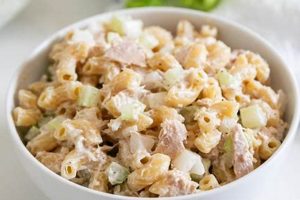
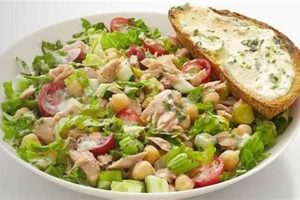
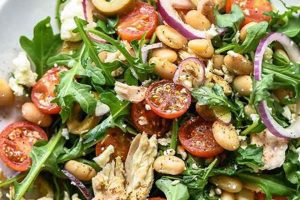
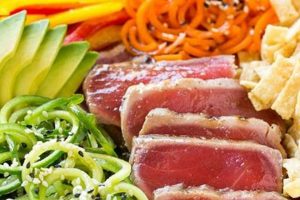
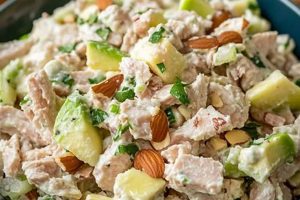
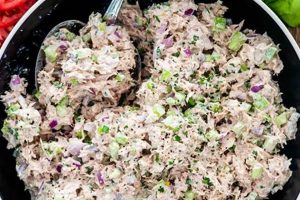
A lighter, tangier twist on the classic, this dish combines canned tuna with yogurt as a healthier alternative to mayonnaise. A typical preparation includes Greek yogurt, providing a creamy texture and protein boost, alongside seasonings and additions like celery, onion, or relish for flavor and crunch. This approach offers a customizable base adaptable to dietary preferences and available ingredients.
Using yogurt instead of mayonnaise significantly reduces the fat and calorie content while increasing protein. The probiotic benefits of yogurt can contribute to gut health. This substitution also lends itself to a more refreshing taste, particularly appealing in warmer weather. While traditional tuna salad recipes have relied on mayonnaise for decades, the growing health-consciousness among consumers has driven a search for lighter alternatives, making yogurt-based versions increasingly popular.
This article will explore various iterations of this nutritious and flavorful meal. Topics covered will include ingredient selection, preparation methods, nutritional information, and serving suggestions. Further discussion will encompass variations suitable for specific dietary needs, such as gluten-free or low-sodium diets.
Tips for Creating Exceptional Tuna Salad with Yogurt
Elevating tuna salad from simple to extraordinary involves thoughtful ingredient selection and preparation. These tips offer guidance for crafting a delicious and nutritious meal.
Tip 1: Opt for high-quality canned tuna. Tuna packed in water offers a cleaner flavor profile and lower fat content compared to oil-packed varieties. Solid or chunk light tuna provides a more substantial texture.
Tip 2: Utilize thick, plain Greek yogurt. Greek yogurt offers a creamy consistency and higher protein content than regular yogurt. Avoid flavored yogurts, as added sugars can detract from the desired savory flavor.
Tip 3: Incorporate fresh herbs and spices. Dill, chives, parsley, and celery seed complement the flavors of tuna and yogurt. A pinch of black pepper or cayenne pepper can add a subtle heat.
Tip 4: Enhance the texture with crunchy additions. Finely diced celery, red onion, or water chestnuts provide a satisfying contrast to the creamy base. Chopped walnuts or pecans contribute healthy fats and additional flavor.
Tip 5: Adjust the yogurt-to-tuna ratio for desired consistency. Start with a 1:1 ratio and adjust according to preference. More yogurt yields a lighter, tangier salad, while a higher tuna ratio results in a richer, more substantial dish.
Tip 6: Chill thoroughly before serving. Chilling allows the flavors to meld and enhances the overall experience. Serve chilled on bread, crackers, lettuce wraps, or as a salad topping.
Tip 7: Consider flavorful additions. Incorporating ingredients like chopped pickles, capers, or a squeeze of lemon juice can elevate the complexity of the flavor profile.
By implementing these strategies, one can create a tuna salad that is both healthful and flavorful. The versatility of this dish allows for endless customization and ensures a satisfying meal.
These tips provide a solid foundation for preparing tuna salad with yogurt. The following section will delve into specific recipe variations and serving suggestions.
1. Ingredients

Ingredient selection significantly impacts the flavor, texture, and nutritional value of tuna salad made with yogurt. Careful consideration of each component ensures a balanced and satisfying final product. The following facets explore key ingredient categories and their contributions to this dish.
- Protein Source: Tuna
Canned tuna forms the foundation of this dish. Opting for tuna packed in water rather than oil minimizes fat content and allows the other flavors to shine. Varieties like albacore or skipjack offer different flavor profiles and textures. Sustainable sourcing practices should also be considered.
- Base: Yogurt
Plain, non-fat Greek yogurt serves as a healthy alternative to mayonnaise, providing creaminess and a tangy flavor while reducing overall fat and calories. Its high protein content further enhances the nutritional value. Alternatives like plain whole milk yogurt or even dairy-free yogurt options can be used based on dietary preferences.
- Flavor Enhancers: Aromatics and Seasonings
Fresh herbs like dill, chives, or parsley contribute brightness and complexity. Spices such as celery seed, black pepper, or a pinch of cayenne pepper add depth. Finely diced red onion or shallots introduce a pungent note. These elements contribute significantly to the overall flavor profile.
- Texture: Crunchy Additions
Chopped celery, water chestnuts, or chopped nuts like walnuts or pecans introduce textural contrast and enhance the eating experience. These ingredients also contribute fiber and other nutrients. Consider the desired level of crunch when choosing and preparing these additions.
The interplay of these ingredient categories determines the ultimate success of the tuna salad. A thoughtful combination of high-quality protein, a healthy base, flavorful aromatics, and contrasting textures creates a dish that is both nutritious and enjoyable. Experimentation with different ingredients allows for customization based on individual preferences and dietary needs.
2. Preparation
Preparation methods significantly influence the final quality of tuna salad made with yogurt. While the process is generally straightforward, attention to detail ensures optimal flavor and texture. Efficient preparation also contributes to the convenience and accessibility of this dish as a quick and healthy meal option. Improper preparation, such as overmixing, can result in a mushy texture, while neglecting to chill the mixture can compromise flavor development.
A typical preparation process involves combining drained canned tuna, Greek yogurt, and chosen aromatics and seasonings in a bowl. Gentle folding ensures even distribution of ingredients without breaking down the tuna. For optimal flavor development, chilling the mixture for at least 30 minutes prior to serving allows the ingredients to meld. This chilling period also firms the texture, creating a more appealing final product. Variations in preparation may include incorporating crunchy elements like chopped celery or nuts either during the initial mixing or just before serving to maintain their texture.
Effective preparation translates directly to a more palatable and enjoyable culinary experience. The ease and speed of preparation further solidify the dish’s practicality for busy individuals seeking a nutritious meal. Mastering the nuances of preparation, from ingredient handling to chilling times, ensures that the potential of this simple yet versatile dish is fully realized. Ultimately, careful preparation elevates the tuna salad from a basic combination of ingredients to a balanced and satisfying meal.
3. Health Benefits

Health benefits associated with tuna salad recipes using yogurt as a base represent a significant advantage over traditional mayonnaise-based versions. This substitution offers a nutritional profile aligned with contemporary dietary guidelines emphasizing reduced fat and increased protein intake. Understanding these benefits provides consumers with informed choices for healthier meal options.
- Reduced Fat Content
Replacing mayonnaise with yogurt significantly lowers the overall fat content, particularly saturated fat. This reduction contributes to cardiovascular health by minimizing the intake of unhealthy fats associated with increased cholesterol levels. For individuals managing weight or adhering to low-fat diets, this substitution offers a substantial improvement in nutritional value.
- Increased Protein Intake
Greek yogurt, commonly used in these recipes, boasts a higher protein content compared to mayonnaise. Increased protein supports satiety, muscle development, and overall metabolic function. This benefit is particularly relevant for individuals engaged in regular physical activity or seeking to maintain lean muscle mass.
- Probiotic Benefits
Live and active cultures present in many yogurt varieties offer probiotic benefits. These beneficial bacteria contribute to a healthy gut microbiome, aiding digestion and potentially boosting immune function. While the viability of these cultures can vary depending on processing and storage, their presence offers a potential health advantage.
- Nutrient Density
Yogurt contributes essential nutrients such as calcium, vitamin D, and potassium, often lacking in mayonnaise-based counterparts. These nutrients play crucial roles in bone health, immune function, and electrolyte balance, respectively. The inclusion of yogurt enhances the overall nutrient density of the meal.
The cumulative effect of these health benefits positions tuna salad with yogurt as a nutritionally advantageous choice. This healthier approach to a classic dish allows individuals to enjoy a flavorful meal while prioritizing well-being. By understanding the specific nutritional advantages, consumers can make informed decisions aligned with their health goals and dietary needs.
4. Flavor Variations
Flavor variations within the realm of tuna salad prepared with yogurt offer a significant departure from the traditional mayonnaise-based versions. This versatility allows for customization catering to individual preferences and dietary restrictions, transforming a simple dish into a culinary canvas. Exploration of these variations highlights the adaptability of this recipe and its potential to satisfy a wide range of palates.
- Mediterranean Influence
Incorporating ingredients like chopped Kalamata olives, crumbled feta cheese, sun-dried tomatoes, and a sprinkle of oregano evokes the flavors of the Mediterranean. This variation offers a briny and savory profile, complementing the tanginess of the yogurt. The combination of these ingredients creates a complex and satisfying flavor experience.
- Spicy Southwest Flair
Diced jalapeos, chopped cilantro, a dash of cumin, and a squeeze of lime juice transform the tuna salad into a zesty, Southwestern-inspired dish. The heat from the jalapeos balances the creamy yogurt, while the cilantro and lime add a refreshing brightness. This variation offers a vibrant alternative for those who prefer bolder flavors.
- Classic Deli Style
Emulating the classic deli-style tuna salad involves incorporating finely diced celery, red onion, and sweet pickle relish. These ingredients provide a familiar and comforting flavor profile reminiscent of traditional preparations. This variation offers a balance of crunch and tang, while still benefiting from the healthier yogurt base.
- Asian-Inspired Fusion
A fusion of Asian flavors can be achieved through the addition of shredded carrots, chopped water chestnuts, a drizzle of sesame oil, and a sprinkle of toasted sesame seeds. This variation introduces a unique umami element, complementing the tuna and yogurt. The combination of textures and flavors provides a distinct and refreshing culinary experience.
These flavor variations demonstrate the adaptability of the tuna salad recipe using yogurt. The ability to incorporate diverse ingredients allows for customization and exploration of various culinary traditions. By understanding these flavor profiles, individuals can create personalized versions tailored to specific tastes and dietary needs, maximizing both enjoyment and nutritional value. The versatility of this simple dish elevates it beyond a basic meal to a culinary expression of individual preference.
5. Serving Suggestions

Serving suggestions for tuna salad made with yogurt expand beyond the traditional sandwich or cracker, reflecting the dish’s versatility and adaptability to diverse culinary contexts. Consideration of serving methods enhances the overall dining experience, maximizing flavor, texture, and presentation. Appropriate presentation elevates the perception of the dish, transforming a simple meal into a more considered culinary creation. This exploration examines various serving suggestions, highlighting their impact on the enjoyment and practicality of this versatile dish.
Classic pairings like whole-wheat bread, crackers, or crisp lettuce cups provide familiar and convenient options. These choices offer a neutral backdrop that allows the flavors of the tuna salad to shine. For a lighter, more refreshing approach, serving the tuna salad atop a bed of mixed greens with a light vinaigrette creates a balanced and nutritious salad. Utilizing endive leaves or avocado halves as vessels offers a visually appealing and flavorful presentation. For those seeking a low-carbohydrate option, bell pepper halves or cucumber slices can serve as sturdy and refreshing bases. Incorporating the tuna salad as a filling for wraps or pita pockets provides a portable and satisfying meal. These diverse options cater to a variety of dietary preferences and lifestyles.
Strategic serving suggestions optimize the culinary potential of tuna salad made with yogurt. Thoughtful presentation elevates the perceived value of the dish, transforming a simple meal into a more sophisticated culinary experience. Understanding these serving options empowers individuals to create appealing and satisfying meals tailored to specific occasions and dietary needs. The versatility inherent in this dish allows for creative exploration and customization, extending its appeal beyond a basic lunch or snack to a more versatile culinary component.
Frequently Asked Questions
This section addresses common inquiries regarding tuna salad prepared with yogurt, providing concise and informative responses to clarify potential uncertainties and enhance understanding of this versatile dish.
Question 1: What type of yogurt is best suited for tuna salad?
Plain, non-fat Greek yogurt is generally recommended due to its thick consistency, high protein content, and tangy flavor profile. However, plain whole milk yogurt or dairy-free alternatives can be substituted based on dietary preferences.
Question 2: How long can tuna salad made with yogurt be stored?
Properly stored in an airtight container in the refrigerator, tuna salad with yogurt typically lasts for three to five days. However, the presence of fresh ingredients like chopped vegetables may reduce shelf life.
Question 3: Can canned tuna packed in oil be used?
While canned tuna packed in oil can be used, it will result in a higher fat content and may alter the flavor profile. Draining the oil thoroughly before incorporating the tuna is recommended.
Question 4: How can the tanginess of the yogurt be balanced?
Adding a small amount of honey or maple syrup can mitigate excessive tanginess. Incorporating finely diced sweet pickles or relish can also balance the flavor profile.
Question 5: What are some alternatives to celery for added crunch?
Chopped water chestnuts, diced red onion, chopped walnuts or pecans, or even shredded carrots can provide textural contrast and enhance the overall culinary experience.
Question 6: Is it necessary to chill the tuna salad before serving?
Chilling the tuna salad for at least 30 minutes prior to serving allows the flavors to meld and enhances the overall experience. Chilling also firms the texture, resulting in a more appealing final product.
Understanding these key aspects of preparation and storage contributes to a more successful and enjoyable culinary experience. Informed choices regarding ingredients and storage practices ensure optimal flavor, texture, and safety.
The subsequent section will offer a collection of diverse recipes for tuna salad made with yogurt, catering to various tastes and dietary preferences.
Conclusion
Exploration of tuna salad recipes utilizing yogurt reveals a versatile and nutritionally advantageous approach to this classic dish. Analysis of ingredient selection, preparation methods, health benefits, flavor variations, and serving suggestions underscores the adaptability and culinary potential inherent in this simple yet dynamic meal. Substituting yogurt for mayonnaise offers significant reductions in fat content while increasing protein and incorporating beneficial probiotics. The ability to customize flavor profiles through the addition of herbs, spices, and crunchy vegetables expands culinary possibilities and caters to diverse palates. Furthermore, versatile serving options extend beyond traditional applications, integrating the dish into a wider range of meal contexts.
The increasing awareness of health and wellness continues to drive culinary innovation, exemplified by the evolution of tuna salad recipes. This adaptable dish demonstrates the potential for healthier alternatives to classic comfort foods without compromising flavor or satisfaction. Further exploration and experimentation within this culinary framework promise continued evolution and refinement of this increasingly popular and nutritious meal option.