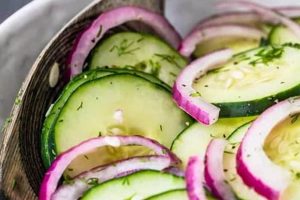
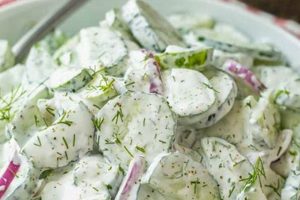
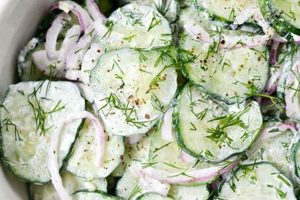
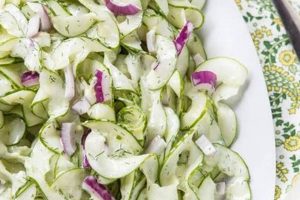
A refreshing, simple salad featuring cucumbers as the primary ingredient, this dish is a staple of Greek cuisine. Typically prepared with thinly sliced cucumbers, red onion, tomatoes, olives, and feta cheese, it is dressed with a vinaigrette of olive oil, red wine vinegar, lemon juice, and oregano. Variations may include other herbs like dill or mint.
This salad embodies the essence of Mediterranean cuisine with its emphasis on fresh, seasonal ingredients and a light, flavorful dressing. The combination of crisp cucumbers, salty feta, and tangy vinaigrette provides a cooling and satisfying culinary experience, particularly suited to warm climates. Historically, access to fresh produce year-round in Greece contributed to the development of salads like this, which became integral to the local diet. Its simplicity also makes it an economical and versatile dish, easily adapted to incorporate available ingredients.
This exploration will delve further into specific variations of this classic salad, including regional adaptations and modern interpretations. It will also examine the nutritional benefits of its key components and offer practical tips for preparation and serving.
Tips for Preparing a Refreshing Cucumber Salad
Achieving optimal flavor and texture requires attention to a few key details. The following tips offer guidance for creating a truly exceptional cucumber salad.
Tip 1: Salt the Cucumbers: Salting the sliced cucumbers for about 15 minutes before adding other ingredients draws out excess moisture. This prevents the salad from becoming watery and helps the cucumbers retain their crispness.
Tip 2: Use High-Quality Olive Oil: The olive oil significantly impacts the flavor profile. Opting for a robust extra virgin olive oil enhances the overall taste and provides health benefits.
Tip 3: Fresh Herbs are Essential: Dried herbs can be used in a pinch, but fresh herbs like oregano, dill, or mint elevate the salad’s aroma and taste. Finely chop the herbs to release their full flavor.
Tip 4: Don’t Overcrowd the Bowl: Using a large enough bowl allows the ingredients to be tossed gently without bruising or breaking. This ensures an aesthetically pleasing presentation.
Tip 5: Marinate Briefly: While not strictly necessary, allowing the salad to marinate for a short period, around 10-15 minutes, allows the flavors to meld and intensify. However, avoid over-marinating, which can make the cucumbers soggy.
Tip 6: Consider Ingredient Variations: While traditional recipes offer a solid foundation, experimentation with ingredients like Kalamata olives, capers, or bell peppers can create unique and exciting flavor combinations.
Tip 7: Serve Chilled: For maximum refreshment, serve the salad chilled. Refrigerate for at least 30 minutes before serving, allowing the flavors to meld further.
By following these tips, one can create a cucumber salad that is both flavorful and visually appealing. Attention to detail, from ingredient selection to preparation techniques, ensures a truly delightful culinary experience.
These guidelines offer a pathway to preparing an exceptional dish, demonstrating that simplicity and quality can combine to create truly memorable flavors.
1. Fresh Cucumbers

Fresh cucumbers are fundamental to a successful Greek cucumber salad. Their crisp texture and mild, refreshing flavor provide the foundational layer upon which the other ingredients build. Using cucumbers lacking freshness compromises the overall quality, resulting in a watery, less vibrant salad. The choice of cucumber variety also influences the final product. Smaller varieties, like Persian cucumbers, tend to have thinner skins and fewer seeds, contributing to a more delicate texture. Larger cucumbers, while suitable, may benefit from seeding to prevent excess moisture in the salad.
The importance of fresh cucumbers becomes evident when considering the effect of less-than-optimal produce. A cucumber past its prime loses its structural integrity, becoming soft and releasing excess water, diluting the dressing and compromising the crispness of other ingredients. The flavor also diminishes, resulting in a bland, less satisfying experience. Conversely, a vibrant, freshly picked cucumber contributes a distinct crunch and clean taste that elevates the entire dish. A real-life example can be found in traditional Greek tavernas, where the emphasis on locally sourced, seasonal produce ensures the cucumber salad delivers optimal freshness and flavor.
Understanding the critical role of cucumber freshness offers practical significance. Selecting firm, unblemished cucumbers with vibrant green skin ensures the best outcome. Proper storage, such as refrigeration in a perforated bag, maintains freshness until preparation. Ultimately, prioritizing fresh cucumbers guarantees a Greek cucumber salad that embodies the vibrancy and refreshing qualities characteristic of this classic dish.
2. Ripe Tomatoes
Ripe tomatoes contribute essential sweetness and a subtle acidity to a Greek cucumber salad, balancing the cool, mild cucumber and salty feta. Their juicy texture also adds moisture and complements the crispness of the other vegetables. Using ripe tomatoes is crucial for achieving the intended flavor profile. Unripe tomatoes possess a tartness that can overpower the delicate balance of the salad, while overripe tomatoes introduce an undesirable mushiness. The specific type of tomato can also influence the overall result. While standard globe tomatoes are commonly used, smaller varieties like cherry or grape tomatoes offer a burst of concentrated flavor and visual appeal.
The contrast between using ripe versus unripe or overripe tomatoes illustrates the ingredient’s impact. An unripe tomato introduces an acidic sharpness that clashes with the other flavors, diminishing the refreshing quality of the salad. Overripe tomatoes, conversely, lack structural integrity and release excess liquid, resulting in a watery, less appealing dish. Authentic Greek tavernas exemplify the importance of ripe tomatoes. Chefs prioritize locally sourced, vine-ripened tomatoes, recognizing their crucial contribution to the salad’s overall balance and freshness. This selection ensures a vibrant, flavorful experience true to the dish’s traditional character.
Selecting ripe tomatoes for this salad has significant practical implications. Look for tomatoes with smooth, unblemished skin that yield slightly to gentle pressure. The aroma should be sweet and fragrant, indicative of ripeness. Storing tomatoes at room temperature, away from direct sunlight, helps maintain their optimal flavor and texture. Understanding the importance of tomato ripeness allows for informed selection and proper handling, maximizing the flavor and overall quality of the Greek cucumber salad. The proper choice of tomatoes elevates this simple dish, showcasing the transformative power of fresh, high-quality ingredients.
3. Red Onion
Red onion plays a crucial role in a Greek cucumber salad, providing a pungent bite that balances the mild cucumber and salty feta. Its sharp, slightly sweet flavor adds complexity and depth, preventing the salad from becoming bland. The onion’s crisp texture also contributes to the overall textural interplay, complementing the cucumbers’ coolness and the tomatoes’ juiciness. While the quantity of red onion used can be adjusted to individual preference, its presence is essential for achieving the characteristic flavor profile of the dish. The choice of red onion over other onion varieties stems from its distinct flavor profile and vibrant color, which enhances the salad’s visual appeal. Substituting with milder onions like white or yellow onions results in a less pronounced sharpness, compromising the intended balance of flavors.
The impact of red onion becomes apparent when comparing its inclusion with its absence or substitution. Without red onion, the salad lacks a crucial dimension of flavor, resulting in a simpler, potentially less satisfying experience. Using a milder onion variety diminishes the contrast between the ingredients, leading to a less dynamic and vibrant taste. Authentic Greek tavernas underscore the importance of red onion. These establishments traditionally incorporate thinly sliced red onion into their cucumber salads, recognizing its essential contribution to the dish’s signature flavor profile. This practice reflects a deep understanding of the ingredient’s role in creating a balanced and refreshing culinary experience.
Understanding the significance of red onion in a Greek cucumber salad offers practical guidance for preparation. Soaking thinly sliced red onion in ice water for a few minutes before adding it to the salad can mellow its sharpness without compromising its flavor or crispness. This technique is particularly useful for those sensitive to strong onion flavors. Furthermore, proper knife skills, such as ensuring uniformly thin slices, contribute to a more pleasant texture and even distribution of flavor. Careful consideration of red onion’s contribution enables the creation of a Greek cucumber salad that embodies the authentic flavors and textures characteristic of this classic dish. The precise balance achieved through the inclusion of red onion exemplifies the power of thoughtfully selected ingredients in creating a harmonious and flavorful culinary composition.
4. Feta Cheese
Feta cheese is integral to a Greek cucumber salad, providing a salty, tangy counterpoint to the other ingredients. Its crumbly texture contrasts with the crisp vegetables, adding a pleasant textural dimension. Authentic feta, made from sheep’s milk or a blend of sheep and goat’s milk, possesses a unique flavor profile that distinguishes it from other cheeses. This distinct taste, characterized by a salty, tangy, and slightly acidic note, contributes significantly to the overall character of the salad. Substitutions, such as cow’s milk feta or other brined cheeses, lack the specific nuances of authentic feta, resulting in a noticeable difference in taste and texture. The quantity of feta incorporated can be adjusted to individual preference, but its inclusion remains essential for an authentic flavor experience. Feta’s presence elevates the salad beyond a simple combination of vegetables, transforming it into a more complex and satisfying dish.
The impact of feta becomes evident when comparing its inclusion with its absence or substitution. A Greek cucumber salad without feta lacks a crucial element of flavor and texture. The salad becomes predominantly vegetal, missing the salty, tangy dimension that feta provides. Using a substitute cheese alters the flavor profile significantly, often resulting in a less nuanced and balanced taste. Traditional Greek cuisine demonstrates feta’s importance. Its ubiquitous presence in salads and other dishes underscores its central role in Greek gastronomy. Examples include the classic horiatiki (village salad) and various savory pies, where feta contributes its characteristic flavor and texture. This widespread use reflects a deep appreciation for feta’s unique culinary qualities.
Understanding feta’s crucial role offers practical considerations. Opting for authentic feta, preferably stored in brine, ensures the best flavor and texture. Draining the feta before adding it to the salad prevents excess moisture from diluting the dressing. Crumbling the feta rather than slicing it ensures even distribution throughout the salad and enhances the textural interplay. Careful consideration of feta’s characteristics allows for its optimal utilization, ensuring the Greek cucumber salad delivers an authentic and satisfying culinary experience. Appreciating the interplay between feta and the other ingredients highlights the importance of ingredient selection in achieving a balanced and flavorful dish.
5. Olive Oil

Olive oil forms an essential component of Greek cucumber salad, contributing significantly to its characteristic flavor profile and texture. The oil’s fruity, peppery notes complement the fresh vegetables and salty feta, creating a harmonious balance. Extra virgin olive oil, with its robust flavor and low acidity, is typically preferred. The oil not only serves as a flavor enhancer but also acts as a binding agent, coating the ingredients and allowing the flavors to meld. This cohesive effect is crucial for achieving the desired sensory experience. The quality of the olive oil directly impacts the overall quality of the salad. Using inferior oils, or those with a neutral flavor profile, diminishes the salad’s complexity and authenticity.
The importance of olive oil is evident in traditional Greek cuisine. Its widespread use, both in salads and other dishes, underscores its central role in Mediterranean gastronomy. Traditional Greek tavernas often feature house-made olive oil, highlighting the ingredient’s significance. This dedication to quality demonstrates the deep connection between olive oil and Greek culinary tradition. A specific example lies in the preparation of horiatiki, the classic Greek village salad. High-quality olive oil, often drizzled generously over the salad, contributes significantly to its characteristic flavor and aroma. This practice exemplifies the importance placed on olive oil as a key component of Greek cuisine. Furthermore, the use of olive oil aligns with the Mediterranean diet’s emphasis on healthy fats, further highlighting its value.
Understanding olive oil’s role in a Greek cucumber salad has practical implications for preparation. Selecting a high-quality extra virgin olive oil ensures optimal flavor and health benefits. The oil should possess a distinct aroma and a slightly peppery taste. Storing olive oil properly, away from heat and light, preserves its quality and prevents oxidation. Careful consideration of olive oil’s contribution allows for the creation of a Greek cucumber salad that embodies the authentic flavors and principles of Mediterranean cuisine. The specific characteristics imparted by olive oil underscore the importance of ingredient selection in achieving a balanced and flavorful dish.
6. Lemon Juice, Vinegar
The acidic components of the dressinglemon juice and/or vinegarare essential for balancing the flavors in a Greek cucumber salad. They provide a tartness that cuts through the richness of the olive oil and complements the other ingredients. The choice and balance of these acidic elements contribute significantly to the salad’s overall flavor profile and refreshing quality.
- Balancing Flavors
The primary function of lemon juice or vinegar is to provide acidity, which balances the flavors of the salad. The tartness counteracts the sweetness of the tomatoes and the richness of the olive oil, creating a harmonious flavor profile. Without this acidic element, the salad can taste bland or overly rich. A well-balanced dressing enhances the individual flavors of the ingredients while creating a unified and refreshing taste.
- Preserving Freshness
The acidity of lemon juice and vinegar also helps preserve the vibrant color and crisp texture of the vegetables. This is particularly important for cucumbers, which can become soft and watery over time. The acid helps maintain their structural integrity, ensuring a pleasant textural experience. This preservative effect is a practical benefit, especially when preparing the salad in advance.
- Traditional Choices and Regional Variations
Traditionally, red wine vinegar is a common choice for Greek cucumber salad, contributing a subtle fruity tartness. Lemon juice offers a brighter, more citrusy alternative. Some regional variations may incorporate white wine vinegar or even a combination of lemon juice and vinegar. These variations reflect the diverse culinary traditions within Greece and demonstrate the adaptability of the basic recipe.
- Adjusting Acidity to Preference
The amount of lemon juice or vinegar used can be adjusted to individual preference. Some prefer a more pronounced tartness, while others prefer a milder acidity. Tasting and adjusting the dressing throughout the preparation process allows for customization and ensures the final balance of flavors aligns with individual tastes. This flexibility allows for a personalized culinary experience.
The careful selection and application of lemon juice or vinegar demonstrate the importance of achieving balance within a seemingly simple dish. The acidity provided by these ingredients is not merely a functional element but a crucial component that elevates the Greek cucumber salad from a basic combination of ingredients to a harmonious and refreshing culinary experience. The interplay of acidity with the other flavors highlights the sophistication and balance characteristic of traditional Greek cuisine.
7. Oregano, Salt, Pepper
Oregano, salt, and pepper constitute the essential seasonings in a Greek cucumber salad, contributing significantly to its authentic flavor profile. Oregano, a pungent herb with slightly bitter and earthy notes, provides the dominant aromatic element. Its distinct character complements the fresh vegetables and feta cheese, creating a cohesive flavor experience. Salt enhances the natural flavors of the ingredients, while pepper adds a subtle touch of heat. The balance of these seasonings is crucial; too much oregano can overpower the other flavors, while insufficient salt can leave the salad tasting bland. The specific type of oregano also plays a role. Greek oregano, with its strong, aromatic qualities, is typically preferred over other varieties. The combined effect of these seasonings transforms the salad from a simple combination of ingredients into a vibrant and flavorful dish.
The significance of these seasonings becomes evident when considering their absence or improper balance. Without oregano, the salad lacks a crucial aromatic dimension, resulting in a less complex flavor profile. An imbalance in the seasoning, such as excessive salt or pepper, can detract from the freshness of the ingredients and compromise the overall taste. Authentic Greek cuisine, particularly dishes like horiatiki (village salad) and various grilled meats, exemplifies the importance of oregano, salt, and pepper. These seasonings are frequently used in combination, highlighting their synergistic relationship and their crucial role in Greek gastronomy. This traditional usage underscores their importance in achieving authentic flavor profiles.
Understanding the role of oregano, salt, and pepper in a Greek cucumber salad has practical implications for preparation. Freshly ground pepper offers a more pronounced aroma and flavor compared to pre-ground pepper. High-quality sea salt or kosher salt is preferred over iodized table salt, as it contributes a cleaner flavor. Furthermore, using dried oregano requires careful portioning to prevent overpowering the salad, while fresh oregano should be added towards the end of preparation to preserve its delicate aroma. Careful consideration of these seasonings allows for precise control over the final flavor profile. The appropriate use of oregano, salt, and pepper distinguishes a truly authentic and flavorful Greek cucumber salad, demonstrating the transformative power of simple yet carefully selected seasonings.
Frequently Asked Questions
This section addresses common inquiries regarding Greek cucumber salad, providing concise and informative responses.
Question 1: Can other types of cheese be substituted for feta?
While other cheeses can be used, authentic feta, made from sheep’s or a combination of sheep and goat’s milk, provides the characteristic salty, tangy flavor essential for an authentic Greek cucumber salad. Substitutions may alter the intended flavor profile.
Question 2: Should the cucumbers be peeled?
Peeling cucumbers is optional. Leaving the skin on adds texture and visual appeal, while peeling results in a more delicate texture. If peeling, consider using a striped peeler for a decorative effect.
Question 3: How long can Greek cucumber salad be stored?
Ideally, this salad is best consumed fresh. However, it can be stored in an airtight container in the refrigerator for up to two days. The texture of the cucumbers may soften slightly over time.
Question 4: What type of vinegar is traditionally used?
Red wine vinegar is the traditional choice, providing a balanced acidity and subtle fruitiness. White wine vinegar or lemon juice may also be used depending on preference and regional variations.
Question 5: Can dried oregano be used instead of fresh?
While fresh oregano is preferred for its vibrant flavor, dried oregano can be substituted. Use a smaller quantity of dried oregano, as its flavor is more concentrated.
Question 6: How can one prevent the salad from becoming watery?
Salting the sliced cucumbers for approximately 15 minutes before combining them with the other ingredients draws out excess moisture. This step is crucial for maintaining the salad’s crispness and preventing a watery consistency.
Understanding these aspects of preparation ensures a successful and authentic culinary experience. Adherence to traditional methods and careful consideration of ingredient selection contribute significantly to the final result.
This concludes the frequently asked questions section. The following section will offer a selection of variations on the classic Greek cucumber salad recipe.
Greek Cucumber Salad Recipe
Exploration of the Greek cucumber salad recipe reveals a dish deeply rooted in tradition and culinary principles. Emphasis on fresh, high-quality ingredients, such as ripe tomatoes, crisp cucumbers, and authentic feta cheese, underscores the importance of simplicity and seasonality. Proper execution of techniques, including salting cucumbers to remove excess moisture and balancing the vinaigrette’s acidity, ensures optimal flavor and texture. Understanding the specific contributions of each componentfrom the pungent bite of red onion to the aromatic presence of oreganoallows for informed ingredient selection and preparation. The seemingly simple composition of this salad belies a complex interplay of flavors and textures, highlighting the sophistication of Greek cuisine.
The Greek cucumber salad recipe serves as a testament to the enduring power of traditional culinary practices. Its continued popularity reflects an appreciation for fresh, wholesome ingredients and balanced flavors. Further exploration of regional variations and adaptations promises to unveil further nuances and possibilities within this classic dish, encouraging culinary creativity and a deeper understanding of Mediterranean gastronomy.