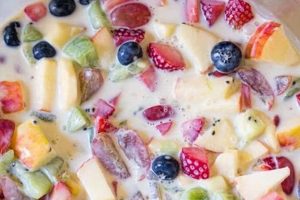
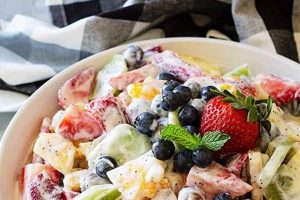
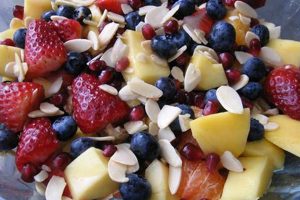
Combining various fresh fruits, often with a light dressing or syrup, creates a refreshing and nutritious dish. A basic version might include readily available fruits like berries, melon, and grapes tossed with a squeeze of citrus juice. More elaborate variations can incorporate nuts, seeds, herbs, or yogurt for added flavor and texture.
Fresh fruit combinations offer a naturally sweet and hydrating treat, contributing essential vitamins, minerals, and dietary fiber. These dishes are versatile, serving as a light breakfast, a healthy snack, or a delightful dessert. Historically, fruit salads have evolved from simple preparations using seasonal produce to more complex concoctions influenced by culinary traditions worldwide.
The following sections will delve into specific examples, offering guidance on ingredient selection, preparation techniques, and creative presentation ideas for crafting appealing and healthful fruit medleys.
Tips for Creating Delicious Fruit Salads
Creating a satisfying fruit salad involves more than simply tossing fruit together. Careful consideration of ingredients, preparation techniques, and presentation elevates the final product.
Tip 1: Select ripe, but firm fruit. Overripe fruit can become mushy and detract from the salad’s texture and overall appeal. Underripe fruit may lack sweetness and flavor.
Tip 2: Choose a variety of colors and textures. This enhances visual appeal and provides a broader range of nutrients and flavors. Consider incorporating fruits with contrasting textures, such as crisp apples and juicy berries.
Tip 3: Prepare fruit just before serving. This helps maintain freshness and prevents browning. If advance preparation is necessary, store cut fruit in an airtight container with a squeeze of lemon or lime juice to minimize oxidation.
Tip 4: Use a light dressing sparingly. A simple syrup, a touch of honey, or a squeeze of citrus juice enhances the natural sweetness of the fruit without overpowering it. Avoid heavy dressings that can mask the delicate flavors.
Tip 5: Consider adding complementary ingredients. A sprinkle of chopped nuts, seeds, or fresh herbs can add interesting textural and flavor dimensions. A dollop of yogurt or a sprinkle of shredded coconut can also enhance the dish.
Tip 6: Pay attention to presentation. Arrange the fruit attractively in a serving bowl or individual glasses. A garnish of fresh mint or a dusting of powdered sugar can add a touch of elegance.
Tip 7: Chill before serving. A chilled fruit salad is particularly refreshing, especially during warmer months.
By following these tips, one can consistently create fruit salads that are both visually appealing and nutritionally rewarding.
With these fundamental principles in mind, exploration of more specific recipes and variations can further enhance fruit salad preparation skills.
1. Fresh, Seasonal Fruits
Optimal fruit salad preparation hinges on utilizing fresh, seasonal produce. This approach maximizes flavor, nutritional value, and overall quality. Selecting in-season fruits ensures peak ripeness and sweetness, minimizing the need for excessive added sugars or complex flavor enhancements. This section explores the facets of using seasonal ingredients in straightforward fruit salads.
- Enhanced Flavor
Seasonal fruits, harvested at their peak, offer superior taste compared to out-of-season alternatives. A summer berry salad bursts with natural sweetness, while a winter citrus salad provides a refreshing tang. This inherent flavor complexity allows for simpler preparations, reducing reliance on added sugars or artificial flavorings. The natural sweetness of ripe, seasonal fruit contributes significantly to a balanced and enjoyable salad.
- Nutritional Value
Fruits offer a wealth of vitamins, minerals, and antioxidants. Consuming produce in season often correlates with higher nutrient content, as fruits are allowed to ripen fully on the vine or tree. This nutritional boost contributes to the health benefits of incorporating fruit salads into one’s diet. A vibrant fruit salad provides a concentrated source of essential nutrients.
- Cost-Effectiveness
Seasonal fruits tend to be more affordable due to their abundance and reduced transportation costs. This allows for greater variety and quantity in fruit salads without straining the budget. Incorporating readily available, seasonal produce offers an economical approach to healthy eating.
- Environmental Impact
Choosing locally sourced, seasonal fruits reduces the environmental impact associated with long-distance transportation and storage. Supporting local farmers and reducing carbon emissions contribute to sustainable food practices. Incorporating seasonal fruits aligns with environmentally conscious consumption patterns.
By prioritizing fresh, seasonal fruits, individuals can create flavorful, nutritious, and cost-effective salads that benefit both personal well-being and environmental sustainability. This practice simplifies recipe development and enhances the overall enjoyment of these refreshing dishes. The vibrant flavors and nutritional density of seasonal produce contribute significantly to a satisfying and healthful culinary experience.
2. Balanced Flavor Profiles

Balanced flavor profiles are crucial for creating palatable and enjoyable fruit salads. A successful recipe considers the interplay of sweetness, tartness, and other flavor notes to achieve a harmonious blend. This section explores the key facets contributing to balanced flavors in simple fruit salads.
- Sweetness and Acidity
Balancing sweet and tart flavors is fundamental. Excessively sweet salads can be cloying, while overly tart salads can be unappealing. Combining fruits like sweet berries with tart citrus segments creates a balanced profile. Consider a mix of strawberries and grapefruit sections. The interplay of these flavors prevents the salad from becoming one-dimensional. A touch of honey or a squeeze of lime juice can further refine the balance.
- Textural Contrast and Flavor Enhancement
Texture influences flavor perception. A combination of soft and crisp textures adds complexity and prevents monotony. Consider pairing soft melon chunks with crisp apple slices. The varying textures create a more interesting and satisfying sensory experience, enhancing the overall enjoyment of the salad. This textural contrast can also highlight subtle flavor nuances within individual fruits.
- Aromatic Complexity
Incorporating fruits with distinct aromatic profiles adds depth and complexity to the salad. Combining fruits like fragrant berries with subtly aromatic melon creates a multi-layered sensory experience. Imagine a mix of raspberries, blueberries, and cantaloupe. The interplay of these aromas enhances the overall flavor perception, making the salad more appealing. A hint of fresh mint or basil can further elevate the aromatic complexity.
- Flavor Combinations
Strategic flavor combinations enhance the overall profile of the salad. Certain fruits complement each other, creating synergistic flavor pairings. For example, combining mango and pineapple creates a tropical flavor profile, while pairing apples and grapes offers a more traditional combination. The choice of combinations depends on personal preference and desired outcome. Experimentation with various combinations can lead to unique and enjoyable flavor discoveries.
Understanding these facets allows for the creation of fruit salads with well-rounded flavor profiles. The balance of sweetness, acidity, texture, and aroma contributes significantly to the overall enjoyment of the dish, transforming a simple combination of fruits into a complex and satisfying culinary experience. Careful consideration of these elements elevates the fruit salad from a basic dish to a nuanced culinary creation.
3. Varied Textures
Textural diversity significantly contributes to the overall enjoyment of simple fruit salads. A combination of contrasting textures elevates the sensory experience, making the salad more appealing and satisfying. This section explores the facets of incorporating varied textures into straightforward fruit salad recipes.
- Sensory Appeal
A variety of textures stimulates the palate, creating a more dynamic and enjoyable eating experience. The interplay of crisp, juicy, and soft textures adds complexity and prevents monotony. A salad featuring crisp apple slices alongside juicy grapes and soft melon chunks offers a more engaging sensory experience than one with uniform texture. This textural variation keeps the palate interested and enhances overall enjoyment.
- Flavor Enhancement
Texture influences flavor perception. Different textures can highlight or enhance the inherent flavors of individual fruits. For example, the crispness of an apple can accentuate its tartness, while the juiciness of a berry can amplify its sweetness. Combining these textures in a salad allows for a more nuanced and complex flavor experience. The interplay of textures allows individual fruit flavors to shine.
- Visual Interest
Varied textures contribute to a visually appealing salad. A mix of textures creates visual depth and interest, making the salad more attractive. Consider a salad with smooth berries, segmented oranges, and chunks of pineapple. The different shapes and textures create a visually engaging presentation, enhancing the dining experience. This visual appeal increases the desirability of the salad.
- Recipe Versatility
Considering texture expands recipe possibilities. Incorporating ingredients with contrasting textures allows for greater creativity and customization. Adding toasted nuts or seeds provides a crunchy element, while incorporating dried fruit offers a chewy contrast. These additions broaden the range of possibilities within simple fruit salad recipes, allowing for personalized creations.
By incorporating a variety of textures, simple fruit salads transcend basic combinations and become more complex and satisfying culinary creations. The interplay of textures elevates the sensory experience, enhances flavor perception, and increases visual appeal. This attention to texture transforms a simple dish into a multi-dimensional culinary experience.
4. Minimal Processing
Minimal processing is a cornerstone of simple fruit salad recipes. It emphasizes preserving the natural flavors, textures, and nutritional value of fresh fruits. This approach prioritizes simplicity and freshness, resulting in salads that are both healthy and delicious. The following facets illustrate the connection between minimal processing and creating appealing fruit salads.
- Retention of Nutrients
Minimally processed fruit retains a higher concentration of vitamins, minerals, and antioxidants compared to heavily processed alternatives. Fruits subjected to extensive processing, such as juicing or drying, can lose some of their nutritional value. In simple fruit salads, keeping the fruit close to its natural state maximizes the health benefits. A salad composed of freshly cut fruit provides a richer source of nutrients than one made with canned or processed fruit.
- Natural Flavor Preservation
Minimal processing ensures the natural flavors of the fruits shine through. Avoiding excessive manipulation or additions allows the inherent sweetness and tartness of the fruit to take center stage. This approach reduces the need for added sugars or artificial flavorings, resulting in a cleaner, more refreshing taste. A simple salad of fresh berries requires little more than a squeeze of lemon to enhance its natural sweetness.
- Textural Integrity
Minimally processed fruit retains its natural texture, contributing to a more satisfying sensory experience. Excessive processing can alter texture, resulting in mushiness or loss of crispness. In simple fruit salads, the varying textures of different fruits play a crucial role in the overall enjoyment of the dish. Freshly cut apple slices retain their satisfying crunch, while ripe melon chunks offer a juicy contrast.
- Ease of Preparation
Minimal processing simplifies the preparation process. Simple fruit salads require minimal effort and time, making them a convenient and accessible healthy eating option. Washing, cutting, and combining fresh fruits is all that is needed to create a delicious and nutritious salad. This ease of preparation encourages frequent consumption of fresh fruit.
The emphasis on minimal processing in simple fruit salad recipes directly contributes to the creation of dishes that are not only flavorful and visually appealing but also nutritionally beneficial. By prioritizing fresh, whole fruits and minimizing unnecessary manipulations, these salads offer a simple yet effective way to enjoy the natural goodness of seasonal produce. This connection between minimal processing and healthfulness reinforces the value of incorporating simple fruit salads into a balanced diet.
5. Simple Dressings

Simple dressings play a vital role in enhancing the flavors of simple fruit salad recipes without masking the natural sweetness and freshness of the fruit. The choice of dressing contributes significantly to the overall balance and complexity of the dish. Understanding the role of simple dressings is essential for creating well-balanced and appealing fruit salads.
- Citrus Juices
A squeeze of fresh citrus juice, such as lemon, lime, or orange, provides a bright, acidic counterpoint to the sweetness of the fruit. Citrus juices also act as a natural preservative, helping to prevent browning. Lemon juice enhances the flavors of a berry salad, while lime juice complements tropical fruits like mango and pineapple. The acidity of citrus juice brightens the overall flavor profile without adding excessive sweetness.
- Light Syrups
A light syrup made from honey or maple syrup adds a touch of sweetness and can help bind the fruit together. The subtle sweetness of these natural syrups enhances the fruit flavors without being overpowering. A honey-lime dressing complements a mixed fruit salad with melon and berries. The syrup adds a subtle sweetness and helps the dressing adhere to the fruit.
- Herbs and Spices
Fresh herbs like mint, basil, or ginger add aromatic complexity to fruit salads. A sprinkle of cinnamon or a pinch of nutmeg can provide warmth and depth. Fresh mint complements a melon and berry salad, while a dusting of cinnamon enhances the flavors of a winter fruit salad with apples and pears. The herbs and spices contribute subtle yet distinct flavor notes.
- Yogurt or Cream
A dollop of plain yogurt or a drizzle of light cream adds a creamy texture and a tangy counterpoint to the sweetness of the fruit. Greek yogurt with a touch of honey complements a fruit salad with berries and granola. The creaminess of the yogurt adds a textural element and a subtle tang. This addition provides a richer, more decadent touch while maintaining a relatively light profile.
The judicious use of simple dressings elevates simple fruit salads from basic combinations to more complex and flavorful dishes. The choice of dressing should complement the natural flavors of the fruit, enhancing the overall balance and appeal without masking the inherent freshness. These simple yet impactful additions transform a basic fruit mixture into a delightful culinary experience.
6. Attractive Presentation

Attractive presentation elevates simple fruit salad recipes from basic nutrition to a visually appealing culinary experience. Visual appeal significantly influences perceived flavor and enjoyment. A thoughtfully arranged salad entices consumption, promoting appreciation for the diverse colors, textures, and shapes of the incorporated fruits. For instance, a melon salad arranged as a colorful mosaic on a platter appears more inviting than melon chunks haphazardly tossed in a bowl. This visual enhancement encourages a positive response even before the first bite.
Several techniques contribute to attractive fruit salad presentation. Utilizing a variety of cutting techniques, such as slicing, dicing, and balling, adds visual interest. Arranging fruits by color creates a vibrant and appealing display. Garnishing with fresh herbs or edible flowers adds a touch of elegance. Serving the salad in attractive bowls or individual glasses further enhances the presentation. Consider a fruit salad served in hollowed-out pineapple halves or arranged in individual parfait glasses layered with yogurt and granola. These presentation choices contribute to a more refined and enjoyable dining experience.
While flavor and freshness remain paramount, attractive presentation adds another dimension to simple fruit salad recipes. The visual appeal enhances the perceived value and enjoyment of the dish. This understanding has practical significance for both home cooks and professional chefs. Investing time in thoughtful presentation elevates even the simplest fruit salad, transforming it into a visually appealing and more satisfying culinary creation. This connection between presentation and enjoyment underscores the importance of visual appeal in culinary arts.
7. Proper Storage
Proper storage is essential for maintaining the quality, safety, and appeal of simple fruit salad recipes. Improper storage can lead to spoilage, bacterial growth, and loss of flavor, texture, and nutritional value. Implementing effective storage techniques preserves the freshness and enjoyment of these dishes.
- Preventing Oxidation and Browning
Exposure to air causes many fruits to oxidize, leading to browning and undesirable flavor changes. This is particularly noticeable in fruits like apples, bananas, and avocados. Storing cut fruit in airtight containers or covering it with a layer of citrus juice helps minimize oxidation and preserves its visual appeal. This practice is crucial for maintaining the aesthetic quality of fruit salads, especially those prepared in advance.
- Temperature Control
Maintaining appropriate temperatures is critical for preventing bacterial growth and preserving fruit quality. Most fruit salads are best stored refrigerated at temperatures below 40F (4C). This inhibits bacterial proliferation and slows down enzymatic processes that lead to spoilage. Storing fruit salads at room temperature for extended periods increases the risk of foodborne illness and reduces shelf life.
- Moisture Control
Excessive moisture can lead to fruit becoming soggy and losing its textural integrity. Storing fruit salads in containers with good ventilation or lining containers with absorbent paper towels helps control moisture and maintain crispness. This is particularly important for salads containing delicate fruits like berries, which are prone to becoming mushy. Proper moisture management contributes to a more enjoyable sensory experience.
- Separation of Ingredients
Some fruits, such as bananas and apples, release ethylene gas, which can accelerate the ripening and spoilage of other fruits. Storing these ethylene-producing fruits separately or incorporating them into the salad just before serving helps maintain the freshness of other ingredients. This practice is especially important for mixed fruit salads containing a variety of fruits with varying sensitivities to ethylene.
Proper storage techniques are integral to maximizing the shelf life and enjoyment of simple fruit salad recipes. By understanding and implementing these methods, individuals can ensure that their fruit salads remain fresh, flavorful, and safe to consume. This attention to detail elevates the culinary experience, transforming a simple dish into a consistently enjoyable and healthful treat.
Frequently Asked Questions
This section addresses common inquiries regarding the preparation and enjoyment of fruit salads, offering practical guidance for optimal results.
Question 1: How can browning be prevented in fruit salads?
Browning, a result of oxidation, can be minimized by coating cut fruit with acidic citrus juice (lemon or lime) or using a commercial anti-browning product. Storing the salad in an airtight container also limits oxygen exposure.
Question 2: What are optimal fruit combinations for a balanced flavor profile?
Balancing sweetness and acidity is key. Combining sweet fruits like berries or melon with tart fruits like citrus or kiwi creates a harmonious flavor profile. Incorporating a variety of textures further enhances the experience.
Question 3: How long can a fruit salad be safely stored?
Refrigerated fruit salad, stored in an airtight container, typically remains safe for consumption for up to three to five days. However, quality and freshness gradually decline over time.
Question 4: Can canned fruit be used in simple fruit salads?
While canned fruit offers convenience, fresh fruit is generally preferred for its superior flavor, texture, and nutritional value. If using canned fruit, choose varieties packed in juice rather than syrup to minimize added sugar.
Question 5: What are suitable dressings for enhancing fruit salad without overpowering natural flavors?
Light dressings, such as a squeeze of citrus juice, a drizzle of honey, or a sprinkle of fresh herbs, enhance natural sweetness without masking delicate flavors. Heavy or creamy dressings can overwhelm the fresh fruit.
Question 6: How can one ensure optimal ripeness when selecting fruit for a salad?
Select fruits exhibiting characteristic aromas, yielding slightly to gentle pressure, and displaying vibrant, unblemished skin. Avoid overly firm or excessively soft fruit, as these indicate underripeness or overripeness, respectively.
Careful consideration of these frequently asked questions ensures optimal preparation, storage, and enjoyment of fruit salads.
This concludes the frequently asked questions section. The following section will offer a collection of simple fruit salad recipes for practical application of the information provided.
Simple Fruit Salad Recipes
Exploration of simple fruit salad recipes reveals the importance of ingredient selection, preparation techniques, and presentation. Prioritizing fresh, seasonal produce maximizes flavor and nutritional value. Balancing sweetness and acidity, incorporating varied textures, and employing minimal processing contribute to a harmonious and appealing culinary experience. Simple dressings enhance natural flavors without masking the inherent freshness of the fruit, while attractive presentation elevates the perceived value and enjoyment. Proper storage techniques maintain quality and safety, ensuring optimal flavor and texture.
Culinary creativity within the realm of simple fruit salad recipes offers a pathway to healthful and enjoyable eating experiences. Understanding the interplay of flavors, textures, and presentation unlocks the potential of fresh produce, transforming basic ingredients into vibrant and satisfying culinary creations. This knowledge empowers individuals to craft personalized dishes tailored to individual preferences and dietary needs, promoting a deeper appreciation for the versatility and nutritional benefits of incorporating fresh fruit into everyday meals.