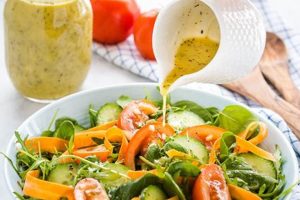
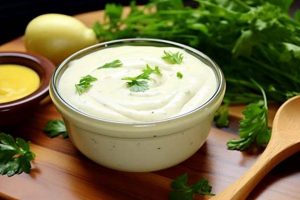
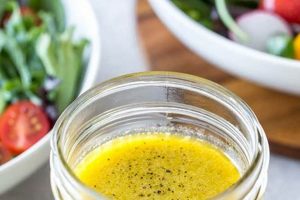
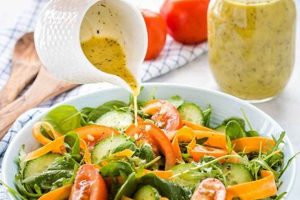
Simple salad dressings enhance the flavor and texture of fresh produce without requiring complex culinary skills or lengthy preparation times. A basic vinaigrette, for instance, involves whisking together oil, vinegar, and seasonings. Variations might incorporate ingredients such as Dijon mustard, honey, or herbs.
Quick and flavorful dressings contribute significantly to healthier eating habits by encouraging greater consumption of vegetables. Historically, dressings served not only to improve palatability but also as a means of preservation before refrigeration. The accessibility of these simple recipes empowers individuals to control ingredients, avoiding excess sodium, sugar, and artificial additives often found in commercial products. This promotes dietary awareness and contributes to overall well-being.
The following sections will delve into specific examples of readily achievable dressings, explore variations to suit diverse tastes, and provide guidance on proper storage and usage.
Tips for Easy Salad Dressing Preparation
Creating flavorful, homemade salad dressings requires minimal effort with the right techniques. These tips offer guidance for achieving delicious results efficiently.
Tip 1: Emulsification for a Smooth Texture: A stable emulsion prevents separation of oil and vinegar. Vigorous whisking or blending creates a cohesive, creamy consistency. Adding a small amount of emulsifier like Dijon mustard or honey enhances stability.
Tip 2: Balancing Flavors: Achieving a harmonious balance between acidity, sweetness, and savory notes is crucial. Taste and adjust seasonings incrementally, ensuring no single flavor dominates.
Tip 3: Fresh Herbs for Enhanced Aroma: Incorporating fresh herbs elevates the flavor profile. Chop herbs finely to release their aromatic oils and distribute them evenly throughout the dressing.
Tip 4: Citrus Zest for Brightness: Adding citrus zest provides a vibrant, refreshing element. Use a fine grater to avoid including the bitter pith.
Tip 5: Proper Storage for Longevity: Store dressings in airtight containers in the refrigerator. Allow oil-based dressings to come to room temperature before serving for optimal flavor and consistency.
Tip 6: Experimentation with Ingredients: Adapting recipes to personal preferences is encouraged. Explore diverse oils, vinegars, spices, and herbs to discover unique flavor combinations.
Tip 7: Start with Small Batches: When trying a new recipe, preparing a smaller quantity allows for adjustments and prevents waste if the flavor profile isn’t ideal.
By following these guidelines, one can consistently produce delicious, homemade salad dressings that complement any salad.
These simple techniques contribute not only to enhanced flavors but also to greater control over ingredients, promoting healthier dietary choices. The following section offers concluding remarks on incorporating these dressings into a balanced diet.
1. Few Ingredients
Ease of preparation in salad dressings often correlates directly with the number of ingredients required. Recipes utilizing minimal components offer accessibility and efficiency, particularly for those new to culinary pursuits or seeking quick meal solutions. This principle of simplicity underscores the appeal of “easy” salad dressings.
- Pantry Staples:
Many simple dressings rely on readily available pantry staples like oil, vinegar, salt, and pepper. Olive oil and red wine vinegar, for instance, form the base of a classic vinaigrette. This accessibility eliminates the need for specialized ingredients, simplifying the process.
- Emphasis on Freshness:
While some recipes incorporate additional flavor enhancers, the focus often remains on highlighting the fresh produce itself. A light dressing with minimal ingredients allows the natural flavors of the vegetables to shine through rather than masking them.
- Reduced Preparation Time:
Fewer ingredients translate to less time spent measuring, chopping, and combining components. A simple two-ingredient dressing can be whisked together in seconds, facilitating quick meal preparation.
- Adaptability and Customization:
Even with a limited number of core ingredients, variations are easily achieved. A simple vinaigrette can be customized with a touch of Dijon mustard, honey, or fresh herbs, demonstrating the versatility of a minimalist approach.
The “few ingredients” aspect of easy salad dressings reinforces the accessibility and efficiency of homemade options. This allows for a focus on fresh, high-quality ingredients, enhancing both flavor and nutritional value while simplifying the cooking process. By understanding the impact of minimizing ingredients, one can appreciate the convenience and versatility offered by these recipes.
2. Quick Preparation

The “quick preparation” aspect of easy salad dressings directly addresses the demand for efficient meal solutions. Time constraints often deter individuals from homemade options, making speed a critical factor in recipe selection. Rapid preparation contributes significantly to the appeal and practicality of these dressings.
- Minimal Processing:
Easy salad dressings frequently minimize or eliminate complex processing steps. Instead of lengthy marinades or intricate emulsification techniques, these recipes often involve simple whisking or blending of readily available ingredients. This streamlined approach significantly reduces preparation time.
- Simplified Techniques:
Techniques employed in quick dressings are generally straightforward and accessible, even to novice cooks. Basic whisking, shaking, or blending suffice for many recipes, eliminating the need for specialized equipment or advanced culinary skills. This simplicity encourages more frequent preparation of homemade dressings.
- Emphasis on Fresh Ingredients:
The use of fresh ingredients often contributes to faster preparation times. Washing, chopping, and combining fresh herbs, vegetables, or citrus components requires less time than processing or cooking more complex ingredients, aligning with the “quick preparation” objective.
- Adaptability for Time-Saving:
Easy recipes readily adapt to time-saving strategies. Pre-chopped ingredients or pre-mixed blends can further expedite the process. Storing a base dressing in the refrigerator allows for quick customization with fresh herbs or spices just before serving.
The emphasis on quick preparation underscores the practicality and convenience of easy salad dressings. This characteristic broadens their appeal, making homemade options a viable choice for busy individuals seeking healthy and flavorful meal solutions without extensive time investment. The efficiency of these recipes contributes significantly to their integration into daily routines.
3. Customizable Flavors
Customization represents a significant advantage of homemade salad dressings, directly contributing to the appeal of “easy” recipes. Adaptability to individual preferences and dietary needs enhances the versatility of these dressings, encouraging culinary exploration and promoting consistent consumption of fresh produce.
- Ingredient Swaps:
Simple recipes provide a foundation for flavor exploration through ingredient substitutions. Substituting different oils, such as avocado oil for olive oil, impacts both flavor and nutritional profile. Likewise, varying vinegars, from balsamic to apple cider, introduces distinct flavor nuances. These simple swaps transform a basic recipe into a personalized culinary creation.
- Herb and Spice Integration:
Fresh or dried herbs and spices offer a potent avenue for customization. A simple vinaigrette gains complexity with the addition of chopped chives, oregano, or a pinch of red pepper flakes. The flexibility of these recipes allows for experimentation with diverse flavor profiles, catering to individual tastes and complementing specific salad ingredients.
- Sweet and Savory Adjustments:
Balancing sweet and savory elements allows for further customization. A touch of honey or maple syrup adds sweetness, while a dash of Dijon mustard or Worcestershire sauce introduces savory notes. Adjusting these elements allows for fine-tuning the flavor profile, achieving a precise balance that complements personal preferences and the overall meal composition.
- Dietary Adaptations:
Customization extends to accommodating dietary restrictions or preferences. Substituting low-sodium ingredients, using specific oils for health benefits, or omitting allergens like nuts or dairy ensures inclusivity. This adaptability broadens the appeal of easy recipes, making them accessible to a wider range of individuals and dietary needs.
The inherent customizability of easy salad dressing recipes enhances their value and promotes their consistent use. This flexibility empowers individuals to explore diverse flavor combinations, adapt recipes to specific dietary needs, and ultimately, enjoy healthier eating habits by making salads more appealing and personalized. This customization aspect reinforces the “easy” nature of the recipes, as adjustments require minimal effort while yielding significant flavor variations.
4. Healthier Alternative
Easy salad dressing recipes present a healthier alternative to commercially produced dressings, often laden with added sugars, unhealthy fats, artificial preservatives, and excessive sodium. This connection stems from the control over ingredients afforded by homemade preparation. Selecting fresh, high-quality oils, such as extra virgin olive oil or avocado oil, provides beneficial monounsaturated fats. Limiting or eliminating added sugars contributes to lower overall caloric intake and reduces the risk of metabolic issues. Furthermore, controlling sodium content helps manage blood pressure and promotes cardiovascular health. For example, a simple vinaigrette made with olive oil, lemon juice, and herbs offers a stark contrast to a bottled dressing containing high fructose corn syrup, soybean oil, and a multitude of preservatives.
The ability to tailor ingredients to specific dietary needs further strengthens the “healthier alternative” proposition. Individuals with allergies or sensitivities can omit problematic components, ensuring safe consumption. Those following specific diets, such as low-sodium or low-fat, can adapt recipes accordingly. Furthermore, incorporating nutrient-rich additions like fresh herbs, spices, or grated ginger boosts the nutritional value beyond basic flavor enhancement. For instance, adding flaxseed oil to a dressing increases omega-3 fatty acid intake, while incorporating nutritional yeast provides B vitamins. This level of control empowers individuals to align their dietary choices with health goals.
Opting for easy, homemade salad dressings offers significant health advantages. The conscious selection of ingredients and avoidance of artificial additives contributes to improved dietary quality and reduces potential health risks associated with processed foods. This connection between “healthier alternative” and “easy salad dressing recipe” highlights the importance of culinary awareness and empowers individuals to make informed choices that support overall well-being. By embracing simple recipes, individuals gain control over their nutritional intake and contribute to long-term health benefits.
5. Cost-Effective

Cost-effectiveness represents a compelling advantage of preparing salad dressings at home, aligning directly with the “easy” aspect of these recipes. Homemade options often offer significant cost savings compared to commercially produced dressings, particularly when factoring in ingredient quality and potential health benefits. This economic advantage contributes to the appeal and accessibility of easy salad dressing recipes.
- Reduced Ingredient Costs:
Many basic salad dressing recipes utilize common pantry staples like oil, vinegar, and seasonings, ingredients typically less expensive than purchasing pre-made dressings. The cost per serving of a homemade vinaigrette, for instance, is often significantly lower than a comparable volume of a bottled dressing. This reduced reliance on specialized or pre-packaged ingredients contributes to overall cost savings.
- Minimized Food Waste:
Preparing dressings in smaller batches, tailored to immediate needs, minimizes food waste. This contrasts with purchasing larger bottles of commercial dressings, which may expire before being fully consumed. Reducing food waste directly contributes to cost savings and promotes sustainable consumption practices.
- Control over Ingredient Quality:
While cost-effective, homemade dressings do not compromise quality. Selecting ingredients directly empowers consumers to prioritize freshness and avoid artificial additives or preservatives often found in commercial products. This focus on quality aligns with health-conscious approaches while remaining budget-friendly.
- Bulk Purchasing of Staples:
The core ingredients of many easy dressings, like oil and vinegar, are amenable to bulk purchasing, further reducing costs. Buying larger quantities of these staples often results in lower unit prices compared to smaller bottles or specialty products. This strategy amplifies the cost-effectiveness of homemade dressings over time.
The cost-effectiveness of easy salad dressing recipes enhances their overall appeal, combining simplicity, health benefits, and economic advantages. This convergence positions homemade dressings as a practical and accessible choice for individuals seeking flavorful, healthy meal options without straining their budget. By embracing simple recipes and utilizing cost-effective strategies, individuals can prioritize both their health and financial well-being.
Frequently Asked Questions
This section addresses common inquiries regarding the creation and utilization of simple salad dressings.
Question 1: How can oil and vinegar be prevented from separating in a basic vinaigrette?
Vigorous whisking or blending creates a temporary emulsion. Adding a small amount of emulsifier, such as Dijon mustard or honey, helps stabilize the mixture and maintain a cohesive texture.
Question 2: What are common mistakes to avoid when preparing simple dressings?
Overusing a single ingredient, such as vinegar or a dominant herb, can create an unbalanced flavor profile. Incremental adjustments and tasting throughout the process ensure a harmonious blend.
Question 3: How can the flavor of a simple vinaigrette be enhanced beyond basic oil and vinegar?
Fresh herbs, spices, citrus zest, garlic, or shallots elevate the flavor profile. Experimentation with different oil and vinegar varieties also expands flavor possibilities.
Question 4: What is the recommended storage method for homemade salad dressings?
Store dressings in airtight containers in the refrigerator. Oil-based dressings should be brought to room temperature before serving for optimal consistency and flavor release.
Question 5: Can homemade salad dressings be frozen?
While freezing is possible, the texture and emulsion may be affected upon thawing. Freezing is generally not recommended for dressings containing fresh herbs or delicate ingredients.
Question 6: How long can homemade salad dressings be stored safely?
Refrigerated dressings typically last up to one week, depending on the ingredients. Discard dressings exhibiting signs of spoilage, such as mold growth or off-odors.
Understanding these fundamental aspects facilitates successful preparation and utilization of easy salad dressing recipes, contributing to healthier and more flavorful meal experiences.
The following section provides a concluding overview of key takeaways and recipe suggestions.
Conclusion
Exploration of straightforward salad dressing recipes reveals the accessibility of fresh, flavorful, and cost-effective culinary enhancements for everyday meals. Emphasis on minimal ingredients, rapid preparation, and customizable flavors empowers individuals to integrate healthful dietary choices seamlessly into busy routines. Considerations of ingredient quality, balanced flavors, and proper storage techniques ensure optimal outcomes and maximize health benefits. The potential for customization accommodates diverse palates and dietary requirements, broadening the appeal of homemade options.
Culinary empowerment through accessible recipes fosters greater awareness of ingredient selection and promotes healthier eating patterns. Continued exploration of flavor combinations and simple techniques elevates everyday meals and contributes to overall well-being. This focus on simplicity and quality in salad dressing preparation represents a positive step toward mindful and sustainable dietary practices.