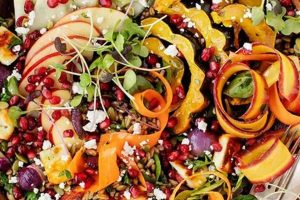
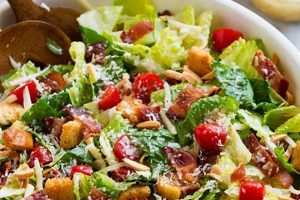
A culinary creation featuring Brussels sprouts as the star ingredient, transformed through roasting to enhance their natural sweetness and texture. This dish typically involves halved or quartered sprouts tossed with oil, seasonings, and often other vegetables before being roasted until tender and slightly caramelized. The roasted vegetables are then incorporated into a salad, which may include complementary ingredients such as dried fruits, nuts, cheeses, and a flavorful vinaigrette.
This preparation method offers a compelling alternative to traditional boiled sprouts, often perceived as less palatable. Roasting concentrates the vegetable’s flavors, creating a nutty and subtly sweet profile. Furthermore, the crispy exterior achieved through roasting adds textural interest. The inclusion of these flavorful and nutrient-rich vegetables in a salad format contributes to a balanced and healthy meal option. This approach to preparing Brussels sprouts has increased their popularity, introducing them to a wider audience.
Further exploration will delve into specific ingredient combinations, variations in roasting techniques, and suitable vinaigrette pairings to create diverse and appealing salad compositions.
Tips for Crafting Exceptional Brussels Sprout Salads
Optimizing flavor and texture requires attention to detail throughout the preparation process. The following tips offer guidance for achieving superior results when creating Brussels sprout salads centered around the roasting technique.
Tip 1: Proper Brussels Sprout Preparation: Trim the ends and remove any loose outer leaves. Halve or quarter sprouts, ensuring consistent size for even roasting.
Tip 2: Enhancing Flavor through Roasting: High-temperature roasting (around 400F/200C) caramelizes the sprouts, developing desirable sweetness and a crisp exterior. Adequate space between sprouts on the baking sheet promotes even browning.
Tip 3: Strategic Oil and Seasoning: Tossed in olive oil, salt, and pepper at a minimum, sprouts benefit from additional spices such as garlic powder, onion powder, or paprika. Experimentation with bolder flavors like balsamic vinegar or maple syrup during roasting adds complexity.
Tip 4: Complementary Ingredient Selection: Consider ingredients that harmonize with roasted Brussels sprouts: dried cranberries or cherries offer tartness, toasted pecans or walnuts provide crunch, and crumbled cheeses like feta or goat cheese contribute creamy and salty notes.
Tip 5: Vinaigrette Choice: A well-balanced vinaigrette enhances the overall salad. A Dijon mustard vinaigrette, a lemon-tahini dressing, or a maple-balsamic vinaigrette complement the roasted sprouts beautifully.
Tip 6: Timing and Assembly: Roast sprouts until tender and slightly charred. Allow them to cool slightly before combining with other salad components to prevent wilting. Toss gently to ensure even distribution of the vinaigrette.
Tip 7: Serving Suggestions: Serve the salad immediately after assembling for optimal flavor and texture. It can be enjoyed as a standalone dish or as a side to roasted meats or poultry.
Careful execution of these tips elevates the final dish, creating a harmonious balance of flavors and textures. The result is a satisfying and nutritious salad that showcases the versatility and deliciousness of roasted Brussels sprouts.
Following these preparatory and compositional insights allows for a culinary experience that highlights the unique qualities of this increasingly popular vegetable.
1. Roasting Technique

Roasting technique stands as a pivotal element in crafting exceptional Brussels sprout salads. The process transforms the sprouts, mitigating potential bitterness while enhancing inherent sweetness and developing desirable textural complexity. Proper execution of roasting methods directly impacts the overall salad’s success.
- Temperature Control
Maintaining consistent high heat (around 400F/200C) proves crucial for caramelization, creating a nuanced, nutty flavor profile. Lower temperatures may result in steaming rather than roasting, yielding a softer, less desirable texture. Careful temperature management ensures optimal results.
- Even Heat Distribution
Proper spacing of Brussels sprouts on the baking sheet allows for uniform heat circulation, promoting even browning and preventing steaming. Overcrowding hinders proper roasting, leading to uneven cooking and potentially undesirable flavors. Ensuring adequate spacing contributes significantly to the overall quality of the roasted sprouts.
- Oil and Seasoning Application
Coating the sprouts evenly with oil facilitates heat transfer and promotes browning. Seasoning, applied prior to roasting, infuses the sprouts with flavor throughout the cooking process. Inadequate oil or uneven seasoning distribution can lead to inconsistent flavor and texture. Proper technique ensures each sprout is properly coated and seasoned.
- Roasting Duration
Sufficient roasting time allows for the development of desired tenderness and caramelization. Under-roasting results in hard, potentially bitter sprouts, while over-roasting can lead to excessive dryness and burnt flavors. Precise timing, dependent on sprout size and oven temperature, is key for achieving optimal tenderness and flavor.
Mastery of these facets of roasting technique yields Brussels sprouts with deep flavor, appealing texture, and overall enhanced palatability. These perfectly roasted sprouts form the foundation of a successful Brussels sprout salad, contributing significantly to its overall appeal.
2. Flavor Balancing
Flavor balancing constitutes a critical aspect of a successful roasted Brussels sprout salad recipe. The inherent slight bitterness of Brussels sprouts, amplified by roasting, necessitates careful consideration of complementary flavors to achieve a harmonious and palatable final dish. Balancing this bitterness with other taste profiles elevates the salad beyond a simple combination of ingredients, transforming it into a complex and satisfying culinary experience. This balance hinges on strategic incorporation of contrasting yet complementary tastes.
Acidity effectively counteracts bitterness. Ingredients such as lemon juice, vinegar, or tart dried fruits like cranberries or cherries provide a refreshing counterpoint to the roasted sprouts. Sweetness also plays a crucial role; a touch of maple syrup or honey in the vinaigrette, or the inclusion of sweet roasted root vegetables like butternut squash, can further mitigate bitterness and enhance the overall flavor profile. Savory elements, such as crumbled bacon or toasted nuts, introduce umami notes and textural contrast, further contributing to a well-rounded flavor experience. For example, a salad featuring roasted Brussels sprouts, toasted pecans, dried cranberries, and a balsamic vinaigrette exemplifies successful flavor balancing, demonstrating the interplay of bitter, sweet, acidic, and savory components.
Understanding the interplay of these flavor profiles allows for a more nuanced approach to recipe development. Careful consideration of ingredient pairings and vinaigrette composition empowers one to create a balanced and delicious roasted Brussels sprout salad. Ignoring these principles can result in a dish dominated by bitterness, failing to showcase the full potential of roasted Brussels sprouts. Successful flavor balancing ensures the inherent bitterness is not a dominant characteristic but rather an integrated component contributing to the overall complexity and enjoyment of the salad.
3. Ingredient Selection
Ingredient selection significantly influences the final character of a roasted Brussels sprout salad. Thoughtful consideration of complementary flavors and textures elevates this dish beyond a simple combination of components, transforming it into a cohesive and satisfying culinary experience. Strategic choices maximize the potential of roasted Brussels sprouts, creating a salad that appeals to a broad range of palates.
- Balancing Bitterness
The inherent bitterness of Brussels sprouts, often intensified by roasting, requires careful balancing through ingredient selection. Sweet and acidic elements play crucial roles in mitigating this bitterness. Examples include dried fruits (cranberries, cherries), sweet root vegetables (roasted butternut squash), and acidic components like citrus segments or a tangy vinaigrette. These additions create a more harmonious flavor profile.
- Textural Variety
Roasted Brussels sprouts offer a satisfying texture contrast between crispy outer leaves and tender interiors. Building upon this foundation through the incorporation of other textural elements enhances the overall sensory experience. Toasted nuts (pecans, walnuts) or seeds (pumpkin, sunflower) contribute crunch, while creamy cheeses (goat, feta) offer a smooth counterpoint. These additions prevent textural monotony.
- Flavor Enhancement
Beyond balancing bitterness, ingredients can enhance and complement the roasted sprouts’ inherent flavors. Umami-rich additions like crumbled bacon or shaved Parmesan cheese introduce savory depth. Fresh herbs, such as parsley or thyme, provide brightness and aromatic complexity. These elements elevate the flavor profile beyond the baseline of roasted sprouts.
- Seasonal Considerations
Adapting ingredient choices to seasonal availability maximizes flavor and freshness. Autumnal salads might incorporate roasted apples or pears, while winter variations could feature pomegranate seeds or citrus fruits. Spring salads could include fresh peas or asparagus. These seasonal adaptations ensure optimal ingredient quality and introduce variety.
Harmonizing these considerations through deliberate ingredient selection ensures a balanced and dynamic final product. The interplay of flavors, textures, and seasonal influences elevates the roasted Brussels sprout salad from a simple side dish to a complex and satisfying culinary creation. Each ingredient plays a specific role in contributing to the overall success of the dish.
4. Texture Enhancement

Texture enhancement plays a crucial role in elevating roasted Brussels sprout salads from satisfactory to exceptional. While the roasting process itself imparts a desirable textural contrast between crispy outer leaves and tender interiors, further textural diversification significantly amplifies the sensory experience. This involves incorporating ingredients that offer contrasting or complementary textures, preventing a monotonous mouthfeel and creating a more dynamic and engaging culinary experience.
Consider the inherent textural profile of roasted Brussels sprouts: the slight char and crispness of the outer leaves juxtaposed with the softer, almost creamy texture of the interior. Building upon this foundation requires careful consideration of additional ingredients. The introduction of crunchy elements, such as toasted nuts (pecans, walnuts, almonds) or seeds (pumpkin, sunflower, sesame), provides a satisfying counterpoint to the sprouts’ texture. These additions create a dynamic interplay of crispness and tenderness, enhancing the overall enjoyment of the salad. Incorporating creamy components, such as crumbled cheeses (feta, goat, blue) or avocado, introduces a contrasting smoothness that further diversifies the textural landscape. Even the vinaigrette can contribute to textural complexity; a thicker, emulsified dressing clings to the sprouts, adding a subtle coating that contrasts with the crispness of the roasted vegetables.
Failing to address textural diversity can result in a one-dimensional salad, despite the inherent textural contrast provided by roasting. A salad consisting solely of roasted Brussels sprouts, while flavorful, may lack the engaging mouthfeel achieved through strategic textural layering. The practical application of these principles allows for the creation of a more complex and satisfying dish. For instance, a salad combining roasted Brussels sprouts, toasted walnuts, crumbled goat cheese, and a lemon-tahini vinaigrette exemplifies successful texture enhancement, offering a delightful interplay of crispy, creamy, and smooth textures that elevate the overall sensory experience. This understanding of textural interplay empowers the creation of roasted Brussels sprout salads that are not only flavorful but also offer a dynamic and satisfying textural profile.
5. Dressing Choice

Dressing choice significantly impacts the overall success of a roasted Brussels sprout salad recipe. The dressing serves not merely as a condiment but as a unifying element, harmonizing the diverse flavors and textures within the salad. It bridges the inherent bitterness of Brussels sprouts with other ingredients, creating a cohesive and balanced flavor profile. Careful selection ensures the dressing complements, rather than overpowers, the other components.
Several factors influence appropriate dressing selection. The intensity of the roasted sprouts’ flavor, influenced by roasting time and seasoning, dictates the dressing’s intensity. A robustly flavored, heavily charred sprout benefits from a lighter, brighter vinaigrette, while a more subtly roasted sprout allows for a bolder, more assertive dressing. The other salad ingredients also factor into the decision; a salad incorporating sweet elements like dried fruit pairs well with a tangy vinaigrette, while a salad featuring savory components like bacon or cheese might benefit from a creamy, herbaceous dressing. For instance, a balsamic vinaigrette complements a salad with roasted Brussels sprouts, goat cheese, and pecans, balancing sweetness and acidity. Conversely, a maple-mustard dressing complements a salad with roasted Brussels sprouts, bacon, and walnuts, providing a sweet and savory counterpoint.
Appropriate dressing choice elevates the roasted Brussels sprout salad from a simple assemblage of ingredients to a carefully composed dish. The dressing’s flavor, acidity, and texture interact with the other components, creating a synergistic culinary experience. Ignoring the importance of dressing selection can result in a disjointed salad, where the individual ingredients fail to harmonize. Understanding the interplay between dressing and other salad components allows for informed decision-making, resulting in a more balanced and satisfying final product. Ultimately, the right dressing enhances the inherent flavors of the roasted Brussels sprouts and other ingredients, creating a cohesive and delicious culinary experience.
6. Seasonal Adaptations

Seasonal adaptations offer a dynamic approach to roasted Brussels sprout salad recipes, capitalizing on the availability of peak-season produce. This approach not only maximizes flavor and nutritional value but also introduces variety and excitement throughout the year. Integrating seasonal ingredients ensures the salad remains a vibrant and evolving culinary experience, reflecting the best of each season’s offerings. This connection between seasonal produce and the roasted Brussels sprout salad allows for creative exploration and a deeper appreciation for the cyclical nature of ingredients.
The practical significance of seasonal adaptations lies in the ability to create salads that showcase the freshest, most flavorful ingredients. In autumn, roasted Brussels sprouts pair beautifully with the sweetness of roasted butternut squash, the tartness of cranberries, and the crunch of pecans, reflecting the season’s bounty. A maple-cider vinaigrette further enhances these autumnal flavors. Winter variations might incorporate citrus fruits like oranges or grapefruits, adding brightness and acidity to counterbalance the richness of the roasted sprouts. Pomegranate seeds offer a textural and flavor contrast, while toasted walnuts provide a complementary crunch. Spring adaptations might include fresh asparagus, peas, or fava beans, adding a verdant touch and a lighter, more delicate flavor profile. A lemon-herb vinaigrette complements these spring vegetables. Summer variations can feature grilled corn, fresh berries, and a light and herbaceous dressing. These examples demonstrate the versatility of roasted Brussels sprout salads and their adaptability to diverse seasonal ingredients.
Successfully integrating seasonal adaptations requires an understanding of flavor profiles and complementary pairings. Balancing the inherent bitterness of Brussels sprouts with the sweetness of in-season fruits, the acidity of citrus, or the earthiness of root vegetables is crucial. Considering textural variety also contributes to a more dynamic and satisfying salad. Seasonal adaptations are not merely about swapping ingredients; they involve a thoughtful approach to flavor balancing, textural interplay, and overall culinary harmony. This awareness elevates the roasted Brussels sprout salad from a static recipe to a dynamic and evolving culinary creation, reflecting the nuances and bounty of each season.
Frequently Asked Questions
This section addresses common inquiries regarding roasted Brussels sprout salad recipes, offering practical guidance for optimal preparation and enjoyment.
Question 1: How can bitterness in Brussels sprouts be minimized during roasting?
High-heat roasting caramelizes the sprouts’ natural sugars, mitigating bitterness. Additionally, tossing the sprouts with a small amount of balsamic vinegar or maple syrup before roasting can further enhance sweetness and counteract any residual bitterness.
Question 2: What temperature and duration are recommended for roasting Brussels sprouts?
A temperature of 400F (200C) is generally recommended. Roasting time varies depending on sprout size and desired level of caramelization, typically ranging from 20 to 40 minutes. Sprouts should be tender and slightly charred at the edges.
Question 3: Can frozen Brussels sprouts be used for this recipe?
While fresh Brussels sprouts are generally preferred, frozen sprouts can be used. Ensure they are fully thawed and patted dry before roasting to prevent excess moisture and steaming.
Question 4: What dressings complement roasted Brussels sprout salads?
Vinaigrettes with acidic components, such as lemon juice or vinegar, pair well with roasted Brussels sprouts. Maple syrup, Dijon mustard, or tahini can be incorporated to add complexity. Creamy dressings should be used judiciously to avoid overpowering the salad.
Question 5: How can a roasted Brussels sprout salad be made more substantial as a main course?
Adding protein-rich ingredients such as grilled chicken, roasted chickpeas, or crumbled bacon transforms the salad into a more substantial meal. Quinoa or farro can also be incorporated for added fiber and nutrients.
Question 6: How long can a roasted Brussels sprout salad be stored?
Ideally, the salad should be consumed immediately after preparation for optimal flavor and texture. If storage is necessary, refrigerate the salad without the dressing and toss just before serving. Stored in an airtight container, the roasted sprouts will typically keep for up to three days.
Understanding these key aspects allows for greater control over the final outcome, enabling creation of a perfectly balanced and flavorful roasted Brussels sprout salad.
This concludes the frequently asked questions section. The following section will offer example recipes demonstrating the practical application of these principles.
Roasted Brussel Sprout Salad Recipe
Exploration of roasted Brussel sprout salad recipes reveals a dish offering both versatility and nutritional value. Careful consideration of roasting techniques, flavor balancing, ingredient selection, texture enhancement, dressing choice, and seasonal adaptations allows for the creation of a dynamic and satisfying culinary experience. Emphasis on achieving optimal roastingbalancing caramelization and tendernessforms the foundation of a successful salad. Strategic incorporation of complementary ingredients, both in terms of flavor and texture, further enhances the dish’s complexity and appeal. Understanding the role of the vinaigrette as a unifying element, rather than a mere condiment, is crucial for achieving a cohesive final product. Finally, embracing seasonal variations allows for year-round enjoyment, showcasing the versatility of roasted Brussel sprouts within a broader culinary context.
The roasted Brussel sprout salad represents more than a simple side dish; it embodies a thoughtful approach to culinary creation, highlighting the potential of a often-underappreciated vegetable. Continued exploration of flavor combinations and innovative techniques promises further evolution and refinement of this increasingly popular dish, solidifying its place within the modern culinary landscape. The potential for creativity within this seemingly simple framework remains vast, inviting further exploration and culinary innovation.