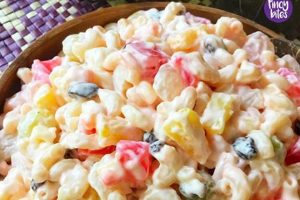
A chilled dessert salad featuring a creamy base often incorporating cream cheese or whipped topping, combined with tropical fruits such as pineapple, mandarin oranges, and maraschino cherries, frequently includes miniature marshmallows and sometimes a crunchy element like chopped nuts or graham cracker crumbs. Variations exist, incorporating different fruits or toppings to suit individual preferences.
This dessert offers a refreshing and light treat, ideal for potlucks, barbecues, or summer gatherings. Its popularity stems from the balanced sweetness of the creamy base and the tartness of the tropical fruits. The ease of preparation and adaptability to different tastes contribute to its enduring presence at celebratory occasions. While the exact origins are unclear, the combination of readily available canned fruits and convenience ingredients likely contributed to its rise in the mid-20th century, aligning with the emergence of other “salad” desserts.
The following sections will delve into variations on this classic dish, offering specific ingredient lists and detailed instructions for preparation. Techniques for achieving the perfect creamy texture and tips for presentation will also be explored.
Tips for a Perfect Hawaiian Cheesecake Salad
Achieving the ideal texture and flavor balance requires attention to specific details. These tips offer guidance for creating a successful dessert.
Tip 1: Ingredient Quality Matters: Utilize high-quality cream cheese for optimal flavor and texture. Fresh fruit, when available, elevates the salad beyond canned alternatives.
Tip 2: Drainage is Crucial: Thoroughly drain canned fruits to prevent excess liquid from thinning the cream cheese mixture and creating a watery salad.
Tip 3: Achieve Creamy Perfection: Ensure the cream cheese is softened to room temperature before blending for a smooth, lump-free base. Beat until light and fluffy for optimal texture.
Tip 4: Sweetness Control: Adjust sweetness according to preference. Taste the base before adding fruit and additional sweeteners like powdered sugar or whipped cream.
Tip 5: Balancing Flavors: A touch of acidity can enhance the sweetness. Consider incorporating a small amount of lemon juice or zest into the cream cheese mixture.
Tip 6: Texture Variation: Introduce textural contrast. Toasted nuts, shredded coconut, or crushed graham crackers provide a satisfying crunch.
Tip 7: Chilling Time Enhances Flavor: Allow the salad to chill for at least two hours before serving. This allows the flavors to meld and the textures to set properly.
Tip 8: Presentation Considerations: Garnish the finished salad with fresh mint sprigs, extra fruit pieces, or a sprinkle of toasted coconut for an appealing presentation.
Attention to these details elevates a simple dessert to a truly enjoyable culinary experience. The result is a refreshing, flavorful salad perfect for any occasion.
By incorporating these tips, one can create a dessert that delights the palate and impresses guests. The following section offers concluding remarks and further inspiration for culinary exploration.
1. Creamy Base
The creamy base forms the foundation of a Hawaiian cheesecake salad, providing texture and a backdrop for the other ingredients. Its consistency and flavor significantly influence the overall sensory experience. Understanding the components and variations within this base is crucial for achieving the desired result.
- Primary Ingredient:
Cream cheese typically serves as the primary ingredient, offering a tangy flavor and smooth texture. Alternatives like mascarpone or ricotta can be utilized, each contributing unique characteristics. The quality of the cream cheese directly impacts the final product; opting for full-fat versions generally yields a richer, more desirable outcome.
- Stabilizers and Thickeners:
Ingredients like whipped cream or Cool Whip are often incorporated to lighten the texture and enhance stability. These additions contribute to the airy consistency characteristic of the salad. Some recipes may include a small amount of gelatin or pudding mix for added firmness, particularly beneficial in warmer climates.
- Sweeteners:
Sugar, powdered sugar, or alternative sweeteners are incorporated to balance the tanginess of the cream cheese. The amount of sweetener depends on personal preference and the sweetness of the other ingredients. Honey or maple syrup can also be employed, offering subtle flavor variations.
- Flavor Enhancements:
Vanilla extract or other flavorings can complement the core ingredients. A touch of lemon zest or juice can brighten the flavor profile. Experimentation with extracts like almond or coconut can create unique variations. The interplay of these flavors contributes to a more complex and enjoyable dessert.
Careful consideration of these elements allows for the creation of a creamy base that perfectly complements the tropical fruit and other components of the Hawaiian cheesecake salad. The balance of richness, sweetness, and texture within the base contributes significantly to the overall success of the dish.
2. Tropical Fruit
Tropical fruit forms an integral component, contributing characteristic flavors and textures. The selection and preparation of these fruits significantly influence the overall quality and sensory experience. A successful outcome relies on understanding the interplay between fruit characteristics and the other components. Pineapple, with its sweet-tart flavor and firm texture, provides a foundational element. Mandarin oranges offer juicy bursts of sweetness and a contrasting textural element. Maraschino cherries contribute visual appeal and a concentrated sweetness. Other tropical fruits, such as mango, papaya, or kiwi, can be incorporated, expanding the flavor profile and adding complexity. The balance of sweetness and acidity across the chosen fruits is crucial for a harmonious final product.
Fresh, canned, or frozen fruit options each present distinct advantages and considerations. Fresh fruit offers optimal flavor and texture but requires careful selection and preparation. Canned fruit provides convenience but necessitates thorough draining to prevent excess liquid from compromising the creamy base. Frozen fruit presents an economical choice but requires thawing and potential adjustments for added moisture. Regardless of the chosen format, proper handling ensures the fruit contributes positively to the overall quality of the dessert. For instance, using overly ripe fresh fruit can lead to a mushy texture, while inadequately drained canned fruit can dilute the cream cheese base.
The choice of tropical fruit directly impacts the sensory experience. The interplay of sweet, tart, and juicy elements creates a dynamic flavor profile. The textural contrast between soft fruit and the creamy base adds another layer of complexity. Consideration of these factors, coupled with careful selection and preparation techniques, ensures the tropical fruit component contributes positively to the overall enjoyment of the dessert. Understanding these principles enables informed decisions regarding fruit selection, preparation methods, and ultimately, a more satisfying culinary outcome. This knowledge translates to a superior final product, highlighting the crucial role tropical fruit plays.
3. Sweetener

Sweetener plays a crucial role in a Hawaiian cheesecake salad, balancing the tartness of the cream cheese and acidity of the tropical fruits. The choice and quantity of sweetener directly influence the overall flavor profile and palatability of the dish. Granulated sugar, powdered sugar, or alternative sweeteners such as honey or maple syrup can be incorporated into the creamy base. The amount required depends on the inherent sweetness of the chosen fruits and individual preference. For instance, using less ripe pineapple may necessitate additional sweetener compared to using ripe, sweet pineapple. Over-sweetening can mask the delicate flavors of the fruit, while under-sweetening can result in a dish that is overly tart or unbalanced.
Achieving the correct level of sweetness is essential for a harmonious blend of flavors. This balance allows the individual characteristics of the fruit and creamy base to shine through without being overwhelmed by excessive sweetness. The choice of sweetener can also introduce subtle nuances to the overall flavor profile. Honey, for example, imparts a distinct floral sweetness, while maple syrup offers a hint of caramel. These nuances can complement the tropical fruit flavors and create a more complex and interesting sensory experience. Beyond the creamy base, additional sweetness can be incorporated through whipped cream or a light dusting of powdered sugar as a garnish. These additions provide a final touch of sweetness and contribute to the overall presentation of the dessert.
Understanding the role and impact of sweetener is fundamental to creating a well-balanced and enjoyable Hawaiian cheesecake salad. Careful consideration of the type and quantity of sweetener, in conjunction with the sweetness of the fruit, ensures a harmonious flavor profile. This awareness allows for adjustments based on ingredient variations and individual preferences, ultimately leading to a more successful and satisfying culinary outcome. The careful balancing act of sweetness within this dessert highlights the interplay of flavors and the importance of sweetener in achieving a delicious result.
4. Textural Element
Textural elements contribute significantly to the overall enjoyment of a Hawaiian cheesecake salad, providing a counterpoint to the creamy base and soft fruit. The incorporation of contrasting textures elevates the sensory experience, transforming a simple dessert into a more complex and satisfying dish. Nuts, such as macadamia nuts or chopped pecans, offer a satisfying crunch and a complementary flavor profile. Toasted coconut flakes provide a delicate crispness and a subtle sweetness. Graham cracker crumbs introduce a familiar, slightly salty crunch that contrasts well with the sweetness of the other components. These elements disrupt the uniformity of the creamy and soft textures, creating a more dynamic and engaging mouthfeel.
The absence of a textural element can result in a monotonous sensory experience. A salad solely comprised of creamy and soft textures may lack the complexity and interest provided by contrasting elements. The strategic incorporation of crunch or crispness provides bursts of contrasting sensations, preventing the palate from becoming overwhelmed by a single texture. This contrast further enhances the perception of sweetness and other flavors. For instance, the addition of chopped macadamia nuts not only adds a pleasant crunch but also complements the tropical flavors of the pineapple and coconut. Similarly, the slight saltiness of graham cracker crumbs balances the sweetness of the cream cheese and fruit, preventing the dessert from becoming cloying. The size and distribution of the textural element also influence the overall experience. Finely chopped nuts provide a delicate crunch, while larger pieces offer a more robust contrast. Evenly distributing the element throughout the salad ensures a consistent textural experience in each bite.
Understanding the role and impact of textural elements allows for informed decisions regarding ingredient selection and preparation techniques. This knowledge translates to a more nuanced and enjoyable culinary outcome, highlighting the integral role texture plays in a well-composed Hawaiian cheesecake salad. Careful consideration of textural contrast elevates this simple dessert to a more sophisticated and satisfying culinary experience. The interplay of textures, in conjunction with flavor and presentation, contributes to the overall success and enjoyment of this dish. The strategic inclusion of textural elements distinguishes a truly exceptional Hawaiian cheesecake salad from a merely satisfactory one.
5. Chilling Time

Chilling time is a crucial element in preparing a Hawaiian cheesecake salad, significantly impacting the final texture, flavor, and overall quality. This period of refrigeration allows the individual components to meld, resulting in a more cohesive and enjoyable dessert. Understanding the role of chilling time is essential for achieving optimal results.
- Flavor Development
Chilling allows the flavors of the various ingredientsthe creamy base, tropical fruits, and any added flavoringsto meld and harmonize. This fusion creates a more complex and balanced flavor profile compared to a freshly made salad. The chilling period allows the subtle nuances of each ingredient to emerge and integrate, resulting in a more unified and enjoyable taste experience. Similar to marinating meats, the waiting period allows the flavors to deepen and interact.
- Texture Enhancement
Refrigeration firms the creamy base, enhancing the overall texture of the salad. The chilling process solidifies the fats within the cream cheese, creating a more stable and less runny consistency. This firmness prevents the salad from becoming overly soft or watery, particularly in warmer environments. This textural enhancement ensures a more pleasant mouthfeel and prevents the salad from collapsing or losing its shape. Just as chilling a custard allows it to set, the refrigeration period for the salad contributes to its structural integrity.
- Temperature and Palatability
A chilled salad offers a more refreshing and enjoyable sensory experience, particularly in warmer climates. The cool temperature enhances the perception of sweetness and provides a welcome contrast to the often-rich flavors. Serving the salad chilled also highlights the textural contrast between the creamy base and the fruit. Similar to the preference for chilled beverages on a hot day, the cool temperature of the salad elevates its palatability and refreshment value.
- Ingredient Stability and Food Safety
Chilling helps maintain the quality and safety of the ingredients, particularly dairy-based components like cream cheese. Refrigeration inhibits bacterial growth, ensuring the salad remains safe for consumption over a longer period. This is particularly important for dishes containing perishable ingredients like fresh fruit or dairy products. Adhering to proper food safety guidelines, including adequate chilling time, minimizes the risk of foodborne illnesses.
Chilling time is not merely a final step but an integral part of the preparation process for Hawaiian cheesecake salad. It contributes significantly to the development of flavor, enhancement of texture, improvement of palatability, and maintenance of food safety. Understanding and adhering to recommended chilling times ensures optimal results, transforming a collection of ingredients into a cohesive and delightful dessert. The attention given to this seemingly passive stage of preparation elevates the final product, demonstrating the crucial role of chilling time in creating a truly successful Hawaiian cheesecake salad.
6. Presentation

Presentation plays a crucial role in the overall enjoyment of a Hawaiian cheesecake salad, elevating it from a simple dish to a visually appealing and enticing dessert. While flavor and texture are paramount, the visual aspect significantly influences perception and enhances the dining experience. Consideration of color, arrangement, serving vessels, and garnishes transforms the presentation from functional to aesthetically pleasing.
- Color Palette
The vibrant colors of the tropical fruits contribute significantly to the visual appeal. The contrast between the creamy white base and the bright hues of pineapple, mandarin oranges, and maraschino cherries creates an attractive and appetizing presentation. Thoughtful arrangement can further enhance this color contrast, making the salad visually engaging. Consider the placement of fruit pieces for maximum visual impact.
- Arrangement and Shape
The manner in which the salad is arranged impacts its perceived elegance and appeal. A simple mound in a serving bowl offers a classic presentation, while individual portions in small glasses or dessert cups add a touch of sophistication. More elaborate arrangements, such as layering the components in a trifle dish or using a mold to create a defined shape, can elevate the presentation for special occasions. The choice of serving vessel further influences the visual appeal. A clear glass bowl showcases the vibrant colors and textures, while a decorative serving dish adds a touch of formality.
- Garnishes
Garnishes provide a finishing touch, enhancing both visual appeal and flavor. Fresh mint sprigs offer a vibrant green contrast and a refreshing aroma. Toasted coconut flakes contribute texture and visual interest. A light dusting of powdered sugar adds a touch of elegance and sweetness. Additional fruit pieces, such as a pineapple wedge or a few maraschino cherries, can further enhance the presentation. The choice of garnish should complement the existing flavors and colors without overpowering the overall presentation.
- Context and Occasion
The appropriate presentation style varies depending on the context and occasion. A casual gathering may call for a simple presentation in a large serving bowl, while a more formal event might warrant individual portions in elegant glassware. Consider the overall theme and atmosphere when determining the most appropriate presentation style. For a buffet setting, a large, visually appealing arrangement is ideal, while a plated dessert for a dinner party requires a more refined approach. The presentation should reflect the nature of the event and enhance the overall dining experience.
Careful consideration of these presentational aspects transforms a Hawaiian cheesecake salad from a simple mixture of ingredients into a visually stunning and enticing dessert. The interplay of color, arrangement, serving vessels, and garnishes enhances the sensory experience, elevating the enjoyment of this classic dish. The attention to presentation demonstrates care and consideration, transforming a casual dessert into a memorable culinary experience. By understanding the impact of visual appeal, one can create a presentation that truly complements the delicious flavors and textures of a Hawaiian cheesecake salad.
7. Variations
Adaptability represents a key strength of the Hawaiian cheesecake salad, allowing for customization based on individual preferences, dietary restrictions, and available ingredients. Exploring variations expands the potential of this classic dessert, demonstrating its versatility and enduring appeal. Understanding the core components allows for informed substitutions and additions, resulting in unique and equally satisfying iterations.
- Fruit Adaptations
While the traditional recipe emphasizes pineapple, mandarin oranges, and maraschino cherries, other fruits can be incorporated to create diverse flavor profiles. Mango, papaya, kiwi, and strawberries offer complementary tropical notes. Stone fruits, such as peaches or nectarines, provide a seasonal twist. The substitution of fruits allows for customization based on availability, preference, and desired flavor combinations. Adapting the fruit component allows for the creation of salads tailored to specific dietary needs, such as reducing sugar content by incorporating lower-sugar fruits.
- Base Modifications
The creamy base, typically centered around cream cheese, can also be modified. Greek yogurt offers a lighter, tangier alternative with higher protein content. Mascarpone contributes a richer, creamier texture. Vegan options, such as coconut cream or cashew-based cream cheese, cater to plant-based diets. These modifications not only alter the flavor and texture but also accommodate dietary restrictions and preferences. Substituting the base allows for the creation of variations that align with specific health goals or culinary preferences.
- Sweetener Adjustments
Variations in sweetener extend beyond quantity adjustments to encompass different types. Honey or maple syrup can replace granulated sugar, introducing subtle flavor nuances. Agave nectar or stevia provide lower-glycemic alternatives. These adjustments impact both the sweetness level and the overall flavor profile. The choice of sweetener contributes to the nutritional profile and aligns with specific dietary considerations, such as reducing refined sugar intake or accommodating specific dietary restrictions.
- Textural Enhancements
Beyond the classic additions of nuts or graham cracker crumbs, other textural elements can enhance the salad’s complexity. Toasted coconut flakes, chopped pretzels, or even candied ginger offer unique contrasts in texture and flavor. These additions provide opportunities for creative exploration and customization. Incorporating different textures allows for the creation of a more dynamic sensory experience, catering to individual preferences and expanding the possibilities beyond traditional interpretations.
Exploring these variations underscores the adaptable nature of the Hawaiian cheesecake salad. The core components provide a foundation for endless customization, allowing for the creation of unique iterations that reflect individual preferences, dietary needs, and creative impulses. These variations demonstrate the enduring appeal of this classic dessert, highlighting its versatility and adaptability across a spectrum of culinary contexts. The ability to personalize this dish ensures its continued relevance in diverse culinary landscapes.
Frequently Asked Questions
This section addresses common inquiries regarding the preparation and variations of Hawaiian cheesecake salad.
Question 1: Can fresh fruit be used instead of canned fruit?
Fresh fruit is recommended for optimal flavor and texture. Ensure thorough draining if using canned fruit to prevent excess liquid from affecting the salad’s consistency.
Question 2: What can be used as a substitute for cream cheese?
Mascarpone or ricotta cheese offer viable alternatives to cream cheese, each contributing unique textural and flavor characteristics. Vegan alternatives include coconut cream or cashew-based cream cheese.
Question 3: How can the sweetness level be adjusted?
Sweetness can be adjusted by varying the amount of sugar or alternative sweeteners added to the cream cheese mixture. Taste the base before incorporating fruit and adjust accordingly.
Question 4: What are some suitable alternatives to nuts for added texture?
Graham cracker crumbs, toasted coconut flakes, or crushed pretzels offer alternative textural elements, suitable for those with nut allergies or seeking varied textures.
Question 5: How long should the salad be chilled before serving?
Chilling for at least two hours allows flavors to meld and the creamy base to set properly. Longer chilling times, up to 24 hours, further enhance flavor development.
Question 6: Can this salad be made ahead of time for a large gathering?
Preparing the salad a day in advance is acceptable. Store it in an airtight container in the refrigerator to maintain freshness and prevent absorption of odors. Garnish immediately before serving.
Addressing these common questions provides clarity regarding optimal preparation techniques and ingredient variations. Understanding these aspects facilitates successful preparation and customization based on individual needs and preferences.
The following section offers a collection of curated recipes for Hawaiian cheesecake salad, providing specific guidance and inspiration for culinary exploration.
Conclusion
Exploration of the elements comprising a successful Hawaiian cheesecake salad reveals the interplay of creamy base, tropical fruit, sweetener, textural components, chilling time, presentation, and potential variations. Emphasis on ingredient quality, careful preparation, and balanced sweetness contributes significantly to the desired outcome. Understanding these elements allows for informed choices regarding ingredient selection, technique adjustments, and creative adaptations. Proper chilling enhances both flavor and texture, solidifying the creamy base and allowing the diverse flavors to meld. Thoughtful presentation elevates the dish, transforming a simple dessert into a visually appealing culinary experience. Consideration of these factors distinguishes an exceptional outcome from a merely satisfactory one.
The enduring popularity of this dessert underscores its adaptability and capacity to satisfy diverse palates. Continued exploration of variations promises further evolution and personalization, ensuring its relevance across generations and culinary landscapes. Careful attention to detail and a willingness to experiment with flavors and textures elevate this classic dish, transforming it from a simple treat into a memorable culinary creation.