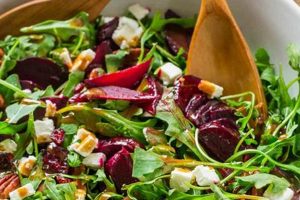
Sweetened and toasted pecan preparations enhance salads by adding a contrasting flavor and textural element. A typical method involves coating pecan halves in a mixture of sugar, spices, and sometimes egg whites, then baking until crispy and caramelized. Variations exist, incorporating ingredients like cinnamon, cayenne pepper, or maple syrup for unique flavor profiles. This technique transforms the nut into a crunchy, flavorful topping.
The addition of candied pecans elevates a simple salad, providing a balance of sweet and savory. This textural contrast enhances the overall sensory experience, making the salad more appealing. Historically, nuts have been a valuable source of nutrients and flavor, and candying them offers a method of preservation and flavor enhancement. This practice likely evolved as culinary techniques advanced, leading to the sophisticated combinations enjoyed today. The process also concentrates the natural sugars and intensifies the nutty flavor.
This exploration of sugared pecan preparation for salads will cover various techniques, ingredient variations, and suitable salad pairings. It will also delve into the nutritional aspects and offer tips for optimal results.
Tips for Candying Pecans for Salads
Optimizing the candying process ensures a flavorful and texturally appealing addition to salads. Attention to detail at each stage contributes to achieving desired results.
Tip 1: Even Coating: Ensure each pecan half receives a uniform coating of the sugar mixture. This promotes even caramelization and prevents some pieces from becoming overly sweet while others remain bland.
Tip 2: Controlled Heat: Maintain a consistent oven temperature throughout the baking process. Low and slow baking allows for gradual caramelization, preventing burning and ensuring a crunchy texture.
Tip 3: Proper Cooling: Allow the candied pecans to cool completely on parchment paper before storing. This prevents sticking and maintains the desired crispness.
Tip 4: Spice Variations: Experiment with various spices like cinnamon, nutmeg, or chili powder to complement the salad ingredients and create unique flavor profiles.
Tip 5: Storage: Store candied pecans in an airtight container at room temperature to maintain freshness and prevent them from absorbing moisture.
Tip 6: Freshness: For optimal flavor and texture, use fresh, high-quality pecans.
Tip 7: Salad Pairing: Consider the salad’s other components when choosing spices for the candied pecans. Complementary flavors enhance the overall dining experience.
By following these guidelines, one can create candied pecans that add a delightful crunch and nuanced flavor to a variety of salads. The resulting enhancement transforms a simple salad into a more complex and satisfying culinary creation.
These tips provide a foundation for successful candied pecan preparation. Further exploration into specific salad pairings and advanced techniques can elevate culinary expertise.
1. Recipe Selection
Recipe selection represents a pivotal step in preparing candied pecans for salads. The chosen recipe dictates the final flavor profile, influencing the overall culinary experience. A recipe incorporating cinnamon and maple syrup yields a different outcome than one utilizing cayenne pepper and smoked paprika. This choice necessitates careful consideration of the salad’s composition. A light vinaigrette benefits from the subtle sweetness of cinnamon-maple pecans, while a robust, savory salad might be enhanced by the smoky heat of cayenne-spiced pecans. For example, a fall harvest salad with roasted butternut squash and cranberries pairs well with maple-candied pecans, whereas a Southwestern salad with grilled chicken and black beans complements pecans with a chili-lime seasoning. The interplay between the salad ingredients and the chosen pecan recipe determines the ultimate harmony of flavors.
Variations in recipes extend beyond spice choices. Some recipes call for egg whites to create a lighter, crispier coating, while others rely on simple syrup or melted butter. The cooking method also influences the final product. Oven-toasting produces a uniform crunch, while pan-frying offers a quicker method, albeit with potential for uneven browning. Understanding these nuances allows for a tailored approach. A delicate spring mix salad might benefit from the airy texture of egg white-coated pecans, whereas a heartier kale salad could accommodate the richer flavor of butter-toasted nuts. Furthermore, the recipe’s sugar content influences the level of sweetness. Adjusting the sugar quantity allows for customization to complement the salad’s overall flavor profile.
Effective recipe selection requires a holistic understanding of the interplay between ingredients and desired outcomes. Careful evaluation of the salad’s composition, coupled with an understanding of the recipe’s impact on flavor and texture, ensures a harmonious culinary result. Failure to consider these factors can lead to a mismatch of flavors, diminishing the overall sensory experience. Therefore, thoughtful recipe selection stands as a critical component of successfully integrating candied pecans into a salad, transforming it from a simple dish into a carefully crafted culinary creation.
2. Ingredient Quality

Ingredient quality significantly impacts the outcome of candied pecans for salads. Fresh, high-quality pecans offer optimal flavor and texture. Rancid or stale pecans impart undesirable flavors that detract from the overall dish. Furthermore, the type of sugar used influences the final product. Granulated sugar produces a classic candied coating, while alternative sweeteners like maple syrup or honey impart distinct flavor nuances. The choice of spices also plays a crucial role. Fresh, high-quality spices contribute vibrant aromas and flavors, enhancing the complexity of the candied pecans. For instance, using high-grade cinnamon versus a generic brand noticeably elevates the warmth and sweetness of the finished product. Similarly, opting for fresh cayenne pepper delivers a cleaner heat compared to a stale alternative.
The quality of ancillary ingredients also warrants consideration. When using egg whites for a lighter coating, fresh, high-quality eggs are essential for achieving the desired texture and minimizing any off-flavors. Moreover, the quality of butter or oil, if used in the recipe, impacts the richness and overall flavor profile. High-quality butter lends a delicate richness, while inferior butter can introduce unwanted flavors. Using fresh, flavorful ingredients elevates the candied pecans from a simple topping to a gourmet component of the salad. Conversely, low-quality ingredients can result in a final product that lacks the desired flavor, texture, and overall appeal. For example, using stale spices can lead to a muted, less vibrant flavor profile, while low-quality pecans can be tough or bitter, detracting from the intended sweetness and crunch.
Ingredient quality directly correlates with the success of candied pecan recipes. The use of premium ingredients enhances flavor, texture, and overall sensory appeal. Compromising on ingredient quality negatively affects the final product, diminishing the intended culinary experience. An understanding of this relationship empowers informed ingredient selection, contributing to the creation of superior candied pecans, ultimately elevating the salad to a more refined and satisfying culinary creation.
3. Candying Technique

Candying technique represents a critical factor in achieving optimal results when preparing candied pecans for salads. The method employed directly influences the texture, flavor, and overall appeal of the final product. Proper execution ensures a balanced sweetness, desirable crunch, and enhanced flavor profile, elevating the pecans beyond a simple topping to a key component of the salad.
- Oven Roasting
Oven roasting offers controlled heat distribution, promoting even caramelization and a consistent crunch. This method involves spreading the pecan halves in a single layer on a baking sheet and baking at a low temperature until golden brown and crisp. Oven roasting allows for precise temperature control, minimizing the risk of burning and ensuring even coating adhesion. This technique is ideal for larger batches and yields a uniform product.
- Stovetop Candying
Stovetop candying involves cooking the pecans in a mixture of sugar and water or butter over direct heat. This method requires continuous stirring to prevent burning and ensure even coating. Stovetop candying offers a quicker method, but demands more attention and skill to achieve optimal results. This technique is suitable for smaller batches and allows for quick adjustments to the sugar concentration during the cooking process. However, it carries a higher risk of uneven cooking and burning compared to oven roasting.
- Spice Incorporation
Spice incorporation influences the flavor profile of the candied pecans. Spices can be added directly to the sugar mixture or applied after the pecans are candied. Adding spices during the candying process allows for deeper flavor infusion, while post-candying application offers greater control over spice intensity. For instance, cinnamon or nutmeg integrated into the sugar mixture during oven roasting creates a warm, evenly distributed flavor, while a dusting of cayenne pepper after stovetop candying provides a more pronounced, localized heat. The choice of incorporation method depends on the desired flavor profile and intensity.
- Cooling and Storage
Proper cooling and storage are essential for preserving the texture and flavor of candied pecans. Spreading the candied pecans on parchment paper after cooking allows them to cool completely and prevents clumping. Storing the cooled pecans in an airtight container at room temperature maintains their crispness and prevents them from absorbing moisture. Proper storage safeguards the textural integrity and flavor profile, extending the shelf life of the candied pecans and ensuring their quality when added to a salad. Neglecting proper cooling and storage can lead to a loss of crispness, compromising the desired textural contrast in the salad.
Each of these facets of the candying technique contributes to the final quality of the candied pecans, influencing their integration into a salad. Careful consideration of these techniques allows for customization and optimization of the final product, ensuring a harmonious balance of flavors and textures within the salad. A thorough understanding of these techniques ensures the creation of candied pecans that enhance rather than detract from the overall culinary experience.
4. Spice Combinations

Spice combinations play a pivotal role in defining the flavor profile of candied pecans destined for salads. Careful selection and application of spices elevate the pecans beyond a simple sweet topping, transforming them into a complex and nuanced flavor component that complements and enhances the overall salad composition. The interplay between spices and the inherent sweetness of candied pecans creates a dynamic flavor experience, offering a spectrum of possibilities ranging from warm and comforting to bright and zesty. Understanding the impact of various spice combinations allows for precise tailoring of the candied pecans to harmonize with specific salad ingredients.
The selection of spices should consider the salad’s overall flavor profile. For salads featuring robust flavors like roasted vegetables or strong cheeses, bolder spice combinations such as smoked paprika and cayenne pepper offer a complementary complexity. In contrast, salads with delicate greens and lighter dressings benefit from more subtle spice combinations like cinnamon and nutmeg, which provide a gentle warmth without overpowering the other ingredients. For example, a candied pecan featuring a blend of cumin, coriander, and chili powder aligns seamlessly with a Southwestern-inspired salad featuring grilled chicken, black beans, and corn. Conversely, a candied pecan seasoned with cardamom and ginger complements the flavors of a fall harvest salad with roasted butternut squash and cranberries. Practical application requires considering the interplay of sweet, savory, and spicy elements within the salad.
Effective spice incorporation necessitates attention to both quantity and application method. Over-spicing can overwhelm the delicate balance of flavors, while under-spicing fails to achieve the desired impact. The method of application also influences the final result. Incorporating spices into the sugar mixture during the candying process results in a more uniform flavor distribution, while adding spices after candying allows for a more pronounced surface flavor. Challenges arise when attempting to balance complexity with subtlety. Overly complex spice combinations can create a muddled flavor profile, obscuring the individual characteristics of the spices and potentially clashing with other salad ingredients. Therefore, achieving a harmonious balance between the spices, the candied pecans sweetness, and the salad’s other components requires careful consideration and experimentation. A nuanced approach to spice selection and application maximizes the potential of candied pecans to elevate a salad from a simple dish into a carefully composed culinary experience.
5. Cooling and Storage
Proper cooling and storage are essential for preserving the desired texture and flavor of candied pecans intended for salads. These practices directly impact the overall quality and longevity of the candied pecans, ensuring they remain a crunchy, flavorful addition to salads rather than becoming sticky or stale. Neglecting these crucial steps can compromise the textural contrast and flavor balance that candied pecans contribute to a salad.
- Cooling Process
Immediately after the candying process, whether through oven roasting or stovetop methods, the pecans possess residual heat that can continue to cook them if not properly dissipated. Spreading the hot candied pecans in a single layer on a sheet of parchment paper allows for efficient heat dissipation and prevents them from sticking together as they cool. This step ensures the pecans retain their individual crispness and prevents the formation of clumps, which can lead to uneven texture in the salad. Failure to cool the pecans properly can result in a sticky, gummy texture, detracting from the desired crunch.
- Container Selection
Selecting an appropriate storage container is crucial for maintaining the quality of candied pecans. An airtight container protects the pecans from humidity and air exposure, which can lead to moisture absorption and staleness. Glass or plastic containers with tight-fitting lids are ideal for this purpose. Avoid storing candied pecans in paper bags or loosely covered containers, as this exposes them to environmental factors that can compromise their texture and flavor. Using an airtight container preserves the crispness and prevents the pecans from absorbing odors from other foods stored nearby.
- Storage Temperature
Storing candied pecans at room temperature is generally recommended for maintaining their optimal texture. Avoid storing them in the refrigerator, as the cold temperature can cause condensation and lead to a loss of crispness. Room temperature storage, combined with an airtight container, provides the ideal environment for preserving the pecans’ crunch and preventing moisture absorption. However, in particularly humid climates, refrigeration might be necessary, but care should be taken to ensure the container is completely airtight to minimize moisture exposure.
- Shelf Life
While proper storage extends the shelf life of candied pecans, they are best consumed within a few weeks for optimal flavor and texture. Over time, even with proper storage, the pecans can gradually lose their crispness and the spices can lose their intensity. Regularly checking the pecans for signs of staleness, such as a loss of crunch or a dull appearance, is important. Discarding any pecans that exhibit these signs ensures that only fresh, flavorful pecans are used in salads.
Implementing these cooling and storage practices safeguards the quality and longevity of candied pecans, ensuring they remain a valuable asset in enhancing salads with both texture and flavor. By understanding the importance of these practices, one can consistently produce candied pecans that remain crunchy, flavorful, and contribute positively to the overall culinary experience. Neglecting these steps can compromise the intended contribution of candied pecans to the salad, leading to a less satisfying outcome. Proper cooling and storage are therefore integral components of successfully incorporating candied pecans into a salad, ensuring they elevate the dish rather than detract from it.
6. Salad Pairing

Salad pairing represents a crucial consideration when preparing candied pecans. The specific ingredients and overall flavor profile of a salad significantly influence the optimal recipe for candied pecans. A harmonious pairing elevates the salad, transforming it from a simple dish into a cohesive culinary creation. Conversely, a mismatched pairing can result in dissonant flavors, diminishing the overall dining experience. Understanding the interplay between salad components and candied pecan variations allows for informed decision-making, ensuring the pecans enhance rather than detract from the salad.
Several factors influence optimal salad pairing. The type of greens plays a significant role. Delicate greens, such as spinach or butter lettuce, benefit from subtly flavored candied pecans, like those seasoned with cinnamon and a touch of maple syrup. These delicate flavors complement the greens without overpowering their inherent subtlety. Robust greens, such as kale or arugula, can withstand bolder flavors, such as candied pecans with smoked paprika and a hint of cayenne pepper. These stronger flavors create a balanced contrast with the assertive taste of the greens. Furthermore, the presence of fruits, cheeses, or proteins within the salad influences appropriate pecan pairings. A salad featuring tart berries pairs well with pecans seasoned with cardamom and ginger, while a salad with creamy goat cheese complements pecans seasoned with rosemary and thyme. A salad with grilled chicken or fish benefits from candied pecans with a savory spice blend incorporating herbs like thyme or oregano. Understanding these nuances allows for informed choices that enhance the overall culinary experience. For instance, a candied pecan featuring maple syrup and cinnamon complements a salad with apples, cranberries, and walnuts. Conversely, pecans spiced with chili powder and cumin enhance a salad with black beans, corn, and avocado. Understanding the flavor profiles of both the salad and the candied pecans ensures a successful pairing.
Effective salad pairing requires a holistic understanding of flavor profiles and ingredient interactions. The interplay between sweet, savory, spicy, and acidic elements determines the ultimate harmony of the dish. Challenges arise when attempting to balance contrasting flavors, requiring careful consideration of each component’s contribution to the overall composition. A successful pairing amplifies the individual flavors while creating a cohesive whole. Failure to consider these nuances can result in a disjointed experience, where individual flavors clash rather than complement each other. Mastering the art of salad pairing with candied pecans transforms a simple salad into a thoughtfully crafted culinary creation, demonstrating an understanding of flavor dynamics and ingredient synergy. This understanding elevates the dining experience, creating a harmonious blend of textures and tastes.
7. Nutritional Value

Nutritional value represents a significant consideration within the context of candied pecans for salads. While pecans offer inherent nutritional benefits, the candying process introduces added sugars, influencing the overall nutritional profile. Understanding this interplay allows for informed choices that balance flavor enhancement with health-conscious considerations. Pecans themselves provide healthy fats, fiber, protein, and essential minerals like manganese and copper. These nutrients contribute to various health benefits, including improved heart health and reduced inflammation. However, the addition of sugar during the candying process increases the calorie and carbohydrate content. This addition necessitates mindful portion control, especially for individuals managing specific dietary requirements, such as those with diabetes or those following low-carbohydrate diets. For example, a salad featuring a small portion of candied pecans alongside nutrient-rich greens and lean protein offers a balanced nutritional profile. Conversely, excessive consumption of candied pecans can contribute to added sugar intake, potentially offsetting the nutritional benefits of the salad’s other components.
The specific recipe influences the nutritional value of candied pecans. Recipes employing alternative sweeteners, like maple syrup or honey, offer marginally different nutritional profiles compared to those using granulated sugar. Maple syrup and honey contain trace amounts of minerals and antioxidants, but their overall impact on the nutritional value remains relatively minor compared to the predominant sugar content. Furthermore, the addition of spices, while contributing flavor complexity, generally exerts a negligible influence on nutritional value. However, specific spice combinations, such as those incorporating cinnamon, can offer potential benefits like improved blood sugar regulation, albeit in relatively small quantities. Practical applications involve considering the overall nutritional composition of the salad. A salad rich in vitamins, minerals, and fiber can accommodate a smaller portion of candied pecans without significantly compromising its nutritional value. For instance, adding candied pecans to a spinach salad with grilled chicken or fish enhances flavor while still prioritizing nutritional balance. Understanding the nutritional implications of ingredient choices allows for informed decisions that align with individual dietary goals.
Integrating candied pecans into a salad requires careful consideration of nutritional impact. Balancing the flavor enhancement provided by candied pecans with the overall nutritional goals of the salad necessitates mindful recipe selection and portion control. Overconsumption of candied pecans, particularly those with high sugar content, can contribute to excessive sugar intake, potentially negating the health benefits of other salad components. Therefore, a balanced approach, prioritizing nutrient-rich ingredients alongside a controlled portion of candied pecans, allows for a flavorful and nutritionally conscious salad. Challenges arise in finding an equilibrium between enhancing flavor and maintaining nutritional integrity. This balance requires an understanding of the nutritional implications of both the candying process and the overall salad composition. Successfully navigating this challenge ensures the creation of a salad that is both satisfying and health-conscious.
Frequently Asked Questions
This section addresses common inquiries regarding the preparation and utilization of candied pecans in salads, offering clarity and practical guidance for optimal results.
Question 1: How can one prevent candied pecans from becoming sticky during storage?
Ensuring complete cooling before storage and utilizing an airtight container are crucial for preventing stickiness. Storing in a cool, dry environment further mitigates moisture absorption.
Question 2: What are suitable alternatives to granulated sugar in candied pecan recipes?
Maple syrup, honey, or agave nectar offer alternative sweeteners, each imparting distinct flavor nuances. Adjustments to cooking times may be necessary due to varying sugar concentrations.
Question 3: How does the choice of pecans influence the final product?
Fresh, high-quality pecan halves are recommended for optimal flavor and texture. Avoid using rancid or stale pecans, as they can impart undesirable flavors.
Question 4: Can spices be added after the candying process?
While spices are typically incorporated during the candying process, they can be added afterward. Post-candying application offers greater control over spice intensity but may result in less uniform distribution.
Question 5: What types of salads pair best with candied pecans?
Candied pecans complement a wide variety of salads, from those featuring delicate greens and fruits to heartier salads with roasted vegetables or cheeses. Consider the overall flavor profile of the salad when selecting spice combinations for the pecans.
Question 6: How long can candied pecans be stored?
When stored correctly in an airtight container at room temperature, candied pecans typically maintain optimal quality for up to two weeks. Refrigeration may extend shelf life, but can impact texture.
Careful consideration of these frequently asked questions empowers informed decision-making regarding candied pecan preparation and salad integration. Attention to detail at each stage ensures a successful outcome.
This concludes the FAQ section. The following sections will further explore specific recipe variations and advanced techniques for candied pecan preparation.
Conclusion
Exploration of candied pecan recipes for salads reveals the multifaceted nature of this culinary enhancement. Careful consideration of ingredient quality, spice combinations, candying techniques, and salad pairings is essential for achieving optimal results. Proper cooling and storage preserve the desired texture and flavor, maximizing the pecans’ contribution to the overall sensory experience. Nutritional considerations highlight the importance of balanced ingredient incorporation and portion control. Understanding these interconnected elements allows for informed choices that elevate salads from simple dishes to carefully composed culinary creations.
Successful integration of candied pecans into salads requires a nuanced understanding of flavor dynamics and ingredient interactions. The interplay of textures, tastes, and aromas creates a symphony of sensations that enhance the dining experience. Further exploration of advanced techniques and creative flavor combinations offers continued opportunities for culinary innovation within the realm of salad preparation. Continued experimentation and refinement of techniques will further enhance culinary expertise in this domain.