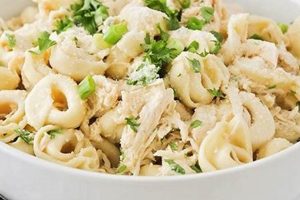
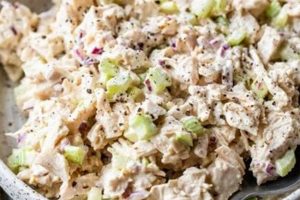
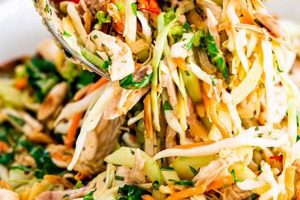
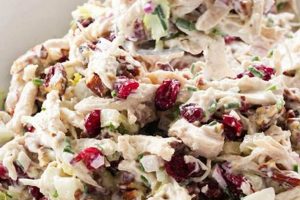
A chilled dish featuring cooked potatoes, often cubed, combined with mayonnaise-based dressing and cooked chicken. Variations can include other ingredients like celery, onions, hard-boiled eggs, and mustard. A classic example involves combining boiled potatoes with diced chicken, mayonnaise, chopped celery, and seasonings.
This combination offers a complete and satisfying meal, providing carbohydrates from the potatoes, protein from the chicken, and healthy fats from the mayonnaise. Its versatility makes it suitable for picnics, potlucks, barbecues, and quick weeknight dinners. Historically, potato salad emerged in European cuisine, evolving with regional variations. The addition of chicken likely arose as a way to enhance the nutritional value and create a more substantial dish.
Further exploration of this culinary concept can delve into specific recipe variations, nutritional information, tips for preparation and storage, and suggestions for complementary dishes and beverages.
Tips for Preparing Chicken Potato Salad
Achieving a flavorful and well-balanced chicken potato salad requires attention to several key aspects, from ingredient selection to preparation techniques.
Tip 1: Select the Right Potatoes: Waxy potatoes, such as red or new potatoes, hold their shape well after boiling and are ideal for potato salad. Avoid starchy potatoes like russets, which can become mushy.
Tip 2: Cook Potatoes Evenly: Ensure potatoes are cooked until tender but not overcooked. Start with cold, salted water and cook until easily pierced with a fork, but not falling apart.
Tip 3: Seasoning the Chicken: Enhance the chicken’s flavor by marinating it or seasoning it well before cooking. Grilled, roasted, or poached chicken can be used.
Tip 4: Optimal Mayonnaise Choice: Full-fat mayonnaise provides a richer, creamier texture and flavor. Light mayonnaise can be used for a lower-calorie version, but may impact the overall richness.
Tip 5: Balancing Flavors: Incorporate complementary ingredients like chopped celery, red onion, or hard-boiled eggs to add texture and flavor complexity. Fresh herbs such as dill or chives can also enhance the taste.
Tip 6: Proper Cooling: Allow the potatoes and chicken to cool completely before combining with the mayonnaise to prevent a runny salad. Chilling the salad for at least an hour before serving allows the flavors to meld.
Tip 7: Mindful Ingredient Incorporation: Gently fold the ingredients together to avoid breaking the potatoes. Overmixing can result in a mushy texture.
By following these tips, one can create a chicken potato salad that is both delicious and visually appealing, ensuring a delightful culinary experience.
This understanding of preparation techniques leads naturally to a discussion of variations and adaptations of the classic recipe.
1. Cooked Potatoes

Cooked potatoes form the foundational ingredient in potato salad with chicken, providing substance, texture, and a neutral canvas for other flavors. The selection, preparation, and handling of potatoes significantly influence the final dish’s quality.
- Potato Variety Selection
Different potato varieties offer varying textures and flavors. Waxy potatoes, such as red or Yukon Gold, hold their shape well after cooking and are preferred for potato salad. Starchy potatoes, like Russets, tend to become mushy and are less suitable. Choosing the right potato ensures the salad maintains a desirable texture.
- Cooking Methods
Boiling is the most common cooking method, offering even cooking and maintaining the potatoes’ shape. Steaming preserves nutrients and results in a drier potato, potentially requiring adjustments to the dressing quantity. Alternative methods like roasting or grilling impart distinct flavors but might not be ideal for traditional potato salad.
- Cooling and Handling
Allowing cooked potatoes to cool completely before mixing with other ingredients prevents the mayonnaise from breaking down and creating a watery dressing. Gentle handling during mixing prevents the potatoes from crumbling and maintains a pleasant texture in the finished salad.
- Flavor Absorption
Cooked potatoes effectively absorb flavors from the dressing and other ingredients. This absorption contributes to a well-integrated and balanced flavor profile in the final dish. The timing of dressing addition and chilling time influence the depth of flavor infusion.
The careful consideration of potato variety, cooking method, cooling process, and inherent absorptive properties are essential for creating a successful potato salad with chicken. These factors directly impact the dish’s texture, flavor, and overall appeal.
2. Diced Chicken
Diced chicken serves as a crucial protein component in potato salad with chicken recipes, contributing significantly to the dish’s nutritional value and overall appeal. The size and preparation method of the chicken pieces influence both the texture and flavor experience. Dicing the chicken ensures even distribution throughout the salad, allowing each bite to contain a balanced combination of ingredients. Furthermore, smaller pieces absorb flavors from the dressing and seasonings more effectively, enhancing the overall taste.
Chicken preparation methods impact the final flavor profile. Roasting or grilling imparts smoky notes, while poaching yields a milder, more delicate taste. Pre-seasoning the chicken before cooking or incorporating marinades further elevates the flavor complexity. For instance, using a lemon-herb marinade complements the creamy dressing and adds a refreshing touch. Alternatively, a barbecue-rubbed chicken provides a smoky and savory dimension. The choice of preparation method allows for customization based on individual preferences and desired flavor outcomes.
The inclusion of diced chicken transforms potato salad from a side dish to a more substantial meal, offering a complete protein source alongside the carbohydrates from potatoes and healthy fats from the mayonnaise. This makes it a versatile option for various occasions, from picnics and potlucks to light lunches and dinners. Understanding the role and impact of diced chicken within the broader context of potato salad with chicken recipes allows for informed choices regarding preparation techniques and flavor combinations, ultimately contributing to a more satisfying culinary experience.
3. Mayonnaise Dressing

Mayonnaise dressing serves as the unifying element in potato salad with chicken, binding the ingredients and contributing significantly to the overall flavor and texture. Its creamy consistency coats the potatoes and chicken, creating a cohesive dish while providing a rich, tangy counterpoint to the other components. The quality and composition of the mayonnaise dressing directly influence the final product’s success.
- Base Ingredient
Traditional mayonnaise, typically made with oil, egg yolks, and an acidic element like vinegar or lemon juice, provides the foundation for the dressing. Variations may include the addition of mustard, providing a sharper flavor profile, or the use of alternative oils, impacting the final taste and texture.
- Flavor Enhancements
Flavor enhancements transform plain mayonnaise into a customized dressing tailored to complement the potato salad. Common additions include fresh herbs like dill or chives, spices such as paprika or celery seed, or finely chopped aromatics like garlic or shallots. These additions create depth and complexity within the dressing, elevating the overall flavor profile of the salad.
- Consistency Adjustments
The consistency of mayonnaise dressing impacts the texture of the final salad. A thicker dressing adheres better to the ingredients, creating a creamier, more cohesive dish. Conversely, a thinner dressing offers a lighter, less dense texture. Adjustments can be made by adding small amounts of milk or buttermilk to thin the dressing or incorporating additional oil to thicken it, depending on the desired outcome.
- Balancing Acidity
The acidity level of the mayonnaise dressing plays a crucial role in balancing the richness of the mayonnaise and the other ingredients in the salad. A touch of vinegar or lemon juice provides a bright, tangy note that cuts through the richness of the mayonnaise and complements the flavors of the potatoes and chicken. Careful adjustment of acidity ensures a harmonious balance and prevents the salad from tasting overly rich or bland.
The careful consideration of these facetsbase ingredients, flavor enhancements, consistency, and acidityallows for the creation of a mayonnaise dressing that not only binds the ingredients but also enhances the overall flavor profile of the potato salad with chicken. A well-crafted dressing elevates the dish from a simple combination of ingredients to a harmonious and satisfying culinary experience.
4. Flavorful Seasonings
Flavorful seasonings are essential for elevating potato salad with chicken from a simple combination of ingredients to a vibrant and nuanced culinary experience. They provide depth, complexity, and balance, enhancing the inherent flavors of the potatoes, chicken, and dressing. The strategic use of seasonings can transform a bland dish into one that is both exciting and satisfying. Seasonings bridge the individual components, creating a cohesive flavor profile.
The selection of seasonings should consider the other ingredients and the desired overall flavor profile. Classic choices like salt, black pepper, and paprika provide a foundational layer of flavor, enhancing the savory notes of the chicken and potatoes. Adding a touch of celery seed or onion powder can introduce subtle vegetal nuances that complement the other components. For a brighter, more herbaceous profile, fresh herbs like dill, chives, or parsley can be incorporated. A pinch of cayenne pepper or a dash of hot sauce can introduce a welcome element of heat. The interplay of these various seasonings creates a symphony of flavors that tantalizes the taste buds.
The practical application of this understanding lies in the ability to tailor the flavor profile of potato salad with chicken to suit individual preferences and specific occasions. A picnic might call for a lighter, brighter flavor profile with fresh herbs and a touch of lemon zest. A barbecue, on the other hand, might benefit from the smoky depth of paprika and a hint of garlic powder. By understanding the impact of different seasonings and their interplay with other ingredients, one can create a potato salad with chicken that is perfectly suited to any occasion and palate. The thoughtful application of seasonings is the key to unlocking the full potential of this classic dish.
5. Complementary Vegetables

Complementary vegetables play a crucial role in enhancing the flavor, texture, and nutritional value of potato salad with chicken. They provide textural contrast to the creamy potatoes and tender chicken, introduce vibrant colors, and contribute essential vitamins and minerals. The strategic selection and incorporation of complementary vegetables elevates this classic dish from simple to sophisticated.
- Celery
Celery’s crisp texture provides a refreshing counterpoint to the softer elements of the salad. Its slightly bitter flavor balances the richness of the mayonnaise dressing. Finely diced celery is a traditional addition, providing a subtle crunch in every bite.
- Red Onion
Red onion contributes a sharp, pungent flavor and vibrant color. Its crisp texture adds another layer of interest. Thinly sliced or finely diced red onion provides bursts of flavor without overpowering the other ingredients. Soaking the sliced red onion in cold water for a few minutes can mellow its sharpness.
- Bell Peppers
Bell peppers, available in various colors, offer both visual appeal and a sweet, slightly vegetal flavor. They introduce a crisp, juicy element to the salad. Diced bell peppers, whether green, red, yellow, or orange, contribute a refreshing burst of color and flavor. Roasting the bell peppers before adding them to the salad imparts a smoky sweetness.
- Hard-boiled Eggs
While not strictly a vegetable, hard-boiled eggs are a frequent addition to potato salad, providing both protein and textural contrast. The yolks contribute a creamy richness, while the whites offer a firmer bite. Chopped or sliced hard-boiled eggs complement the other ingredients and enhance the salad’s nutritional value.
The interplay of these complementary vegetablescelery, red onion, bell peppers, and hard-boiled eggselevates potato salad with chicken by introducing contrasting textures, vibrant colors, and nuanced flavors. Their inclusion enhances the overall culinary experience, transforming a simple dish into a well-rounded and satisfying meal. The selection and preparation of these elements can be tailored to individual preferences and desired flavor profiles, offering endless possibilities for customization and culinary exploration.
6. Proper Chilling

Proper chilling is crucial for food safety and optimal flavor development in potato salad with chicken. Chilling inhibits bacterial growth, a significant concern with mayonnaise-based salads, particularly those containing chicken. Harmful bacteria, such as Salmonella, can proliferate rapidly at room temperature, posing health risks. Thorough chilling, maintaining a temperature below 40F (4C), minimizes this risk. Additionally, chilling allows the flavors of the various ingredientspotatoes, chicken, vegetables, and seasoningsto meld and deepen, resulting in a more complex and balanced flavor profile. A well-chilled potato salad offers a more enjoyable sensory experience compared to a lukewarm one.
The practical application of this principle involves refrigerating the cooked potatoes and chicken separately before combining them with the other ingredients. This prevents the still-warm ingredients from raising the overall temperature of the salad and potentially compromising food safety. Once combined, the salad should be promptly and thoroughly chilled for at least two hours before serving. For larger batches or particularly warm ambient conditions, longer chilling times may be necessary. Transporting potato salad with chicken requires proper insulation and coolant packs to maintain a safe temperature. Neglecting proper chilling can lead to both unpleasant textural changes, such as a runny consistency due to mayonnaise breakdown, and serious health risks related to bacterial growth. A real-world example would be a picnic or outdoor gathering where improper temperature control could lead to foodborne illness among attendees.
Effective chilling is an essential step in preparing potato salad with chicken, directly impacting both food safety and flavor quality. Understanding the principles of temperature control and applying best practices for chilling ensures a safe and enjoyable culinary experience. This underscores the importance of integrating food safety considerations throughout the entire process of preparing and serving potato salad with chicken, not just during the final chilling stage.
7. Recipe Variations

Recipe variations represent the adaptive nature of potato salad with chicken, allowing for customization based on individual preferences, dietary restrictions, and available ingredients. This adaptability ensures the dish remains relevant across diverse culinary landscapes and evolving tastes. Variations stem from modifications to core componentsthe potatoes, chicken, dressing, and supplementary ingredients. Substituting sweet potatoes for traditional white potatoes offers a different nutritional profile and flavor dimension. Employing grilled or smoked chicken introduces smoky nuances, while roasted chicken contributes a richer, more savory character. Dressing variations range from lighter vinaigrettes to creamy yogurt-based alternatives, catering to different dietary needs and taste preferences. Incorporating regional ingredients, such as roasted corn and black beans in a Southwestern variation, or using curry powder and raisins for an Indian-inspired twist, further expands the culinary possibilities.
The practical significance of understanding recipe variations lies in the ability to tailor the dish to specific contexts. A light and refreshing version with lemon-herb dressing and fresh vegetables might suit a summer picnic, while a heartier version with roasted chicken and a creamy Dijon dressing might be appropriate for a potluck dinner. Dietary adaptations, such as using a vegan mayonnaise or omitting the chicken altogether, allow individuals with specific dietary needs to enjoy this versatile dish. Real-world examples include adapting the recipe to incorporate seasonal ingredients, utilizing leftover cooked chicken, or adjusting the spice level to accommodate different palates. Challenges in exploring variations might involve balancing flavors and textures when introducing new ingredients, ensuring food safety when incorporating different protein sources, and adapting cooking techniques to suit different ingredients.
Recipe variations underscore the inherent versatility of potato salad with chicken. They allow for creative exploration while respecting the fundamental elements of this classic dish. This adaptability ensures its continued relevance in contemporary cuisine, catering to a broad range of tastes and dietary needs. A thorough understanding of the interplay between core components and adaptable elements empowers individuals to create personalized versions of potato salad with chicken, tailored to specific occasions and preferences, thereby enriching the culinary experience.
Frequently Asked Questions
This section addresses common inquiries regarding potato salad with chicken, providing concise and informative responses to clarify potential uncertainties and enhance understanding of this versatile dish.
Question 1: What is the best way to prevent potato salad from becoming watery?
Watery potato salad often results from using starchy potatoes or not allowing the cooked potatoes to cool completely before combining them with the dressing. Using waxy potatoes like red or Yukon Gold and ensuring the potatoes are thoroughly cooled minimizes excess moisture.
Question 2: Can different types of chicken be used in potato salad?
Various chicken preparations, including roasted, grilled, poached, or baked, can be incorporated. The chosen method impacts the flavor profile of the salad. Roasting or grilling imparts smoky notes, while poaching yields a milder taste.
Question 3: How long can potato salad with chicken be stored safely?
Properly stored in an airtight container in the refrigerator, potato salad with chicken typically remains safe for consumption for up to three to five days. However, always prioritize discarding any salad showing signs of spoilage, such as an off odor or discoloration.
Question 4: What are suitable alternatives to mayonnaise in the dressing?
For those seeking alternatives to mayonnaise, plain yogurt or Greek yogurt can provide a lighter, tangier base for the dressing. Alternatively, a vinaigrette dressing using oil and vinegar offers a non-creamy option.
Question 5: How can one adapt the recipe for different dietary needs, such as gluten-free or vegan?
Gluten-free adaptations involve ensuring all ingredients, including seasonings and condiments, are certified gluten-free. Vegan variations require substituting the mayonnaise with a plant-based alternative and omitting the chicken or using a plant-based chicken substitute. Careful attention to ingredient selection is crucial for accommodating specific dietary needs.
Question 6: What are some complementary dishes to serve alongside potato salad with chicken?
Potato salad with chicken pairs well with various dishes, including grilled meats, sandwiches, burgers, or salads. It can serve as a standalone main course for a light meal or as a side dish complementing a larger spread.
Understanding these common points of inquiry allows for informed decisions regarding ingredient selection, preparation techniques, and storage practices, contributing to a safer and more enjoyable culinary experience with potato salad with chicken. This foundational knowledge empowers individuals to adapt the recipe confidently to suit individual preferences and dietary needs.
This FAQ section concludes the current exploration of potato salad with chicken. Further research and experimentation can deepen one’s understanding and appreciation of this adaptable and satisfying dish.
Conclusion
Exploration of potato salad with chicken recipes reveals a dish adaptable to various culinary preferences and dietary needs. Careful selection of potato variety, chicken preparation method, and complementary ingredients contributes significantly to the final product. Understanding the role of mayonnaise dressing, seasonings, and chilling processes ensures both food safety and optimal flavor development. Recipe variations demonstrate the dish’s versatility, allowing for creative exploration while respecting fundamental principles.
Potato salad with chicken offers a canvas for culinary expression, blending tradition with innovation. Continued exploration of flavor profiles, ingredient combinations, and cultural adaptations promises to further enrich appreciation for this classic dish. Diligent attention to detail, from ingredient selection to safe handling practices, ensures a satisfying and wholesome culinary experience.