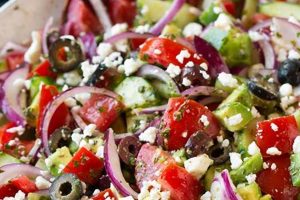
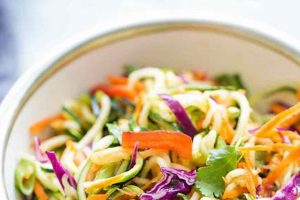
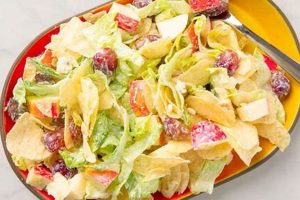
A chilled dish featuring cooked noodles, diced ham, and typically a variety of vegetables, often bound in a creamy or vinaigrette-based dressing. Variations can include different types of noodles, ham, vegetables, and dressings, allowing for customization based on preference and availability of ingredients. An example might incorporate egg noodles, cubed cooked ham, celery, bell peppers, and a mayonnaise-based dressing with a touch of mustard and sweet pickle relish.
This type of dish offers a refreshing and satisfying meal, particularly suited for warm weather or light lunches. Its adaptable nature makes it an economical choice, allowing for the utilization of leftover ham and readily available pantry staples. Historically, cold pasta salads gained popularity as refrigeration became more common, providing a convenient and flavorful make-ahead option for gatherings and everyday meals.
The following sections will delve into specific aspects of creating this dish, covering variations in ingredients, dressings, and techniques for achieving optimal flavor and texture. Guidance will be provided on ingredient selection, preparation methods, and presentation suggestions.
Tips for a Superior Noodle and Ham Salad
Achieving a flavorful and well-balanced cold noodle salad with ham involves attention to detail in ingredient selection and preparation. The following tips offer guidance for optimizing texture, flavor, and overall presentation.
Tip 1: Noodle Selection Matters: Opt for noodles that hold their shape well when chilled, such as egg noodles, rotini, or farfalle. Avoid thinner varieties that may become mushy.
Tip 2: Proper Noodle Cooking: Cook noodles al dente to prevent a soft, overly starchy texture in the finished salad. Rinse cooked noodles under cold water to stop the cooking process and maintain firmness.
Tip 3: Ham Considerations: Choose high-quality cooked ham, either sliced or cubed. Avoid overly processed ham with excessive sodium content. Consider using leftover baked ham for enhanced flavor.
Tip 4: Vegetable Variety: Incorporate a variety of crisp vegetables for textural and flavor contrast. Common choices include celery, bell peppers, red onion, and carrots. Blanching certain vegetables, such as peas or green beans, can enhance their color and tenderness while maintaining a desirable crunch.
Tip 5: Dressing Dynamics: The dressing is crucial to the overall success of the salad. Consider using a mayonnaise-based dressing, a vinaigrette, or a combination of both. Balance sweetness, acidity, and savory elements for a well-rounded flavor profile.
Tip 6: Chill Time is Essential: Allow the salad to chill thoroughly in the refrigerator for at least an hour before serving. This allows the flavors to meld and the noodles to absorb the dressing.
Tip 7: Fresh Herbs Elevate: Fresh herbs, such as chopped parsley, chives, or dill, can add brightness and complexity to the salad. Add these just before serving to maintain their vibrancy.
By following these guidelines, one can create a cold noodle and ham salad that is both visually appealing and delicious. Attention to these details ensures a balanced and satisfying dish suitable for various occasions.
The following section will provide a comprehensive recipe incorporating these principles for a truly exceptional culinary experience.
1. Noodle Choice
Noodle selection significantly influences the final quality of a ham noodle salad. The type of noodle affects not only the texture of the dish but also how well it absorbs the dressing and complements the other ingredients. Choosing the right noodle ensures a balanced and enjoyable culinary experience.
- Shape and Structure
Different noodle shapes offer varying textural experiences and dressing adhesion. Long, thin noodles like spaghetti tend to clump together and may become soggy. Spiral shapes, such as rotini or fusilli, hold their shape better and create pockets that trap dressing. Short, sturdy shapes like farfalle or elbow macaroni offer a pleasant bite and distribute evenly throughout the salad. The chosen shape should complement the other ingredients and contribute to a visually appealing presentation.
- Cooking Properties
Noodles vary in their cooking times and how they behave when chilled. Overcooked noodles become mushy and detract from the salad’s overall texture. Noodles should be cooked al dente and rinsed under cold water to stop the cooking process, ensuring a firm texture in the final dish. This is particularly important for thinner noodles that are more prone to overcooking.
- Flavor Compatibility
While most noodles have a relatively neutral flavor, some varieties possess subtle taste nuances that can enhance or detract from the salad’s profile. Egg noodles, for instance, offer a slightly richer flavor that complements ham and creamy dressings. Whole wheat noodles provide a nuttier flavor, while rice noodles offer a lighter, more delicate taste. Consider the other ingredients and the dressing when selecting a noodle variety to ensure a harmonious flavor profile.
- Visual Appeal
The visual presentation of a dish enhances the dining experience. Different noodle shapes and colors contribute to the salad’s aesthetic appeal. Tri-color rotini adds visual interest, while wide egg noodles provide a classic look. The chosen noodle should complement the colors and shapes of the other ingredients, creating a visually appealing and appetizing salad.
Careful noodle selection elevates the ham noodle salad from a simple dish to a carefully composed culinary creation. Considering the shape, cooking properties, flavor compatibility, and visual appeal of the noodles ensures a well-balanced, texturally satisfying, and visually appealing final product. A thoughtful approach to this seemingly minor detail significantly impacts the overall enjoyment of the dish.
2. Ham Quality
Ham quality significantly impacts the overall flavor and enjoyment of a ham noodle salad. Selecting the right ham is crucial for a well-balanced and satisfying dish. The nuances of flavor, texture, and sodium content contribute to the final product’s success. Understanding these factors allows for informed decisions that elevate the salad beyond the ordinary.
- Flavor Profile
Ham offers a range of flavor profiles, from sweet and smoky to savory and salty. The chosen ham’s flavor should complement the other ingredients in the salad. For instance, a honey-glazed ham lends a touch of sweetness, while a Black Forest ham offers a more robust, smoky flavor. The desired flavor profile influences ham selection and its interaction with other components like the dressing and vegetables.
- Texture and Moisture
Ham texture plays a vital role in the salad’s overall mouthfeel. Dry, overly processed ham can result in a tough and stringy salad. Moist, tender ham contributes to a more pleasant and palatable experience. Consider the ham’s texture when selecting, opting for options that offer a desirable balance of firmness and tenderness. This ensures the ham integrates well with the other ingredients without becoming dry or crumbly.
- Sodium Content
Many commercially available hams contain high levels of sodium. Excessive sodium can overpower the other flavors in the salad and create an unbalanced taste. Choosing lower-sodium ham or adjusting the dressing accordingly helps maintain a balanced flavor profile. Being mindful of sodium content contributes to a healthier and more flavorful dish.
- Cut and Preparation
The ham’s cut and preparation method influence its integration into the salad. Thickly sliced ham can be difficult to eat and may overpower the other ingredients. Thinly sliced or diced ham distributes more evenly throughout the salad and allows for easier mixing and serving. The chosen cut should complement the other ingredients’ size and shape, creating a harmonious blend of textures and flavors.
The selection of ham directly influences the overall quality and enjoyment of the ham noodle salad. Careful consideration of flavor profile, texture, sodium content, and cut ensures a balanced and satisfying dish. Prioritizing ham quality elevates the salad from a simple combination of ingredients to a well-crafted culinary experience.
3. Vegetable Selection

Vegetable selection significantly influences the flavor, texture, and nutritional value of a ham noodle salad. Thoughtful consideration of vegetable choices elevates this dish from simple fare to a balanced and satisfying meal. Vegetables contribute not only crucial nutrients but also textural and color contrasts that enhance the overall dining experience. The interplay of flavors and textures between the ham, noodles, and vegetables is paramount to a successful recipe.
Crisp, crunchy vegetables provide textural contrast to the soft noodles and ham. Celery, bell peppers, and carrots are common choices, offering a refreshing crunch and vibrant colors. Blanched vegetables, such as peas or green beans, offer a slightly softer texture while retaining their vibrant green hue and contributing essential nutrients. Red onion adds a pungent bite, while chopped cucumbers provide a cooling element. The combination of textures creates a multi-dimensional sensory experience.
Beyond texture, vegetables contribute a variety of flavors that complement the savory ham. Sweet bell peppers offer a subtle sweetness, while the peppery bite of radishes provides a contrasting flavor. The slight bitterness of blanched broccoli florets adds complexity, and the earthy flavor of chopped mushrooms provides a savory depth. Balancing these flavors with the saltiness of the ham and the chosen dressing is essential for a harmonious final product. For example, a vinaigrette dressing with a sweet and tangy profile pairs well with a combination of bell peppers, cucumbers, and red onion, creating a refreshing and balanced flavor profile.
The choice of vegetables also impacts the nutritional value of the salad. Incorporating a variety of colorful vegetables ensures a broader range of vitamins and minerals. Dark leafy greens, such as spinach or kale, can be added for an extra boost of nutrients. The nutritional contribution of the vegetables enhances the health benefits of the salad, making it a more complete and nourishing meal. Understanding the nutritional content of different vegetables allows for informed choices that contribute to a balanced and healthy diet.
4. Dressing Flavor
Dressing flavor plays a pivotal role in the overall success of a ham noodle salad recipe. The dressing acts as a unifying element, binding the individual components and creating a cohesive flavor profile. It is not merely a condiment but an essential component that significantly impacts the final dish’s taste and enjoyment. The interplay between the dressing and the other ingredientsthe ham, noodles, and vegetablesdetermines the salad’s balance and complexity. An appropriately chosen dressing elevates the salad from a simple assemblage of ingredients to a harmonious and flavorful culinary creation.
The complexity of dressing flavor can range from simple vinaigrettes to rich, creamy emulsions. A classic vinaigrette, composed of oil, vinegar, and seasonings, offers a light and tangy counterpoint to the richness of the ham and the starchiness of the noodles. The acidity of the vinegar cuts through the fattiness of the ham, creating a balanced flavor profile. Conversely, a creamy dressing, often mayonnaise-based, provides a luscious coating that binds the ingredients together and adds a layer of richness. Incorporating herbs, spices, or other flavoring agents further enhances the dressing’s complexity and its interaction with the other components. For example, a Dijon mustard vinaigrette adds a sharp, tangy note, while a creamy dressing infused with dill introduces a fresh, herbaceous element.
Understanding the interplay between dressing flavor and the other ingredients is crucial for achieving a balanced and delicious ham noodle salad. The dressing should complement, not overpower, the flavors of the ham, noodles, and vegetables. A delicate balance of sweet, sour, salty, and savory elements ensures a harmonious flavor profile. Too much sweetness can cloy, while excessive acidity can make the salad unpleasantly tart. The right dressing enhances the individual flavors of the other ingredients, creating a synergistic effect where the whole is greater than the sum of its parts. Careful consideration of dressing flavor is therefore essential for a successful ham noodle salad recipe, transforming a simple dish into a culinary masterpiece.
5. Chill Time
Chill time is a crucial element in a ham noodle salad recipe, significantly impacting the final dish’s flavor and texture. This period of refrigeration, typically at least one hour, allows several key processes to occur, transforming the salad from a simple mixture of ingredients into a cohesive and flavorful dish. The benefits of adequate chill time are multifaceted, affecting both the sensory experience and the food safety aspects of the salad.
Flavor development is significantly enhanced by chill time. As the salad rests in the refrigerator, the flavors of the individual components meld and harmonize. The dressing penetrates the noodles, infusing them with flavor, while the ham and vegetables release their juices, creating a more complex and nuanced flavor profile. The chilling process also allows the flavors of any added herbs and spices to permeate the salad, contributing to a more well-rounded and balanced taste. Without sufficient chill time, the flavors remain disjointed, resulting in a less satisfying culinary experience. For instance, a freshly made salad might taste predominantly of the dressing, with the other flavors remaining muted. However, after an hour or more in the refrigerator, the flavors blend seamlessly, creating a more harmonious and enjoyable taste.
Texture is also affected by chill time. Chilling firms the noodles, preventing them from becoming mushy or overly soft. This is particularly important for thinner noodles that are more prone to absorbing excess dressing and losing their structural integrity. The chilling process also allows the vegetables to maintain their crispness, contributing to a more pleasing textural contrast between the soft noodles, tender ham, and crunchy vegetables. A salad that has not been adequately chilled may have soggy noodles and wilted vegetables, detracting from the overall enjoyment of the dish. Furthermore, from a food safety perspective, chill time is essential for inhibiting bacterial growth, particularly in salads containing mayonnaise-based dressings. Maintaining a safe temperature below 40F (4C) helps prevent the proliferation of harmful bacteria, ensuring the salad remains safe for consumption.
6. Proper Proportions

Proper proportions are essential for a well-balanced and enjoyable ham noodle salad. The ratio of noodles, ham, vegetables, and dressing contributes significantly to the overall flavor, texture, and aesthetic appeal of the dish. Achieving the right balance ensures that no single ingredient dominates, allowing each component to contribute its unique characteristics to the final product. Careful consideration of proportions elevates the salad from a simple mixture to a harmonious blend of flavors and textures.
- Noodle-to-Ham Ratio
The balance between noodles and ham influences the salad’s heartiness and protein content. Too many noodles can result in a bland and starchy salad, while too much ham can make it overly rich and heavy. A balanced ratio ensures that both the noodles and ham contribute their respective flavors and textures without either one dominating. A typical guideline is to use approximately equal amounts of cooked noodles and diced ham, but this can be adjusted based on personal preference and the desired protein-to-carbohydrate ratio.
- Vegetable-to-Other-Ingredient Ratio
Vegetables provide crucial texture, color, and nutritional value to the salad. An adequate proportion of vegetables ensures a refreshing crunch and a visually appealing contrast to the softer noodles and ham. Too few vegetables can result in a dense and less visually interesting salad, while too many can dilute the flavors of the other ingredients. A good starting point is to use a volume of vegetables roughly equal to the combined volume of noodles and ham. However, this can be adjusted based on the types of vegetables used and personal preference.
- Dressing-to-Salad Ratio
The amount of dressing significantly impacts the salad’s overall flavor and moisture content. Too much dressing can make the salad soggy and overpower the other flavors, while too little can result in a dry and less flavorful dish. The ideal amount of dressing coats the ingredients evenly without making them swim in sauce. A general rule of thumb is to start with a smaller amount of dressing and add more gradually until the desired level of moisture and flavor is achieved. The type of dressing also plays a role; a thicker, creamier dressing will require less volume than a thinner vinaigrette.
- Visual Balance and Presentation
Visual appeal enhances the dining experience. Proper proportions contribute not only to flavor and texture but also to the salad’s aesthetic presentation. A well-balanced salad features a visually appealing distribution of colors, shapes, and textures. The ingredients should be evenly dispersed, with no large clumps of any single component. Attention to visual detail elevates the salad from a simple meal to a visually pleasing culinary creation. Garnishes, such as chopped fresh herbs or a sprinkle of paprika, can further enhance the visual appeal.
Achieving the proper proportions in a ham noodle salad requires attention to detail and a balanced approach. Careful consideration of the ratios of noodles, ham, vegetables, and dressing ensures a harmonious blend of flavors, textures, and visual appeal. Mastering these proportions elevates the salad from a simple dish to a well-crafted culinary experience, demonstrating a thoughtful approach to ingredient selection and preparation.
Frequently Asked Questions
This section addresses common inquiries regarding ham noodle salad preparation, offering concise and informative responses to enhance understanding and facilitate successful culinary outcomes.
Question 1: What type of noodles is best suited for this salad?
Noodles that hold their shape well when chilled are ideal. Egg noodles, rotini, and farfalle are recommended. Avoid thinner varieties like spaghetti or angel hair, which tend to become mushy.
Question 2: Can leftover ham be used in this recipe?
Leftover ham, particularly baked ham, adds excellent flavor. Ensure the ham is properly stored and still within its safe consumption period.
Question 3: How can sodium content be controlled?
Select lower-sodium ham and consider the sodium content of other ingredients, such as dressings and condiments. Adjust seasoning accordingly.
Question 4: What vegetables complement ham and noodles?
Crisp vegetables like celery, bell peppers, red onion, and carrots offer textural contrast. Blanched peas or green beans provide a softer texture with vibrant color.
Question 5: What type of dressing works best?
Mayonnaise-based dressings, vinaigrettes, or a combination of both complement this salad. Balance sweetness, acidity, and savory notes for a well-rounded flavor profile.
Question 6: How long should the salad be chilled?
Chilling for at least one hour allows flavors to meld and enhances food safety by inhibiting bacterial growth, especially with mayonnaise-based dressings.
Careful attention to these frequently asked questions ensures a successful and enjoyable ham noodle salad experience. Understanding the nuances of ingredient selection, preparation, and storage contributes to optimal flavor, texture, and food safety.
The subsequent section will offer a comprehensive recipe incorporating the principles and addressing the considerations discussed throughout this article.
Ham Noodle Salad Recipe
This exploration of ham noodle salad recipes has highlighted the multifaceted nature of this seemingly simple dish. From the careful selection of noodles that hold their shape and texture to the nuanced interplay of ham quality, vegetable variety, and dressing flavor, each component contributes significantly to the final product. Proper proportions and adequate chill time further enhance the balance of flavors and textures, ensuring a satisfying and enjoyable culinary experience. The adaptability of this dish allows for endless variations, catering to individual preferences and dietary needs. Understanding the underlying principles of ingredient selection and preparation empowers culinary exploration and ensures consistent, high-quality results.
Ham noodle salad represents more than a mere combination of ingredients; it embodies a culinary synthesis of flavors, textures, and cultural influences. Its adaptability allows for continuous evolution and personalized interpretations, reflecting the dynamic nature of culinary traditions. The principles discussed herein provide a foundation for crafting not only delicious ham noodle salads but also for approaching culinary endeavors with a deeper understanding of ingredient interactions and the transformative power of thoughtful preparation. This exploration encourages a shift from rote recipe following to a more nuanced and engaged approach to cooking, fostering creativity and a deeper appreciation for the culinary arts.