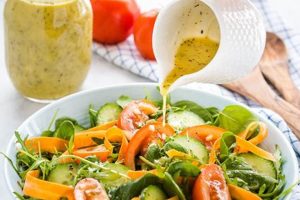
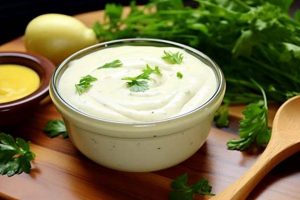
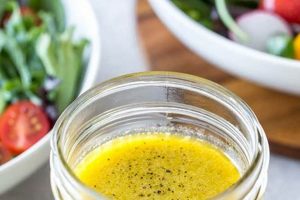
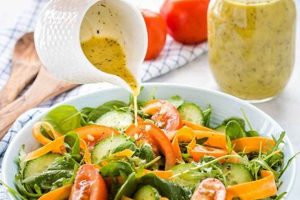
Combinations of oil, acid, and sweetener emulsified with poppy seeds create a versatile dressing commonly used with salads featuring fruits, vegetables, and nuts. A classic example includes a base of oil (often vegetable or canola), vinegar (like white wine or apple cider), and a sweetener such as sugar or honey, all blended with poppy seeds.
The subtle nuttiness of the poppy seeds complements a wide array of flavors, offering a textural element and visual appeal. This type of dressing has become a staple in many cuisines, offering a refreshing and flavorful enhancement to salads and even some cooked dishes. Its popularity stems from its ability to balance sweet and tangy notes, creating a harmonious flavor profile. Historically, poppy seeds have been prized for their culinary and medicinal uses, dating back to ancient civilizations. Their inclusion in dressings adds both nutritional value and a distinct character.
The following sections will delve into the versatility of these dressings, exploring variations in ingredients, techniques for preparation, and suitable pairings for different salad compositions. Guidance will also be provided on achieving optimal emulsification and storage methods to maximize flavor and freshness.
Tips for Poppy Seed Dressings
Achieving a well-balanced and flavorful dressing requires attention to detail and an understanding of the interplay of ingredients. The following tips offer guidance for optimal preparation.
Tip 1: Toasting Poppy Seeds: Toasting poppy seeds in a dry pan over medium heat for a few minutes enhances their nutty flavor and aroma. Constant stirring prevents burning.
Tip 2: Emulsification Techniques: Proper emulsification prevents separation. Whisking ingredients vigorously while slowly drizzling in the oil creates a stable emulsion. A blender or food processor can also be used.
Tip 3: Balancing Sweet and Tangy Elements: Adjust the ratio of sweetener and acid (vinegar or citrus juice) to achieve the desired balance. Taste and adjust as needed.
Tip 4: Oil Selection: Neutral oils like vegetable, canola, or grapeseed oil allow the poppy seed flavor to shine. Extra virgin olive oil can be used for a more robust flavor profile.
Tip 5: Freshness of Ingredients: Using fresh, high-quality ingredients contributes to the overall flavor and quality. Freshly squeezed citrus juice offers a brighter, more vibrant flavor than bottled varieties.
Tip 6: Storage: Store dressings in an airtight container in the refrigerator for up to one week. Shake well before serving as some separation may occur.
Tip 7: Experimentation with Flavors: Explore variations by adding Dijon mustard, minced garlic, shallots, or herbs like chives or parsley.
By following these tips, one can create delicious and well-balanced dressings that complement a variety of salad ingredients.
The concluding section will offer examples of classic and innovative salad pairings that showcase the versatility of poppy seed dressings.
1. Ingredients

Ingredient selection significantly impacts the final flavor profile and quality of poppy seed salad dressing. The interplay of various components contributes to the dressing’s overall character. High-quality oils, such as extra virgin olive oil or cold-pressed avocado oil, lend richness and distinct flavor notes. Vinegars, ranging from apple cider to balsamic, introduce acidity and complexity. Sweeteners, including honey, maple syrup, or granulated sugar, balance the tartness and contribute to the emulsification process. The poppy seeds themselves, ideally toasted to enhance their nutty aroma, provide a textural element and subtle flavor.
Consider a dressing featuring robust extra virgin olive oil, tangy red wine vinegar, a touch of Dijon mustard for emulsification and depth, and honey for sweetness. This combination offers a complex flavor profile that complements salads with bitter greens, such as arugula or dandelion greens. Conversely, a lighter dressing made with grapeseed oil, white wine vinegar, and a simple sugar sweetener provides a delicate backdrop for salads featuring fresh fruits and vegetables. The choice of ingredients directly influences the overall sensory experience.
Understanding the role of each ingredient allows for informed choices tailored to specific flavor preferences and salad pairings. Fresh, high-quality ingredients contribute not only to taste but also to the nutritional value. Careful consideration of ingredient combinations ensures a harmonious blend of flavors and textures, elevating the culinary experience. Experimentation with diverse ingredients enables the creation of unique and personalized poppy seed salad dressings.
2. Proportions
Proportions play a crucial role in determining the balance and overall flavor profile of poppy seed salad dressings. The ratio of oil to acid, the amount of sweetener, and the quantity of poppy seeds all contribute to the final taste and texture. Understanding these proportions allows for precise control over the dressing’s characteristics, ensuring a harmonious blend of flavors.
- Oil-to-Acid Ratio
The oil-to-acid ratio significantly impacts the dressing’s mouthfeel and tartness. A higher oil-to-acid ratio (e.g., 3:1) results in a richer, less tangy dressing, while a lower ratio (e.g., 1:1) yields a sharper, more acidic flavor. Classic vinaigrette recipes often employ a 3:1 ratio, providing a balance suitable for a variety of salads.
- Sweetener Level
The amount of sweetener balances the acidity and adds complexity. Too much sweetener can overpower the other flavors, while too little can result in an overly tart dressing. The ideal sweetener level depends on the type of sweetener used and personal preference. Honey and maple syrup offer distinct flavor profiles compared to granulated sugar, impacting the overall taste.
- Poppy Seed Density
The quantity of poppy seeds affects both the texture and flavor. A higher density creates a more pronounced poppy seed flavor and a thicker consistency. A lower density provides a subtler poppy seed presence and a thinner dressing. The desired density depends on personal preference and the salad being dressed.
- Emulsifier Quantity
Emulsifiers, such as Dijon mustard or egg yolks, help bind the oil and acid together, creating a stable emulsion. The amount of emulsifier used impacts the dressing’s thickness and stability. Too much emulsifier can result in a heavy dressing, while too little may lead to separation.
Careful consideration of these proportions allows for the creation of dressings tailored to specific flavor profiles and salad pairings. Adjusting these ratios offers flexibility in balancing sweetness, acidity, and texture, ultimately enhancing the culinary experience. A well-balanced dressing complements the salad’s ingredients without overpowering them, creating a harmonious and enjoyable dish.
3. Emulsification

Emulsification is crucial for the stability and texture of poppy seed salad dressings. It involves combining two immiscible liquids, typically oil and vinegar, into a stable mixture. Without emulsification, the oil and vinegar would separate, resulting in an undesirable oily layer on top of the dressing. Emulsifiers, such as Dijon mustard, egg yolks, or honey, contain molecules with both hydrophilic (water-loving) and hydrophobic (oil-loving) ends. These molecules surround the oil droplets, preventing them from coalescing and maintaining a uniform dispersion throughout the vinegar. This process creates a creamy, cohesive dressing with a pleasant mouthfeel.
The effectiveness of emulsification impacts the dressing’s long-term stability. A well-emulsified dressing will resist separation even after refrigeration, ensuring a consistent texture and flavor with each use. Conversely, a poorly emulsified dressing will separate quickly, requiring vigorous shaking before each serving. The type and quantity of emulsifier used, along with the technique employed (e.g., whisking, blending), affect the emulsion’s stability. For instance, using a small amount of Dijon mustard in a vinaigrette provides sufficient emulsification for a temporary, light dressing. However, a more robust, longer-lasting emulsion might require an egg yolk, particularly for creamier dressings like those used in Caesar salads.
Achieving a stable emulsion contributes significantly to the overall quality and sensory experience of poppy seed salad dressings. It ensures a smooth, creamy texture and prevents an oily mouthfeel. Understanding the principles of emulsification allows for the creation of dressings that remain homogenous and visually appealing, enhancing the dining experience. Challenges in maintaining emulsification can arise from factors such as temperature fluctuations or the use of highly acidic ingredients. Addressing these challenges through the appropriate selection and application of emulsifiers contributes to the creation of high-quality, visually appealing, and flavorful poppy seed salad dressings.
4. Variations
Variations within poppy seed salad dressing recipes offer a wide spectrum of flavor profiles and culinary applications. These variations stem from alterations in core ingredients, additions of complementary components, and adjustments to the balance of sweet, sour, and savory elements. The adaptability of the base recipe allows for customization to suit individual preferences and specific salad pairings. For instance, a standard recipe can be transformed by substituting honey for sugar, resulting in a richer, more nuanced sweetness. Adding citrus zest, such as orange or lemon, introduces a bright, aromatic dimension. Incorporating fresh herbs like chives or dill provides a savory counterpoint to the sweetness and acidity. These seemingly small changes can significantly alter the final flavor profile, demonstrating the versatility of poppy seed dressings.
The practical significance of understanding these variations lies in the ability to create dressings tailored to specific culinary needs. A lighter, citrus-infused variation complements delicate spring salads with fresh greens and berries. A richer, honey-based dressing with Dijon mustard pairs well with heartier salads featuring roasted vegetables or grilled chicken. Exploring these variations not only expands the culinary repertoire but also allows for creative expression in the kitchen. The ability to adjust ingredients and flavors empowers individuals to craft dressings that perfectly accentuate the flavors of their chosen salad components. Further variations can involve the inclusion of spices like paprika or ginger, offering unique and unexpected flavor combinations. The possibilities are vast, limited only by culinary imagination.
Ultimately, exploring variations within poppy seed salad dressing recipes elevates a simple condiment to a versatile culinary tool. Understanding the interplay of ingredients and flavors empowers culinary creativity and allows for personalized flavor experiences. From subtle tweaks to bolder experimentation, variations unlock a world of possibilities within this classic dressing, enhancing the enjoyment of a wide range of salads and culinary creations. This adaptability ensures that poppy seed dressing remains a relevant and adaptable component of diverse culinary traditions.
5. Pairings

Successful pairings of poppy seed salad dressing with various salads depend on a nuanced understanding of flavor interactions and textural harmonies. The dressing’s inherent sweetness, tanginess, and nutty notes from the poppy seeds influence its compatibility with different ingredients. Consideration must be given to the salad’s composition, including the types of greens, vegetables, fruits, proteins, and cheeses present. For instance, the classic combination of poppy seed dressing with a spinach salad containing strawberries, mandarin oranges, crumbled blue cheese, and candied pecans exemplifies a harmonious pairing. The dressing’s sweetness complements the fruits, while its tanginess balances the richness of the cheese and nuts. The spinach provides a neutral backdrop, allowing the other flavors to shine.
Conversely, pairing poppy seed dressing with a salad containing strong, assertive flavors like roasted red peppers, Kalamata olives, and feta cheese might create a clash of flavors. The dressing’s sweetness could clash with the peppers’ smokiness and the olives’ saltiness. In such cases, a vinaigrette with a more herbaceous or acidic profile might provide a better balance. Understanding these interactions allows for informed decisions regarding appropriate pairings. A lighter, citrus-infused poppy seed dressing harmonizes well with delicate greens, fresh berries, and grilled fish or chicken. A richer, honey-based variation complements salads with roasted root vegetables, nuts, and goat cheese. Considering the weight and intensity of both the dressing and the salad components ensures a cohesive and enjoyable culinary experience. Practical applications of this understanding extend to menu planning, recipe development, and everyday meal preparation.
Effective pairing of poppy seed salad dressing with complementary salad ingredients elevates the overall dining experience. Careful consideration of flavor profiles, textures, and ingredient interactions allows for the creation of harmonious and balanced dishes. Challenges in pairing can often be overcome by adjusting the dressing’s ingredients, such as adding more acidity or incorporating herbs and spices to complement the salad components. Ultimately, successful pairings enhance the individual flavors of both the dressing and the salad, creating a synergistic culinary experience that is greater than the sum of its parts. This nuanced approach to pairing ensures that the poppy seed dressing enhances, rather than overwhelms, the other flavors present in the salad, resulting in a well-balanced and satisfying meal.
6. Storage
Proper storage of poppy seed salad dressing is essential for maintaining its quality, flavor, and safety. Improper storage can lead to undesirable changes in texture, flavor degradation, and potential microbial growth. Understanding optimal storage practices ensures the dressing remains enjoyable and safe to consume.
- Container Selection
Choosing an appropriate container is the first step in proper storage. Airtight containers, preferably made of glass or food-grade plastic, are ideal. These containers minimize exposure to air, which can cause oxidation and lead to off-flavors. Avoid using reactive metals, such as copper or aluminum, as they can interact with the dressing’s acidic components.
- Refrigeration
Refrigeration is crucial for preserving the freshness of poppy seed salad dressing. The cool temperature slows down the growth of microorganisms and enzymatic activity, which can cause spoilage. Ideally, store the dressing in the coldest part of the refrigerator, typically the back, to maintain a consistent temperature.
- Duration
While refrigeration extends shelf life, poppy seed dressing does not last indefinitely. Homemade versions typically maintain optimal quality for up to one week. Commercially prepared dressings may have longer shelf lives due to added preservatives, but it is essential to check the manufacturer’s recommendations for specific storage durations. Discard any dressing that exhibits signs of spoilage, such as mold growth, off-odors, or changes in texture.
- Emulsion Stability during Storage
Poppy seed dressings, particularly those made with a vinaigrette base, are prone to separation during storage. The oil and vinegar components naturally tend to separate over time. While this does not necessarily indicate spoilage, it affects the dressing’s texture and flavor distribution. Vigorously shaking the container before each use re-emulsifies the ingredients, restoring the desired consistency and ensuring a balanced flavor in each serving.
Adhering to these storage practices maximizes the shelf life and preserves the quality of poppy seed salad dressings. Proper storage ensures that the dressing retains its intended flavor profile, texture, and safety for consumption, contributing to a more enjoyable culinary experience. Neglecting these guidelines can compromise the dressing’s quality and potentially pose health risks. By understanding and implementing proper storage techniques, individuals can confidently enjoy the delicious flavors of poppy seed salad dressing while minimizing waste and ensuring food safety.
Frequently Asked Questions
This section addresses common inquiries regarding the preparation, storage, and utilization of poppy seed salad dressings.
Question 1: How can separation in poppy seed dressing be prevented or rectified?
Separation is a natural occurrence due to the immiscibility of oil and vinegar. Vigorous whisking or shaking before serving typically resolves this. Adding a small amount of Dijon mustard or honey can aid in emulsification and improve stability.
Question 2: What are suitable substitutes for white wine vinegar in poppy seed dressing?
Apple cider vinegar or champagne vinegar offer comparable acidity and a slightly fruity flavor profile. Lemon or lime juice can also provide a citrusy alternative. The choice of substitute impacts the final flavor profile.
Question 3: Can poppy seeds be omitted from poppy seed dressing?
While the poppy seeds contribute flavor and texture, they can be omitted. The resulting dressing will retain a similar sweet-tart profile but lack the characteristic nutty flavor and visual appeal of the seeds.
Question 4: What storage practices maximize the shelf life of poppy seed dressing?
Storing the dressing in an airtight container in the refrigerator is crucial. Glass or food-grade plastic containers are preferred to avoid interactions with reactive metals. Homemade dressings typically last up to one week when refrigerated properly.
Question 5: How can one adjust the sweetness or tartness of poppy seed dressing?
Adjusting the amount of sweetener (sugar, honey, etc.) or acid (vinegar, citrus juice) directly impacts these flavor dimensions. Adding small increments and tasting between adjustments allows for precise control over the desired balance.
Question 6: What salads pair best with poppy seed dressing?
Salads featuring fruits, vegetables, nuts, and milder cheeses often complement the sweet and tangy notes of poppy seed dressing. Spinach, romaine, and mixed green salads are common pairings. The specific ingredients within the salad influence the suitability of the dressing.
Understanding these common questions and their answers provides a foundation for successful preparation and utilization of poppy seed salad dressings. This knowledge empowers culinary exploration and ensures optimal flavor and quality.
This concludes the FAQ section. The subsequent section will offer concluding remarks and summarize key takeaways regarding poppy seed salad dressings.
Conclusion
Exploration of poppy seed salad dressing recipes reveals a versatile culinary staple adaptable to diverse palates and ingredient combinations. Emphasis on ingredient quality, proportional balance, and proper emulsification techniques underscores the potential for culinary refinement. Variations in acid, sweetener, and additional components expand flavor profiles, offering customized taste experiences. Consideration of complementary pairings ensures harmonious integration with diverse salad compositions. Proper storage practices maintain quality and extend shelf life.
Culinary exploration through experimentation and adaptation of established guidelines unlocks the full potential of poppy seed salad dressing recipes. Continual refinement of techniques and exploration of flavor profiles promise further evolution within this culinary domain. The enduring appeal and adaptability of poppy seed dressing solidify its position as a valued component within the culinary landscape.