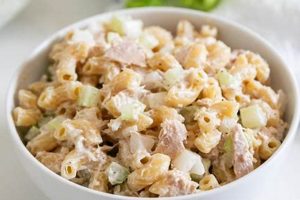
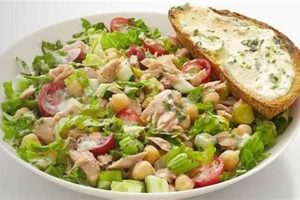
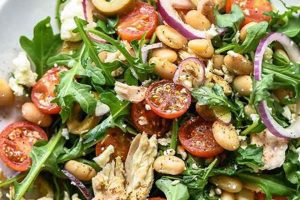
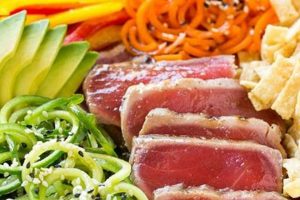
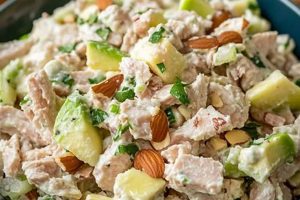
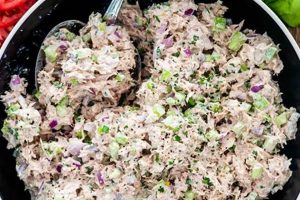
A classic deli-style tuna salad typically features simple, high-quality ingredients. Canned albacore tuna is combined with mayonnaise, finely diced celery, and onion. Flavor is often enhanced with a touch of lemon juice, salt, and black pepper. Variations may include dill, hard-boiled eggs, or a hint of Dijon mustard. This mixture is typically served chilled on bread, a roll, or as a salad plate component. The emphasis is on fresh ingredients and a balanced, savory flavor profile.
This style of tuna salad is prized for its accessibility, affordability, and quick preparation. It offers a protein-rich, satisfying meal or snack suitable for various occasions, from a quick lunch to a catered event. Its enduring popularity stems from its versatility and familiar, comforting taste. Historically, delis, particularly those in New York City, played a significant role in popularizing this simple yet flavorful dish, offering it as a readily available and affordable menu item. This accessibility contributed to its widespread adoption in home kitchens.
This discussion will further explore variations on this classic preparation, including ingredient selection, techniques for achieving optimal texture and flavor, and serving suggestions.
Tips for an Authentic Deli-Style Tuna Salad
Achieving a truly authentic deli-style tuna salad involves attention to detail and a focus on quality ingredients. These tips offer guidance for elevating this simple dish.
Tip 1: Quality Tuna Selection: Opt for high-quality canned tuna packed in water or oil. Albacore is often preferred for its delicate flavor and firm texture. Avoid pre-seasoned or flavored varieties to maintain control over the final taste.
Tip 2: Freshness of Produce: Utilize crisp, fresh celery and onion. Finely dicing these ingredients ensures even distribution and enhances the overall texture.
Tip 3: Mayonnaise Matters: A good quality mayonnaise is crucial. Consider using a classic, full-fat mayonnaise for optimal flavor and creaminess. Avoid low-fat or flavored versions, which can compromise the authentic taste.
Tip 4: Balancing Flavors: A touch of acidity brightens the flavor profile. Freshly squeezed lemon juice is preferred over bottled varieties. Salt and freshly ground black pepper should be added to taste.
Tip 5: Enhancing with Herbs and Spices: A subtle addition of fresh dill can elevate the flavor. A small amount of Dijon mustard can add a touch of tanginess. Experimentation with these ingredients can create unique flavor profiles.
Tip 6: Texture Considerations: Avoid overmixing, which can result in a mushy texture. Gently combine the ingredients until just incorporated.
Tip 7: Chilling for Optimal Flavor: Allow the prepared tuna salad to chill in the refrigerator for at least 30 minutes before serving. This allows the flavors to meld and enhances the overall experience.
Tip 8: Bread Choice While often served on rye or white bread, consider a croissant or a bed of lettuce for a lighter option.
By following these tips, one can create a tuna salad that captures the essence of a classic New York deli experience. The combination of high-quality ingredients, careful preparation, and attention to detail results in a flavorful and satisfying dish.
This exploration of tips and techniques provides a solid foundation for creating a truly exceptional tuna salad. The following section will offer serving suggestions and variations to further enhance the versatility of this classic dish.
1. High-quality Tuna

High-quality tuna plays a crucial role in a New York deli-style tuna salad recipe. The tuna selected significantly impacts the overall flavor, texture, and perceived quality of the final product. Understanding the characteristics of high-quality tuna and its impact on this classic dish is essential for achieving an authentic deli experience.
- Species and Processing:
Albacore tuna is often preferred for its delicate, mild flavor and firm texture, which holds up well when mixed with other ingredients. Solid or chunk light tuna, typically skipjack, offers a more robust flavor and a flakier texture. The canning process also matters. Tuna packed in water maintains a cleaner tuna flavor, while oil-packed varieties impart a richer taste and softer texture. Choosing tuna packed in olive oil can add a subtle, desirable nuance.
- Freshness and Quality Indicators:
Look for tuna that exhibits a firm texture and a consistent color. Avoid products with excessive liquid or a strong, fishy odor. Reputable brands often adhere to sustainable fishing practices, which contributes to both environmental responsibility and higher-quality products. Examining the “best by” date is also crucial for ensuring freshness.
- Impact on Flavor and Texture:
The quality of the tuna directly influences the overall flavor profile of the salad. High-quality tuna contributes a clean, pleasant taste, allowing the other ingredients to complement rather than mask the flavor. The texture also plays a significant role. A firm texture prevents the tuna from becoming mushy when mixed, resulting in a more appealing final product.
- Cost Considerations:
While higher-quality tuna may come at a slightly higher price point, the improvement in flavor and texture often justifies the investment. Using premium tuna elevates the overall dining experience, aligning with the expectation of quality associated with a New York deli.
Ultimately, selecting high-quality tuna significantly contributes to the overall authenticity and enjoyment of a New York deli-style tuna salad. The choice of tuna species, processing method, and attention to freshness indicators directly affect the final flavor, texture, and perceived quality of the dish. Prioritizing these factors ensures a truly satisfying and authentic culinary experience.
2. Fresh Ingredients
Fresh ingredients are fundamental to an authentic New York deli-style tuna salad. The emphasis on freshness stems from the desire to maximize flavor and create a vibrant, appealing dish. This principle influences ingredient selection, preparation techniques, and the overall sensory experience.
Freshness significantly impacts the flavor profile. Consider celery: crisp, recently harvested celery offers a bright, clean taste and satisfying crunch. Conversely, older celery can develop a bitter flavor and a limp texture, detracting from the overall quality of the salad. Similarly, freshly diced onions provide a sharp, pungent bite that complements the richness of the tuna and mayonnaise, while onions that have been stored for too long can develop an unpleasant, sulfurous odor. Using high-quality mayonnaise, preferably made with fresh eggs and oil, enhances the creamy texture and adds a subtle tang. Even seemingly minor ingredients like lemon juice contribute significantly; fresh-squeezed lemon juice offers a vibrant acidity compared to the duller taste of bottled varieties. These examples illustrate how ingredient freshness directly correlates with the final product’s flavor complexity and overall enjoyment. A New York deli prides itself on using top-tier ingredients, and this commitment to quality is evident in the final product.
Prioritizing fresh ingredients is essential for replicating the authentic New York deli tuna salad experience. This commitment to freshness not only elevates the flavor profile but also contributes to a superior texture and overall sensory appeal. The difference is readily apparent in the vibrant flavors and the satisfying textural contrast between the creamy mayonnaise, the tender tuna, and the crisp vegetables. This dedication to quality ingredients is a hallmark of the New York deli tradition and distinguishes it from pre-packaged or less carefully prepared versions.
3. Simple Preparation

The simplicity of preparation is a defining characteristic of the New York deli-style tuna salad. This streamlined approach prioritizes the inherent quality of the ingredients, allowing their flavors to shine through without unnecessary embellishment. The process typically involves combining a limited number of high-quality components: canned tuna, mayonnaise, finely chopped celery and onion, and a touch of lemon juice, salt, and pepper. This minimalist approach contrasts sharply with more complex recipes that incorporate numerous ingredients or require elaborate cooking techniques. The focus on simplicity underscores the importance of fresh, top-tier ingredients; with fewer components, the quality of each element becomes paramount.
This emphasis on simple preparation has practical implications. It allows for quick assembly, making it an ideal choice for a speedy lunch or a last-minute meal. Furthermore, the straightforward nature of the recipe reduces the potential for error, ensuring a consistently satisfactory result even for less experienced cooks. Consider the difference between a deli-style tuna salad and a more elaborate preparation involving searing tuna steaks, creating a complex vinaigrette, and assembling a carefully composed salad. The former can be prepared in minutes, while the latter requires considerably more time and effort. This ease of preparation contributes to the widespread popularity of the deli-style version, making it a staple in homes and delis alike.
In conclusion, the simplicity inherent in the New York deli-style tuna salad recipe is not a mere convenience; it is a defining characteristic that highlights the quality of the core ingredients and contributes to its enduring appeal. This straightforward approach allows for quick, reliable preparation while emphasizing fresh flavors, reinforcing its status as a classic culinary staple. Understanding this connection between simplicity and quality underscores the essence of the New York deli experience.
4. Balanced Flavor Profile

A balanced flavor profile is essential to an authentic New York deli-style tuna salad. This balance hinges on the harmonious interplay of key flavor components: the richness of the tuna, the tang of the mayonnaise, the brightness of the acid, the savory notes of the seasonings, and the textural crunch of the vegetables. Each element contributes to the overall sensory experience, and careful proportioning ensures that no single flavor dominates. Consider the impact of excessive mayonnaise; it can overwhelm the delicate flavor of the tuna, resulting in a bland, overly creamy mixture. Conversely, insufficient mayonnaise can lead to a dry, unappetizing salad. The judicious use of acid, typically lemon juice, is equally crucial. The right amount brightens the other flavors, while too much can create an excessively tart taste. The interplay of these elements distinguishes a well-crafted deli-style tuna salad from a less refined preparation. Achieving this balance is a hallmark of experienced deli chefs, demonstrating a nuanced understanding of flavor dynamics.
Practical application of this understanding involves careful ingredient selection and measured additions. Opting for high-quality tuna packed in water allows its inherent flavor to shine. Freshly squeezed lemon juice provides a more vibrant acidity than bottled alternatives. Using a good-quality mayonnaise contributes a creamy texture and a subtle tang without overwhelming the other components. Freshly ground black pepper adds a subtle bite. These choices contribute to a more complex and satisfying flavor profile. Consider a scenario where pre-minced garlic is added to the mix. While some might appreciate the added flavor, it can easily overpower the delicate balance, disrupting the classic deli-style taste. A true New York deli tuna salad avoids such additions, focusing instead on the harmonious blend of core ingredients.
In summary, achieving a balanced flavor profile is paramount in creating an authentic New York deli-style tuna salad. This balance relies on the careful interplay of core ingredients, with each element contributing to the overall sensory experience. Practical application involves judicious ingredient selection and measured additions, ensuring that no single flavor dominates. This nuanced understanding of flavor dynamics distinguishes a truly exceptional deli-style tuna salad from less refined versions. The absence of extraneous ingredients underscores the importance of this balanced profile and its significance within the broader context of New York deli cuisine.
5. Proper Chilling
Proper chilling plays a crucial role in the final quality of a New York deli-style tuna salad. Chilling allows the flavors of the individual ingredientstuna, mayonnaise, celery, onion, lemon juice, and seasoningsto meld and harmonize. This melding creates a more cohesive and complex flavor profile compared to a freshly made, unchilled mixture. The temperature also affects the texture of the salad. Chilling firms the mayonnaise and the tuna, creating a more desirable consistency. A warm tuna salad, conversely, tends to have a softer, less appealing texture, with the mayonnaise becoming looser and the tuna potentially exhibiting a less desirable, oily consistency. This textural difference significantly impacts the overall sensory experience.
Consider the difference between a tuna salad consumed immediately after preparation and one that has been chilled for at least 30 minutes. The chilled salad will exhibit a more pronounced and unified flavor profile, with the individual components blending harmoniously. The texture will also be noticeably firmer and more appealing. This improvement is not merely subjective; it reflects a chemical reality. Flavor molecules require time to interact and distribute within the mixture. Lower temperatures also slow enzymatic activity, preserving the fresh flavors of the ingredients. This understanding has practical implications for both professional deli operations and home cooks. Delis often prepare large batches of tuna salad in advance and rely on proper chilling to maintain quality and consistency. Home cooks benefit similarly, as chilling allows for make-ahead convenience without sacrificing flavor or texture.
In conclusion, proper chilling is not merely a final step but an integral component of a successful New York deli-style tuna salad recipe. It directly impacts both the flavor profile and the texture of the salad. Chilling allows flavors to meld, creating a more unified and complex taste experience. It also firms the texture, resulting in a more desirable consistency. Understanding the importance of this step, supported by both sensory experience and scientific principles, elevates tuna salad preparation from a simple assembly of ingredients to a more nuanced culinary endeavor. This attention to detail distinguishes an authentic deli-style experience from a less carefully crafted preparation.
6. Classic Serving Style

The classic serving style of a New York deli-style tuna salad is integral to the overall experience. It’s not merely a vessel for the salad; it contributes to the perceived authenticity and influences the sensory experience. Typically served on rye bread or a roll, this choice of bread provides a textural counterpoint to the creamy tuna salad and offers a slightly tangy flavor that complements the other ingredients. This combination has historical significance, reflecting the readily available bread options in New York delis. Serving a similar tuna salad on, for example, a croissant or multi-grain bread, while potentially delicious, would deviate from the classic deli experience. This seemingly simple choice of bread underscores the importance of tradition and cultural context in defining a specific culinary style. Consider a scenario: a customer orders a tuna salad sandwich in a New York deli. The expectation is not just for a flavorful tuna salad but also for the specific experience of that salad served on rye or a similar roll. This expectation reflects the established culinary norms associated with this dish.
Beyond the bread, the presentation contributes to the classic serving style. Often, the sandwich is presented simply, cut in half and wrapped in wax paper. This unpretentious presentation underscores the focus on quality ingredients and straightforward preparation. While some delis may offer variations, such as adding lettuce or tomato, the classic style emphasizes the tuna salad itself as the star. Furthermore, the portion size is typically generous, reflecting the deli tradition of providing ample, satisfying meals. This contrasts with more meticulously plated or smaller-portioned presentations found in other dining contexts. These details, often overlooked, contribute significantly to the overall perception of authenticity and align with the practical considerations of a busy deli environment.
In summary, the classic serving style of a New York deli-style tuna salad is more than just a presentation method; it is a crucial component of the overall experience. The choice of bread, the simple presentation, and the generous portion size all contribute to the perceived authenticity and influence the sensory perception. Understanding the historical and cultural context of this serving style provides a deeper appreciation for the dish and reinforces its status as a culinary classic. Deviation from these established norms, while not inherently negative, fundamentally alters the experience, underscoring the significance of these seemingly minor details in defining a specific culinary tradition.
Frequently Asked Questions
This section addresses common inquiries regarding the preparation and enjoyment of New York deli-style tuna salad.
Question 1: What type of tuna is best suited for this recipe?
While solid or chunk light tuna offers a more robust flavor, albacore tuna is generally preferred for its delicate taste and firm texture, which holds up well when mixed with other ingredients. High-quality canned tuna packed in water is recommended to maintain a clean tuna flavor.
Question 2: Can low-fat mayonnaise be used?
While low-fat mayonnaise can be used, it may compromise the authentic flavor and creamy texture characteristic of a classic deli-style tuna salad. Full-fat mayonnaise is generally recommended for optimal results.
Question 3: How finely should the celery and onion be chopped?
Celery and onion should be finely diced to ensure even distribution throughout the salad and to provide a pleasant textural contrast without overwhelming the other ingredients. Uniformly small pieces also contribute to a more refined final product.
Question 4: What can be done to prevent a watery tuna salad?
Ensuring the tuna is well-drained before mixing is crucial for preventing a watery consistency. Thoroughly draining the canned tuna removes excess liquid that can dilute the flavor and compromise the texture of the salad.
Question 5: How long can the prepared tuna salad be stored?
Prepared tuna salad should be stored in an airtight container in the refrigerator for no more than 3-5 days to maintain optimal freshness and prevent bacterial growth.
Question 6: Beyond bread, what are other suitable serving options?
While rye bread or a roll is traditional, deli-style tuna salad can also be served on a croissant, in a lettuce wrap, or as a filling for tomatoes or avocados. It can also be enjoyed as a stand-alone salad.
Careful attention to these details contributes to the creation of an authentic and satisfying New York deli-style tuna salad.
The following section will offer variations and additional tips for customizing this classic dish to individual preferences.
New York Deli Tuna Salad Recipe
This exploration of the New York deli tuna salad recipe has highlighted the essential elements that contribute to its enduring appeal. From the selection of high-quality tuna and fresh ingredients to the simplicity of preparation and the importance of a balanced flavor profile, each detail plays a crucial role in the final product. Proper chilling techniques and adherence to the classic serving style further enhance the sensory experience, connecting the contemporary preparation with its historical and cultural roots. The frequently asked questions section addressed practical considerations, offering guidance for achieving optimal results and avoiding common pitfalls.
The New York deli tuna salad recipe represents more than a simple combination of ingredients; it embodies a culinary tradition. Its enduring popularity speaks to the timeless appeal of fresh, flavorful food prepared with care and attention to detail. Further exploration of regional deli traditions and variations within this classic recipe promises to deepen culinary understanding and inspire continued appreciation for this accessible and satisfying dish.