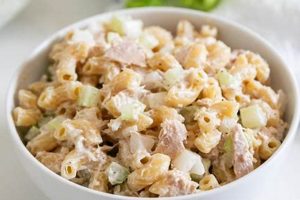
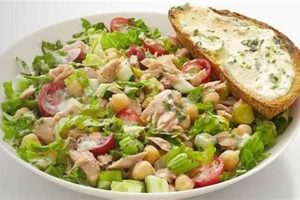
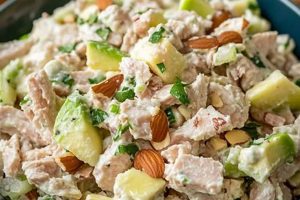
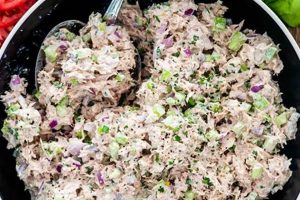
A simple preparation of this dish typically involves cooked elbow macaroni, canned tuna, mayonnaise, and seasonings like celery, onion, and relish. Variations may incorporate hard-boiled eggs, cheese, or different types of pasta. This combination offers a convenient and affordable meal option.
Quick to prepare and requiring minimal cooking skills, this type of dish is ideal for busy individuals or those new to cooking. Its affordability and adaptability make it a popular choice for budget-conscious households. Furthermore, the dish can be customized with various ingredients to suit individual preferences and dietary needs. This adaptability has contributed to its enduring presence in home kitchens for generations.
The following sections will explore specific ingredient recommendations, step-by-step preparation instructions, and suggestions for variations and serving.
Tips for a Delicious and Easy Macaroni Tuna Salad
Preparation of a superior macaroni tuna salad involves attention to detail and selection of quality ingredients. The following tips offer guidance for achieving optimal results.
Tip 1: Pasta Perfection: Cook pasta al dente for the best texture. Overcooked pasta can result in a mushy salad. Rinse the cooked pasta under cold water to stop the cooking process and cool it down quickly. This helps maintain firmness and prevents sticking.
Tip 2: Tuna Selection: Opt for high-quality canned tuna packed in water or olive oil. Drain the tuna thoroughly before adding it to the salad to prevent excess liquid.
Tip 3: Mayonnaise Matters: The choice of mayonnaise significantly impacts the flavor profile. Experiment with different types, such as classic, light, or flavored varieties, to find a preferred taste. Start with a smaller amount and add more as needed to achieve desired creaminess.
Tip 4: Enhancing Flavors: Incorporating finely chopped celery, red onion, and sweet pickle relish adds depth and complexity. Consider other additions, such as chopped hard-boiled eggs, shredded carrots, or bell peppers, for added nutrients and texture.
Tip 5: Seasoning Strategies: Seasoning is crucial. Salt, black pepper, and a touch of Dijon mustard can elevate the flavor profile. A dash of paprika or cayenne pepper can add a subtle kick.
Tip 6: Chilling Time: Allow the salad to chill in the refrigerator for at least 30 minutes before serving. This allows the flavors to meld and enhances the overall taste.
Tip 7: Serving Suggestions: Serve the salad on bread, crackers, lettuce cups, or as a side dish. Garnish with fresh herbs like parsley or dill for an added touch of freshness.
By following these tips, one can consistently create a flavorful and satisfying macaroni tuna salad experience.
These practical suggestions offer a pathway to creating a macaroni tuna salad that is both easy to prepare and enjoyable to consume.
1. Simple Ingredients
The ease of a macaroni tuna salad recipe is directly related to the simplicity of its ingredients. Recipes utilizing readily available pantry staples contribute significantly to accessibility and convenience. Canned tuna, dried pasta, and mayonnaise are commonly stocked items, reducing the need for specialized shopping trips. This accessibility lowers the barrier to entry for novice cooks or those with limited time. For example, using canned tuna eliminates the complexities of purchasing and preparing fresh fish.
Furthermore, simple ingredients often translate to quicker preparation times. Ingredients requiring minimal processing, such as pre-chopped vegetables or pre-shredded cheese, can streamline the cooking process. This efficiency is paramount for individuals seeking quick and easy meal solutions. One can further simplify the recipe by using pre-cooked pasta pouches, reducing cooking time considerably. The focus shifts from elaborate preparation to quick assembly, aligning with the “easy” aspect of the recipe.
The reliance on simple ingredients not only contributes to ease of preparation but also impacts affordability. Pantry staples like canned tuna and pasta are generally less expensive than fresh ingredients or specialized products. This cost-effectiveness makes the dish an attractive option for budget-conscious individuals or families. Moreover, the use of common ingredients contributes to reduced food waste, as leftover components can be readily incorporated into other meals. This practicality reinforces the connection between simple ingredients and an “easy” recipe, encompassing both preparation and resource management.
2. Quick Preparation
The “easy” aspect of a macaroni tuna salad recipe is intrinsically linked to its quick preparation time. This speed and efficiency are crucial for individuals seeking convenient meal solutions, especially in time-constrained scenarios. A shorter preparation time contributes directly to the overall ease and accessibility of the dish, making it a practical choice for busy weeknights or impromptu lunches.
- Minimal Cooking Time:
A primary factor contributing to the quick preparation is the minimal cooking required. Pasta, a core ingredient, typically cooks in under 10 minutes. Canned tuna requires no cooking at all, further streamlining the process. This minimal reliance on active cooking time allows for multitasking in the kitchen or completing other tasks while the dish comes together. For example, while the pasta cooks, one can simultaneously chop vegetables or prepare other meal components.
- Simple Assembly:
Once the pasta is cooked and cooled, the remaining steps involve simple assembly. Combining the ingredients tuna, mayonnaise, and chosen seasonings requires minimal effort. This straightforward process eliminates the need for complex techniques or specialized equipment, reducing the overall preparation time. This ease of assembly makes the dish particularly appealing for novice cooks or individuals with limited kitchen experience.
- Advance Preparation:
Macaroni tuna salad lends itself well to advance preparation, further enhancing its convenience. The entire salad can be assembled a day or two in advance and stored in the refrigerator. This makes it an ideal option for meal prepping or packing lunches. This flexibility contributes to time management, eliminating the need for daily meal preparation. For instance, preparing a large batch on the weekend can provide convenient lunches throughout the workweek.
- Adaptability to Variations:
Even with variations, the preparation time remains relatively short. Adding different vegetables, spices, or other ingredients generally does not significantly increase the overall preparation time. This adaptability allows for customization without sacrificing convenience. For example, incorporating chopped celery, red onion, or hard-boiled eggs requires minimal additional effort while enhancing the nutritional value and flavor profile.
The convergence of these factors minimal cooking time, simple assembly, advance preparation options, and adaptability to variations solidifies the connection between quick preparation and the “easy” nature of a macaroni tuna salad recipe. This speed and efficiency contribute significantly to the dish’s appeal as a convenient and accessible meal option.
3. Budget-Friendly

Affordability is a key factor contributing to the enduring popularity of macaroni tuna salad. Its budget-friendly nature makes it an accessible and appealing meal option, particularly for those seeking cost-effective meal solutions without compromising on taste or nutrition. Examining the components of this affordability provides a deeper understanding of its relevance within the context of an “easy” recipe.
- Cost-Effective Core Ingredients:
The primary ingredients canned tuna, pasta, and mayonnaise are typically inexpensive and readily available. Canned tuna offers a protein source significantly more affordable than fresh fish. Dried pasta is a pantry staple known for its low cost and long shelf life. Mayonnaise, while varying in price, remains a relatively inexpensive condiment. The affordability of these core components establishes a foundation for an economical meal.
- Stretching Ingredients with Versatile Additions:
The recipe’s adaptability allows for incorporating less expensive fillers and additions. Chopped celery, onions, and relish not only enhance flavor but also stretch the volume of the salad, maximizing value. These additions contribute to both nutritional value and cost-effectiveness. Using less tuna and incorporating more vegetables can further reduce the overall cost while increasing the nutritional content.
- Reduced Food Waste:
Macaroni tuna salad minimizes food waste through its adaptability and utilization of common pantry staples. Leftover cooked pasta or vegetables can be easily incorporated, reducing spoilage. The versatility of the recipe allows for adjustments based on available ingredients, further minimizing waste. This resourcefulness contributes to the overall affordability of the dish by maximizing the use of existing ingredients.
- Minimal Equipment Requirements:
Preparing macaroni tuna salad requires minimal specialized equipment. A pot for boiling pasta, a bowl for mixing, and basic utensils are generally sufficient. This lack of reliance on specialized tools reduces upfront costs and makes the recipe accessible to a wider range of individuals, regardless of their kitchen resources. This simplicity aligns with the “easy” aspect by minimizing both financial investment and preparation complexity.
The confluence of these factors affordable core ingredients, the ability to stretch ingredients with versatile additions, reduced food waste, and minimal equipment requirements underscores the budget-friendly nature of macaroni tuna salad. This affordability, combined with its ease of preparation, solidifies its position as an accessible and practical meal solution for individuals and families seeking economical and delicious meals.
4. Customizable Flavors
The ease of customizing flavors contributes significantly to the enduring appeal of macaroni tuna salad as a simple and versatile dish. This adaptability allows individuals to tailor the salad to specific taste preferences, dietary needs, and available ingredients. The inherent simplicity of the base recipepasta, tuna, and mayonnaiseprovides a neutral canvas for a wide range of flavor enhancements, thereby aligning with the “easy” aspect by offering flexibility without complexity. Customization does not necessitate advanced culinary skills or specialized ingredients, further reinforcing the accessibility of the dish.
Several factors contribute to this ease of customization. Firstly, the neutral flavor profile of the core ingredients readily accepts a variety of additions. Incorporating ingredients like chopped vegetables (celery, onions, bell peppers), herbs (dill, parsley, chives), spices (paprika, garlic powder, cayenne pepper), or other flavor enhancers (relishes, pickles, olives) can significantly alter the final taste without requiring complex techniques. For example, adding diced jalapeos creates a spicy variation, while incorporating chopped grapes and walnuts offers a sweeter, more textural profile. Secondly, the adaptable nature of the recipe accommodates substitutions based on dietary restrictions or preferences. Greek yogurt can replace mayonnaise for a lighter, tangier option. Gluten-free pasta can be substituted for traditional wheat-based pasta. These variations demonstrate the recipe’s flexibility while maintaining its ease of preparation.
The practical significance of customizable flavors extends beyond individual preferences. This adaptability contributes to reduced food waste by allowing for the incorporation of leftover ingredients. For example, roasted vegetables from a previous meal can be added to the salad, minimizing waste and adding a unique flavor dimension. Furthermore, customizable flavors increase the frequency with which the dish can be enjoyed without palate fatigue. Regularly altering the flavor profile prevents monotony and ensures continued enjoyment, making it a sustainable option for meal planning. This customization empowers individuals to create a dish that aligns perfectly with their needs and preferences, reinforcing the connection between “easy” preparation and personalized flavor experiences.
5. Versatile Serving Options
The versatility of serving options contributes significantly to the “easy” aspect of a macaroni tuna salad recipe. This adaptability expands the dish’s utility beyond a simple side dish, transforming it into a key component of various meals and snacks. This versatility stems from the salad’s adaptable texture and flavor profile, which seamlessly integrates into different culinary contexts. Consequently, macaroni tuna salad becomes a convenient and practical solution for diverse meal planning needs, aligning with the inherent simplicity and ease associated with the recipe. This flexibility reduces the need for elaborate meal preparation, further reinforcing the connection between “easy” and versatile serving options.
Several examples illustrate this versatility. Classically, macaroni tuna salad serves as a sandwich filling, offering a quick and satisfying lunch or snack. Its creamy texture and savory flavor pair well with various bread types, from simple white bread to crusty rolls or croissants. Alternatively, the salad can be served atop lettuce cups for a lighter, low-carbohydrate option. This adaptability caters to different dietary preferences without compromising on flavor or ease of preparation. Furthermore, macaroni tuna salad can function as a standalone salad, accompanied by crackers or crudits. This versatility extends to more substantial meals, serving as a filling for baked potatoes or tomatoes. These varied applications highlight the dish’s adaptability, transforming it from a simple salad into a multi-faceted meal component. For larger gatherings, it can be presented as a dip with tortilla chips or vegetables, demonstrating its adaptability to different social contexts.
The practical significance of this versatility lies in its contribution to simplified meal planning and reduced food waste. The ability to utilize macaroni tuna salad in various ways reduces the need for multiple distinct recipes throughout the week. Leftovers can be repurposed creatively, minimizing waste and maximizing resourcefulness. Moreover, the adaptability of the salad to different serving formats enhances its appeal to a wider range of palates and dietary needs. This flexibility contributes to the dish’s overall “easiness” by providing a simple yet versatile solution for diverse culinary scenarios. This adaptability, combined with the inherent simplicity of the recipe, positions macaroni tuna salad as an accessible and convenient option for individuals and families seeking efficient and flavorful meal solutions.
6. Excellent for Meals/Snacks
The suitability of macaroni tuna salad for both meals and snacks underscores the “easy” aspect of its preparation and consumption. This dual functionality stems from the dish’s inherent simplicity, nutritional balance, and adaptable portioning. Its ease of preparation makes it a convenient option for quick meals or snacks, while its nutritional profile offers a more substantial alternative to less healthy processed snacks. This exploration delves into the specific facets that contribute to macaroni tuna salad’s suitability for both meals and snacks.
- Nutritional Completeness:
Macaroni tuna salad offers a reasonable balance of macronutrients, making it a suitable component of a complete meal. Tuna provides protein, pasta offers carbohydrates, and mayonnaise contributes fats. This balance can be further enhanced with the addition of vegetables, increasing the nutritional density and aligning with dietary guidelines. For example, incorporating chopped celery and bell peppers adds fiber and vitamins. This nutritional profile allows the salad to serve as a satisfying and relatively complete meal option.
- Portion Adaptability:
The ease with which macaroni tuna salad can be portioned contributes to its dual role as both a meal and a snack. Smaller portions serve as a light snack, while larger portions can constitute a full meal. This flexibility allows for easy adaptation to different appetite levels and dietary needs. This adaptability is especially practical for portion control and managing calorie intake. For example, a small scoop of salad with crackers can be a satisfying afternoon snack, while a larger portion served with a side salad can constitute a complete lunch.
- Convenience and Speed of Preparation:
The quick preparation time of macaroni tuna salad makes it an ideal option for both impromptu meals and snacks. Minimal cooking and assembly time mean a satisfying meal or snack can be ready in minutes. This convenience is crucial for busy schedules or when time is limited. The ease of preparation also reduces the reliance on less healthy, processed convenience foods. For example, a quick macaroni tuna salad can be prepared and consumed more quickly than ordering takeout or preparing a more complex meal.
- Portability and Storage:
Macaroni tuna salad’s portability and storage further enhance its suitability for meals and snacks, especially outside the home. It travels well in containers, making it a convenient option for packed lunches, picnics, or road trips. Its ability to be stored in the refrigerator for several days also allows for meal prepping and advanced snack preparation. This portability and ease of storage enhance convenience and reduce the need for on-the-go meal purchases. For example, packing a portion of macaroni tuna salad for lunch avoids the need for vending machine snacks or expensive cafe purchases.
The combination of nutritional completeness, portion adaptability, speed of preparation, and portability and storage solidifies macaroni tuna salad’s position as an excellent option for both meals and snacks. These factors, combined with the inherent “easy” nature of the recipe, make it a versatile and practical solution for various dietary needs and time constraints, further emphasizing its appeal as a convenient and satisfying food choice.
7. Minimal Cooking Skills
The accessibility of macaroni tuna salad recipes hinges significantly on requiring minimal cooking skills. This characteristic broadens the potential audience, enabling individuals with limited culinary experience to create a satisfying and nutritious meal. The simplicity of the recipe reduces the barrier to entry for novice cooks, contributing directly to its classification as “easy.” Boiling pasta, opening a can of tuna, and mixing ingredients represent the core skills involved, all of which require minimal technical expertise. This ease empowers individuals lacking confidence in their cooking abilities to prepare a meal successfully, fostering a sense of culinary accomplishment. Furthermore, the limited skill requirement reduces the likelihood of culinary missteps, ensuring a consistently positive outcome, a crucial factor contributing to the perceived “easiness” of the recipe.
The practical implications of this low skill requirement are substantial. For young adults living independently for the first time, macaroni tuna salad offers a nutritious and accessible entry point into cooking. Time-constrained individuals, regardless of their culinary experience, can prepare a quick and satisfying meal without elaborate techniques. Furthermore, the simplicity of the recipe allows for greater participation in meal preparation, engaging children or individuals with limited mobility in a shared culinary activity. For example, stirring ingredients or assembling sandwiches can become a collaborative and accessible task, promoting inclusivity in the kitchen.
In conclusion, the minimal cooking skills required for macaroni tuna salad contribute significantly to its “easy” classification. This simplicity expands accessibility, empowers novice cooks, and facilitates culinary inclusion. The practical implications of this characteristic extend beyond individual meal preparation, impacting family dynamics and promoting a sense of culinary accomplishment for a wide range of individuals. This accessibility not only simplifies meal preparation but also fosters a positive association with cooking, encouraging further exploration in the kitchen.
Frequently Asked Questions
This section addresses common inquiries regarding the preparation and variations of easy macaroni tuna salad recipes.
Question 1: What type of pasta is best suited for macaroni tuna salad?
Elbow macaroni is the traditional choice, but other small pasta shapes like shells, rotini, or ditalini work well. The key is to select a pasta that holds its shape after cooking and mixes well with the other ingredients.
Question 2: Can low-fat or fat-free mayonnaise be used?
Lower-fat mayonnaise options can be used, but they may affect the overall flavor and creaminess of the salad. Adjustments to seasoning may be necessary to compensate for the difference in taste.
Question 3: How long can macaroni tuna salad be stored in the refrigerator?
Properly stored in an airtight container, the salad should last for 3-5 days in the refrigerator. Always check for spoilage before consuming.
Question 4: How can one reduce the sodium content in the salad?
Opting for low-sodium canned tuna and reducing or omitting added salt can help lower the sodium content. Rinsing the canned tuna under cold water can also remove some excess sodium.
Question 5: Can other proteins be substituted for tuna?
While tuna is traditional, other protein sources like shredded chicken, salmon, or hard-boiled eggs can be substituted to create variations on the classic recipe.
Question 6: What are some healthy additions to boost the nutritional value?
Incorporating chopped vegetables such as celery, bell peppers, onions, and carrots adds nutrients and fiber. Adding chopped apples or grapes can introduce a touch of sweetness and further enhance nutritional content.
Addressing these common questions provides a comprehensive understanding of preparing and enjoying an easy macaroni tuna salad. Careful consideration of these points ensures a successful and satisfying culinary experience.
The following section will explore variations on the classic macaroni tuna salad recipe.
Macaroni Tuna Salad Recipe Easy
Exploration of the “macaroni tuna salad recipe easy” keyword reveals a dish characterized by simplicity, affordability, and adaptability. Minimal cooking skills, readily available ingredients, and quick preparation times contribute to its accessibility. The customizable nature of the recipe allows for flavor adjustments based on individual preferences and dietary needs. Versatile serving options, ranging from sandwiches to salads, expand its utility beyond a simple side dish. Its suitability for both meals and snacks further enhances its practical appeal.
Macaroni tuna salad stands as a testament to the enduring appeal of simple, adaptable recipes. Its continued presence in kitchens worldwide underscores its value as a convenient, affordable, and nutritious meal option. Further exploration of variations and flavor combinations promises to enhance the culinary experience and solidify its role as a timeless classic.