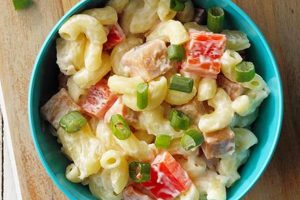
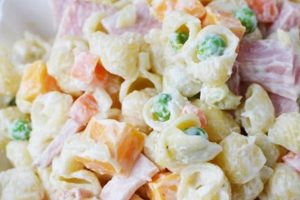
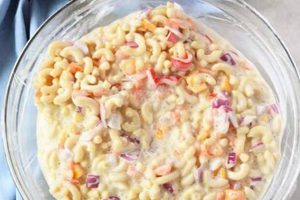
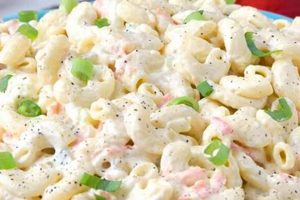
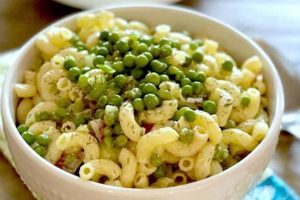
A chilled pasta salad typically features cooked elbow macaroni, combined with mayonnaise and various other ingredients. The addition of fresh dill introduces a bright, herbaceous flavor that complements the creamy base and other common additions such as celery, onion, and sometimes hard-boiled eggs or pickles. Variations exist, incorporating different vegetables, proteins, and seasonings to create unique flavor profiles.
This dish offers a refreshing and convenient meal option, particularly suited for warm weather or potlucks. Its adaptable nature allows for customization to individual preferences and dietary needs, making it a versatile choice. Historically, pasta salads gained popularity in the mid-20th century as refrigeration became more common, allowing for safe consumption of mayonnaise-based dishes. The use of fresh herbs like dill adds a sophisticated touch, elevating the dish beyond a simple combination of ingredients.
This exploration will delve into specific ingredient combinations, offer guidance on preparation techniques, and provide suggestions for variations to suit different tastes and occasions. From classic preparations to innovative twists, the potential of this culinary creation will be thoroughly examined.
Tips for Preparing Macaroni Salad with Dill
Achieving optimal flavor and texture requires attention to detail throughout the preparation process. The following tips offer guidance for creating a successful and satisfying dish.
Tip 1: Cook the Macaroni Properly: Macaroni should be cooked al dente for optimal texture in the salad. Overcooked pasta will become mushy and less appealing.
Tip 2: Chill Ingredients Thoroughly: Using chilled ingredients, especially the macaroni, mayonnaise, and vegetables, helps maintain food safety and prevents the salad from becoming watery.
Tip 3: Use Fresh Dill: Fresh dill provides the best flavor and aroma. Dried dill can be substituted, but use approximately one-third the amount.
Tip 4: Balance Flavors: Carefully balance the tanginess of the mayonnaise and other acidic ingredients (like vinegar or pickles) with the sweetness of any added vegetables or seasonings.
Tip 5: Add Dill at the End: To preserve its fresh flavor and vibrant color, incorporate the chopped dill just before serving the salad. This also prevents the dill from wilting if added too early.
Tip 6: Don’t Overmix: Overmixing can damage the delicate ingredients and result in a less appealing texture. Gently combine the ingredients until evenly distributed.
Tip 7: Taste and Adjust Seasoning: Before serving, taste the salad and adjust the seasoning as needed. Salt, pepper, and a touch of lemon juice or vinegar can enhance the overall flavor profile.
By following these guidelines, one can create a macaroni salad with dill that is both flavorful and visually appealing. Attention to these details ensures a satisfying culinary experience.
These practical tips provide a foundation for successful preparation. The following section will offer concluding remarks and further resources for exploration.
1. Elbow Macaroni

Elbow macaroni’s shape and texture are integral to a successful macaroni salad with dill. The curved tubes offer ample surface area for capturing the creamy dressing and distributing flavor throughout the salad. Their small size allows for easy incorporation with other ingredients, creating a harmonious blend of textures and tastes. Furthermore, the hollow shape of elbow macaroni readily absorbs the flavors of the dressing and other ingredients, ensuring a cohesive and flavorful dish. For instance, compared to longer pasta shapes like spaghetti or linguine, which can become tangled and difficult to manage in a salad, elbow macaroni’s compact form contributes to a more manageable and enjoyable eating experience. This characteristic also distinguishes it from smaller pasta shapes like orzo, which, while suitable for salads, offer a different textural experience.
The use of elbow macaroni influences not only the flavor but also the overall presentation of the salad. Its consistent size and shape contribute to a visually appealing dish. The ability of elbow macaroni to hold its shape after cooking ensures that the salad maintains its structure, even after being chilled and mixed with other ingredients. Unlike other pasta shapes that may become soft or break apart, elbow macaroni retains its form, contributing to a visually appealing and texturally satisfying salad. Consider a macaroni salad prepared with overcooked, mushy pasta; the overall appearance would be less desirable and the texture unpleasant, highlighting the importance of selecting the right pasta and cooking it correctly.
Selecting and properly cooking elbow macaroni is crucial for achieving the desired outcome in a macaroni salad with dill. Overcooked macaroni can result in a mushy texture, while undercooked pasta can be too firm. Choosing high-quality pasta made from durum wheat ensures optimal texture and flavor absorption. Following recommended cooking times and quickly chilling the cooked pasta preserves its shape and prevents it from becoming sticky. This careful attention to the pasta selection and preparation contributes significantly to the overall success of the dish.
2. Fresh Dill
Fresh dill contributes a unique flavor profile crucial to a successful macaroni salad. Its bright, slightly tangy, and anise-like notes complement the creamy mayonnaise base and other common ingredients. Dried dill can be a substitute, but the fresh herb offers a superior aroma and taste, elevating the salad beyond a simple combination of ingredients. The volatile oils responsible for dill’s characteristic flavor are more pronounced in the fresh herb, dissipating over time in dried forms. For example, a macaroni salad featuring fresh dill will possess a vibrant, herbaceous aroma, while one made with dried dill may lack the same intensity.
Dill’s delicate, feathery fronds also contribute a visual appeal to the salad. Its vibrant green color contrasts with the other ingredients, creating a visually appealing dish. Incorporating fresh dill just before serving maximizes its visual impact and prevents wilting or discoloration. Consider a salad prepared with fresh dill added several hours in advance; the dill may lose its vibrant green color and become less visually appealing. Furthermore, the delicate fronds can become bruised and less attractive if mixed too vigorously or too far in advance.
Understanding the role of fresh dill enhances appreciation for its contribution to macaroni salad. Its distinct flavor and visual appeal distinguish this herb from other potential additions, making it a defining element in the overall sensory experience. Challenges may include sourcing fresh, high-quality dill, particularly outside of its growing season. However, the payoff in flavor and presentation justifies the effort. The subtle nuances fresh dill provides highlight the importance of ingredient selection in achieving culinary excellence. This attention to detail elevates the dish from a simple side to a more complex and satisfying culinary creation.
3. Mayonnaise base
Mayonnaise serves as the foundational binding agent and flavor component in macaroni salad with dill. Its creamy texture coats the pasta and other ingredients, creating a cohesive dish while contributing a rich, tangy flavor that complements the herbaceous dill. The quality and type of mayonnaise significantly influence the overall taste and texture of the salad. Further exploration reveals the multifaceted role of this crucial ingredient.
- Texture and Cohesion
Mayonnaise provides the creamy texture characteristic of macaroni salad. Its emulsification of oil and egg yolks creates a smooth, viscous consistency that binds the ingredients together. Without mayonnaise, the salad would be dry and lack the desired creaminess. For instance, substituting a vinaigrette for mayonnaise would result in a drastically different texture and flavor profile. The viscosity of mayonnaise also helps suspend other ingredients, distributing them evenly throughout the salad. This ensures each bite offers a balanced combination of flavors and textures.
- Flavor Balance
Mayonnaise contributes a tangy, slightly acidic flavor that balances the other ingredients in the salad. This tanginess complements the fresh, herbaceous notes of dill, preventing the salad from becoming overly sweet or bland. The richness of mayonnaise also provides a backdrop for the other flavors to shine. Consider a macaroni salad made with low-fat mayonnaise; the reduced fat content often results in a thinner consistency and less robust flavor, potentially impacting the overall balance of the dish. Furthermore, the subtle eggy flavor of mayonnaise enhances the overall savory profile of the salad.
- Customization and Variation
Mayonnaise offers a versatile base that allows for customization. Adding ingredients like Dijon mustard, lemon juice, or garlic to the mayonnaise creates unique flavor profiles. For example, incorporating a spoonful of Dijon mustard adds a sharp, tangy dimension, while a squeeze of lemon juice brightens the flavor. This adaptability allows for endless variations, catering to individual preferences. Furthermore, different types of mayonnaise, such as olive oil-based or avocado oil-based mayonnaise, can be used to create distinct flavor profiles and address dietary restrictions.
- Preservation and Food Safety
Mayonnaise plays a role in preserving the freshness of the salad. Its coating action creates a barrier that helps prevent the other ingredients from drying out or oxidizing. Proper refrigeration of mayonnaise-based salads is essential for preventing bacterial growth. Leaving a mayonnaise-based salad at room temperature for extended periods can compromise food safety, highlighting the importance of proper storage. Additionally, the acidic nature of mayonnaise contributes to a slightly lower pH, which can inhibit the growth of certain microorganisms.
The mayonnaise base is integral to a successful macaroni salad with dill, impacting not only the texture and flavor but also the overall presentation and preservation. Careful selection and proper handling of mayonnaise contribute significantly to the final product. Understanding its multifaceted role empowers culinary exploration and ensures a satisfying dining experience. From its cohesive properties to its flavor balancing capabilities, mayonnaise forms the foundation upon which the other ingredients build, culminating in a harmonious blend of tastes and textures.
4. Complementary Vegetables

Complementary vegetables contribute essential texture, flavor, and visual appeal to macaroni salad with dill. Their careful selection and preparation enhance the overall sensory experience, transforming a simple pasta salad into a multifaceted culinary creation. The following facets explore the crucial roles vegetables play in this dish.
- Textural Contrast
Crisp vegetables, such as celery, bell peppers, and red onion, provide a textural counterpoint to the soft macaroni and creamy mayonnaise. This contrast prevents the salad from becoming monotonous and adds an element of freshness. Imagine a macaroni salad without these crisp elements; the texture might feel heavy and less appealing. The snap of a celery stalk or the crunch of a bell pepper elevates the eating experience, creating a dynamic interplay of textures.
- Flavor Enhancement
Vegetables contribute a range of flavors that complement the dill and mayonnaise. The subtle sweetness of chopped carrots or the sharp bite of red onion adds depth and complexity. These flavors interact with the herbaceous dill and tangy mayonnaise, creating a balanced and nuanced flavor profile. Consider the addition of chopped pickles or olives; their briny, salty notes provide a counterpoint to the other flavors, further enhancing the overall taste experience.
- Visual Appeal
The vibrant colors of various vegetables enhance the visual appeal of the salad. The bright red of bell peppers, the deep green of celery, and the sunny yellow of corn create a visually stimulating dish. This visual appeal increases the overall enjoyment of the meal. A monochromatic salad, while potentially flavorful, might lack the visual interest and excitement provided by a colorful array of vegetables.
- Nutritional Value
Incorporating a variety of vegetables increases the nutritional value of the macaroni salad. Vegetables provide essential vitamins, minerals, and fiber, contributing to a more balanced and healthful meal. This nutritional boost transforms the salad from a simple indulgence into a more nutritious option. For example, adding chopped broccoli or spinach increases the vitamin and mineral content while adding a subtle vegetal flavor that complements the other ingredients.
The strategic inclusion of complementary vegetables elevates macaroni salad with dill from a basic dish to a more complex and satisfying culinary experience. Their contributions to texture, flavor, visual appeal, and nutritional value highlight the importance of thoughtful ingredient selection. The interplay of these elements transforms a simple combination of ingredients into a well-rounded and enjoyable meal, demonstrating the power of complementary components in culinary creation.
5. Balanced Seasoning
Balanced seasoning is crucial for a successful macaroni salad recipe with dill. It elevates the dish beyond simple ingredients, transforming it into a harmonious blend of flavors. Seasoning enhances the inherent flavors of the components, creating a cohesive and satisfying culinary experience. The interplay of salty, acidic, sweet, and herbaceous notes determines the overall taste profile. For instance, the tanginess of mayonnaise requires a counterbalancing element, often achieved through the addition of salt and a touch of sweetness. The dill, with its bright, anise-like flavor, necessitates careful seasoning to prevent it from overpowering the other components.
Consider a macaroni salad where the seasoning is unbalanced overly salty or excessively sweet. The individual flavors of the dill, mayonnaise, and vegetables become muddled, resulting in a less enjoyable experience. Conversely, a properly seasoned salad allows each ingredient to shine while contributing to the overall harmony of the dish. A touch of black pepper adds subtle warmth, while a pinch of sugar can enhance the sweetness of the vegetables and balance the acidity of the mayonnaise. Achieving this balance requires careful consideration of the other ingredients and adjustments based on individual preferences. For example, if using sweeter vegetables like carrots or red onions, less added sugar may be necessary. If incorporating briny ingredients like pickles or olives, the salt level should be adjusted accordingly.
Mastery of balanced seasoning demonstrates culinary expertise, elevating the macaroni salad with dill from a simple side dish to a carefully crafted culinary creation. This understanding allows for adaptation and improvisation, ensuring the salad complements a variety of meals and palates. While recipes provide a starting point, the ability to adjust seasoning based on the specific ingredients and desired outcome is essential. This skill translates beyond a single recipe, contributing to a deeper understanding of flavor principles applicable to a wide range of culinary endeavors. The nuanced interplay of flavors in a well-seasoned macaroni salad exemplifies the power of balanced seasoning in transforming simple ingredients into a complex and satisfying dish.
6. Proper Chilling
Proper chilling is essential for food safety and optimal texture in macaroni salad with dill. Mayonnaise-based salads are susceptible to bacterial growth at room temperature, necessitating careful temperature control. Chilling also influences the final texture of the dish, impacting the overall enjoyment. This exploration delves into the critical facets of proper chilling within the context of this specific salad.
- Food Safety
Chilling inhibits bacterial growth, a critical concern with mayonnaise-based salads. Harmful bacteria, such as Salmonella, can proliferate rapidly at room temperature, posing health risks. Promptly chilling the salad after preparation minimizes this risk. Leaving a macaroni salad unrefrigerated for an extended period, particularly in warm environments, can create a breeding ground for bacteria, potentially leading to foodborne illness. Proper chilling safeguards against such risks, ensuring the salad remains safe for consumption.
- Texture Preservation
Chilling helps maintain the desired texture of the macaroni and other ingredients. Warm or room-temperature macaroni absorbs mayonnaise more readily, resulting in a softer, potentially mushy texture. Chilling the cooked macaroni quickly before combining it with other ingredients helps preserve its firmness. Compare a salad made with room-temperature macaroni to one made with chilled macaroni; the former may have a less appealing, softer texture, while the latter retains a desirable firmness. This difference highlights the importance of temperature control in preserving textural integrity.
- Flavor Enhancement
Chilling allows the flavors of the various ingredients to meld and develop. The cool temperature enhances the perception of freshness, particularly with the herbaceous dill. Serving the salad chilled intensifies the bright, clean flavors of the dill and other vegetables. A warm macaroni salad might present muted flavors, whereas a chilled salad offers a more pronounced and refreshing taste experience. This difference underscores the influence of temperature on flavor perception.
- Presentation
A properly chilled macaroni salad presents more attractively. The cool temperature helps maintain the vibrant colors of the vegetables and prevents the mayonnaise from becoming oily or separated. A chilled salad appears fresh and inviting, enhancing the overall dining experience. Consider a salad left at room temperature; the mayonnaise may appear separated, and the vegetables might lose their vibrancy, detracting from the visual appeal. Proper chilling preserves the aesthetic integrity of the dish.
Proper chilling is integral to a successful macaroni salad with dill, influencing not only food safety but also texture, flavor, and presentation. Understanding the multifaceted role of temperature control elevates this dish beyond a simple combination of ingredients. Careful attention to chilling practices ensures a safe, flavorful, and visually appealing culinary experience, highlighting the interconnectedness of temperature and culinary excellence.
7. Gentle Mixing

Gentle mixing plays a crucial role in the final quality of macaroni salad with dill. Aggressive mixing can damage the delicate ingredients, resulting in a less appealing texture and appearance. Macaroni, particularly when cooked al dente, can break apart under excessive force. The delicate fronds of fresh dill can also become bruised and less visually appealing. Overmixing the mayonnaise-based dressing can cause it to thin out, leading to a watery salad. Consider the difference between a gently folded salad where ingredients retain their shape and a vigorously mixed salad where the macaroni is fragmented, the dill is wilted, and the dressing is thin. The former presents a visually appealing and texturally satisfying dish, while the latter appears less appetizing and lacks textural integrity.
The goal is to combine the ingredients evenly while preserving their individual characteristics. A light tossing motion with a large spoon or spatula is generally sufficient. This ensures the dressing coats the macaroni and other ingredients without applying excessive force. Imagine adding the dressing and then simply stirring vigorously; the macaroni may break down, and the vegetables could become crushed, compromising both texture and visual appeal. The gentle mixing technique allows each element, from the dill’s delicate fronds to the crisp vegetables, to retain its distinct identity while contributing to the overall composition.
Understanding the impact of mixing technique on the final presentation and texture of macaroni salad with dill highlights the importance of seemingly minor details in culinary practice. This attention to detail distinguishes a carefully crafted salad from a hastily assembled one. The practical significance lies in the ability to achieve a desirable outcomea salad with distinct textures, vibrant colors, and an appetizing appearancethrough mindful preparation. This principle extends beyond macaroni salad, applying to a wide range of dishes where preserving the integrity of individual ingredients is paramount.
Frequently Asked Questions
This section addresses common inquiries regarding macaroni salad recipes featuring dill, offering concise and informative responses.
Question 1: Can dried dill be substituted for fresh dill?
While dried dill can be used as a substitute, fresh dill is recommended for optimal flavor and aroma. Dried dill tends to have a less pronounced flavor profile. If using dried dill, reduce the quantity to approximately one-third of the amount specified for fresh dill.
Question 2: How long can macaroni salad with dill be stored in the refrigerator?
Properly stored in an airtight container, macaroni salad with dill can be refrigerated for up to three to five days. Beyond this timeframe, the quality and safety of the salad may be compromised. Always ensure the salad is stored at or below 40F (4C).
Question 3: Can other herbs be used in addition to or instead of dill?
Other fresh herbs, such as parsley, chives, or tarragon, can complement or replace dill. Experimentation with different herb combinations can create unique and flavorful variations. Consider flavor profiles and potential interactions when selecting alternative herbs.
Question 4: What types of pasta can be used besides elbow macaroni?
Other small pasta shapes, such as ditalini, rotini, or shells, can be used as alternatives to elbow macaroni. The choice of pasta shape can influence the overall texture and presentation of the salad. Select a pasta shape that complements the other ingredients and holds its shape well after cooking.
Question 5: How can the creaminess of the salad be adjusted?
The creaminess can be adjusted by adding more or less mayonnaise. For a lighter salad, use less mayonnaise or incorporate a small amount of plain yogurt or sour cream. For a richer salad, increase the amount of mayonnaise or add a dollop of crme frache.
Question 6: Can this salad be made ahead of time for events like potlucks?
Macaroni salad with dill is well-suited for potlucks and can be made a day or two in advance. Store the salad in an airtight container in the refrigerator until ready to serve. Adding the fresh dill just before serving preserves its vibrant color and flavor.
Understanding these common queries provides a comprehensive foundation for preparing and enjoying macaroni salad with dill. Attention to detail, from ingredient selection to proper storage, contributes to a successful and satisfying culinary outcome.
The following section will offer a concluding summary and suggestions for further exploration.
Conclusion
This exploration has provided a comprehensive overview of the essential elements contributing to a successful macaroni salad enhanced with the distinct flavor of dill. From the selection and preparation of elbow macaroni to the crucial role of fresh dill, each component contributes to the final product. The importance of a balanced mayonnaise base, the textural and visual appeal added by complementary vegetables, the nuanced art of seasoning, and the necessity of proper chilling and gentle mixing techniques have been thoroughly examined. These factors collectively determine the overall quality and enjoyment of the dish. Addressing common inquiries further solidifies understanding and empowers culinary experimentation.
Culinary creations, even seemingly simple ones, offer opportunities for nuanced exploration and appreciation of individual ingredients. Macaroni salad, elevated by the addition of fresh dill, exemplifies this principle. Careful consideration of each element, from pasta selection to seasoning, transforms a basic side dish into a carefully orchestrated culinary experience. The potential for customization and adaptation allows for endless variations, ensuring continued enjoyment and exploration within this culinary framework. The pursuit of culinary excellence lies in understanding the subtle interplay of ingredients and techniques, transforming simple components into something truly exceptional.