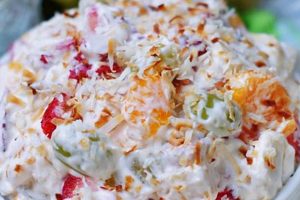
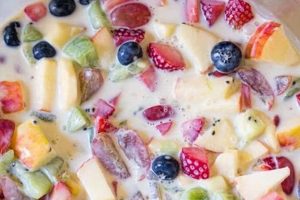
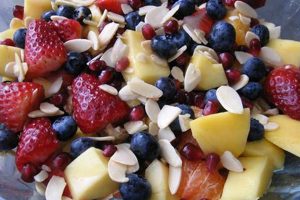
A Filipino fruit salad, distinct for its use of local and readily available fruits combined with a sweet, creamy dressing, often incorporates condensed milk or cream. Common ingredients include mangoes, bananas, papayas, pineapples, and sometimes nata de coco or kaong. Variations may involve the addition of cheese, fruit cocktails, or other regional specialties. A key element is the balance between the sweetness of the dressing and the tartness or acidity of certain fruits.
This dish holds cultural significance in the Philippines, often served during special occasions, holidays, and fiestas. Its refreshing qualities make it a popular choice in the tropical climate. The affordability and adaptability of the recipe, allowing for substitutions based on seasonal availability and personal preferences, contribute to its widespread appeal. Historically, the fusion of indigenous fruits with Western influences, like canned fruit cocktail and cream, shaped the contemporary Filipino fruit salad.
Further exploration of this culinary delight will encompass regional variations, preparation techniques, nutritional benefits, and tips for achieving optimal flavor combinations and textures. A deeper dive into the historical and cultural context surrounding Filipino fruit salad will enrich the understanding of its enduring popularity.
Tips for Creating a Delicious Filipino Fruit Salad
Achieving a well-balanced and flavorful Filipino fruit salad requires attention to detail and an understanding of complementary flavors and textures. The following tips offer guidance for optimal results.
Tip 1: Fruit Selection and Ripeness: Select fruits at peak ripeness for optimal sweetness and flavor. Avoid overripe fruits, as they can become mushy and compromise the salad’s texture.
Tip 2: Balancing Flavors: Incorporate a mix of sweet and slightly tart fruits. The sweetness of mangoes and bananas complements the acidity of pineapples and oranges.
Tip 3: Dressing Consistency: The dressing should be thick enough to coat the fruit without being overly runny. Adjust the amount of condensed milk or cream accordingly.
Tip 4: Chilling Time: Allow the fruit salad to chill for at least 30 minutes before serving. Chilling enhances the flavors and provides a refreshing experience.
Tip 5: Ingredient Preparation: Cut fruits into uniform sizes for even distribution and visual appeal. Drain canned fruits thoroughly to prevent excess liquid from thinning the dressing.
Tip 6: Customization and Regional Variations: Explore different regional variations by incorporating local fruits and ingredients. Adding cheese or nata de coco offers textural and flavor variations.
Tip 7: Freshness and Storage: Prepare the fruit salad as close to serving time as possible to maximize freshness. Store leftovers in an airtight container in the refrigerator for up to two days.
By following these guidelines, one can create a Filipino fruit salad that is both visually appealing and delivers a harmonious blend of flavors and textures.
These practical tips provide a foundation for crafting a delightful Filipino fruit salad experience. Further exploration of specific recipes and regional variations will deepen one’s appreciation of this beloved dish.
1. Fresh, Ripe Fruits

The foundation of an authentic Filipino fruit salad rests upon the selection of fresh, ripe fruits. This emphasis on quality ingredients directly influences the overall flavor, texture, and aroma of the final dish. Ripe fruits offer optimal sweetness and juiciness, crucial for balancing the richness of the creamy dressing commonly used in Filipino fruit salads. For instance, a perfectly ripe mango provides a burst of sweetness that complements the tang of pineapple, while slightly underripe mangoes lack the desired intensity. Using fresh produce also ensures a vibrant and appealing presentation, essential for a dish often served during festive occasions.
The choice of specific fruits often reflects seasonal availability and regional preferences. During mango season, various mango cultivars like ‘carabao’ and ‘pico’ become prominent ingredients. Similarly, the inclusion of local fruits like lanzones, rambutan, or durian adds a distinct regional character to the fruit salad. Careful consideration of ripeness extends beyond mere sweetness; it impacts the fruit’s texture. An overripe papaya, for example, may contribute an undesirable mushiness, whereas a firm, ripe papaya offers a pleasant bite. This attention to detail elevates the fruit salad from a simple mixture to a carefully crafted culinary creation.
Prioritizing fresh, ripe fruits underscores the commitment to quality inherent in Filipino cuisine. It illustrates the understanding that the success of a dish hinges upon the integrity of its components. While some recipes may incorporate canned fruits for convenience or availability, the emphasis on fresh, seasonal produce remains a defining characteristic of authentic Filipino fruit salad. This principle not only enhances flavor and texture but also reflects cultural values of resourcefulness and appreciation for the bounty of nature.
2. Sweet, Creamy Dressing

The sweet, creamy dressing forms an integral component of Filipino fruit salad, distinguishing it from other fruit salad variations. This dressing provides a unifying element, binding the diverse fruits together while contributing a rich, indulgent texture and flavor that complements the natural sweetness and acidity of the fruit. The composition and consistency of this dressing are crucial to the overall balance and palatability of the dish.
- Base Ingredients:
Condensed milk typically serves as the foundation of the dressing, lending its signature sweetness and creamy texture. Alternatively, heavy cream or all-purpose cream can be utilized, often combined with sugar or confectioner’s sugar to achieve the desired sweetness. The choice of base ingredient influences the richness and overall flavor profile of the salad.
- Flavor Enhancements:
While the base ingredient provides the core sweetness and creaminess, additional components can enhance the dressing’s complexity. A touch of vanilla extract adds a subtle aromatic dimension, while a pinch of salt balances the sweetness and accentuates the other flavors. Some variations incorporate a small amount of lemon or calamansi juice to introduce a hint of tartness, counterpointing the sweetness and adding brightness.
- Consistency and Texture:
The dressing’s consistency plays a crucial role in its ability to coat the fruit and contribute to the overall mouthfeel of the salad. A dressing that is too thin will fail to adhere properly, while a dressing that is too thick can become cloying. The desired consistency is typically smooth and creamy, thick enough to cling to the fruit without being overly heavy.
- Cultural Significance:
The use of condensed milk in Filipino fruit salad reflects the historical influence of Western ingredients on Filipino cuisine. Condensed milk, readily available and affordable, became a popular ingredient in Filipino desserts and sweet dishes, including fruit salad. Its inclusion contributes to the unique and recognizable flavor profile of Filipino fruit salad, setting it apart from fruit salads in other culinary traditions.
The interplay between the sweet, creamy dressing and the fresh, often tart fruits creates the signature flavor profile of Filipino fruit salad. The dressing not only enhances the individual flavors of the fruits but also binds them together into a harmonious whole. This balance of sweetness, creaminess, and fruit acidity, combined with the cultural significance of the dressing, contributes to the enduring popularity of Filipino fruit salad as a beloved dessert and celebratory dish.
3. Balance of Flavors
Balance of flavors constitutes a critical element in a successful Filipino fruit salad recipe. Achieving harmony among diverse fruits requires careful consideration of sweetness, acidity, and texture. This balance prevents the salad from becoming overly sweet or tart, ensuring a refreshing and enjoyable culinary experience.
- Sweetness and Acidity
The interplay between sweet and acidic fruits forms the foundation of flavor balance. Mangoes, bananas, and ripe papayas provide sweetness, while pineapples, oranges, and green mangoes contribute acidity. The proportion of these elements determines the overall flavor profile. For instance, incorporating more citrus fruits results in a tangier salad, while increasing the quantity of sweet fruits yields a milder flavor.
- Textural Contrast
Varying textures enhance the sensory experience of the fruit salad. Combining soft fruits like bananas and ripe mangoes with firmer fruits like apples and grapes introduces textural complexity. Adding elements like nata de coco provides a unique chewy texture, further diversifying the mouthfeel.
- Role of the Dressing
The dressing, often made with condensed milk or cream, plays a vital role in balancing flavors. Its sweetness complements the natural sugars in the fruit, while its creaminess balances the acidity of certain fruits. The dressing also coats the fruit, unifying the diverse elements and creating a cohesive flavor experience.
- Cultural Preferences
Flavor preferences vary across regions and individuals. Some prefer a sweeter fruit salad, while others appreciate a more tart profile. Regional variations often incorporate local fruits and ingredients, reflecting local tastes and culinary traditions. For example, the addition of cheese in some regions adds a salty and savory dimension, further enriching the flavor balance.
The delicate balance of flavors distinguishes Filipino fruit salad. It showcases the careful consideration given to the interplay of sweet, acidic, and textural elements, resulting in a refreshing and harmonious dish reflective of Filipino culinary sensibilities. This balance, influenced by cultural preferences and regional variations, underscores the complexity and artistry inherent in this seemingly simple dish.
4. Chilled Serving Temperature

Chilled serving temperature is integral to the sensory experience of Filipino fruit salad. Cooling enhances the refreshing qualities of the dish, particularly beneficial in the Philippines’ tropical climate. Lower temperatures subtly mute excessive sweetness, allowing the inherent flavors of the fruits to emerge more prominently. The chilled temperature also improves the textural integrity of the salad, maintaining the firmness of the fruit pieces and preventing them from becoming overly soft or mushy. A chilled fruit salad provides a welcome contrast to the ambient temperature, making it a revitalizing treat.
Consider a fruit salad composed of ripe mangoes, bananas, and pineapples dressed with a creamy, sweet dressing. When served chilled, the sweetness of the mangoes is tempered, allowing their distinct tropical flavor to shine. The coolness accentuates the tartness of the pineapple, creating a pleasant contrast. The chilled temperature also firms the banana slices, preventing them from becoming overly soft in the dressing. This textural contrast contributes to a more satisfying eating experience. Serving the salad warm, conversely, would amplify the sweetness, potentially making it cloying, and compromise the texture, resulting in a less appealing presentation.
The practice of chilling Filipino fruit salad underscores the importance of temperature in optimizing flavor and texture. This understanding has practical implications for both preparation and serving. Chilling the fruit salad for an adequate period before serving, typically at least 30 minutes, allows the flavors to meld and the temperature to stabilize. Serving the salad in chilled bowls further maintains the desired temperature. This attention to detail elevates the enjoyment of the dish, transforming it from a simple combination of ingredients into a carefully orchestrated sensory experience.
5. Regional Variations
Regional variations in Filipino fruit salad demonstrate the adaptability of a core recipe while showcasing the diversity of local produce and culinary traditions across the Philippine archipelago. These variations offer a glimpse into the unique flavors and preferences that characterize different regions, enriching the overall understanding and appreciation of Filipino cuisine. Examining these variations reveals how a seemingly simple dish can evolve and adapt to local contexts.
- Luzon Island:
Luzon Island, the largest and most populous island in the Philippines, features fruit salad variations incorporating fruits readily available in the region. The use of avocados, particularly in the Laguna province, adds a creamy texture and subtle flavor to the salad. Additionally, the inclusion of macapuno strings, derived from a special variety of coconut, introduces a unique chewy texture. These adaptations highlight the resourcefulness and ingenuity in utilizing local ingredients to create distinctive variations of the classic fruit salad.
- Visayas Region:
The Visayas region often incorporates local fruits like mangoes, bananas, and pineapples readily available in the area. A notable variation includes the addition of sweetened saba bananas, a starchy variety of banana often used in Filipino desserts. These bananas offer a distinct flavor and texture compared to the more commonly used Cavendish bananas. The inclusion of local seasonal fruits such as lanzones or rambutan further exemplifies the region’s unique culinary identity.
- Mindanao Island:
Mindanao Island, known for its rich biodiversity, showcases a broader range of fruits in its fruit salad variations. Durian, a pungent yet highly prized fruit in Southeast Asia, sometimes finds its way into fruit salad, adding a bold and distinctive flavor. The inclusion of marang, another unique fruit with a creamy texture and aromatic flavor, contributes to Mindanao’s distinct culinary identity. These variations highlight the region’s adventurous spirit in incorporating unusual and locally abundant fruits.
- Role of Cheese:
The addition of cheese, particularly cheddar cheese, to fruit salad represents a notable variation prevalent in certain regions of the Philippines. This addition adds a salty and savory element, contrasting the sweetness of the fruit and the creaminess of the dressing. While the origin of this practice remains unclear, it exemplifies the fusion of various culinary influences within Filipino cuisine. The use of cheese also adds a textural dimension, further enriching the sensory experience of the fruit salad.
These regional variations exemplify the adaptability of the core Filipino fruit salad recipe. They demonstrate how local ingredients and cultural preferences shape culinary traditions, resulting in a diverse and vibrant array of fruit salad iterations across the Philippines. Exploring these variations provides valuable insights into the dynamic nature of Filipino cuisine and its capacity to reflect regional identities and local ingenuity. This understanding fosters a deeper appreciation for the cultural significance and culinary artistry embodied in a dish as seemingly simple as fruit salad.
6. Cultural Significance
Filipino fruit salad transcends its role as a mere dessert; it embodies cultural significance deeply intertwined with Filipino traditions, values, and social interactions. This cultural resonance stems from several factors, including its association with celebrations, its adaptability to local ingredients, and its reflection of Filipino hospitality. Understanding this cultural significance provides valuable insights into Filipino society and its culinary heritage.
Fruit salad’s presence at Filipino gatherings, from birthdays and holidays to fiestas and casual get-togethers, underscores its symbolic value. The vibrant colors and refreshing flavors evoke a sense of festivity and abundance, mirroring the celebratory atmosphere. The communal act of sharing fruit salad reinforces social bonds and strengthens community ties. Furthermore, the adaptability of the recipe, allowing for substitutions based on available seasonal fruits, reflects Filipino resourcefulness and adaptability. This flexibility ensures that fruit salad remains accessible and enjoyable regardless of location or economic circumstances. The tradition of offering fruit salad to guests exemplifies Filipino hospitality, demonstrating warmth and generosity.
The cultural significance of Filipino fruit salad extends beyond its immediate consumption. The preparation process itself can be a communal activity, with family members contributing to the selection, preparation, and presentation of the dish. This shared experience reinforces family bonds and transmits culinary knowledge across generations. Moreover, fruit salad’s adaptability to local ingredients contributes to regional culinary identities. Different regions utilize their unique produce, creating variations that reflect local flavors and traditions. This diversity contributes to the rich tapestry of Filipino culinary heritage. Recognizing the cultural significance of Filipino fruit salad provides a deeper appreciation for its role in Filipino society, beyond its nutritional value. It reveals how a simple dish can embody cultural values, foster social connections, and contribute to a sense of shared identity.
7. Adaptable Ingredients
The adaptability of ingredients in Filipino fruit salad recipes reflects both the practical considerations of resource availability and the inherent creativity within Filipino culinary culture. This adaptability allows for a wide range of variations while maintaining the essential character of the dish. Understanding this flexibility provides insights into the resourcefulness and ingenuity that shape Filipino cuisine.
- Seasonal Availability
The Philippines’ diverse climate and geography yield a wide array of seasonal fruits. Mangoes, pineapples, and bananas are staples, but regional and seasonal variations incorporate fruits like lanzones, durian, rambutan, or guava. This adaptability ensures access to fresh, flavorful ingredients throughout the year, reflecting a practical approach to utilizing available resources. Recipes adapt to incorporate seasonal produce, ensuring both variety and affordability.
- Regional Preferences
Regional preferences influence ingredient choices, reflecting diverse culinary traditions across the archipelago. In certain regions, the addition of cheese, such as cheddar, provides a salty counterpoint to the sweetness of the fruit. Other regions might emphasize local specialties like macapuno strings from a specific coconut variety. These variations highlight the dynamic interplay between local ingredients and regional culinary identities.
- Economic Considerations
Adaptability extends to accommodating economic constraints. While fresh fruits are preferred, canned fruit cocktail or preserved fruits serve as alternatives when fresh produce is unavailable or unaffordable. This flexibility ensures that fruit salad remains accessible across socioeconomic levels, reinforcing its role as a ubiquitous dish in Filipino celebrations and everyday meals.
- Creative Expression
Adaptability encourages culinary creativity and personalization. Home cooks often incorporate unique ingredients or adjust sweetness levels based on individual preferences. This element of personalization transforms fruit salad from a standardized recipe into a canvas for culinary expression, reflecting the dynamic and evolving nature of Filipino food culture.
The adaptability of ingredients in Filipino fruit salad signifies more than mere substitution; it represents a deep understanding of resource management, regional preferences, and creative expression within Filipino cuisine. This flexibility allows the dish to remain accessible, affordable, and enjoyable across diverse contexts, solidifying its position as a beloved staple in Filipino culinary tradition.
Frequently Asked Questions about Filipino Fruit Salad
This section addresses common inquiries regarding Filipino fruit salad, providing concise and informative responses to clarify potential uncertainties and enhance understanding of this beloved dish.
Question 1: What distinguishes Filipino fruit salad from other fruit salad variations?
Filipino fruit salad typically features a sweet, creamy dressing, often made with condensed milk or cream, and incorporates tropical fruits readily available in the Philippines. The balance of sweetness, acidity, and creamy textures sets it apart.
Question 2: Can canned fruits be used in Filipino fruit salad?
While fresh fruits are preferred for optimal flavor and texture, canned fruits, particularly fruit cocktail, can be used as alternatives, especially when fresh produce is limited or for convenience.
Question 3: Why is chilling important for Filipino fruit salad?
Chilling enhances the refreshing qualities of the salad, tempers excessive sweetness, and helps maintain the firmness of the fruit pieces, contributing to a more enjoyable sensory experience.
Question 4: What is the significance of adding cheese to Filipino fruit salad?
In some regions, cheese, particularly cheddar, is added to introduce a salty and savory element, creating a flavor contrast that balances the sweetness of the fruit and the creaminess of the dressing.
Question 5: How long can Filipino fruit salad be stored in the refrigerator?
Properly stored in an airtight container, Filipino fruit salad can typically be refrigerated for up to two days, though consuming it within 24 hours is recommended for optimal freshness.
Question 6: Are there specific fruits essential for authentic Filipino fruit salad?
While mangoes, bananas, and pineapples are common components, there isn’t a fixed list of essential fruits. Regional and seasonal variations incorporate diverse fruits readily available locally, showcasing the adaptability of the recipe.
Understanding these common inquiries offers valuable insights into the preparation, storage, and cultural nuances of Filipino fruit salad, enriching the overall appreciation of this cherished dish.
Beyond these frequently asked questions, further exploration of specific recipes and regional variations will enhance one’s understanding and enjoyment of Filipino fruit salad.
Filipino Fruit Salad Recipe
Examination of the components of a Filipino fruit salad recipe reveals a dish deeply rooted in cultural tradition and culinary ingenuity. From the careful selection of fresh, ripe fruits to the balance of sweetness and acidity, each element contributes to a harmonious blend of flavors and textures. Regional variations demonstrate adaptability and resourcefulness, showcasing the diverse culinary landscape of the Philippines. The significance of chilled serving temperatures and the unique addition of cheese in certain regions further highlight the nuanced approach to this seemingly simple dish. Beyond its culinary aspects, Filipino fruit salad embodies cultural values of hospitality, community, and celebration, solidifying its role as a cherished culinary tradition.
The enduring popularity of Filipino fruit salad speaks to its adaptability and its ability to resonate with diverse palates. Continued exploration of regional variations and experimentation with seasonal ingredients promise further evolution and enrichment of this vibrant culinary tradition, ensuring its continued presence in Filipino homes and celebrations for generations to come. Appreciation for the cultural and culinary nuances of Filipino fruit salad fosters a deeper understanding of the rich tapestry of Filipino cuisine and its enduring connection to cultural identity.