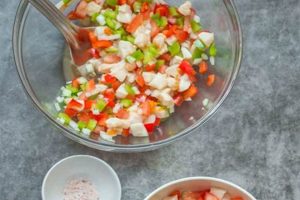
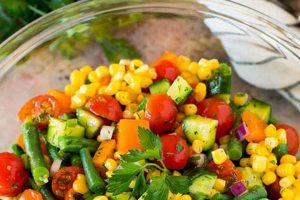
Combinations of freshly cut pineapple with other ingredients create flavorful and refreshing dishes. These dishes can range from simple fruit salads featuring pineapple as the star ingredient to more complex preparations that incorporate vegetables, herbs, proteins, and diverse dressings. For example, a classic combination includes pineapple chunks, red onion, bell pepper, and cilantro, tossed in a lime vinaigrette.
Such dishes offer a range of nutritional benefits derived from the pineapple’s high vitamin C content and bromelain enzyme, which aids digestion. Historically, pineapple has been a symbol of hospitality and is frequently used in tropical cuisines, adding a bright, sweet, and tangy flavor profile to salads. This fruit’s versatility allows for a wide spectrum of culinary interpretations, from sweet to savory applications.
This exploration will delve into variations on this culinary theme, exploring diverse ingredient combinations, dressing options, and preparation techniques. Further discussion will cover nutritional aspects and the historical and cultural context of pineapple in gastronomy.
Tips for Pineapple Salad Preparation
Achieving optimal flavor and texture in a pineapple salad requires attention to detail. The following tips provide guidance for creating a successful dish.
Tip 1: Select Ripe Pineapple: A ripe pineapple offers the best flavor. Look for a fragrant aroma at the base and a slight yield when pressed gently.
Tip 2: Precise Cutting Techniques: Uniformly sized pineapple pieces ensure even flavor distribution and appealing presentation. Remove the skin and eyes thoroughly.
Tip 3: Complementary Ingredient Selection: Consider ingredients that complement pineapple’s sweetness and acidity. Mint, cilantro, bell peppers, and red onion are excellent choices.
Tip 4: Balancing Flavors with Dressings: A well-balanced dressing enhances the salad’s overall flavor profile. Lime juice, ginger, and chili flakes offer contrasting notes.
Tip 5: Timing is Crucial: To prevent the pineapple from oxidizing and becoming mushy, prepare the salad close to serving time.
Tip 6: Proper Storage: If preparing in advance, store cut pineapple separately in an airtight container refrigerated at or below 40F (4C) to maintain freshness.
Tip 7: Consider Textural Variety: Incorporating toasted nuts or seeds can add a pleasing textural contrast to the softness of the pineapple.
By following these guidelines, one can create a vibrant and flavorful pineapple salad that highlights the fruit’s natural sweetness and acidity while offering a balanced culinary experience.
These techniques contribute not only to the immediate enjoyment of the dish but also to an appreciation for the versatility of pineapple in culinary applications.
1. Fresh, Ripe Pineapple
Fresh, ripe pineapple forms the foundation of a successful pineapple salad. The quality of the pineapple directly impacts the overall flavor, texture, and aroma of the final dish. A ripe pineapple provides the necessary sweetness and tanginess that balances other ingredients. Conversely, an unripe or overripe pineapple can result in a bland or unpleasant taste, diminishing the salad’s appeal. For instance, a salad made with a green, unripe pineapple will lack the characteristic sweetness and juiciness, while an overripe one might be overly soft and fermenting. This underscores the crucial role of pineapple selection in recipe outcomes.
The ripeness of a pineapple affects not only taste but also texture. A ripe pineapple offers a firm yet tender bite, contributing to a pleasant mouthfeel. An unripe pineapple, on the other hand, will be tough and fibrous, detracting from the overall sensory experience. Overripe pineapple, conversely, tends to become excessively soft and mushy. These textural variations significantly impact the salad’s palatability and demonstrate the practical importance of choosing a perfectly ripe pineapple. Imagine a pineapple salad where the fruit is either stringy and tough or so soft it disintegratesneither scenario creates an appetizing dish.
Careful selection of a fresh, ripe pineapple is therefore paramount for achieving the desired flavor and texture profile in a pineapple salad. This selection process ensures the optimal balance of sweetness, acidity, and texture, elevating the dish from merely acceptable to truly exceptional. Understanding the relationship between pineapple ripeness and salad quality enables informed decision-making during ingredient selection and contributes to a more satisfying culinary experience. The difference between a vibrant, flavorful salad and a disappointing one often hinges on this single, crucial element.
2. Complementary Ingredients

Complementary ingredients play a vital role in enhancing the flavor profile of a fresh pineapple salad recipe. Pineapple, with its inherent sweetness and tanginess, provides a versatile base. However, relying solely on pineapple limits the complexity and depth of flavor achievable. Thoughtfully chosen complementary ingredients create balance and contrast, elevating the dish beyond the simple sum of its parts. For instance, the sweetness of pineapple can be offset by the savory notes of red onion, while the acidity of lime juice amplifies the tropical flavors. Jalapeo peppers add a spicy kick, while fresh herbs like mint or cilantro introduce refreshing herbal notes. The interplay of these contrasting flavors creates a more nuanced and satisfying culinary experience.
The textural interplay introduced by complementary ingredients is equally crucial. Pineapple’s relatively soft texture benefits from the addition of ingredients that provide textural contrast. Toasted coconut flakes add a welcome crunch, while chopped bell peppers contribute a crisp freshness. Even the subtle textural variation between diced and slivered ingredients enhances the sensory experience. For example, a salad featuring both diced pineapple and thinly sliced red onion offers a more dynamic mouthfeel compared to one with uniformly chopped ingredients. This attention to textural diversity contributes significantly to the overall enjoyment of the dish.
Careful consideration of complementary ingredients demonstrates a sophisticated understanding of flavor and texture balance. This approach transforms a basic pineapple salad into a multi-dimensional culinary creation. Balancing sweetness, acidity, spiciness, and textural variation ensures the dish appeals to a wider range of palates. Successfully integrating complementary ingredients not only enhances the immediate enjoyment of the salad but also demonstrates a mastery of culinary principles, making a simple dish truly exceptional.
3. Balanced Dressing
Balanced dressing is crucial for a successful fresh pineapple salad. The dressing bridges the flavor profiles of diverse ingredients, creating a cohesive and harmonious culinary experience. A well-balanced dressing enhances, rather than masks, the inherent flavors of the pineapple and other components. It provides a counterpoint to the sweetness of the fruit, preventing the salad from becoming cloying. For example, a vinaigrette with lime juice and a touch of ginger offers acidity and a subtle spice that complements pineapple’s sweetness, while a dressing based on coconut milk adds richness and creaminess that balances the tangy notes.
The interplay of acidity, sweetness, saltiness, and spiciness within the dressing directly impacts the overall taste profile. A dressing that is overly acidic can overpower the delicate flavor of the pineapple, while one that lacks acidity can result in a bland and uninspiring salad. Similarly, excessive sweetness can make the salad cloying, while insufficient sweetness fails to balance the tartness of other components. Consider a pineapple salad with a dressing of pure lime juice: the intense acidity would overwhelm the pineapple. Conversely, a dressing consisting solely of honey would be excessively sweet. The balance of these elements determines the dressing’s effectiveness in unifying the salad’s components.
Achieving a balanced dressing requires careful consideration of the salad’s other ingredients. The dressing should complement, not compete with, the existing flavors. A pineapple salad with spicy jalapeos, for example, might benefit from a cooling yogurt-based dressing, while a salad featuring fresh herbs might be enhanced by a light vinaigrette that allows the herbal notes to shine through. Understanding the interplay of flavors and adjusting the dressing accordingly elevates the salad from a simple combination of ingredients to a well-composed dish, demonstrating culinary expertise and resulting in a more satisfying sensory experience. Ultimately, the balanced dressing acts as the unifying element, bringing together the individual components and creating a harmonious and delicious whole.
4. Proper Cutting Technique

Proper cutting technique is essential for maximizing the enjoyment and aesthetic appeal of a fresh pineapple salad. The way pineapple is cut influences not only the presentation but also the texture and flavor experience. Uniformity in size and shape ensures even distribution of flavor and a pleasing visual presentation. Furthermore, proper cutting minimizes waste and maximizes the yield from the fruit, contributing to both efficient resource utilization and a more enjoyable culinary outcome. This seemingly simple aspect of preparation significantly impacts the overall quality and success of the dish.
- Uniformity of Pieces:
Uniformly sized pineapple pieces ensure even marinating and cooking (if applicable), preventing some pieces from becoming overly saturated or remaining underprepared. In a salad context, this uniformity contributes to a balanced flavor experience in each bite. Imagine a salad with large, uneven chunks of pineapple; some bites would be overwhelmingly pineapple-flavored, while others would lack the fruit’s characteristic sweetness. Consistent sizing eliminates this issue, creating a more harmonious and enjoyable experience.
- Removal of the Rind and Eyes:
Thorough removal of the tough rind and prickly “eyes” is crucial for palatability. The rind is inedible, and the eyes can be irritating to the mouth. Precise removal maximizes the edible portion of the fruit while ensuring a pleasant textural experience. Leaving behind pieces of rind or eyes detracts from the overall enjoyment and can even create an unpleasant, prickly sensation. Careful attention to this detail ensures a smooth and delightful textural experience.
- Choice of Cut:
The chosen cut, whether chunks, spears, or rings, influences the final presentation and can be tailored to the specific salad composition. Chunks are versatile and well-suited for mixing with other ingredients, while spears offer a more elegant presentation. Rings can be grilled or used as a base for layered salads. Choosing the appropriate cut enhances the salad’s aesthetic appeal and practicality. For example, small chunks of pineapple blend seamlessly with other salad components, while rings might be more suitable for a visually striking layered presentation.
- Minimizing Bruising:
A sharp knife and careful handling minimize bruising, preserving both the visual appeal and the fresh flavor of the pineapple. Bruising accelerates enzymatic browning, which affects the fruit’s appearance and can introduce off-flavors. Gentle handling and precise cutting preserve the vibrant color and optimal flavor profile. Consider the difference between a brightly colored, cleanly cut pineapple piece and a bruised, browning one. The visual difference is striking, and the bruised piece may also have a less desirable flavor.
These facets of proper cutting technique demonstrate that this seemingly basic skill significantly impacts the overall quality of a fresh pineapple salad. From maximizing flavor and ensuring even cooking to enhancing presentation and minimizing waste, proper cutting elevates the dish from simple to sophisticated. By mastering these techniques, one can fully appreciate the vibrant flavors and textures that a well-prepared pineapple salad offers, highlighting the crucial role of preparation in creating a truly exceptional culinary experience.
5. Timely Preparation

Timely preparation is essential for a fresh pineapple salad recipe due to the fruit’s susceptibility to enzymatic browning and textural degradation. Pineapple contains an enzyme called bromelain, which, upon exposure to air, causes the fruit to brown and lose its firmness. This oxidation process negatively impacts both the visual appeal and the flavor profile of the salad. Delayed preparation leads to a less vibrant, potentially mushy, and less flavorful final product. Consider a scenario where pineapple is cut hours before being incorporated into a salad: the exposed surfaces will brown, and the fruit’s texture will soften, resulting in a less appealing and less palatable dish. Conversely, preparing the pineapple immediately before assembling the salad preserves its bright color, firm texture, and fresh flavor.
The practical implications of timely preparation extend beyond aesthetics and flavor. Bromelain, while contributing to the characteristic tanginess of pineapple, can also have undesirable effects when given excessive time to act on other salad ingredients. It can break down proteins, causing other fruits and vegetables to become mushy and potentially affecting the overall texture and structural integrity of the salad. For example, if a pineapple salad containing cucumbers and tomatoes is prepared hours in advance, the bromelain may cause these vegetables to lose their crispness, resulting in a less desirable texture. Therefore, timely preparation is crucial not only for preserving the quality of the pineapple itself but also for maintaining the desired texture and consistency of the other salad components.
In conclusion, the importance of timely preparation in a fresh pineapple salad recipe stems from the delicate nature of the fruit and its interaction with other ingredients. Understanding the role of enzymatic browning and the effects of bromelain on other components allows for informed decision-making regarding preparation timing. This knowledge empowers one to create a visually appealing and flavorful salad that showcases the best qualities of fresh pineapple and its complementary ingredients. Proper timing, a seemingly simple aspect of preparation, is ultimately key to maximizing the quality and enjoyment of the final dish. It underscores the critical connection between preparation technique and the successful execution of a fresh pineapple salad recipe.
Frequently Asked Questions
This section addresses common inquiries regarding fresh pineapple salad preparation.
Question 1: How can one select a ripe pineapple for a salad?
A ripe pineapple exhibits a fragrant aroma at its base and yields slightly to gentle pressure. Avoid pineapples with a fermented odor or excessive softness.
Question 2: What methods prevent pineapple from browning after cutting?
Storing cut pineapple in an airtight container refrigerated at or below 40F (4C) slows enzymatic browning. Additionally, coating the cut surfaces with a solution of citric acid (such as lemon or lime juice) helps inhibit oxidation.
Question 3: Which ingredients complement pineapple in a salad?
Ingredients that offer contrasting flavors and textures complement pineapple. Examples include mint, cilantro, red onion, bell peppers, jalapeos, and toasted nuts.
Question 4: What dressing types best suit a pineapple salad?
Vinaigrettes with citrus juice (lime or lemon), ginger, and a touch of chili offer a balanced counterpoint to pineapple’s sweetness. Creamy dressings based on coconut milk or yogurt also provide complementary flavor profiles.
Question 5: How long can a fresh pineapple salad be stored safely?
Refrigerated at or below 40F (4C) in an airtight container, a fresh pineapple salad generally remains safe to consume for up to three days. However, optimal flavor and texture are best enjoyed within 24 hours of preparation.
Question 6: Can canned pineapple be substituted for fresh pineapple in a salad?
While canned pineapple offers convenience, it often lacks the vibrant flavor and firm texture of fresh pineapple. Using fresh pineapple is recommended for optimal salad quality. If canned pineapple is used, opt for varieties packed in juice rather than syrup to avoid excessive sweetness.
Understanding these aspects of preparation allows for consistent creation of high-quality pineapple salads.
This information provides a foundational understanding for successful pineapple salad preparation. Further exploration into specific regional variations and culinary traditions involving pineapple salads can enhance culinary expertise and offer new avenues for culinary creativity.
Conclusion
Exploration of the elements contributing to a successful pineapple-based salad emphasizes the importance of ingredient selection, preparation techniques, and flavor balancing. Ripe pineapple selection, precise cutting methods, and the thoughtful incorporation of complementary ingredients contribute significantly to the final product’s quality. Furthermore, a balanced dressing enhances the combined flavors, unifying the diverse components into a harmonious whole. Timely preparation preserves the fresh flavors and textures, maximizing the culinary experience. Careful attention to these factors ensures a vibrant and flavorful outcome.
The potential for culinary creativity within this seemingly simple dish remains vast. Further exploration of flavor combinations, cultural adaptations, and innovative presentations promises to unlock new dimensions of culinary expression. A deeper understanding of these foundational principles empowers culinary exploration and elevates the potential of a dish as versatile and refreshing as a pineapple salad. This exploration serves as a starting point for a continued appreciation of this vibrant culinary creation and its potential within the broader culinary landscape.