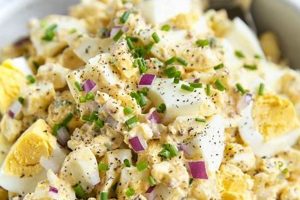
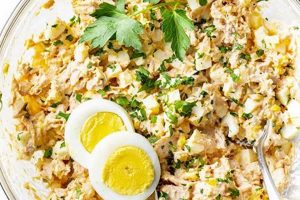
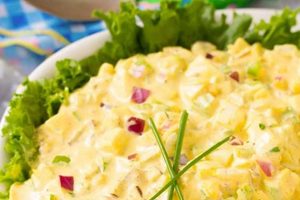
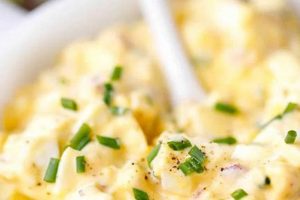
A classic dish featuring chopped hard-boiled eggs combined with mayonnaise and the tangy crunch of pickles, this simple yet flavorful combination can be further enhanced with a variety of ingredients such as mustard, celery, onion, and various seasonings. Variations range from simple mixtures to more elaborate preparations featuring diverse spices and additions like fresh herbs or relish.
This readily adaptable dish offers a quick and satisfying meal, ideal for picnics, lunches, or light suppers. Its affordability and nutritional value make it a popular choice. Historically, combining eggs and mayonnaise became fashionable in Western cuisine during the 18th and 19th centuries, with pickled additions likely emerging later as a way to add zest and preserve the dish. This evolution exemplifies the continuous adaptation and refinement of culinary traditions.
The following sections will delve into specific recipes, exploring diverse ingredient combinations and preparation methods. Nutritional information, suggested serving pairings, and tips for optimal storage will also be provided.
Tips for Preparing Egg Salad with Pickles
Achieving optimal flavor and texture requires attention to several key details. The following tips provide guidance for creating a superior egg salad experience.
Tip 1: Perfect Hard-Boiled Eggs: Overcooked yolks can result in a dry, chalky texture. A perfectly cooked yolk should be firm yet moist. Achieve this by gently simmering eggs for the appropriate time, followed by immediate immersion in ice water to halt the cooking process.
Tip 2: Pickle Selection: Dill pickles are the classic choice, offering a tangy counterpoint to the richness of the eggs and mayonnaise. Bread and butter pickles offer a sweeter profile, while other pickled vegetables, such as gherkins or green beans, can provide interesting variations.
Tip 3: Mayonnaise Matters: High-quality mayonnaise enhances the overall flavor. Consider using a mayonnaise made with olive oil for a richer taste. The amount of mayonnaise can be adjusted to achieve desired creaminess.
Tip 4: Chop Consistency: Uniformly chopped ingredients ensure a pleasant texture and even distribution of flavors. Over-chopping can result in a mushy consistency. Aim for a fine dice for the eggs and pickles.
Tip 5: Seasoning Strategy: Salt, black pepper, and a touch of paprika are standard seasonings. Experiment with other spices such as cayenne pepper or Dijon mustard to add depth and complexity.
Tip 6: Freshness First: For optimal flavor and food safety, consume the egg salad within two to three days of preparation. Store it in an airtight container in the refrigerator.
Tip 7: Texture Enhancement: Finely diced celery or red onion adds a welcome crunch and elevates the overall sensory experience.
By following these guidelines, one can consistently create a delicious and satisfying egg salad with pickles.
This attention to detail ensures a dish that is not only flavorful but also visually appealing and texturally satisfying. The subsequent section offers concluding remarks and suggestions for further exploration.
1. Hard-boiled Eggs
Hard-boiled eggs constitute the foundational ingredient in egg salad with pickles. Their preparation and quality significantly influence the final dish’s overall taste and texture. An understanding of proper cooking methods and the impact of egg quality is essential for achieving optimal results.
- Cooking Method:
Properly cooked hard-boiled eggs should have firm, yet moist yolks, avoiding the dry, chalky texture resulting from overcooking. Best practices include gently simmering the eggs, avoiding a rolling boil, and immediately immersing them in ice water after cooking to halt the process. This method ensures a tender, palatable yolk crucial for a pleasant egg salad experience.
- Yolk Consistency:
The yolk’s consistency plays a critical role in the final texture of the egg salad. Overcooked yolks result in a crumbly, less cohesive mixture, while properly cooked yolks contribute to a smoother, creamier texture. This directly impacts the salad’s palatability and overall enjoyment.
- Freshness:
Fresh eggs are essential for both flavor and food safety. Fresh eggs peel more easily, simplifying preparation. Moreover, using fresh, high-quality eggs minimizes the risk of foodborne illnesses, contributing to a safer and more enjoyable culinary experience.
- Peeling Technique:
Effective peeling techniques minimize egg white loss and contribute to a smoother, more aesthetically pleasing final product. Methods such as gently tapping the egg all over before peeling or adding baking soda to the boiling water can aid in shell removal. A clean, efficiently peeled egg enhances the presentation and minimizes waste.
The quality and preparation of hard-boiled eggs directly impact the flavor, texture, and overall success of egg salad with pickles. Mastering these elements elevates the dish from simple to exceptional. Attention to detail in each step ensures a consistently satisfying culinary experience.
2. Mayonnaise (quality matters)

Mayonnaise serves as a crucial binding agent and flavor enhancer in egg salad with pickles. Its quality significantly impacts the overall taste, texture, and richness of the dish. Selecting the right mayonnaise is essential for achieving a balanced and flavorful result.
- Emulsification and Texture:
High-quality mayonnaise possesses a stable emulsion, preventing separation and ensuring a smooth, creamy texture in the egg salad. A stable emulsion is essential for a visually appealing and palatable final product. Conversely, a poorly emulsified mayonnaise can lead to a watery or oily consistency, negatively impacting the salad’s overall quality.
- Flavor Profile:
Mayonnaise contributes significantly to the overall flavor profile of egg salad. Different mayonnaises offer varying levels of tanginess, richness, and sweetness. For instance, a mayonnaise made with olive oil provides a richer, more complex flavor compared to one made with soybean oil. The chosen mayonnaise should complement the other ingredients, particularly the tanginess of the pickles.
- Ingredient Quality:
The quality of ingredients used in mayonnaise production directly impacts the final flavor. Mayonnaise made with fresh eggs and high-quality oils typically offers a superior taste compared to those using lower-grade ingredients. Ingredient quality influences the overall flavor complexity and richness of the mayonnaise, directly impacting the egg salad’s taste.
- Quantity and Balance:
The amount of mayonnaise used affects the final texture and richness of the egg salad. Too much mayonnaise can result in an overly rich and heavy salad, while too little can lead to a dry and crumbly texture. Finding the right balance is crucial for achieving a pleasant mouthfeel and a harmonious blend of flavors. The ideal quantity allows the other ingredients, including the pickles, to shine without being overwhelmed.
The quality and type of mayonnaise play a pivotal role in determining the overall success of egg salad with pickles. A carefully chosen mayonnaise elevates the dish by providing a smooth, creamy texture, a balanced flavor profile, and a richness that complements the other ingredients. The interaction between the mayonnaise and the pickles’ acidity is crucial for a harmonious and delicious final product.
3. Pickles (type and cut)

Pickles contribute a crucial acidic, savory, and textural counterpoint to the richness of mayonnaise and eggs within egg salad. The type of pickle selected and its cut significantly influence the overall flavor profile, texture, and aesthetic appeal of the final dish. Understanding these nuances allows for informed decisions that enhance the culinary experience.
- Pickle Variety:
Dill pickles, with their characteristic tangy and herbaceous notes, represent the traditional choice, offering a refreshing contrast to the richness of the egg and mayonnaise base. Bread and butter pickles introduce a sweeter and less assertive flavor profile, complementing the other ingredients without overpowering them. Sour pickles, with their intense acidity, provide a bolder, more pungent flavor dimension. Finally, opting for sweeter gherkins or other pickled vegetables introduces a range of nuanced flavor profiles, from the subtly sweet to the distinctly savory, allowing for extensive culinary exploration and personalized taste experiences.
- Cut and Texture:
The cut of the pickle impacts both texture and flavor release. Finely diced pickles disperse their flavor evenly throughout the salad and offer a subtle crunch. Larger, coarsely chopped pickles provide a more pronounced textural contrast and deliver bursts of concentrated pickle flavor. Slices or spears create visual interest and a distinct textural experience. The chosen cut should complement the desired texture of the egg salad, balancing creaminess with crunch.
- Pickle Brine:
Incorporating a small amount of pickle brine can heighten the tangy flavor profile of the egg salad and adjust its overall moisture content. The brine complements the pickles themselves, enhancing their flavor impact and creating a more cohesive flavor experience. However, excessive brine can lead to an overly watery consistency, requiring careful portioning to achieve the desired balance.
- Flavor Balance:
The interplay between the pickle’s acidity and the richness of the mayonnaise is crucial. The pickles should complement, not overpower, the other flavors in the salad. Balancing the tanginess of the pickles with the richness of the mayonnaise and the mildness of the eggs ensures a harmonious and palatable final product. This balance allows all components of the salad to contribute to the overall taste experience.
Careful consideration of pickle type and cut significantly elevates the complexity and enjoyment of egg salad. The interplay of flavor, texture, and acidity contributes to a well-balanced and nuanced dish. Selecting the right pickle and preparing it appropriately enhances the overall culinary experience, transforming a simple egg salad into a nuanced and flavorful creation.
4. Seasoning (balance and creativity)

Seasoning plays a critical role in elevating egg salad with pickles from simple to exceptional. It provides depth, complexity, and balance, transforming the inherent richness of the mayonnaise and eggs and the acidity of the pickles into a harmonious flavor profile. A judicious approach to seasoning is essential; an imbalance can easily overpower the delicate flavors of the core ingredients. Understanding the interplay of seasonings and their impact on the overall taste experience allows for informed choices and creative exploration.
Salt and freshly ground black pepper constitute foundational seasonings, enhancing the existing flavors without introducing competing notes. A touch of paprika adds a subtle smokiness and visual appeal. Beyond these basics, a range of seasonings can complement the egg salads profile. For example, a dash of Dijon mustard adds a tangy complexity, while a pinch of cayenne pepper introduces a subtle heat. Fresh herbs, such as dill or chives, provide a refreshing counterpoint to the richness of the mayonnaise. The quantity of each seasoning should be carefully considered, as even small amounts can significantly impact the overall flavor balance. Experimentation is key to discovering unique and personalized flavor combinations. Consider the overall flavor profile desired: a classic, subtly seasoned salad or a bolder, more adventurous creation.
Effective seasoning requires an understanding of complementary and contrasting flavors. The tanginess of pickles already provides a contrasting element to the richness of the eggs and mayonnaise. Seasonings should enhance this interplay without creating conflict. For example, the sharpness of Dijon mustard complements the pickle’s acidity, while the subtle heat of cayenne pepper adds another layer of complexity. Over-seasoning can easily mask the delicate flavors of the core ingredients, resulting in a less nuanced and less satisfying experience. Achieving a well-balanced and flavorful egg salad requires careful consideration of each seasonings contribution and its interaction with the existing components. This balance allows the individual flavors to shine while contributing to a harmonious whole.
5. Texture (chop consistency)

Textural complexity contributes significantly to the enjoyment of egg salad with pickles. Chop consistency of the ingredients plays a crucial role in this, influencing mouthfeel and the interplay of flavors. Uniformity and appropriate size enhance the overall sensory experience. Understanding the impact of chop consistency allows for deliberate choices that elevate the dish beyond a simple combination of ingredients.
- Egg Chopping:
Over-chopped eggs create a paste-like consistency, resulting in a dense, heavy salad. Conversely, coarsely chopped eggs provide uneven texture and can lead to large, bland pieces. A fine dice ensures a pleasant, balanced texture that allows the other ingredients to integrate harmoniously. This consistency also prevents the salad from becoming overly dense.
- Pickle Chopping:
Pickle chop size influences both texture and flavor distribution. Finely diced pickles provide a consistent tang throughout the salad and a subtle crunch. Larger pieces offer bursts of intense pickle flavor and a more pronounced textural contrast. The chosen size should complement the egg chop and the overall desired texture.
- Other Ingredient Consistency:
If incorporating additional ingredients, such as celery or onion, consistent chopping is essential. Uniformly sized pieces ensure even distribution of flavors and a balanced textural experience. This prevents certain ingredients from dominating the salad and maintains a harmonious blend of textures and tastes.
- Overall Cohesion:
The interplay of chop consistency among all ingredients influences the final product’s overall cohesion. Harmonious sizing prevents the salad from feeling disjointed or unbalanced. It ensures that each bite offers a pleasant combination of textures and flavors, contributing to a more satisfying culinary experience. This attention to detail elevates the dish beyond a simple mixture of ingredients to a carefully constructed culinary creation.
Chop consistency significantly impacts the overall enjoyment of egg salad with pickles. Careful attention to the size and uniformity of the chopped ingredients creates a balanced, harmonious texture that enhances the interplay of flavors. This attention to detail elevates the dish from a basic combination of ingredients to a carefully crafted culinary experience.
6. Freshness (ingredients and final product)
Freshness plays a paramount role in determining the overall quality, flavor, and safety of egg salad with pickles. Ingredient quality directly impacts the final product’s taste and texture, while proper storage ensures food safety and prevents spoilage. Compromised freshness can lead to off-flavors, undesirable textures, and potential health risks, significantly diminishing the enjoyment and safety of the dish.
- Ingredient Sourcing:
The freshness of individual ingredientseggs, mayonnaise, pickles, and any additional componentsestablishes the foundation for a high-quality egg salad. Fresh eggs exhibit firm whites and vibrant yolks, contributing to optimal texture and flavor. High-quality mayonnaise, ideally made with fresh ingredients, offers a superior taste and a stable emulsion. Crisp, flavorful pickles, whether store-bought or homemade, provide the essential acidic counterpoint. Prioritizing ingredient quality ensures a flavorful and enjoyable final product.
- Preparation Timing:
Consuming the egg salad promptly after preparation maximizes its freshness and minimizes the risk of bacterial growth. Ideally, the salad should be assembled and consumed within a few hours. This minimizes the time the ingredients are exposed to air and potential contaminants, ensuring optimal flavor and texture while reducing food safety risks.
- Proper Storage:
Refrigeration at appropriate temperatures is crucial for preserving the egg salad’s freshness and preventing bacterial proliferation. Storing the salad in an airtight container minimizes exposure to air and contaminants. Adhering to recommended storage times further mitigates spoilage risks and maintains optimal quality.
- Shelf Life and Spoilage Indicators:
Egg salad, being perishable, has a limited shelf life, even when refrigerated. Generally, it is recommended to consume egg salad within two to three days of preparation. Visual cues, such as a change in color or texture, or the development of off-odors, indicate spoilage. Consuming spoiled egg salad poses significant health risks. Strict adherence to storage guidelines and attention to spoilage indicators are crucial for ensuring food safety.
Prioritizing freshness in both ingredients and the final product is essential for creating a delicious and safe egg salad with pickles. Attention to ingredient quality, preparation timing, proper storage, and spoilage indicators ensures a satisfying culinary experience while mitigating potential health risks. Overlooking these aspects can compromise flavor, texture, and, most importantly, food safety.
7. Optional additions (herbs, spices)
While classic egg salad with pickles relies on a core set of ingredients, optional additions offer opportunities to personalize flavor profiles and introduce complexity. Herbs and spices, judiciously applied, can elevate this simple dish, adding depth and nuance without overpowering the fundamental balance of creamy, tangy, and savory elements.
- Fresh Herbs:
Fresh herbs introduce bright, aromatic notes that complement the richness of the egg salad. Dill, chives, parsley, and tarragon are particularly well-suited. Dill echoes the flavor profile often found in pickles themselves, creating a harmonious blend. Chives offer a delicate onion-like flavor, while parsley provides a clean, fresh taste. Tarragon contributes a subtle anise-like flavor that adds complexity. The quantity used should be carefully considered, as fresh herbs can easily overpower the more subtle flavors of the egg salad.
- Dry Spices:
Dry spices contribute warm, earthy undertones. Paprika, smoked paprika, onion powder, and garlic powder are common choices. Paprika adds a touch of smokiness and vibrant color. Onion and garlic powder deepen the savory notes of the salad. A light hand is crucial with dry spices, as they can quickly become overpowering. The goal is to enhance, not dominate, the existing flavors.
- Spice Blends:
Prepared spice blends offer convenient flavor combinations. Cajun seasoning, curry powder, or everything bagel seasoning can add intriguing complexity. Cajun seasoning introduces a blend of heat and savory notes, while curry powder adds a warm, aromatic dimension. Everything bagel seasoning contributes a mix of savory, salty, and slightly sweet flavors. These blends should be used sparingly to avoid overwhelming the core flavors of the egg salad.
- Other Flavor Enhancers:
Beyond herbs and spices, other ingredients can enhance the flavor profile. A dash of hot sauce introduces heat, while a squeeze of lemon juice adds brightness. A small amount of prepared mustard contributes tang and complexity. These additions should be used judiciously, complementing rather than competing with the existing flavors. The interplay of these additions with the pickles tang is crucial for a balanced final product.
Optional additions, specifically herbs and spices, offer significant opportunities to personalize and elevate egg salad with pickles. By carefully considering flavor profiles and exercising restraint in their application, one can transform a simple dish into a nuanced culinary experience. These additions, integrated thoughtfully, complement the core flavors of the egg salad, creating a balanced and more complex flavor profile. The choice of additions should reflect personal preferences and the desired balance of flavors, ranging from subtle enhancements to bolder statements.
Frequently Asked Questions
This section addresses common inquiries regarding egg salad preparation, focusing on achieving optimal results and ensuring food safety.
Question 1: How can one prevent hard-boiled eggs from becoming overcooked and developing a green ring around the yolk?
Overcooking occurs when eggs are boiled too vigorously or for too long. A green ring around the yolk results from a reaction between iron in the yolk and sulfur in the white, triggered by high heat. To prevent this, simmer eggs gently, avoid a rolling boil, and immediately immerse them in ice water after cooking to halt the cooking process.
Question 2: What is the optimal mayonnaise-to-egg ratio for achieving the desired creaminess without making the salad overly rich?
The ideal ratio depends on personal preference and the specific mayonnaise used. Starting with a smaller amount of mayonnaise and gradually adding more until the desired consistency is achieved is recommended. This allows for adjustments based on the mayonnaise’s thickness and personal preferences for creaminess.
Question 3: Beyond dill pickles, what other types of pickles or pickled vegetables complement egg salad?
Bread and butter pickles offer a sweeter profile, while sweeter gherkins provide a milder tang. Pickled vegetables such as green beans, carrots, or cauliflower florets can also add interesting textural and flavor dimensions.
Question 4: How long can egg salad with pickles be safely stored in the refrigerator, and what are the indicators of spoilage?
Refrigerated egg salad, stored in an airtight container, is typically safe to consume for two to three days. Indicators of spoilage include a sour odor, changes in color or texture (such as a slimy appearance), or mold growth. Discard the salad immediately if any of these signs are present.
Question 5: What are some effective methods for peeling hard-boiled eggs efficiently and minimizing egg white loss?
Adding baking soda or vinegar to the boiling water can aid in shell removal. Gently tapping the cooked egg all over before peeling, or peeling the egg under cold running water, can also facilitate cleaner removal of the shell.
Question 6: Can egg salad with pickles be frozen for longer-term storage?
Freezing egg salad is not recommended. Freezing alters the texture of both the mayonnaise and eggs, resulting in a watery, less palatable salad upon thawing. It’s best to prepare and consume egg salad within the recommended refrigeration timeframe for optimal quality.
Understanding these aspects of egg salad preparation ensures both optimal flavor and food safety. Careful attention to detail in each step contributes to a more enjoyable and safe culinary experience.
The following section provides a selection of recommended egg salad recipes, catering to diverse tastes and preferences. These recipes will further explore the versatility of egg salad with pickles.
Egg Salad Recipe with Pickles
This exploration of egg salad recipes incorporating pickles has highlighted the multifaceted nature of this seemingly simple dish. From the foundational elements of perfectly cooked eggs and high-quality mayonnaise to the nuanced selection of pickle types and cuts, each component contributes significantly to the final product’s overall flavor and textural profile. Proper seasoning, attention to chop consistency, and a rigorous focus on freshness further elevate this classic preparation. The adaptability of egg salad, demonstrated through the incorporation of various herbs, spices, and other additions, allows for extensive culinary customization.
Egg salad with pickles stands as a testament to the potential for culinary complexity within seemingly basic dishes. Careful consideration of each ingredient and preparation step transforms this humble combination into a nuanced and satisfying culinary experience. Further experimentation with flavor profiles and ingredient combinations promises continued evolution and enjoyment of this versatile classic.