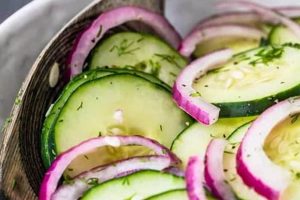
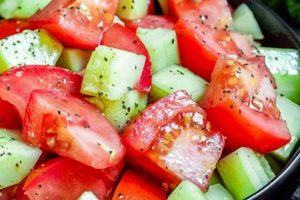
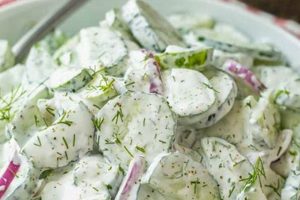
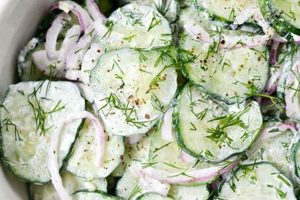
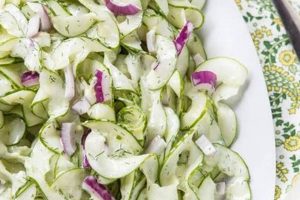
A refreshing and hydrating dish typically combines cubed watermelon and cucumber, often with other ingredients like feta cheese, mint, red onion, and a light vinaigrette. Variations may include different herbs, spices, or cheeses, offering a wide range of flavor profiles. For example, a simple version might include watermelon, cucumber, feta, and mint dressed with a lime vinaigrette. More complex versions could incorporate grilled halloumi, chili flakes, or toasted nuts.
This type of salad provides a healthy and flavorful way to enjoy seasonal produce. The high water content in both watermelon and cucumber makes it particularly appealing during warmer months. Beyond its refreshing qualities, this dish offers nutritional benefits from vitamins, minerals, and antioxidants present in the ingredients. Historically, combining fresh produce like cucumbers and melons has been a culinary practice in various cultures, particularly in regions with hot climates. These salads provided essential hydration and nutrients during periods of intense heat.
The following sections will explore variations on this theme, including specific ingredient combinations, preparation techniques, and serving suggestions to enhance the culinary experience.
Tips for a Perfect Watermelon and Cucumber Salad
Creating a delicious and refreshing salad hinges on proper ingredient selection and preparation techniques. These tips offer guidance for achieving optimal results.
Tip 1: Choose ripe produce. Select a watermelon with a deep, hollow sound when tapped, indicating ripeness. Cucumbers should be firm and free from blemishes.
Tip 2: Balance flavors. The sweetness of watermelon pairs well with salty and acidic elements. Consider adding feta cheese, olives, or a citrus-based vinaigrette.
Tip 3: Control moisture content. Watermelon tends to release water after being cut. Salting the watermelon chunks lightly and letting them sit in a colander for a few minutes helps reduce excess moisture in the final salad.
Tip 4: Enhance with herbs. Fresh herbs like mint, dill, or basil add a refreshing layer of flavor and aroma. Experiment with different herb combinations to discover preferred profiles.
Tip 5: Consider texture. Toasted nuts or seeds offer a satisfying crunch that complements the softer textures of watermelon and cucumber.
Tip 6: Chill before serving. Allowing the salad to chill in the refrigerator for at least 30 minutes enhances the refreshing qualities and allows flavors to meld.
Tip 7: Don’t overdress. A light vinaigrette is all that’s needed to enhance the natural flavors of the ingredients. Overdressing can make the salad soggy.
By following these tips, one can elevate a simple watermelon and cucumber salad into a culinary delight. Attention to detail in ingredient selection, flavor balancing, and mindful preparation contributes to a superior sensory experience.
The following section provides a sample recipe incorporating these principles, offering a practical guide for creating this refreshing dish.
1. Ingredients

Ingredient selection significantly impacts the overall quality and character of a cucumber watermelon salad. The inherent qualities of each ingredient contribute to the final flavor profile, texture, and nutritional value. Careful consideration of ingredient characteristics ensures a balanced and enjoyable culinary experience. For instance, using ripe, sweet watermelon alongside crisp, cool cucumber establishes a foundational contrast in textures and sweetness. The addition of salty feta cheese or sharp red onion introduces further complexity, highlighting the interplay of contrasting yet complementary flavors.
Beyond the primary components of watermelon and cucumber, additional ingredients offer opportunities for customization and flavor enhancement. Fresh herbs, such as mint or dill, contribute aromatic complexity and refreshing notes. A variety of cheeses, from feta to goat cheese, can introduce different levels of saltiness and tang. Nuts and seeds, like toasted pine nuts or pumpkin seeds, add textural contrast and subtle earthy flavors. Even a simple vinaigrette, composed of olive oil, citrus juice, and a touch of sweetness, plays a vital role in unifying the diverse ingredients and enhancing their individual characteristics. The choice of acid in the vinaigrettelime, lemon, or even a splash of red wine vinegarcan significantly alter the final taste.
Understanding the interplay of these ingredients is crucial for creating a well-balanced and flavorful cucumber watermelon salad. The selection, quality, and proportions of each component contribute to the overall sensory experience. Challenges may arise from seasonal availability or personal preferences, requiring careful substitutions and adjustments to maintain the desired balance. Ultimately, a successful recipe relies on a thoughtful combination of ingredients that harmonize in flavor, texture, and visual appeal.
2. Preparation
Preparation significantly influences the final quality and enjoyment of a cucumber watermelon salad. Careful techniques maximize the inherent flavors and textures of the ingredients, while improper handling can lead to a suboptimal outcome. Consider the impact of knife skills on the presentation and mouthfeel. Precise, uniform cuts create a visually appealing salad and ensure even distribution of flavors. Conversely, unevenly chopped ingredients can result in an unbalanced textural experience. The timing of ingredient preparation also plays a crucial role. For example, combining the ingredients too far in advance can lead to excess moisture release, diluting the flavors and creating a watery salad. Salting the watermelon prior to mixing and allowing it to drain helps mitigate this issue. Chilling the ingredients separately before combining maintains crispness and enhances the refreshing qualities of the salad.
Specific preparation steps, such as how the watermelon is cut (cubed, balled, or sliced) and whether the cucumber is peeled or seeded, contribute to both the aesthetic presentation and the overall sensory experience. Leaving the cucumber peel on adds textural complexity and visual appeal, while removing the seeds prevents excess moisture in the final dish. The order of operations also matters. Adding delicate herbs just before serving prevents them from wilting, preserving their fresh aroma and flavor. Similarly, tossing the salad with the vinaigrette immediately before serving prevents the ingredients from becoming soggy. These seemingly small details contribute significantly to the overall success of the dish.
Mastery of preparation techniques elevates this simple salad to a culinary delight. Consistent application of proper methods ensures a refreshing, flavorful, and visually appealing dish. Challenges may arise from variations in ingredient quality or available tools, requiring adaptability and attention to detail. Ultimately, precise and thoughtful preparation is essential for achieving the desired outcome and maximizing the enjoyment of this refreshing summer salad.
3. Flavor Balance
Flavor balance is paramount in a successful cucumber watermelon salad recipe. The inherent sweetness of ripe watermelon necessitates a counterpoint. This balance can be achieved through the strategic incorporation of salty elements, such as feta cheese, crumbled queso fresco, or even a sprinkle of sea salt. Acidity plays a crucial role as well, cutting through the sweetness and adding brightness. A squeeze of lime or lemon juice, a splash of white wine vinegar, or the inclusion of pickled red onions introduces the necessary acidic notes. The interplay of these contrasting flavorssweet, salty, and acidiccreates a harmonious and refreshing taste profile. For example, a salad featuring watermelon, cucumber, feta cheese, and a lime vinaigrette exemplifies this balance: the sweetness of the melon is tempered by the salty feta and the tart lime, creating a complex and satisfying flavor profile. Ignoring flavor balance can result in a one-dimensional salad that is either overwhelmingly sweet or overly tart.
Beyond the core trio of sweet, salty, and acidic, other flavor dimensions can further enhance the complexity of the salad. The introduction of herbs, such as fresh mint, dill, or basil, adds a layer of aromatic complexity and herbaceousness. Spices, like a pinch of chili flakes or a sprinkle of black pepper, introduce subtle heat and depth. Even the choice of oil in the vinaigrette contributes to the overall flavor profile. A robust extra virgin olive oil lends a peppery fruitiness, while a lighter grapeseed oil offers a more neutral backdrop. The careful consideration of these nuanced flavors elevates the salad from simple refreshment to a sophisticated culinary creation. Consider a variation incorporating grilled halloumi cheese, adding a smoky, savory dimension that complements the sweetness of the watermelon. This demonstrates how layering flavors creates a more dynamic and engaging culinary experience.
Achieving optimal flavor balance requires careful attention to ingredient selection and proportion. Understanding the interplay of contrasting flavors and the contribution of each component is essential for creating a well-rounded and harmonious salad. Challenges may arise from variations in ingredient ripeness or personal preferences, requiring adjustments to achieve the desired balance. Ultimately, a well-balanced flavor profile is the hallmark of a successful cucumber watermelon salad recipe, ensuring a refreshing and satisfying culinary experience.
4. Presentation
Presentation elevates a cucumber watermelon salad from a simple dish to a visually appealing culinary creation. Visual appeal significantly influences perception of flavor and enjoyment. Consider the impact of color contrast: the vibrant pink of watermelon against the deep green of cucumber immediately attracts the eye. This visual contrast enhances anticipation and perceived freshness. The arrangement of ingredients also plays a vital role. A haphazard toss may suffice for a casual meal, but a more deliberate arrangement, such as layering slices or artfully arranging components, elevates the dining experience. Imagine a salad where watermelon balls are nestled amongst thinly sliced cucumbers and topped with crumbled feta and sprigs of mint the visual appeal enhances the perceived value and enjoyment of the dish. Further enhancing presentation can involve the choice of serving vessel. A rustic wooden bowl complements the natural ingredients, while a sleek glass bowl emphasizes the vibrant colors and clean lines of the salad.
Beyond the arrangement and color palette, attention to detail further refines the presentation. Garnishes, such as a sprinkle of toasted nuts, a drizzle of balsamic glaze, or a scattering of edible flowers, add visual interest and complexity. Consider the impact of microgreens: a delicate scattering of radish or cilantro microgreens adds a touch of elegance and vibrant color. The size and shape of the ingredients also contribute to the overall aesthetic. Uniformly sized watermelon cubes or carefully sculpted melon balls create a sense of order and precision. Conversely, unevenly chopped ingredients can appear careless and detract from the visual appeal. The interplay of textures also influences presentation. Smooth watermelon paired with rough-chopped cucumber offers a textural contrast that is both visually and tactilely engaging.
Ultimately, thoughtful presentation enhances the perceived value and enjoyment of a cucumber watermelon salad. While flavor remains paramount, visual appeal significantly influences the overall dining experience. Challenges may arise from time constraints or limited resources, but even simple adjustments can make a noticeable difference. Consider the impact of a simple garnish or a more deliberate arrangement on a plate. Attention to these details demonstrates care and elevates the dish from a simple combination of ingredients to a carefully considered culinary creation.
5. Nutritional Value
Nutritional value represents a significant aspect of a cucumber watermelon salad recipe. This dish offers more than just refreshment; it provides a substantial contribution to dietary health due to the inherent properties of its core ingredients. Watermelon, rich in lycopene, a potent antioxidant linked to reduced risk of chronic diseases, contributes significantly to the salad’s nutritional profile. Cucumber, with its high water content and electrolytes, aids in hydration and supports digestive health. Combining these ingredients creates a dish dense in vitamins, minerals, and antioxidants, offering a low-calorie, nutrient-rich option. Consider the impact of adding feta cheese: while contributing flavor and texture, it also increases the protein and calcium content of the salad. Understanding this nutritional profile allows for informed dietary choices and recipe modifications to meet specific health goals, such as increasing potassium intake by adding mint.
The nutritional value of this salad extends beyond the individual benefits of its components. The synergistic interaction of these ingredients enhances their bioavailability and overall nutritional impact. For example, the vitamin C in watermelon aids in the absorption of iron from other ingredients, if present. Furthermore, the high water content in both watermelon and cucumber contributes to feelings of fullness and satiety, potentially aiding in weight management. The low glycemic index of this salad also makes it a suitable option for individuals managing blood sugar levels. However, variations in ingredients can influence the overall nutritional profile. Adding a sugary dressing, for instance, can negatively impact the sugar content. Therefore, informed ingredient selection and recipe modification are crucial for maximizing health benefits.
In conclusion, nutritional value is an integral component of a cucumber watermelon salad recipe. Understanding the nutritional contributions of individual ingredients and their synergistic effects allows for informed dietary choices and recipe customization. This knowledge empowers individuals to maximize the health benefits while enjoying a refreshing and flavorful dish. Challenges may arise from balancing nutritional goals with taste preferences, necessitating careful consideration of ingredient choices and portion sizes. This understanding ultimately contributes to a holistic appreciation of this simple yet nutritionally powerful culinary creation.
Frequently Asked Questions
This section addresses common inquiries regarding cucumber and watermelon salad recipes, offering clarity and practical guidance for optimal preparation and enjoyment.
Question 1: How can excess moisture in the salad be prevented?
Watermelon’s high water content can lead to a watery salad. Salting cubed watermelon and allowing it to drain in a colander for approximately 15 minutes before combining with other ingredients helps mitigate this issue.
Question 2: What are suitable alternatives to feta cheese?
Goat cheese, ricotta salata, or crumbled queso fresco offer comparable salty and tangy notes while providing textural variation. Vegan options include crumbled tofu marinated in a savory dressing.
Question 3: Can this salad be prepared in advance?
While best served fresh, the salad can be prepared a few hours in advance. Store the watermelon and cucumber separately and combine just before serving to maintain optimal texture and prevent excess moisture. Dress the salad immediately before serving.
Question 4: How can the flavor profile be adjusted for those who prefer less sweetness?
Increasing the acidity of the vinaigrette by adding more lime or lemon juice, or incorporating a splash of vinegar, helps balance the sweetness of the watermelon. Adding ingredients like red onion or pickled ginger also introduces savory and tangy notes.
Question 5: What are suitable herbs beyond mint and basil?
Dill, cilantro, or tarragon offer distinct flavor profiles that complement the watermelon and cucumber. Experimentation with various herbs allows for personalized flavor combinations.
Question 6: How can the nutritional value of the salad be maximized?
Adding ingredients like toasted nuts or seeds increases healthy fats and protein. Incorporating a variety of colorful vegetables, such as bell peppers or red onion, boosts vitamin and antioxidant content.
Understanding these common concerns and their solutions allows for successful preparation and enjoyment of this versatile and refreshing salad. Adaptability and thoughtful ingredient selection ensures a personalized culinary experience.
The subsequent section offers a collection of curated recipes, providing practical examples and further inspiration for creating delicious cucumber and watermelon salads.
Cucumber Watermelon Salad Recipe
Exploration of cucumber watermelon salad recipes reveals a dish offering versatility and refreshment. Emphasis on ingredient quality, precise preparation, and balanced flavors contributes to a successful culinary outcome. Nutritional value, highlighted by the inherent properties of watermelon and cucumber, adds to the appeal. Adaptability to individual preferences, through ingredient substitutions and flavor adjustments, allows for personalized variations. Consideration of presentation elevates the dish from simple to elegant, enhancing the overall dining experience.
Culinary exploration extends beyond basic preparation. Experimentation with diverse ingredients, flavor profiles, and presentation styles unlocks the full potential of this refreshing dish. Continued exploration promises further culinary discoveries and personalized variations, enriching gastronomic experiences and promoting appreciation for fresh, seasonal ingredients.