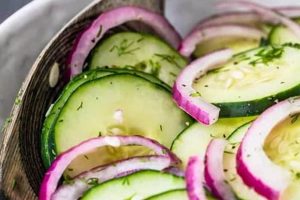
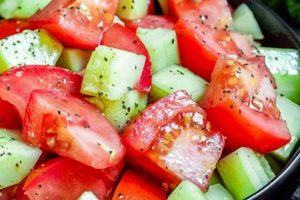
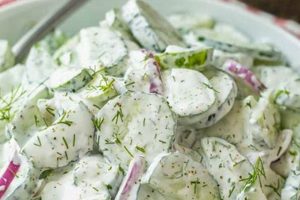
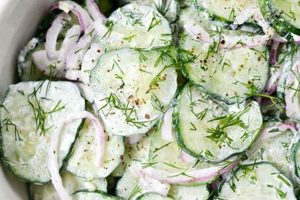
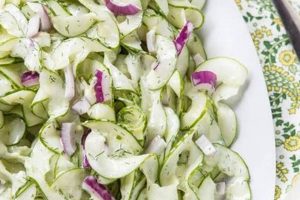
A refreshing and creamy side dish typically combines thinly sliced cucumbers with a dressing based on cream cheese, often enhanced with herbs, spices, and other ingredients like sour cream, dill, or onions. Variations may incorporate different types of cucumbers, such as English or Persian, and include additions like garlic, lemon juice, or vinegar for a tangy twist. This cool and flavorful salad offers a versatile complement to various main courses, particularly grilled meats, fish, or sandwiches.
The blend of crisp cucumbers and rich cream cheese creates a textural and flavorful contrast that appeals to a wide range of palates. The inherent coolness makes it a particularly popular choice during warmer months. This style of salad provides a good source of hydration due to the cucumber’s high water content and can offer beneficial nutrients depending on the incorporated ingredients. Historically, cucumbers and dairy products like cream cheese have been used in salads across various cultures, demonstrating a timeless appeal for this combination.
This discussion will explore the versatility of this culinary creation, examining specific recipes and variations, highlighting nutritional aspects, offering tips for preparation and presentation, and considering its place within broader culinary traditions.
Tips for a Perfect Cucumber Salad
Achieving optimal flavor and texture requires attention to detail. The following tips ensure a delightful culinary experience.
Tip 1: Cucumber Preparation: Select firm, unwaxed cucumbers. For optimal texture, thinly slice cucumbers using a mandoline or sharp knife. Salting sliced cucumbers and allowing them to drain removes excess moisture, preventing a watery salad.
Tip 2: Cream Cheese Selection: Full-fat cream cheese provides the richest flavor and creamiest texture. Allowing the cream cheese to soften at room temperature ensures smooth blending with other ingredients.
Tip 3: Enhancing Flavor Profiles: Fresh dill, chives, or mint elevate the flavor profile. Incorporating garlic, red onion, or jalapeo adds a savory dimension. A splash of lemon juice or vinegar introduces a tangy counterpoint to the richness of the cream cheese.
Tip 4: Balancing Flavors: Achieving a harmonious balance between the creaminess of the cheese, the freshness of the cucumbers, and the chosen herbs and spices is crucial. Careful tasting and adjustment of seasonings are recommended.
Tip 5: Chilling and Serving: Chilling the salad for at least 30 minutes allows the flavors to meld. Serving the salad chilled enhances its refreshing qualities. Consider garnishing with a sprinkle of fresh herbs or a dusting of paprika for an elegant presentation.
Tip 6: Ingredient Variations: Exploring variations, such as incorporating different types of cucumbers, adding crumbled bacon or toasted nuts, or using Greek yogurt in addition to or instead of cream cheese, provides opportunities for culinary creativity.
By following these guidelines, one can create a cucumber salad that offers a delightful balance of flavors, textures, and visual appeal.
These insights provide a foundation for crafting a truly exceptional dish. The following section will offer concluding thoughts and recipe suggestions.
1. Fresh Cucumbers

The foundation of a successful cucumber salad with cream cheese rests upon the selection and preparation of fresh cucumbers. Cucumber quality significantly influences the final dish’s flavor, texture, and overall appeal. This section explores the critical role fresh cucumbers play in this culinary creation.
- Variety Selection
Different cucumber varieties offer unique characteristics. English cucumbers, known for their thin skin and mild flavor, require minimal peeling and contribute a delicate crunch. Persian cucumbers, smaller and slightly sweeter, offer a similar profile. Traditional garden cucumbers, with thicker skins and more pronounced flavors, may benefit from peeling and seeding to mitigate bitterness. Selecting the appropriate variety aligns with desired flavor and textural outcomes.
- Indicators of Freshness
Choosing fresh cucumbers involves assessing several key indicators. Firm texture, vibrant green color, and absence of bruises or soft spots signify optimal quality. Avoiding cucumbers with wrinkled or yellowed skin ensures peak flavor and crispness. Proper storage, in a refrigerated environment, maintains freshness until preparation.
- Preparation Techniques
Proper preparation techniques maximize cucumber contribution to the salad. Thinly slicing cucumbers, preferably using a mandoline slicer or sharp knife, ensures even texture and optimal integration with the cream cheese dressing. Salting sliced cucumbers and allowing them to drain removes excess moisture, preventing a watery final product. This step enhances the cucumber’s crispness and allows the dressing to adhere more effectively.
- Flavor Enhancement
While cucumbers offer a refreshing, mild flavor, their subtle taste provides a canvas for other ingredients. The cream cheese base, often combined with herbs, spices, and acidic elements, complements and enhances the cucumber’s inherent qualities. This synergy creates a balanced and flavorful salad.
Careful consideration of cucumber variety, freshness, preparation, and flavor pairings elevates a simple cucumber salad with cream cheese into a delightful culinary experience. The interplay between these elements contributes to a harmonious balance of taste and texture, highlighting the cucumber’s essential role in this classic dish.
2. Quality Cream Cheese
Cream cheese constitutes a pivotal ingredient in cucumber salad, significantly influencing the final product’s flavor, texture, and overall quality. Understanding the nuances of cream cheese selection and its impact on the dish is crucial for achieving optimal results. This section explores the critical connection between quality cream cheese and a successful cucumber salad.
- Fat Content
Cream cheese varieties range in fat content, from full-fat to reduced-fat and fat-free options. Full-fat cream cheese possesses a rich, dense texture and delivers the most authentic flavor profile. Lower-fat alternatives may compromise the creaminess and overall richness of the salad. The fat content directly impacts the dressing’s mouthfeel and its ability to coat the cucumbers effectively. Full-fat cream cheese provides optimal richness and flavor delivery.
- Freshness and Storage
Using fresh, properly stored cream cheese is paramount for both flavor and food safety. Checking expiration dates and ensuring proper refrigeration are essential. Cream cheese exposed to temperature fluctuations or stored improperly can develop off-flavors or harbor bacterial growth. Freshness guarantees the intended flavor profile and ensures a safe culinary experience.
- Brand and Processing
Different brands employ varying processing methods and ingredient sourcing, potentially affecting cream cheese flavor and texture. Some brands might incorporate stabilizers or additives that alter the final product’s characteristics. Selecting a reputable brand known for quality ingredients and minimal processing ensures a superior foundation for the salad’s dressing.
- Incorporation and Blending
Proper incorporation of cream cheese into the dressing involves allowing it to soften at room temperature before blending with other ingredients. This ensures a smooth, homogenous mixture and prevents lumps or uneven distribution. Gentle folding or whisking, rather than aggressive mixing, preserves the cream cheese’s delicate texture and prevents it from becoming overly aerated.
The quality of cream cheese selected directly impacts the overall success of a cucumber salad. Prioritizing full-fat, fresh cream cheese from a reputable brand, stored and incorporated correctly, ensures the desired rich, creamy texture and optimal flavor development within the dish. These considerations highlight the importance of cream cheese quality in achieving a balanced and flavorful cucumber salad.
3. Balancing Flavors
Balancing flavors represents a crucial aspect of crafting a successful cucumber salad with cream cheese. The inherent mildness of cucumbers and the richness of cream cheese necessitate careful consideration of additional ingredients to achieve a harmonious flavor profile. This balance prevents any single flavor from dominating, resulting in a more nuanced and enjoyable culinary experience. The interplay of contrasting tastes and textures contributes significantly to the salad’s overall appeal.
The creamy richness of the cream cheese base requires a counterpoint. Acidity, often introduced through vinegar or lemon juice, provides this necessary balance. The tangy notes cut through the richness, preventing the salad from becoming overly heavy. Herbaceous elements, such as fresh dill, chives, or mint, introduce another layer of complexity, complementing both the cucumber and cream cheese. These aromatic additions contribute freshness and depth, further enhancing the overall flavor profile. Consider a classic combination: the tang of white vinegar balances the richness of cream cheese, while fresh dill provides a bright, herbaceous counterpoint to the mild cucumber. This interplay creates a dynamic flavor profile that engages the palate.
Achieving optimal flavor balance involves careful consideration of ingredient ratios and individual taste preferences. While general guidelines exist, experimentation often leads to personalized variations. The ultimate goal remains a harmonious blend where each ingredient contributes to a unified whole. Overemphasis on any single flavor component can detract from the overall balance. A well-balanced cucumber salad with cream cheese offers a refreshing and flavorful experience, showcasing the synergistic relationship between contrasting yet complementary ingredients. Understanding this interplay allows for informed ingredient choices and adjustments, resulting in a truly exceptional culinary creation.
4. Proper Chilling
Proper chilling significantly influences the final quality of a cucumber salad with cream cheese. Temperature affects both flavor perception and textural integrity. Chilling allows the flavors of the various ingredientscucumbers, cream cheese, herbs, and spicesto meld and harmonize. This integration creates a more cohesive and nuanced flavor profile. Furthermore, chilling enhances the refreshing qualities of the salad, making it particularly appealing in warmer weather. A chilled salad offers a crisp, cool contrast to richer or heavier dishes.
The impact of chilling extends beyond mere temperature reduction. It impacts the cucumber’s texture, maintaining its desirable crispness. Cream cheese, when properly chilled, holds its form and provides a smooth, creamy counterpoint to the cucumbers. Insufficient chilling can result in a watery salad due to increased cucumber moisture release and a less desirable, softer texture in the cream cheese component. Conversely, excessive chilling can mute the delicate flavors of fresh herbs. Ideally, chilling the salad for 30 minutes to an hour before serving allows for optimal flavor development and textural balance. For instance, a cucumber salad incorporating fresh dill and a touch of lemon juice benefits significantly from chilling, as it allows the bright herbal notes and citrusy tang to integrate fully with the creamy base.
Understanding the role of proper chilling contributes to a more successful culinary outcome. The delicate interplay of flavors and textures in a cucumber salad with cream cheese relies on careful temperature management. Chilling enhances the refreshing nature of the salad, preserves the crispness of the cucumbers, and allows for the harmonious development of a balanced flavor profile. Attention to this detail elevates a simple side dish to a more refined and enjoyable culinary experience. Chilling, therefore, should not be considered merely a final step but rather an integral component of the recipe itself, essential for achieving the desired sensory experience.
5. Creative Variations

Creative variations elevate the basic cucumber salad with cream cheese from a simple side dish to a versatile culinary expression. Exploration beyond the standard recipe expands flavor profiles, introduces textural nuances, and allows adaptation to diverse dietary preferences or seasonal ingredient availability. Such variations enhance the dish’s adaptability, ensuring its continued appeal across a range of culinary contexts. For example, incorporating roasted red peppers introduces a smoky sweetness and vibrant color, while crumbled feta cheese offers a salty, tangy complexity in place of or in addition to cream cheese. These additions transform the salad’s character, demonstrating the transformative potential of creative variations.
The practical significance of embracing creative variations extends beyond mere novelty. Such experimentation fosters culinary innovation, encouraging exploration of flavor pairings and textural combinations. Seasonal adaptations, such as using summer herbs like mint and basil or incorporating autumnal ingredients like toasted walnuts and cranberries, ensure year-round enjoyment. Dietary modifications, such as substituting Greek yogurt for cream cheese or incorporating alternative sweeteners, cater to specific health needs without sacrificing flavor or satisfaction. Consider a vegan adaptation using a cashew-based cream cheese alternative, combined with toasted sunflower seeds for added texture and nutritional value. This illustrates the adaptability of the core recipe to diverse dietary requirements.
Creative variations demonstrate the inherent flexibility of the cucumber salad with cream cheese concept. They transform a basic recipe into a platform for culinary expression, offering opportunities to personalize flavors, incorporate seasonal ingredients, and accommodate dietary needs. This adaptability ensures its continued relevance as both a refreshing side dish and a versatile culinary centerpiece. Ultimately, embracing creative variations elevates this simple salad from a predictable accompaniment to a dynamic and engaging culinary experience.
6. Elegant Presentation

Elegant presentation elevates the cucumber salad with cream cheese from a simple side dish to a visually appealing culinary creation. Visual appeal enhances the dining experience, stimulating appetite and adding a touch of sophistication. While flavor and texture remain paramount, presentation transforms the dish into a more refined and engaging offering. Consideration of visual elements demonstrates attention to detail and enhances the perceived value of the dish, contributing to a more memorable culinary experience. The following aspects highlight the importance of elegant presentation for this seemingly simple salad.
- Plating Techniques
Strategic plating choices significantly impact visual appeal. Instead of simply heaping the salad onto a plate, consider using a shallow bowl or arranging it artfully on a platter. Individual portions presented in small glass dishes or on crisp lettuce cups add a touch of elegance. Negative space on the plate enhances visual appeal, preventing a cluttered appearance. Consider, for example, arranging cucumber slices in a pinwheel pattern, topped with a dollop of cream cheese dressing and a sprig of fresh dill. Such deliberate plating transforms a simple salad into a visually striking presentation.
- Garnishing Choices
Garnishes provide visual interest and often contribute subtle flavor enhancements. A sprinkle of freshly chopped herbs, a dusting of paprika, or a few strategically placed edible flowers elevate the salad’s aesthetic appeal. The garnish should complement the salad’s flavor profile without overpowering the core ingredients. For instance, a cucumber salad featuring dill in the dressing could be garnished with a delicate sprig of fresh dill, reinforcing the herbal note while adding a touch of visual flair. Thoughtful garnishing elevates the dish’s presentation without overshadowing the primary flavors.
- Color and Contrast
The inherent color palette of a cucumber saladprimarily green and whitebenefits from the introduction of contrasting colors. Incorporating ingredients like cherry tomatoes, slivered red onion, or chopped fresh chives introduces visual dynamism. These additions not only enhance visual appeal but also contribute textural and flavor complexity. For example, the vibrant red of cherry tomatoes against the backdrop of creamy white dressing and green cucumber slices creates an appealing visual contrast, enhancing the salad’s overall presentation.
- Serving Temperature and Timing
Serving the salad at the appropriate temperature is essential for both flavor and presentation. A chilled salad maintains the cucumber’s crispness and the cream cheese dressing’s desired consistency. Serving the salad immediately after plating prevents the cucumbers from releasing excess moisture, maintaining a visually appealing and texturally satisfying dish. For instance, a warm salad would appear less appetizing and compromise the refreshing qualities expected of this dish.
Elegant presentation enhances the enjoyment of a cucumber salad with cream cheese by engaging multiple senses. Visual appeal complements the refreshing flavors and textures, creating a more complete and satisfying culinary experience. Attention to plating, garnishing, color contrast, and serving temperature transforms a simple side dish into a visually striking and memorable culinary creation. By considering these aspects of presentation, one elevates the perceived value and overall enjoyment of this versatile dish.
Frequently Asked Questions
This section addresses common inquiries regarding cucumber salad with cream cheese, offering concise and informative responses to clarify potential uncertainties and provide practical guidance.
Question 1: Can one prepare cucumber salad in advance?
Advance preparation is possible, but optimal flavor and texture are achieved when served within a few hours of assembly. Longer storage can result in excess moisture release from the cucumbers, potentially leading to a watery consistency. If advance preparation is necessary, storing the dressing and sliced cucumbers separately and combining them shortly before serving can help maintain optimal quality. It is crucial to store the salad in a covered container within the refrigerator until it is ready to be served.
Question 2: How can one prevent a watery cucumber salad?
Excess moisture from cucumbers can lead to a watery salad. Salting sliced cucumbers and allowing them to drain for approximately 15-20 minutes before combining them with the dressing draws out excess water. Thoroughly patting the cucumbers dry with paper towels further reduces moisture content. Selecting varieties like English or Persian cucumbers, known for their lower water content, can also minimize this issue.
Question 3: What are suitable cream cheese alternatives?
Greek yogurt, sour cream, or a combination thereof, offer viable alternatives to cream cheese, particularly for those seeking lower-fat or tangier options. Vegan alternatives, such as cashew-based cream cheese, cater to specific dietary requirements. These alternatives may alter the salad’s overall flavor profile, but offer flexibility for individual preferences and dietary needs. However, substitutions might affect the final texture and richness compared to traditional cream cheese.
Question 4: How can one enhance the flavor profile beyond basic ingredients?
Fresh herbs, such as dill, mint, chives, or parsley, elevate the flavor profile significantly. Incorporating spices like garlic powder, onion powder, or paprika adds depth. A splash of lemon juice or vinegar introduces a tangy counterpoint to the richness of the cream cheese. Experimentation with different combinations of herbs and spices allows for personalized flavor customization.
Question 5: What main courses complement cucumber salad with cream cheese?
This salad complements a variety of main courses, particularly grilled meats, fish, and sandwiches. It also serves as a refreshing counterpoint to heavier or spicier dishes. The cool, creamy salad provides a palate cleanser and balances richer flavors within a meal.
Question 6: How long can one store cucumber salad safely?
Properly stored in an airtight container in the refrigerator, cucumber salad with cream cheese typically remains safe to consume for up to three days. However, its quality, particularly texture and flavor, may degrade over time. It is advisable to consume the salad within 24-48 hours for optimal enjoyment.
Addressing these common inquiries provides a comprehensive understanding of cucumber salad preparation, storage, and variations. This knowledge empowers individuals to confidently create and enjoy this versatile dish.
The following section offers a collection of curated recipes, providing practical examples of how to incorporate these principles into delicious culinary creations.
Cucumber Salad Recipe with Cream Cheese
This exploration of cucumber salad with cream cheese has delved into the nuances of this seemingly simple dish. From the selection of crisp cucumbers and high-quality cream cheese to the delicate balance of flavors and the importance of proper chilling, each element contributes to the final product’s success. Creative variations offer a pathway to personalized flavor profiles and dietary adaptations, while elegant presentation elevates the dish from a simple side to a visually appealing culinary creation. Addressing frequently asked questions provides practical guidance for preparation and storage, ensuring optimal enjoyment. This comprehensive examination reveals that even a seemingly basic dish, when approached with attention to detail, can offer a complex and rewarding culinary experience.
The enduring appeal of cucumber salad with cream cheese lies in its adaptability and refreshing simplicity. Whether served as a light accompaniment to a summer barbecue or a sophisticated addition to a more formal meal, its versatility remains a testament to the harmonious combination of fresh ingredients and balanced flavors. Further culinary exploration and personalized interpretations promise continued enjoyment and appreciation of this classic dish.