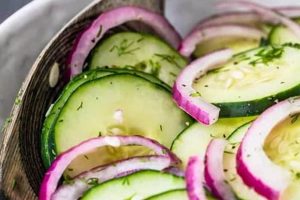
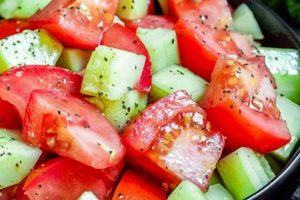
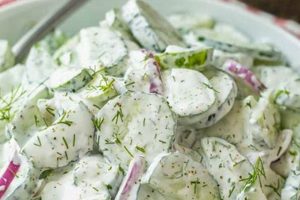
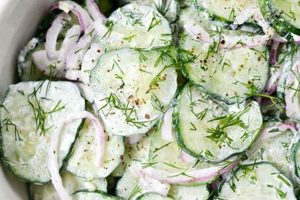
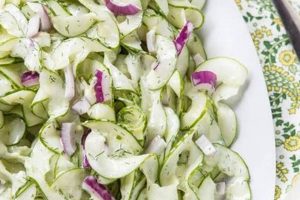
A refreshing and light dish typically combines sliced cucumbers and apples, often with other complementary ingredients. Variations may include additions such as onions, herbs (like dill or mint), nuts, seeds, or dried fruits like cranberries or raisins. Dressings range from simple vinaigrettes (e.g., a combination of oil, vinegar, and seasonings) to creamy yogurt or sour cream based options. A simple example includes thinly sliced cucumbers and apples tossed with a light vinaigrette, a sprinkle of fresh dill, and a few toasted walnuts.
This type of salad offers several nutritional benefits, being a good source of vitamins, minerals, and fiber. The high water content in both cucumbers and apples contributes to hydration. Furthermore, such salads can be easily adapted to seasonal availability and individual preferences, offering flexibility and variety in meal planning. Historically, simple salads featuring fresh produce became more common with increased access to refrigeration and a wider variety of ingredients.
Further exploration of this culinary topic might include discussions of specific ingredient pairings, variations in dressings and seasonings, techniques for achieving optimal texture and flavor, and the role of these salads within broader culinary traditions and dietary practices.
Tips for a Perfect Cucumber and Apple Salad
Achieving optimal flavor and texture requires attention to detail in ingredient selection and preparation.
Tip 1: Ingredient Selection: Opt for firm, crisp cucumbers and apples. Avoid overripe or bruised produce. Consider varieties like English cucumbers for their thinner skin and smaller seeds.
Tip 2: Slicing Technique: Uniformly thin slices ensure even coating with dressing and a pleasant texture. A mandoline slicer can be helpful for achieving consistent results.
Tip 3: Preventing Browning: Apples are prone to browning when exposed to air. A light coating of lemon juice can help prevent oxidation and maintain their fresh appearance.
Tip 4: Balancing Flavors: Consider the sweetness and tartness of the apple variety chosen. Balance these flavors with complementary ingredients like tart cranberries or tangy feta cheese.
Tip 5: Dressing Choice: Light vinaigrettes enhance the natural flavors of the cucumbers and apples. Creamy dressings, while delicious, can sometimes overpower the delicate flavors of the produce.
Tip 6: Timing is Key: Dress the salad just before serving to prevent the cucumbers and apples from becoming soggy.
Tip 7: Adding Texture: Toasted nuts or seeds, such as walnuts, pecans, or sunflower seeds, provide a satisfying crunch and enhance the overall sensory experience.
By following these tips, one can create a crisp, refreshing salad that balances flavor and texture effectively.
These considerations contribute to a delightful culinary experience.
1. Ingredients
Ingredient selection significantly impacts the flavor profile, nutritional value, and overall quality of a cucumber and apple salad. The interplay between key components like the variety of apple (e.g., Granny Smith versus Fuji), the type of cucumber (e.g., English versus Kirby), and additional elements (e.g., red onion, fresh herbs, or dried cranberries) determines the final taste experience. For instance, a Granny Smith apple provides tartness, while a Fuji apple offers sweetness. This choice influences whether the salad leans towards sweet or tangy. Similarly, the inclusion of red onion adds a pungent bite, while fresh dill provides a subtle anise flavor. The selection process represents a crucial step in crafting a well-balanced and flavorful salad.
Beyond flavor, ingredient choices affect nutritional content. Adding components like walnuts or sunflower seeds increases healthy fats and protein, while spinach or kale boosts vitamin and mineral intake. Understanding these nutritional implications allows for tailoring the salad to specific dietary needs or preferences. For example, individuals seeking a low-carbohydrate option might opt for more leafy greens and fewer apples, while those looking to increase protein could include grilled chicken or chickpeas. Careful consideration of ingredients thus allows for maximizing nutritional benefits.
Ingredient quality also plays a vital role. Fresh, crisp produce ensures optimal texture and flavor. Using seasonal ingredients often results in the best taste and nutritional value. Prioritizing quality ingredients elevates the final product from a simple side dish to a vibrant and satisfying culinary experience. Compromising on ingredient quality can lead to a less appealing and potentially less nutritious salad. Therefore, thoughtful ingredient selection, considering flavor profiles, nutritional goals, and quality, is fundamental to a successful cucumber and apple salad.
2. Preparation
Preparation techniques significantly influence the final quality and enjoyment of a cucumber and apple salad. Proper procedures maximize flavor, optimize texture, and enhance presentation. From knife skills to timing considerations, each step contributes to the overall culinary experience.
- Knife Skills and Slicing Techniques
Precise cutting techniques ensure uniform slices, promoting even dressing distribution and consistent texture. Thinly slicing cucumbers and apples creates a delicate, palatable salad. Dicing, on the other hand, yields a chunkier, more substantial texture. Employing a mandoline slicer allows for consistent thinness and uniformity, contributing to an aesthetically pleasing and evenly flavored final product. Incorrect or inconsistent slicing may lead to unevenly coated pieces, affecting both taste and presentation.
- Preventing Oxidation and Maintaining Freshness
Apples are susceptible to browning upon exposure to air due to enzymatic oxidation. Immersing sliced apples in a solution of lemon juice or ascorbic acid inhibits this process, preserving their fresh appearance and preventing undesirable flavor changes. Proper storage in airtight containers further minimizes oxidation. Neglecting these preventative measures can result in a visually unappealing and less flavorful salad.
- Ingredient Order and Timing
The order in which ingredients are combined impacts the final result. Adding more delicate ingredients, such as herbs, closer to serving time preserves their freshness and prevents them from wilting or becoming bruised. Similarly, dressing the salad immediately before serving avoids sogginess and maintains the crispness of the cucumbers and apples. Improper timing can lead to a less texturally appealing salad.
- Washing and Drying Produce
Thoroughly washing and drying produce removes potential contaminants and excess moisture. Residual water can dilute the dressing and lead to a less flavorful, watery salad. Proper drying, using a salad spinner or clean towels, ensures optimal texture and flavor adhesion. Neglecting this step compromises both hygiene and the overall quality of the salad.
These preparatory steps, when executed correctly, contribute significantly to the overall success of a cucumber and apple salad. Attention to detail in each stage ensures a refreshing, flavorful, and visually appealing dish. Neglecting these elements can compromise the final product, leading to a less satisfying culinary experience.
3. Dressing
Dressing constitutes a critical component of a cucumber and apple salad recipe, significantly influencing the final flavor profile and overall enjoyment. The choice of dressing should complement the inherent flavors of the cucumbers and apples without overpowering their delicate nature. A well-chosen dressing enhances the salad’s refreshing qualities, creating a harmonious balance of tastes and textures. An understanding of various dressing types and their impact on the salad is essential for achieving a successful culinary outcome.
- Vinaigrettes
Vinaigrettes, classic dressings composed of oil and vinegar, offer a light and tangy counterpoint to the sweetness of apples and the mildness of cucumbers. The ratio of oil to vinegar dictates the intensity of the vinaigrette, allowing for customization based on preference. Common additions include Dijon mustard for emulsification and depth of flavor, herbs like dill or mint for freshness, and sweeteners like honey or maple syrup for balance. A simple apple cider vinaigrette with a touch of Dijon and fresh dill provides a bright, complementary flavor profile that enhances the natural sweetness of the apples and the refreshing crispness of the cucumbers.
- Creamy Dressings
Creamy dressings, often based on yogurt, sour cream, or mayonnaise, provide a richer, more decadent alternative to vinaigrettes. These dressings offer a smooth, velvety texture that coats the salad ingredients, creating a different sensory experience. However, the richness of creamy dressings can sometimes mask the delicate flavors of the cucumbers and apples. A light yogurt-based dressing with a hint of lemon zest and fresh herbs can provide a creamy element without overpowering the salad’s inherent flavors. Incorporating Greek yogurt increases the protein content while maintaining a lighter texture compared to traditional mayonnaise-based dressings. The choice between a vinaigrette and a creamy dressing depends on the desired flavor profile and overall balance of the salad.
- Flavor-Infused Oils
Flavor-infused oils, such as those infused with herbs, garlic, or chili peppers, can elevate a simple vinaigrette or serve as a standalone dressing. These oils add complexity and depth without the need for numerous additional ingredients. For instance, a chili-infused oil adds a subtle heat that complements the sweetness of apples, while a basil-infused oil provides a fresh, herbaceous note. Using high-quality oils ensures a superior flavor profile and nutritional value. These oils exemplify how a single ingredient can contribute significantly to the overall complexity of the salad’s flavor profile.
- Balancing Sweetness and Acidity
The interplay between sweetness and acidity within the dressing contributes significantly to the overall balance of the salad. A dressing that is too sweet can overpower the other flavors, while a dressing that is too acidic can be jarring. Balancing these elements requires careful consideration of the other ingredients in the salad. For instance, if the salad includes sweet apples like Fuji or Honeycrisp, the dressing might benefit from a touch of acidity, such as lemon juice or apple cider vinegar. Conversely, if the salad features tart apples like Granny Smith, a touch of sweetness in the dressing, like a drizzle of honey, can create a harmonious balance. Achieving this balance is essential for a well-rounded and enjoyable salad.
The selection and preparation of the dressing profoundly impact the overall success of a cucumber and apple salad. A well-balanced dressing complements the natural flavors of the cucumbers and apples, creating a harmonious blend of tastes and textures. Whether a light vinaigrette or a creamy dressing is chosen, attention to flavor pairings and balance ensures a delightful culinary experience. The dressing serves as a unifying element, bringing together the individual components of the salad into a cohesive and satisfying whole.
4. Presentation
Presentation plays a crucial role in the overall enjoyment of a cucumber and apple salad. Visual appeal enhances the dining experience, stimulating appetite and increasing perceived value. A thoughtfully presented salad elevates the dish from a simple side to a centerpiece, reflecting care and attention to detail. This consideration extends beyond mere aesthetics, influencing perceived freshness and flavor.
Several factors contribute to effective presentation. The choice of serving dish significantly impacts visual impact. A shallow, wide bowl allows for an attractive arrangement of ingredients, showcasing their colors and textures. Alternatively, individual portions in clear glasses offer a modern, elegant presentation. The arrangement of ingredients itself contributes to visual appeal. Consider layering ingredients to create height and visual interest. Artful placement of herbs or edible flowers adds a touch of elegance. For example, a sprinkle of chopped fresh dill or a few strategically placed nasturtium blossoms can significantly enhance visual appeal. Even the way the salad is dressed impacts presentation. Lightly tossing the salad ensures even coating without making it soggy, preserving the vibrant colors and crisp textures of the ingredients.
Understanding the impact of presentation allows for tailoring the approach to suit the occasion. A casual lunch might call for a simple arrangement in a bowl, while a more formal dinner might benefit from a more elaborate presentation, perhaps incorporating individual portions or decorative elements. Ultimately, thoughtful presentation enhances the sensory experience, contributing to a more satisfying and enjoyable dining experience. This attention to detail elevates the perceived value of the dish, transforming a simple salad into a culinary statement.
5. Variations

The concept of variations plays a crucial role in the context of cucumber and apple salad recipes. Adaptability allows for customization based on individual preferences, dietary restrictions, and seasonal ingredient availability. Variations broaden the appeal of this simple salad, ensuring its relevance across diverse culinary landscapes and individual needs. Understanding the potential for variation unlocks a wealth of possibilities, transforming a basic recipe into a versatile culinary foundation.
Specific examples illustrate the practical application of variations. Substituting different apple varieties, such as Granny Smith for a tart flavor or Honeycrisp for sweetness, alters the overall taste profile. Incorporating additions like dried cranberries, toasted walnuts, or crumbled feta cheese introduces textural and flavor complexities. Addressing dietary restrictions presents another opportunity for variation. A vegan adaptation might substitute maple syrup for honey in the dressing and omit cheese, while a gluten-free version would necessitate careful selection of add-ins. Seasonal variations, utilizing fruits like berries in the summer or pomegranate seeds in the winter, align the salad with peak ingredient availability, maximizing flavor and nutritional value. These examples highlight the adaptability of the basic cucumber and apple salad recipe.
The practical significance of understanding variations extends beyond individual preferences. In professional culinary settings, variations allow chefs to tailor dishes to specific menus and cater to diverse clientele. From simple adjustments in dressing ingredients to more substantial modifications incorporating proteins or grains, the ability to adapt a basic recipe demonstrates culinary expertise and responsiveness to customer needs. For home cooks, variations offer a pathway to creativity and personalization, allowing for experimentation with flavors and textures while maximizing ingredient utilization and minimizing food waste. Ultimately, embracing variations ensures the continued relevance and enjoyment of cucumber and apple salad across diverse contexts and culinary preferences.
Frequently Asked Questions
This section addresses common inquiries regarding cucumber and apple salads, providing concise and informative responses to facilitate a deeper understanding of this versatile dish.
Question 1: How can browning of apples be prevented in the salad?
A light coating of lemon juice or ascorbic acid (vitamin C) on the sliced apples inhibits enzymatic browning, preserving their fresh appearance and preventing discoloration.
Question 2: What are suitable dressing alternatives for those avoiding dairy?
Dairy-free options include vinaigrettes based on olive oil and vinegar, or creamy dressings utilizing tahini, avocado, or cashew cream as a base.
Question 3: Can this salad be prepared in advance?
While the salad is best consumed fresh, advance preparation is possible. Store the dressing separately and combine with the salad ingredients just before serving to prevent sogginess.
Question 4: What cucumber varieties are best suited for this salad?
English cucumbers, known for their thin skin and minimal seeds, are ideal. Persian cucumbers also offer a crisp, mild flavor. Standard cucumbers can be used, but peeling and seeding may be preferable.
Question 5: How can nutritional value be maximized in this salad?
Incorporating nutrient-rich additions such as spinach, kale, walnuts, or sunflower seeds enhances vitamin, mineral, and healthy fat content.
Question 6: What are some suitable variations for individuals following a low-carbohydrate diet?
Reduce the apple quantity and prioritize leafy greens, such as spinach or kale. Opt for a dressing lower in sugar and avoid dried fruit additions.
Addressing these frequently asked questions provides a comprehensive understanding of how to create and enjoy a delicious and adaptable cucumber and apple salad. Each consideration, from preventing browning to exploring variations, contributes to optimizing the final product.
This foundational knowledge empowers culinary exploration and ensures a successful outcome for every preparation.
Cucumber and Apple Salad Recipe
Exploration of the cucumber and apple salad recipe reveals a dish characterized by simplicity, adaptability, and nutritional value. Careful ingredient selection, precise preparation techniques, and thoughtful dressing choices contribute significantly to the final product. From preventing enzymatic browning to balancing sweetness and acidity, each step influences the overall culinary experience. Variations accommodate diverse dietary needs and preferences, showcasing the recipe’s versatility. Consideration of presentation elevates the dish beyond mere sustenance, transforming it into a visually appealing culinary creation.
The enduring appeal of this salad lies in its capacity for customization and its inherent health benefits. Further exploration of flavor profiles, ingredient combinations, and regional adaptations offers a pathway to continued culinary discovery. Ultimately, the cucumber and apple salad recipe provides a foundation for creative expression and a testament to the potential of fresh, simple ingredients.