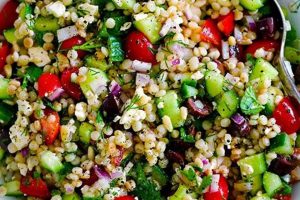
A slaw characterized by crisp, fresh textures typically features thinly sliced or shredded cabbage as its base. This foundation is often combined with other vegetables like carrots, bell peppers, or onions, contributing to both the flavor profile and textural complexity. A creamy dressing, frequently mayonnaise-based, binds the ingredients and provides richness, although vinegar-based dressings offer a lighter alternative. Achieving the desired crispness often involves specific preparation techniques such as chilling the shredded vegetables or employing particular slicing methods.
The appeal of a crisp, refreshing slaw lies in its versatility and balance. It can serve as a light, standalone dish, a vibrant side to complement heavier entrees, or a crucial component in sandwiches and tacos, adding a textural and flavorful counterpoint. Historically, cabbage salads have enjoyed a long culinary tradition across various cultures, adapting to regional ingredients and preferences over time. This adaptability ensures its continued relevance in contemporary cuisine.
The following sections will delve into specific ingredient selections, explore variations in dressing preparations, and provide step-by-step instructions for achieving optimal texture and flavor. Techniques for maintaining crispness, suggestions for creative additions, and insights into pairing slaws with various dishes will also be addressed.
Tips for a Crunchy Coleslaw
Achieving optimal crispness and flavor in a slaw requires attention to detail throughout the preparation process. The following tips offer guidance for creating a slaw that is both refreshing and satisfying.
Tip 1: Cabbage Selection and Preparation: Opt for firm, tightly packed cabbage heads. Remove the core and slice or shred the cabbage thinly and uniformly for consistent texture. A sharp knife or mandoline slicer yields the best results.
Tip 2: Enhancing Crispness: Soaking shredded cabbage in ice water for 30 minutes before dressing helps enhance its crispness. Thoroughly dry the cabbage after soaking to prevent a watery slaw.
Tip 3: Dressing Application: Add the dressing just before serving to maintain optimal texture. Overdressing can lead to a soggy slaw, so start with a smaller amount and add more as needed.
Tip 4: Balancing Flavors: Acidity plays a key role in balancing the richness of the dressing. A touch of vinegar or lemon juice can brighten the flavors and enhance the overall experience.
Tip 5: Creative Ingredient Incorporation: Explore additions beyond traditional carrots and onions. Shredded apple, jicama, or red cabbage can introduce interesting flavors and textures.
Tip 6: Seasoning Adjustments: Freshly ground black pepper, celery seeds, or a pinch of red pepper flakes can elevate the flavor profile without overpowering the delicate cabbage.
Tip 7: Proper Storage: Store leftover slaw in an airtight container in the refrigerator. Consume within two to three days for optimal quality and texture.
By following these guidelines, one can consistently achieve a slaw that exemplifies both freshness and satisfying crunch. These techniques contribute to a dish that is not only visually appealing but also offers a delightful textural and flavor experience.
In conclusion, achieving a perfectly balanced and crunchy slaw involves a combination of careful ingredient selection, precise preparation techniques, and thoughtful flavor combinations. These insights provide a foundation for creating a slaw that is sure to impress.
1. Crisp, fresh cabbage

Cabbage selection and preparation are paramount in achieving the desired crunch in coleslaw. The cabbage’s inherent qualities and how it is handled significantly influence the final texture and overall enjoyment of the dish.
- Cabbage Variety
Different cabbage varieties offer varying textures. Denser varieties like green cabbage provide a robust crunch, while Napa cabbage offers a more delicate crispness. Savoy cabbage, with its crinkled leaves, presents a unique textural experience. Choosing the right variety lays the groundwork for the slaw’s textural profile. For a classic crunchy slaw, green cabbage is often preferred.
- Freshness Indicators
Indicators of fresh cabbage include firm, tightly packed heads with vibrant, unblemished leaves. Avoiding cabbage with wilted or discolored leaves is crucial, as these indicate age and potential loss of crispness. Freshness directly correlates with the final product’s textural integrity.
- Slicing and Shredding Techniques
Precise slicing or shredding techniques are essential. Uniformity in size and thickness ensures even dressing distribution and consistent texture throughout the slaw. A sharp knife or mandoline slicer yields optimal results, minimizing bruising and maximizing crunch. Unevenly cut cabbage can lead to some pieces becoming soggy while others remain too firm.
- Post-Cutting Handling
Proper handling after cutting is crucial for preserving crispness. Submerging shredded cabbage in ice water for a short period firms the tissues and enhances its crunch. However, thorough drying after soaking is essential to prevent excess moisture from diluting the dressing and compromising the slaw’s overall texture. Neglecting this step can result in a watery final product.
These facets of cabbage selection and preparation directly influence the final slaw’s crunch. Attention to detail in each step, from choosing the right variety to employing proper cutting and handling techniques, ensures a satisfyingly crisp and refreshing coleslaw.
2. Thin, uniform shredding

Thin, uniform shredding plays a crucial role in the final texture and flavor experience of a crunchy coleslaw salad. The thickness and consistency of the shredded cabbage significantly impact several aspects of the dish, from dressing absorption to overall mouthfeel.
Uniformly thin shreds offer a larger surface area for the dressing to coat, ensuring even flavor distribution throughout the salad. This prevents pockets of undressed cabbage and creates a harmonious blend of ingredients. Furthermore, thin shreds contribute to a delicate, pleasant texture that contrasts with the creamy richness of the dressing. Conversely, thick or unevenly cut cabbage can result in an unevenly dressed slaw with some pieces remaining dry and others becoming overly saturated. The texture may also be perceived as coarse or unwieldy. Consider, for example, the difference between a finely shredded slaw that is lightly and evenly coated with dressing versus a coarsely chopped slaw where the dressing pools at the bottom of the bowl, leaving some pieces dry and others saturated. The former offers a more refined and enjoyable eating experience.
Achieving thin, uniform shreds can be accomplished using various techniques. A sharp knife allows for precise control, although it can be time-consuming for larger batches. Mandoline slicers offer a faster and more consistent approach, ensuring uniform thickness with minimal effort. Food processors equipped with shredding attachments also provide efficient shredding capabilities, though the resulting texture might be slightly less delicate compared to hand-slicing or mandoline shredding. Regardless of the chosen method, maintaining consistency in shred size is paramount to achieving optimal texture and flavor distribution in the final slaw.
3. Balanced, flavorful dressing

The dressing serves as the unifying element in a crunchy coleslaw salad recipe, binding the ingredients and imparting a cohesive flavor profile. A well-balanced dressing enhances the inherent flavors of the vegetables without overpowering their delicate crispness. The interplay of acidity, sweetness, richness, and seasonings determines the overall success of the coleslaw.
- Acidity
Acidity provides brightness and balances the richness of other dressing components. Vinegar, lemon juice, or buttermilk contribute a tangy note that cuts through the creamy texture and prevents the slaw from tasting bland. The type and amount of acid used influence the overall flavor profile, ranging from a subtle tang to a pronounced tartness.
- Sweetness
A touch of sweetness complements the acidity and rounds out the flavor profile. Sugar, honey, or maple syrup can be used sparingly to achieve the desired level of sweetness. Overly sweet dressings can mask the fresh flavors of the vegetables, so judicious use is essential. The balance between acidity and sweetness is key to a well-rounded dressing.
- Richness and Texture
Mayonnaise, sour cream, or yogurt contribute richness and creaminess to the dressing, creating a luscious coating for the shredded vegetables. The choice of base influences the texture and mouthfeel of the slaw. A lighter base, such as buttermilk or plain yogurt, can create a more refreshing slaw, while mayonnaise offers a richer, more traditional experience. The fat content also impacts the dressing’s ability to cling to the cabbage.
- Seasonings and Aromatics
Seasonings and aromatics add depth and complexity to the dressing. Freshly ground black pepper, celery seeds, onion powder, garlic powder, or a pinch of red pepper flakes can enhance the overall flavor profile. Fresh herbs, such as dill or parsley, can also add brightness and a fresh element. The choice of seasonings should complement the other dressing components and the chosen vegetables. For instance, a slaw with a vinegar-based dressing might benefit from the addition of dill, while a creamy slaw might be enhanced with celery seeds or onion powder.
A balanced, flavorful dressing is integral to a successful crunchy coleslaw salad recipe. The careful consideration of acidity, sweetness, richness, and seasonings results in a dressing that complements the fresh vegetables and elevates the overall dining experience. The dressing’s texture and flavor should enhance, not overwhelm, the natural flavors and crisp texture of the slaw’s components, ensuring a harmonious and refreshing final dish.
4. Ice water bath for cabbage

An ice water bath for shredded cabbage is a crucial step in achieving the desired crunch in a coleslaw salad recipe. This technique relies on the principle of osmosis, where water molecules move across a semi-permeable membrane from an area of lower solute concentration (the ice water) to an area of higher solute concentration (the cabbage cells). This influx of water into the cabbage cells causes them to become turgid, or firm, contributing to the overall crispness of the slaw. Submerging the shredded cabbage in ice water for approximately 20-30 minutes prior to dressing hydrates the plant cells and effectively reverses any wilting or softening that may have occurred during processing or storage. This pre-dressing hydration step is particularly effective for cabbage that appears slightly less than perfectly fresh, revitalizing its texture and preparing it for the dressing application.
The impact of the ice bath extends beyond simple hydration. It also helps to remove any residual bitterness sometimes present in cabbage. The cold temperature further firms the cabbage tissues, enhancing the perceived crunch. This contrasts with cabbage that is not subjected to an ice bath, which can be less crisp and, in some cases, exhibit slightly bitter undertones. Consider the difference between two otherwise identical coleslaws, one prepared with cabbage that was soaked in ice water and another with cabbage that was not. The former exhibits a notable increase in crispness, contributing to a more satisfying textural experience. The ice bath effectively primes the cabbage for optimal dressing adherence, preventing the slaw from becoming watery and enhancing its structural integrity.
Despite the benefits, it’s important to note that the ice water bath is not a substitute for starting with fresh, high-quality cabbage. While it can revitalize slightly less-than-perfect cabbage to a degree, it cannot fully compensate for cabbage that is already significantly wilted or damaged. Furthermore, care must be taken to thoroughly dry the cabbage after the ice bath to prevent the excess water from diluting the dressing and creating a watery slaw. The ice water bath is a valuable technique within a larger strategy of achieving optimal coleslaw texture, emphasizing the importance of both ingredient quality and careful preparation techniques in achieving culinary excellence. Proper execution of the ice bath step, combined with appropriate drying and attention to other recipe details, ensures a final product that embodies the desired crispness and flavor balance characteristic of a successful coleslaw.
5. Creative ingredient additions

Creative ingredient additions offer opportunities to elevate a crunchy coleslaw salad recipe beyond traditional preparations. These additions introduce novel textures, flavors, and visual appeal, transforming a simple slaw into a more complex and engaging culinary experience. The judicious incorporation of supplementary ingredients can broaden the slaw’s flavor profile, complementing the core ingredients while maintaining the desired textural integrity. Such additions must be carefully considered to ensure they harmonize with the existing components and contribute positively to the overall composition.
Several categories of ingredients can enhance a crunchy coleslaw. Fruits, such as shredded apples, pears, or dried cranberries, introduce sweetness and contrasting textures. Vegetables like shredded jicama, kohlrabi, or red cabbage offer unique flavors and contribute to visual appeal. Nuts and seeds, including toasted sunflower seeds, slivered almonds, or chopped walnuts, provide satisfying crunch and enhance the overall textural complexity. Herbs and spices, such as fresh cilantro, mint, or a pinch of red pepper flakes, introduce aromatic notes and further diversify the flavor profile. Consider, for instance, the addition of shredded apple to a traditional coleslaw. The apple’s sweetness and slight tartness complement the creamy dressing and cabbage, while its crisp texture enhances the overall crunch. Similarly, incorporating toasted sunflower seeds introduces a nutty flavor and an additional layer of textural complexity. These examples demonstrate how thoughtfully chosen additions can elevate a simple slaw.
Successful incorporation of creative ingredients hinges on understanding flavor pairings and textural compatibility. Ingredients should complement, not clash with, the existing components. Furthermore, the added ingredients should maintain their structural integrity and contribute to the slaw’s overall crunch. Overly soft or watery additions can compromise the desired texture, resulting in a less satisfying final product. Therefore, ingredient selection should be guided by both flavor and textural considerations, ensuring a harmonious and balanced final dish. The integration of creative additions expands the possibilities of the crunchy coleslaw salad recipe, transforming it from a simple side dish into a more dynamic and versatile culinary creation.
6. Proper storage techniques
Proper storage techniques are essential for preserving the desired crispness and flavor of a crunchy coleslaw salad. Coleslaw, being primarily composed of delicate, shredded vegetables, is susceptible to textural degradation and flavor changes upon exposure to air and temperature fluctuations. Implementing appropriate storage methods safeguards the slaw’s quality and extends its shelf life, ensuring a satisfying culinary experience even after initial preparation. Neglecting proper storage can result in a soggy, wilted slaw with diminished flavor, compromising the intended textural and gustatory appeal. For instance, storing coleslaw in a loosely sealed container at room temperature accelerates enzymatic activity, leading to breakdown of cell walls and subsequent loss of crispness. Conversely, proper storage in an airtight container at refrigerator temperatures inhibits these processes, preserving the slaw’s desired attributes.
Effective storage of crunchy coleslaw begins with selecting an appropriate container. An airtight container minimizes exposure to oxygen, which can contribute to oxidation and discoloration of the vegetables. Furthermore, the container should be of appropriate size to minimize excess air space, further reducing the potential for oxidation and moisture loss. Refrigeration at temperatures between 34F and 40F (1C and 4C) is crucial for inhibiting microbial growth and slowing down enzymatic activity, both of which contribute to spoilage and textural degradation. Storing the coleslaw away from strong-smelling foods prevents flavor transfer and maintains the slaw’s intended flavor profile. For example, storing coleslaw next to cut onions can impart an undesirable oniony flavor to the slaw. Practical application of these principles ensures that the slaw retains its desirable qualities for an extended period, typically up to three days. Extending storage beyond this timeframe risks compromising texture and flavor, even with proper storage techniques.
In summary, proper storage techniques are integral to maintaining the quality and extending the shelf life of crunchy coleslaw. The combination of an airtight container, appropriate refrigeration temperature, and strategic placement within the refrigerator plays a decisive role in preserving the slaw’s crispness, flavor, and overall appeal. Adherence to these practices allows for enjoyment of the slaw’s intended qualities beyond immediate consumption, optimizing the culinary experience and minimizing food waste. Neglecting proper storage, conversely, accelerates degradation processes, compromising the slaw’s textural and flavorful integrity.
Frequently Asked Questions
This section addresses common inquiries regarding the preparation and enjoyment of crunchy coleslaw salad.
Question 1: How can one achieve maximum crispness in coleslaw?
Optimal crispness is achieved through a combination of factors: selecting fresh, firm cabbage; employing thin, uniform shredding techniques; and utilizing an ice water bath prior to dressing. Soaking shredded cabbage in ice water for 20-30 minutes hydrates the cells, restoring turgidity and enhancing crunch.
Question 2: What are the best cabbage varieties for coleslaw?
While various cabbage types can be used, denser varieties like green cabbage are generally preferred for their robust crunch. Napa cabbage offers a more delicate crispness, while savoy cabbage contributes a unique textural experience due to its crinkled leaves.
Question 3: How can one prevent coleslaw from becoming watery?
Wateriness can be prevented by thoroughly drying the cabbage after the ice water bath and by adding the dressing just before serving. Overdressing can also contribute to excess moisture, so starting with a smaller amount of dressing and adding more as needed is recommended.
Question 4: What are some creative additions to enhance coleslaw’s flavor profile?
Shredded fruits (apples, pears), vegetables (jicama, red cabbage), nuts and seeds (sunflower seeds, almonds), herbs (cilantro, mint), and spices (red pepper flakes) can elevate the flavor profile and add textural complexity.
Question 5: What is the optimal storage method for maintaining coleslaw’s crispness?
Storing coleslaw in an airtight container in the refrigerator at temperatures between 34F and 40F (1C and 4C) is crucial for preserving its crispness and flavor. It is also advisable to store the coleslaw away from strong-smelling foods to prevent flavor transfer.
Question 6: How long can coleslaw be stored in the refrigerator?
Properly stored coleslaw typically maintains its optimal quality for two to three days in the refrigerator. Beyond this timeframe, the texture and flavor may begin to deteriorate, even with proper storage.
Understanding these key aspects of coleslaw preparation and storage allows for consistent creation of a crisp, flavorful, and enjoyable dish.
The subsequent sections will provide detailed recipes and explore variations on the classic coleslaw theme.
Crunchy Coleslaw Salad Recipe
This exploration of the crunchy coleslaw salad recipe has highlighted the critical factors contributing to its success. From the selection of crisp, fresh cabbage and the importance of thin, uniform shredding to the delicate balance of flavors within the dressing, each component plays a vital role in the final product. The transformative effect of an ice water bath on cabbage crispness and the potential for creative ingredient additions to elevate flavor profiles were also examined. Proper storage techniques were emphasized as crucial for maintaining the slaw’s textural and flavorful integrity over time.
Ultimately, the crunchy coleslaw salad recipe represents a culinary synergy of fresh ingredients, precise techniques, and balanced flavors. Attention to detail throughout the preparation process yields a dish that exemplifies both textural and flavorful complexity. This exploration serves as a foundation for further culinary experimentation and personalized interpretations of this versatile and refreshing salad. The potential for innovation within the crunchy coleslaw salad recipe remains vast, inviting culinary enthusiasts to explore the interplay of textures, flavors, and ingredients.