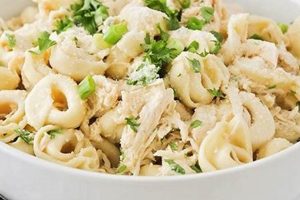
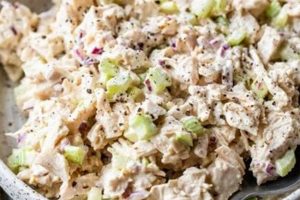
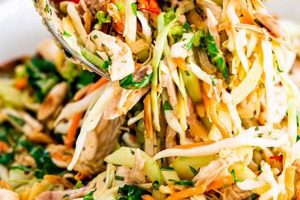
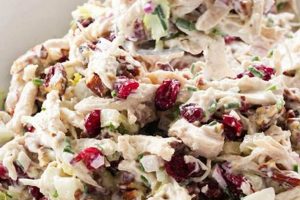
This dish typically features shredded chicken, bacon, cheese (often cheddar, Colby Jack, or cream cheese), and a creamy base made with mayonnaise or ranch dressing. Variations may include other ingredients such as grapes, green onions, or jalapenos. It is often served as a sandwich filling, on crackers, or as a dip with vegetables.
The popularity of this particular chicken salad stems from its rich flavor profile and satisfying texture. The combination of savory chicken, salty bacon, and creamy dressing creates a highly palatable dish, often described as addictivehence the colloquial name. While its exact origins are unclear, the recipe’s widespread availability online and in cookbooks suggests a relatively recent emergence, likely fueled by social media sharing and food blogs.
Further exploration will delve into specific ingredient variations, preparation methods, nutritional information, and serving suggestions to provide a complete understanding of this contemporary culinary creation.
Tips for a Superior Chicken Salad Experience
Achieving optimal flavor and texture requires attention to detail throughout the preparation process. The following tips offer guidance for creating a truly exceptional dish.
Tip 1: Chicken Selection: Opting for high-quality chicken, such as roasted or rotisserie, significantly enhances the overall flavor. Pre-cooked chicken offers convenience, but ensure it is properly shredded or diced for optimal texture.
Tip 2: Bacon Preparation: Crispy bacon provides a delightful textural contrast to the creamy base. Cook bacon until thoroughly crisp, then crumble or chop it into small pieces.
Tip 3: Cheese Selection: Sharp cheddar, Colby Jack, or cream cheese are popular choices, each contributing a distinct flavor profile. Experimenting with different cheese combinations can yield interesting results.
Tip 4: Dressing Consistency: The creamy base should be thick enough to bind the ingredients without being overly heavy. Adjust the amount of mayonnaise or ranch dressing accordingly. Greek yogurt can be incorporated for a lighter alternative.
Tip 5: Fresh Ingredients: Incorporating fresh ingredients like chopped green onions, grapes, or celery adds brightness and complexity to the dish. These elements provide a refreshing counterpoint to the richness of the other components.
Tip 6: Seasoning: Seasoning with salt, pepper, and other spices, such as garlic powder or paprika, enhances the overall flavor profile. Adjust seasonings to taste.
Tip 7: Chilling: Chilling the salad for at least 30 minutes allows the flavors to meld and enhances the creamy texture. This step is crucial for optimal enjoyment.
By following these tips, one can elevate this simple dish to a truly exceptional culinary experience. Careful attention to ingredient selection, preparation techniques, and seasoning ensures a flavorful and satisfying result.
This exploration of preparation tips segues into a discussion of various serving suggestions and potential recipe adaptations.
1. Ingredients

Ingredient selection significantly impacts the final flavor profile and overall quality of the dish. The foundational ingredients typically include cooked chicken, bacon, cheese, and a mayonnaise or ranch-based dressing. Each ingredient contributes distinct characteristics: chicken provides protein and texture, bacon offers smoky saltiness and crispness, cheese adds richness and creaminess, and the dressing binds the elements together. The quality of these core ingredients directly correlates with the final result. For instance, using rotisserie chicken versus boiled chicken yields a more robust flavor, while opting for thick-cut bacon over thin bacon offers a more substantial textural contrast. Similarly, the choice of cheese, whether sharp cheddar, creamy Colby Jack, or tangy blue cheese, influences the overall taste experience.
Beyond the core ingredients, additions such as grapes, green onions, or jalapenos introduce complexity and balance. Grapes offer sweetness and juiciness, green onions provide a mild onion flavor and a pop of color, while jalapenos contribute heat and spice. Careful consideration of these supplementary ingredients allows for customization and personalization of the recipe. The balance of flavors and textures is crucial; the sweetness of grapes can offset the richness of the cheese and bacon, while the sharpness of green onions cuts through the creamy dressing. Understanding the interplay of these components empowers informed ingredient choices to achieve the desired outcome.
Ultimately, successful preparation hinges on utilizing high-quality ingredients and understanding their individual contributions to the final product. Thoughtful selection and balanced incorporation of both core and supplementary ingredients elevates this simple dish from basic to exceptional. This understanding allows for recipe adaptation based on individual preferences and dietary considerations. Whether emphasizing richness, enhancing freshness, or exploring different flavor profiles, careful ingredient selection remains paramount.
2. Preparation
Preparation methods significantly influence the final quality and enjoyment of this dish. Proper techniques ensure optimal flavor development, texture, and food safety. A systematic approach to preparation, from ingredient handling to combining components, contributes to a successful outcome.
- Chicken Handling
Whether using pre-cooked or raw chicken, proper handling is crucial. Pre-cooked chicken, such as rotisserie or baked, should be shredded or diced into bite-sized pieces. If using raw chicken, it must be cooked thoroughly to an internal temperature of 165F (74C) before incorporating it into the salad. This ensures both food safety and optimal texture. Overcooking can result in dry, stringy chicken, while undercooking poses health risks.
- Bacon Preparation
Bacon contributes both flavor and texture. Cooking bacon until crispy yields the best results, providing a satisfying crunch that contrasts with the creamy elements. After cooking, the bacon should be drained of excess grease and crumbled or chopped into small pieces for even distribution throughout the salad. Properly cooked bacon enhances the overall sensory experience.
- Ingredient Combination
The order in which ingredients are combined can affect the final texture and flavor. Generally, the creamy base (mayonnaise or ranch dressing) should be mixed with the shredded chicken first, followed by the cheese and other ingredients. This method ensures even coating and prevents the salad from becoming overly wet. Adding ingredients in stages allows for better control over the final consistency.
- Chilling
Chilling the prepared salad for at least 30 minutes allows the flavors to meld and enhances the overall experience. This step is particularly important when using fresh ingredients, as it allows their flavors to permeate the salad. Chilling also firms the texture, making it easier to serve as a sandwich filling or dip. Proper chilling optimizes both flavor and texture.
Careful attention to these preparation steps contributes significantly to the overall quality and enjoyment of the final product. Each step, from chicken handling to chilling, plays a vital role in achieving the desired flavor profile, texture, and food safety. By following these guidelines, one ensures a consistently delicious and satisfying culinary experience.
3. Variations

Adaptability represents a significant advantage of this recipe. Numerous variations exist, allowing for customization based on individual preferences, dietary needs, and available ingredients. Exploring these variations highlights the recipe’s versatility and potential for creative expression within a basic framework.
- Health-Conscious Adaptations
Healthier versions can be achieved through ingredient substitutions. Using Greek yogurt in place of mayonnaise or a portion of the mayonnaise reduces fat and calories without sacrificing creaminess. Incorporating leaner protein options, such as ground turkey or chicken breast, further reduces overall fat content. These modifications allow individuals to enjoy the dish while adhering to dietary restrictions or health goals. Substituting whole-wheat crackers for traditional crackers adds fiber. Each adjustment contributes to a nutritionally balanced meal.
- Flavor Enhancements
Flavor profiles can be customized through the addition of spices and herbs. Smoked paprika adds a smoky depth, while garlic powder provides a savory punch. Fresh herbs, such as dill or chives, introduce bright, herbaceous notes. Incorporating different cheeses, like pepper jack or blue cheese, alters the overall flavor profile. These variations allow for endless experimentation and customization to suit individual palates. The interplay of spices, herbs, and cheeses creates a complex and nuanced flavor experience.
- Textural Variations
Texture can be modified through the inclusion of different ingredients. Adding chopped celery, water chestnuts, or chopped nuts introduces contrasting crunchy elements. Using dried cranberries or chopped apples provides a chewy texture and a touch of sweetness. These additions create a more dynamic sensory experience. The interplay of creamy, crunchy, and chewy textures elevates the dish beyond a simple salad.
- Spicy Variations
Spice levels can be adjusted to suit individual preferences. Incorporating diced jalapeos, a dash of hot sauce, or a pinch of cayenne pepper adds heat. The level of spice can be easily controlled, from a mild warmth to a fiery kick. These variations cater to a range of spice tolerances, from those who prefer a subtle heat to those who enjoy a more intense burn.
The inherent flexibility of this recipe allows for a wide range of interpretations. From health-conscious adaptations to bold flavor explorations, the possibilities for customization are vast. This adaptability contributes to the recipe’s widespread appeal and enduring popularity. By understanding the core components and their potential for modification, individuals can create personalized versions that perfectly suit their individual tastes and dietary requirements.
4. Serving
Presentation and serving methods significantly influence the overall dining experience. Consideration of various serving options enhances the enjoyment of this versatile dish, extending beyond a simple scoop on a plate. Exploring diverse serving styles elevates the dish from casual fare to a more considered culinary creation.
- Sandwiches
Classic sandwich preparations offer a convenient and satisfying option. Using croissants, slider rolls, or traditional bread provides varied textures and flavors that complement the creamy filling. Toasted bread adds a crispy element, while flaky croissants offer a buttery richness. The choice of bread influences the overall sensory experience.
- Crackers and Vegetables
Serving the salad as a dip with crackers or fresh vegetables provides a lighter alternative. Crisp crackers or crunchy vegetables offer textural contrast to the creamy salad. This serving style is ideal for casual gatherings or appetizers. The variety of crackers and vegetables available allows for customization and caters to different dietary preferences.
- Salads
Incorporating the chicken salad into a green salad adds a protein boost and a flavorful twist. A bed of mixed greens topped with the chicken salad creates a complete and balanced meal. The freshness of the greens complements the richness of the salad, creating a harmonious balance of flavors and textures. Adding other salad components, such as tomatoes, cucumbers, or croutons, further enhances the nutritional value and visual appeal.
- Wraps
Using tortillas or lettuce wraps offers a portable and customizable option. Filling tortillas or lettuce cups with the chicken salad creates a convenient meal or snack. The flexibility of wraps allows for the addition of other ingredients, such as shredded cheese, salsa, or avocado, further expanding the flavor profile and nutritional value.
Thoughtful consideration of these serving options elevates the dining experience. From simple sandwiches to elegant salads, the versatility of this dish allows for adaptation to various occasions and preferences. Choosing the appropriate serving method enhances presentation and maximizes enjoyment, transforming a basic recipe into a more sophisticated culinary offering.
5. Storage
Proper storage is crucial for maintaining the quality and safety of this dish. Given its combination of ingredients, including mayonnaise, cheese, and cooked chicken, it is highly susceptible to bacterial growth if not handled and stored correctly. Spoilage can occur rapidly at room temperature, leading to foodborne illness. Therefore, refrigeration is essential to slow bacterial growth and preserve freshness.
Ideally, the prepared salad should be stored in an airtight container in the refrigerator. This prevents exposure to air and cross-contamination from other foods. Airtight storage also helps maintain the desired texture and prevents the salad from drying out. Consumption within three to four days of preparation is recommended for optimal quality and safety. Beyond this timeframe, the risk of bacterial growth increases significantly, even under refrigeration. Freezing is generally not recommended, as the mayonnaise-based dressing can separate and become watery upon thawing, compromising the texture and overall quality.
Effective storage practices are essential for preserving the quality and ensuring the safety of this dish. Refrigeration in an airtight container immediately after preparation and consumption within a reasonable timeframe minimize the risk of spoilage and foodborne illness. Understanding these storage guidelines contributes to a safe and enjoyable culinary experience.
6. Nutrition
Nutritional considerations are relevant when evaluating this dish. While offering a flavorful and satisfying experience, it is important to understand its nutritional composition. Awareness of caloric content, macronutrient breakdown, and potential health implications allows for informed consumption and integration into a balanced diet. This understanding empowers individuals to make health-conscious choices and enjoy the dish responsibly.
- Calorie Content
This dish tends to be calorie-dense due to its combination of ingredients, particularly the mayonnaise or ranch dressing, cheese, and bacon. Calorie counts can vary based on specific ingredients and portion sizes. Understanding the caloric density allows for portion control and integration into overall daily caloric intake goals. Adjusting portion sizes or modifying ingredients can help manage calorie consumption.
- Macronutrient Profile
The macronutrient profile typically consists of high protein from the chicken, significant fat from the dressing, cheese, and bacon, and moderate carbohydrates. The specific ratios of protein, fat, and carbohydrates can vary depending on the recipe and ingredient choices. Understanding the macronutrient breakdown allows individuals to balance their overall dietary intake and make informed choices aligned with their nutritional goals. For example, substituting Greek yogurt for a portion of the mayonnaise can shift the macronutrient ratio towards higher protein and lower fat.
- Micronutrients
While not a significant source of micronutrients, this dish can contribute small amounts of certain vitamins and minerals, depending on the specific ingredients. For instance, using dark meat chicken increases the iron content, while incorporating fresh vegetables like celery or green onions adds vitamins and minerals. However, the overall micronutrient contribution is generally modest compared to other food groups like fruits and vegetables. Therefore, it should be considered as part of a larger, balanced dietary pattern that includes diverse nutrient sources.
- Dietary Considerations
This dish may not be suitable for all dietary restrictions or health conditions. Individuals with high cholesterol, heart conditions, or those following low-fat or low-sodium diets should consume this dish with caution and consider modifications. Ingredient substitutions, portion control, and balanced meal planning can help address these concerns. Consulting a healthcare professional or registered dietitian can provide personalized guidance on incorporating this dish into specific dietary needs.
Nutritional awareness enhances responsible consumption of this popular dish. Understanding the caloric content, macronutrient profile, micronutrient contributions, and potential dietary restrictions allows for informed choices that align with individual health goals and dietary needs. While offering a delicious and satisfying experience, it is important to approach this dish with a balanced perspective on its nutritional value and its role within a broader dietary context.
Frequently Asked Questions
This section addresses common inquiries regarding preparation, variations, and safe handling.
Question 1: What is the origin of the name?
While the exact origin remains unclear, the name likely reflects the dish’s highly palatable and addictive nature due to its rich combination of flavors and textures.
Question 2: Can this dish be prepared in advance?
Advance preparation is possible. Storing the prepared salad in an airtight container in the refrigerator for up to three days is recommended. Flavor melding may enhance the taste experience.
Question 3: What are suitable alternatives to mayonnaise?
Greek yogurt or light mayonnaise offer lower-fat alternatives while maintaining a creamy consistency. Avocado can also contribute a healthy creaminess. Adjustments to other ingredients may be necessary to maintain desired flavor balance and texture.
Question 4: How can spice levels be adjusted?
Spice can be adjusted through the incorporation of ingredients such as jalapeos, hot sauce, or cayenne pepper. Start with small amounts and adjust according to preferred heat intensity. Removing the seeds and membranes from jalapeos reduces their heat.
Question 5: Is freezing recommended?
Freezing is generally not recommended due to potential textural changes in the dressing upon thawing. Mayonnaise-based dressings tend to separate and become watery after freezing, negatively affecting the overall quality of the dish.
Question 6: What are appropriate serving vessels for larger gatherings?
For larger gatherings, consider serving the salad in a hollowed-out bread bowl, a large platter garnished with fresh herbs, or individual serving cups for portion control and ease of handling. These presentation options enhance the visual appeal and convenience for guests.
Addressing these common queries provides clarity regarding optimal preparation and handling practices. Understanding these aspects contributes to a successful culinary outcome.
This FAQ section concludes the exploration of this versatile and popular dish. The information presented provides a comprehensive understanding of its origins, preparation methods, variations, serving suggestions, storage guidelines, nutritional considerations, and commonly asked questions. This knowledge empowers individuals to approach the recipe with confidence and creativity, adapting it to their own preferences and dietary needs.
Crack Chicken Salad Recipe
Exploration of this popular dish reveals a versatile recipe adaptable to various tastes and dietary needs. From ingredient selection and preparation techniques to serving suggestions and storage guidelines, understanding the core components empowers culinary creativity. Variations range from health-conscious adaptations to bold flavor explorations, highlighting the recipe’s inherent flexibility. Nutritional awareness allows for informed consumption, while proper storage practices ensure food safety and maintain quality. Addressing common inquiries further clarifies preparation and handling techniques.
The enduring popularity of this dish underscores its broad appeal. Its adaptability and customizable nature ensure continued relevance in the culinary landscape. Further experimentation and exploration of flavor profiles promise ongoing evolution and personalized interpretations of this contemporary classic.