A classic Caesar dressing typically emulsifies raw egg yolks, garlic, lemon juice, Worcestershire sauce, and olive oil. Authentic versions often incorporate anchovies or anchovy paste for a distinctive umami flavor. Variations exist, substituting ingredients like Dijon mustard for a sharper taste or omitting the raw egg for food safety concerns. A truly traditional preparation involves coddling the egg yolk gently in the warm emulsion, resulting in a rich, creamy texture.
From its origin in Tijuana, Mexico, this dressing has evolved into a culinary staple. Its popularity stems from the balanced combination of savory, tangy, and rich flavors that complement crisp romaine lettuce and crunchy croutons. Understanding the components and preparation methods allows for appreciating the nuances of a well-executed emulsion and its ability to elevate a simple salad to an iconic dish. Mastering the technique offers a foundation for culinary creativity, allowing for personalized adaptations and variations while respecting the dressing’s historical roots.
The following sections will delve deeper into the origins of this beloved dressing, explore variations and substitutions for dietary restrictions or preferences, and provide a step-by-step guide for crafting an exceptional emulsion at home. Further exploration will also cover the evolution of the recipe over time and offer tips for selecting the freshest, highest quality ingredients.
Tips for an Exceptional Caesar Dressing
Achieving a truly remarkable Caesar dressing requires attention to detail and an understanding of the core ingredients. These tips offer guidance on optimizing flavor and texture.
Tip 1: Emulsify Thoroughly: A stable emulsion is crucial for a creamy, cohesive dressing. Adding the oil drop by drop while whisking vigorously creates a proper emulsion, preventing separation.
Tip 2: Fresh Garlic is Key: Pre-minced garlic often lacks the pungent bite of freshly minced or grated cloves. This subtle difference significantly impacts the overall flavor profile.
Tip 3: Quality Olive Oil Matters: Extra virgin olive oil contributes a fruity, peppery note that complements the other ingredients. Opt for a high-quality oil for the best results.
Tip 4: Balance Acidity: Lemon juice provides the necessary acidity to balance the richness of the other ingredients. Taste and adjust accordingly, adding more if needed for a brighter, tangier dressing.
Tip 5: Anchovy Enhancement: While optional, anchovy paste or fillets provide a depth of umami flavor that is characteristic of traditional preparations. Start with a small amount and adjust to taste.
Tip 6: Coddled Egg for Richness (Optional): Coddling the egg yolk gently in the warm emulsion, while taking appropriate food safety precautions, creates an exceptionally luxurious texture.
Tip 7: Seasoning is Essential: Freshly ground black pepper and kosher salt enhance the overall flavor profile. Taste and adjust seasoning throughout the preparation process.
By focusing on these details, one can create a Caesar dressing that surpasses pre-made versions, offering a superior culinary experience.
With these fundamental principles established, let’s conclude with a recap of the core elements that contribute to a truly authentic and delightful Caesar salad experience.
1. Fresh, High-Quality Ingredients

Authentic Caesar salad dressing relies heavily on the quality of its ingredients. Fresh, high-quality components elevate the dressing from ordinary to exceptional, impacting both flavor and texture. Subpar ingredients result in a muted, less vibrant final product, failing to capture the dressing’s characteristic complexity.
- Extra Virgin Olive Oil
The foundation of any good Caesar dressing is extra virgin olive oil. Its fruity, peppery notes contribute significantly to the overall flavor profile. Using a low-quality oil results in a flat, greasy dressing. Selecting an extra virgin olive oil with a robust flavor profile ensures a rich, flavorful emulsion. Consider oils with designations of origin for guaranteed quality and flavor characteristics.
- Fresh Garlic
Freshly minced or grated garlic provides a pungent, aromatic bite essential to a true Caesar dressing. Pre-minced garlic, often preserved in oil, lacks the same intensity and can introduce unwanted flavors. The difference between fresh and pre-minced is readily apparent in the final product. The sharp, clean flavor of fresh garlic is indispensable.
- High-Quality Parmesan Cheese
Authentic Caesar dressing utilizes high-quality Parmesan cheese, preferably Parmigiano-Reggiano, for its sharp, salty, umami notes. Pre-grated Parmesan often contains cellulose and other additives, diminishing its flavor and impacting texture. Freshly grated Parmesan adds a depth of flavor that pre-grated options cannot replicate. This ingredient contributes significantly to the dressing’s overall complexity.
- Fresh Eggs (Optional)
Traditional Caesar dressings incorporate raw or coddled egg yolks for richness and creaminess. Using the freshest, highest-quality eggs is crucial for both flavor and safety. Pasteurized eggs offer a safer alternative for those concerned about consuming raw eggs. The quality and freshness of the eggs directly influence the dressing’s texture and overall richness.
The interplay of these fresh, high-quality ingredients creates a symphony of flavors that define a true Caesar salad experience. Compromising on ingredient quality diminishes the final result, resulting in a dressing that lacks the depth, complexity, and vibrancy of an authentic preparation. Selecting premium ingredients ensures the final product remains faithful to the dressing’s origins and delivers an exceptional culinary experience.
2. Proper Emulsification Technique

Emulsification is fundamental to a successful Caesar dressing, binding ingredients into a cohesive, creamy texture rather than a separated, oily mixture. A properly emulsified dressing clings to the romaine lettuce, delivering a balanced distribution of flavor in every bite. Understanding this technique is essential for achieving an authentic, high-quality Caesar salad experience.
- Slow Incorporation of Oil
The gradual addition of oil, drop by drop initially, while whisking constantly, allows the egg yolks (or other emulsifying agent) to encapsulate the oil droplets, creating a stable emulsion. Rushing this process, by adding oil too quickly, results in a broken emulsion where the oil and other liquids separate. This slow, deliberate approach is crucial for achieving the desired creamy consistency.
- Constant Whisking
Vigorous whisking creates the necessary shear force to disperse the oil into tiny droplets, enabling the emulsifier to effectively coat them and prevent coalescence. This continuous agitation ensures a uniform emulsion and prevents separation. The physical action of whisking, whether by hand or with a blender, is paramount to the process.
- Temperature Considerations
Ingredients at room temperature typically emulsify more readily. Cold ingredients can hinder the process, leading to a less stable emulsion. While traditional recipes may incorporate a coddled egg, utilizing room temperature ingredients promotes a smoother, more consistent emulsion. Attention to temperature enhances the effectiveness of the emulsification.
- Identifying a Stable Emulsion
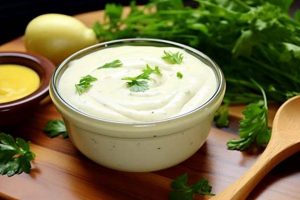
A properly emulsified dressing will appear thick, creamy, and opaque. It will coat the back of a spoon and hold its shape without readily dripping. A broken emulsion, conversely, appears thin, watery, and separated. Recognizing the visual cues of a stable emulsion ensures a desirable final product.
Mastering the emulsification technique ensures a Caesar dressing with the desired texture and flavor distribution, a hallmark of a truly exceptional preparation. This fundamental process distinguishes a homemade dressing from pre-made versions, elevating the culinary experience and demonstrating an understanding of fundamental culinary principles. The creamy, cohesive texture achieved through proper emulsification contributes significantly to the overall enjoyment of the salad.
3. Balanced Flavor Profile
A defining characteristic of an authentic Caesar salad dressing lies in its balanced flavor profile. This balance, achieved through a harmonious interplay of contrasting tastes, distinguishes it from imitations and contributes significantly to its enduring appeal. Understanding this interplay is crucial for replicating the classic flavor experience.
- Savory Depth
Umami, the savory fifth taste, forms the foundation of the dressing’s flavor profile. Traditionally derived from anchovies or anchovy paste, this savory depth provides a rich, complex backbone. Worcestershire sauce, often containing anchovies and other fermented ingredients, further enhances this savory dimension. This element provides the grounding for the other flavors to build upon.
- Tangy Brightness
Fresh lemon juice introduces a tangy brightness that cuts through the richness of the oil and other savory elements. This acidity balances the overall flavor, preventing the dressing from becoming overly heavy or cloying. The right balance of acidity is essential for a refreshing and palatable final product.
- Richness and Creaminess
Olive oil contributes a rich, smooth mouthfeel, while the emulsification process creates a creamy texture that coats the palate. Traditionally, raw or coddled egg yolks further enhance this richness and creaminess, adding a luxurious element. This textural component complements the flavor profile, contributing to the overall sensory experience.
- Subtle Pungency
Fresh garlic provides a subtle yet essential pungent note that complements the other flavors without overpowering them. The quantity of garlic used requires careful consideration, as too much can create an overly aggressive flavor, while too little diminishes its contribution to the balance. This element adds a layer of complexity and depth.
The delicate balance of these distinct flavor componentssavory, tangy, rich, and pungentdefines a true Caesar dressing. The absence or overemphasis of any single element disrupts this harmony, resulting in a dressing that falls short of the authentic experience. Achieving this balance allows the individual flavors to shine while contributing to a cohesive and complex whole, exemplifying the art of culinary balance.
4. Authenticity over Shortcuts

Authenticity, in the context of a real Caesar salad dressing recipe, prioritizes traditional methods and ingredients over convenient substitutions. This commitment to the original preparation yields a superior flavor profile and a deeper appreciation for the dressing’s culinary heritage. Embracing authenticity necessitates understanding the rationale behind each ingredient and technique.
- Freshly Emulsified Dressing
A genuine Caesar dressing requires hand-emulsification of raw egg yolks, oil, and seasonings. While bottled dressings offer convenience, they often contain preservatives, stabilizers, and substitutes that compromise the flavor and texture of a true Caesar. The act of emulsification itself contributes to the dressing’s unique character, a nuance lost with pre-made options. This hands-on approach reflects a dedication to the traditional method.
- High-Quality Ingredients
Authenticity mandates the use of high-quality ingredients, such as extra virgin olive oil, fresh garlic, and Parmigiano-Reggiano cheese. Substituting these with inferior alternatives diminishes the dressing’s complexity and overall quality. The flavor profile of a true Caesar relies on the synergistic interplay of these premium components. Compromising on quality undermines the authenticity of the final product.
- Traditional Flavor Components
Authentic Caesar dressings incorporate ingredients like anchovy paste or Worcestershire sauce, contributing a distinctive umami depth often absent in simplified versions. These ingredients, while sometimes omitted due to personal preferences, are integral to the traditional flavor profile. Understanding their role in the overall composition is crucial for appreciating the dressing’s authentic character.
- Freshly Prepared, Never Bottled
A hallmark of authenticity is the commitment to freshly prepared dressing. Bottled versions, while shelf-stable, lack the vibrancy and complexity of a freshly made emulsion. The immediate consumption of a freshly prepared dressing guarantees optimal flavor and texture, an element unattainable with pre-made alternatives. This dedication to freshness distinguishes a true Caesar enthusiast.
Prioritizing authenticity elevates the Caesar salad experience beyond mere convenience. It fosters an appreciation for culinary tradition and results in a superior product, showcasing the depth and complexity achievable through time-honored techniques and carefully selected ingredients. This dedication to authenticity reflects a respect for the dressing’s origins and a commitment to culinary excellence.
5. Freshly Prepared
Fresh preparation is paramount to a truly authentic Caesar salad dressing experience. The immediacy of emulsification and incorporation of fresh ingredients distinguishes a real Caesar dressing from pre-made or bottled versions. The volatile aromatic compounds in freshly minced garlic, for instance, begin to dissipate shortly after preparation, impacting the dressing’s overall pungency and vibrancy. Similarly, the delicate balance of flavors in a freshly emulsified dressingthe tangy lemon juice, the rich olive oil, the savory anchovybegins to degrade over time. Oxidation of the oil and enzymatic changes within the other components contribute to this flavor degradation. A freshly prepared dressing captures these flavors at their peak, offering a complexity and vibrancy unattainable in pre-made alternatives. Consider the difference between freshly squeezed lemon juice and bottled lemon juice; the fresh variant offers a brightness and complexity often absent in its processed counterpart. This principle applies equally to the Caesar dressing as a whole.
Practical implications of this understanding are numerous. Restaurant patrons seeking an authentic Caesar should inquire about dressing preparation methods. Home cooks aiming to replicate the classic experience must prioritize fresh ingredients and immediate preparation. Attempting to prepare the dressing significantly in advance inevitably compromises the flavor profile, diminishing the overall quality. The effort involved in fresh preparation translates directly into a superior culinary experience, highlighting the integral role of “freshly prepared” within a real Caesar salad dressing recipe. This commitment to freshness showcases a dedication to culinary excellence, mirroring the approach of Caesar Cardini himself.
The connection between freshly prepared and a real Caesar salad dressing is undeniable. Fresh preparation preserves the volatile aromatic compounds and delicate flavor balance, characteristics absent in pre-made versions. This understanding underscores the importance of prioritizing fresh ingredients and immediate preparation for an authentic Caesar salad experience, aligning with the principles of culinary tradition and maximizing flavor potential. The effort invested in fresh preparation directly correlates with the quality of the final product, reinforcing the significance of “freshly prepared” as a defining characteristic of a real Caesar salad dressing.
Frequently Asked Questions
This section addresses common inquiries regarding authentic Caesar salad dressing preparation, clarifying potential misconceptions and offering further insights into achieving optimal results.
Question 1: Is raw egg essential for an authentic Caesar dressing?
While traditional recipes incorporate raw egg yolk, concerns regarding salmonella exist. Pasteurized eggs offer a safe alternative without significantly compromising flavor or texture. Coddling the egg yolk, while requiring careful temperature control, mitigates risk and enhances richness.
Question 2: Can anchovies be omitted?
Anchovies contribute the characteristic umami depth associated with authentic Caesar dressing. While omission caters to personal preferences, it deviates from the traditional flavor profile. Worcestershire sauce, often containing anchovies, offers a milder alternative for enhancing umami.
Question 3: What type of olive oil is recommended?
Extra virgin olive oil, with its fruity, peppery notes, is preferred. High-quality extra virgin olive oil contributes significantly to the dressing’s overall flavor complexity. Avoid using lower-grade oils, as they lack the nuanced flavor profile necessary for an authentic Caesar.
Question 4: Why is fresh garlic preferred over pre-minced?
Fresh garlic possesses a more pungent, complex flavor compared to pre-minced alternatives, which often lack intensity and may contain preservatives. Freshly minced or grated garlic provides the optimal flavor profile for an authentic Caesar dressing.
Question 5: How long can homemade Caesar dressing be stored?
Due to the presence of fresh ingredients, particularly if using raw egg, homemade Caesar dressing is best consumed immediately. Refrigeration, while extending shelf life for a day or two, compromises flavor and texture. Prioritizing freshness ensures optimal quality and safety.
Question 6: What is the significance of proper emulsification?
Proper emulsification creates a stable, creamy texture essential for an authentic Caesar dressing. This process evenly distributes flavors and prevents separation of oil and other liquids. A broken emulsion results in a thin, watery dressing that lacks the characteristic richness and mouthfeel.
Understanding these key aspects of Caesar dressing preparation ensures optimal results and allows for informed decisions regarding ingredient selection and technique. Prioritizing freshness, quality ingredients, and traditional methods yields a dressing that remains true to the dish’s origins.
The subsequent section will provide a step-by-step guide to preparing a classic Caesar dressing, incorporating the principles discussed thus far.
Real Caesar Salad Dressing Recipe
Exploration of a real Caesar salad dressing recipe reveals a commitment to fresh, high-quality ingredients, proper emulsification techniques, and a balanced flavor profile. Authenticity dictates prioritizing traditional methods and freshly prepared ingredients over convenient shortcuts. The delicate interplay of savory umami from anchovies (or Worcestershire sauce), tangy lemon juice, rich olive oil, pungent garlic, and creamy egg yolk defines this iconic dressing. Compromising ingredient quality or employing shortcuts diminishes the final product, failing to capture the dressing’s characteristic complexity and depth.
Culinary traditions, like that of the Caesar salad dressing, deserve preservation and understanding. Embracing these traditions fosters an appreciation for culinary history and elevates the dining experience. One hopes future generations continue to explore and appreciate the nuances of a real Caesar salad dressing recipe, ensuring its legacy endures as a testament to culinary excellence.