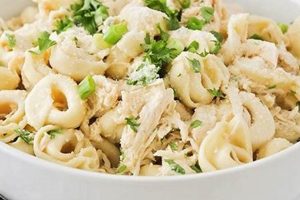
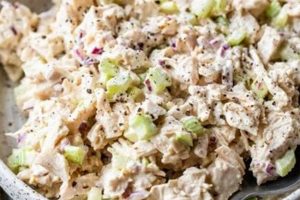
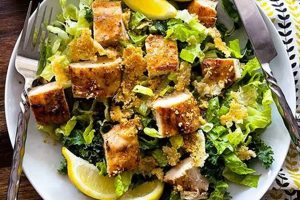
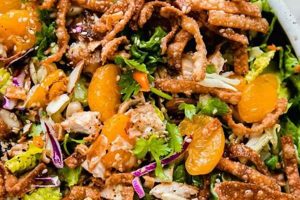
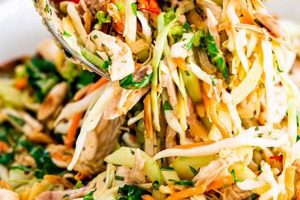
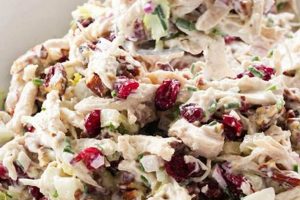
A dish typically comprised of cooked pasta, chilled chicken, and various other ingredients such as vegetables, herbs, cheese, and a flavorful dressing. A classic example might include rotini pasta, diced grilled chicken breast, celery, red onion, mayonnaise, and Dijon mustard. Variations abound, incorporating different pasta shapes, chicken preparations (roasted, poached, shredded), and a wide array of vegetables, cheeses, and dressings.
This type of dish offers several advantages. Its make-ahead nature allows for convenient meal prepping, making it ideal for picnics, potlucks, and quick lunches. The combination of protein, carbohydrates, and customizable additions provides a balanced and often nutritious meal. Historically, pasta salads gained popularity as refrigeration became more common, allowing for safe consumption of cold dishes. The adaptable nature of the dish has led to countless regional and cultural variations.
Further exploration will delve into specific ingredient recommendations, preparation techniques, dressing options, and creative variations to inspire culinary enthusiasts of all levels.
Tips for a Successful Preparation
Achieving a flavorful and well-balanced dish requires attention to several key elements. The following tips offer guidance for optimal results.
Tip 1: Pasta Selection and Cooking: Opt for shorter pasta shapes that hold the dressing well, such as rotini, farfalle, or penne. Cook the pasta al dente for optimal texture; overcooked pasta can become mushy in a salad. Rinse cooked pasta under cold water to stop the cooking process and cool it down quickly.
Tip 2: Chicken Preparation: Employ any preferred cooking method for the chicken: grilling, roasting, poaching, or even using leftover rotisserie chicken. Ensure the chicken is fully cooked and cooled before adding it to the salad to prevent bacterial growth and maintain a desirable temperature.
Tip 3: Vegetable Choices: Incorporate a variety of colorful vegetables for added flavor, texture, and visual appeal. Consider options like bell peppers, celery, red onion, cucumber, cherry tomatoes, or blanched broccoli.
Tip 4: Flavorful Dressings: A well-balanced dressing is crucial. Vinaigrettes, creamy dressings based on mayonnaise or yogurt, or pesto can all be excellent choices. Consider the other ingredients when selecting a dressing to ensure complementary flavors.
Tip 5: Ingredient Proportion: Strive for a balance of pasta, chicken, and vegetables. Too much pasta can result in a bland salad, while too many vegetables might overpower the other flavors.
Tip 6: Chilling Time: Allow the salad to chill for at least 30 minutes before serving. This allows the flavors to meld and the salad to reach an optimal temperature.
Tip 7: Preventing Sogginess: If using a creamy dressing, add it just before serving to prevent the pasta from absorbing too much and becoming soggy.
By following these guidelines, one can create a delicious and satisfying dish. Attention to detail, from ingredient selection to chilling time, contributes significantly to the overall enjoyment.
With these foundational tips established, a deeper exploration into specific recipe variations and advanced techniques can further enhance culinary expertise.
1. Chilled

“Chilled” is a crucial characteristic of this dish, directly influencing its palatability and food safety. It signifies more than just a lower temperature; it represents a deliberate culinary choice that enhances the overall dining experience. Understanding the nuances of “chilled” in this context is essential for successful preparation and enjoyment.
- Temperature Range
While “cold” suggests any temperature below room temperature, “chilled” implies a more specific range, typically between 4C and 7C (39F and 45F). This temperature range is cool enough to be refreshing, yet not so cold as to numb the palate and mask subtle flavors. For instance, a pasta salad served directly from the refrigerator might be too cold to fully appreciate the nuances of the dressing or the freshness of the vegetables. Allowing it to rest briefly at room temperature allows the flavors to bloom.
- Food Safety
Maintaining a chilled temperature is paramount for food safety, particularly with dishes containing protein like chicken. Harmful bacteria thrive at temperatures between 4C and 60C (40F and 140F), often referred to as the “danger zone.” Chilling the salad promptly after preparation and storing it consistently below 4C inhibits bacterial growth and ensures safe consumption. Proper chilling practices, such as using shallow containers for faster cooling and avoiding prolonged storage at room temperature, are vital.
- Flavor Enhancement
Chilling allows the flavors of the various components, from the dressing to the vegetables and the chicken, to meld and intensify. The cooler temperature also heightens the perception of acidity and saltiness, balancing the richness of ingredients like mayonnaise or cheese. This effect is particularly noticeable in salads with vibrant, fresh ingredients like herbs and citrus, where chilling preserves their brightness and prevents them from wilting.
- Textural Impact
Chilling firms the pasta and vegetables, providing a desirable texture contrast to the tender chicken. This is particularly important in salads with softer vegetables like cucumbers or tomatoes, where chilling helps maintain their crispness. A chilled salad offers a more satisfying mouthfeel compared to a lukewarm one, where the ingredients might feel limp or less appealing.
The concept of “chilled” is integral to a successful preparation. It’s not merely a matter of temperature, but a combination of factors influencing food safety, flavor, and texture. By understanding these nuances, one can elevate this simple dish into a truly satisfying culinary experience.
2. Cooked Chicken
Cooked chicken forms a foundational element, contributing protein and influencing the overall flavor profile. Its preparation method and inclusion are crucial for both taste and food safety. Understanding its role within the dish is essential for successful culinary execution.
- Cooking Methods
Various methods, including grilling, roasting, poaching, and pan-frying, offer distinct flavor profiles and textures. Grilling imparts a smoky char, while roasting yields a tender, juicy result. Poaching produces a clean, mild flavor, suitable for delicate dressings. The chosen method significantly impacts the final taste of the salad. For instance, grilled chicken pairs well with robust vinaigrettes, while poached chicken complements lighter, creamier dressings.
- Food Safety Considerations
Ensuring the chicken reaches an internal temperature of 74C (165F) is paramount to eliminate harmful bacteria. Using a meat thermometer is the most reliable method for verifying doneness. Undercooked chicken poses significant health risks. Proper handling and storage, including prompt refrigeration after cooking, are essential to prevent bacterial growth and maintain food safety.
- Flavor Profile and Seasoning
The chicken’s flavor profile contributes significantly to the overall balance of the salad. Simple seasonings like salt, pepper, and herbs can enhance the chicken’s natural taste without overpowering other ingredients. More complex marinades or rubs can introduce additional layers of flavor. For example, a lemon-herb marinade complements Mediterranean-style salads, while a smoky paprika rub pairs well with Southwestern flavors.
- Texture and Presentation
The chicken’s texture plays a crucial role in the salad’s overall mouthfeel. Dicing or shredding cooked chicken offers different textural experiences. Diced chicken provides more substantial bites, while shredded chicken integrates more seamlessly with the other ingredients. The presentation of the chicken, whether diced uniformly or shredded into rustic pieces, also contributes to the visual appeal of the dish.
Properly cooked and prepared chicken elevates this simple dish. Consideration of cooking methods, food safety, flavor profiles, and texture ensures a satisfying culinary outcome. Attention to these details contributes not only to taste but also to the overall enjoyment and safety of the dish.
3. Pasta Variety
Pasta variety constitutes a significant factor influencing the overall success of a cold chicken pasta salad recipe. The choice of pasta shape affects not only the aesthetic presentation but also the dish’s texture, flavor absorption, and ability to hold the dressing. Careful consideration of pasta shape enhances the final product, contributing to a more satisfying culinary experience.
- Shape and Texture
Different pasta shapes offer varying textural experiences. Short, sturdy shapes like rotini, farfalle (bowties), and penne hold their shape well and readily capture dressing and smaller ingredients within their curves and ridges. Longer strands such as spaghetti or linguine, while visually appealing, can become cumbersome to eat in a cold salad context and tend to clump together. The interplay of textures between the pasta and other ingredients, such as crisp vegetables and tender chicken, is key to a well-balanced salad. Rotini, for example, provides a pleasant textural contrast against diced chicken and bell peppers, while its spirals effectively hold the dressing.
- Dressing Adherence
The pasta’s ability to hold dressing effectively influences the overall flavor distribution and enjoyment. Shapes with crevices and textured surfaces, like fusilli or radiatore, cling to dressings more readily than smooth shapes like macaroni. This ensures that each bite is well-coated and flavorful. A smooth pasta shape might result in the dressing pooling at the bottom of the bowl, leaving the salad unevenly flavored.
- Visual Appeal
The visual presentation of the salad enhances its appeal. A variety of shapes and colors can create a visually engaging dish. Tri-color rotini adds a splash of color, while farfalle offer an attractive, whimsical touch. The pasta’s visual contribution should complement the other ingredients, creating a harmonious and appetizing presentation.
- Size and Proportion
The size of the pasta should be proportionate to the other ingredients. Overly large pasta shapes can overwhelm the salad, while excessively small shapes might get lost among the other components. Choosing a size that complements the diced chicken and vegetables ensures a balanced and visually appealing final product. For example, using large shells with finely diced chicken and vegetables would create an unbalanced presentation and eating experience.
Selecting the appropriate pasta variety is integral to creating a successful cold chicken pasta salad. By considering factors like shape, texture, dressing adherence, visual appeal, and size, one can elevate this seemingly simple dish, ensuring a harmonious blend of flavors and textures that contribute to a truly satisfying culinary experience.
4. Flavorful Dressing
Flavorful dressing represents a crucial element in a cold chicken pasta salad recipe, acting as the unifying component that binds the individual ingredients into a cohesive and palatable whole. It provides the dominant flavor profile, influencing the overall taste experience significantly. The selection and preparation of the dressing should be approached with careful consideration, taking into account the other components of the salad to achieve a harmonious balance of flavors and textures.
- Balancing Acidity and Richness
A successful dressing balances acidity and richness. Acidity, often derived from vinegar or citrus juice, cuts through the richness of ingredients like mayonnaise or cheese, preventing the salad from feeling heavy or overly saturated. A lemon-herb vinaigrette, for instance, offers a bright, acidic counterpoint to the richness of grilled chicken and creamy pasta. The balance of these elements ensures a refreshing and palatable final product.
- Complementary Flavor Profiles
The dressing’s flavor profile should complement the other ingredients, not overpower them. A Mediterranean-style dressing featuring oregano, feta cheese, and Kalamata olives might clash with Asian-inspired ingredients like sesame oil or ginger. Careful consideration of flavor pairings ensures a harmonious blend of tastes. For example, a creamy dill dressing complements the flavors of smoked salmon and cucumber, while a pesto dressing enhances the flavors of roasted vegetables and mozzarella.
- Texture and Consistency
The dressing’s texture and consistency contribute to the overall mouthfeel of the salad. A creamy dressing clings to the pasta and other ingredients, providing a rich, cohesive experience. A vinaigrette, on the other hand, offers a lighter, more refreshing texture. The chosen consistency should complement the other ingredients. A thick, creamy dressing might overwhelm delicate greens, while a thin vinaigrette might not adhere well to heavier pasta shapes.
- Freshness and Quality of Ingredients
Using fresh, high-quality ingredients elevates the dressing’s flavor. Freshly squeezed lemon juice offers a brighter, more vibrant flavor than bottled lemon juice. High-quality olive oil contributes a nuanced, fruity flavor that enhances the overall taste experience. The quality of ingredients directly impacts the final flavor profile of the dressing and, consequently, the entire salad.
A well-crafted dressing elevates a cold chicken pasta salad from a simple assemblage of ingredients to a cohesive and flavorful dish. The interplay of acidity, richness, complementary flavors, appropriate texture, and fresh ingredients contributes significantly to the overall enjoyment of the salad, demonstrating the crucial role of the dressing in creating a balanced and satisfying culinary experience.
5. Fresh Ingredients
Fresh ingredients are paramount to a successful cold chicken pasta salad recipe, directly impacting flavor, texture, and overall quality. Utilizing fresh produce and high-quality proteins and dairy maximizes the dish’s potential, creating a vibrant and enjoyable culinary experience. Conversely, subpar or stale ingredients detract significantly from the final product. This interconnectedness warrants detailed exploration.
Fresh vegetables contribute crispness, vibrant colors, and distinct flavors. Consider the difference between a salad made with crisp, freshly chopped celery versus celery that has become limp and slightly discolored. The fresh celery provides a satisfying crunch and clean taste, while the less-fresh celery detracts from both the texture and flavor profile of the salad. Similarly, using ripe, juicy tomatoes enhances the salad’s flavor and visual appeal compared to using mealy, out-of-season tomatoes. The inherent freshness of the produce elevates the overall sensory experience.
Beyond produce, the freshness of other components, such as herbs and proteins, plays a crucial role. Freshly chopped herbs offer a brighter, more intense aroma and flavor compared to dried or stale herbs. Using freshly cooked chicken, as opposed to chicken that has been stored for an extended period, ensures optimal texture and flavor. Furthermore, fresh dairy products, such as high-quality cheeses or yogurt-based dressings, contribute a creamy richness and tang that complements the other ingredients. For example, freshly grated Parmesan cheese offers a sharper, more nuanced flavor compared to pre-grated cheese.
Prioritizing fresh ingredients represents an investment in the overall quality and enjoyment of the cold chicken pasta salad. While convenience might tempt one to utilize pre-cut vegetables or pre-cooked chicken, the flavor and textural differences are often noticeable. Selecting fresh, high-quality ingredients, whenever possible, significantly elevates the final product. The enhanced flavors, vibrant colors, and crisp textures resulting from fresh ingredients transform a simple pasta salad into a truly delightful culinary experience, underscoring the importance of ingredient quality in achieving optimal results.
Frequently Asked Questions
This section addresses common inquiries regarding the preparation and enjoyment of cold chicken pasta salad.
Question 1: How long can cold chicken pasta salad be safely stored?
Properly stored in an airtight container in a refrigerator maintained at or below 4C (40F), the salad typically remains safe for consumption for up to 3-5 days. Beyond this timeframe, the risk of bacterial growth increases significantly.
Question 2: Can frozen chicken be used in this dish?
While frozen chicken can be used, it must be thoroughly thawed and cooked to an internal temperature of 74C (165F) before incorporation into the salad. Thawing should occur in a refrigerator or under cold running water, never at room temperature, to prevent bacterial growth.
Question 3: What are suitable vegetarian alternatives to chicken?
Chickpeas, cubed firm tofu, or cooked cannellini beans provide excellent plant-based protein sources and textural substitutes for chicken. These options maintain the nutritional balance and offer diverse flavor profiles adaptable to various dressings and vegetable combinations.
Question 4: How can one prevent the salad from becoming soggy?
Sogginess often results from the pasta absorbing excessive dressing. Adding the dressing just before serving, rather than hours in advance, mitigates this issue. Alternatively, using a slightly thicker dressing or ensuring the pasta is cooked al dente can help maintain its texture.
Question 5: Can other grains be used in place of pasta?
Quinoa, couscous, or orzo pasta, while not technically traditional pasta, offer viable alternatives with distinct flavors and textures. These options can create interesting variations and cater to dietary preferences or restrictions.
Question 6: What are the best types of dressings for warm weather?
Lighter, more acidic dressings, such as vinaigrettes or those based on yogurt or buttermilk, are particularly well-suited for warm weather. These dressings offer a refreshing counterpoint to the heat and prevent the salad from feeling heavy or overly rich. Conversely, heavier, mayonnaise-based dressings might become less palatable in high temperatures.
Understanding these common points of inquiry helps ensure the safe and successful preparation and enjoyment of cold chicken pasta salad. Attention to detail, from proper storage to ingredient selection, contributes significantly to the overall culinary experience.
This concludes the frequently asked questions section. The following section will offer a collection of recipe variations to inspire culinary creativity.
Conclusion
Exploration of the elements comprising a successful cold chicken pasta salad recipe reveals the importance of carefully considering each component. From the chilled temperature that enhances food safety and flavor to the selection of pasta shape and the balance of the dressing, each element contributes to the overall culinary experience. Proper cooking of the chicken, the incorporation of fresh ingredients, and an understanding of how these elements interact are crucial for achieving optimal results. Addressing frequently asked questions further clarifies potential challenges and offers solutions for successful preparation and storage.
Culinary creativity thrives on understanding fundamental principles. This exploration provides a foundation for informed experimentation and personalized variations. The potential for customization, from ingredient selection to dressing variations, allows adaptation to individual preferences and dietary needs. Ultimately, thoughtful consideration of each component elevates this seemingly simple dish into a versatile and satisfying culinary creation.