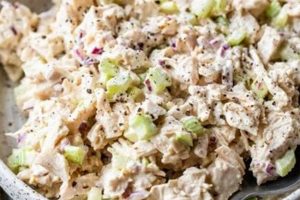
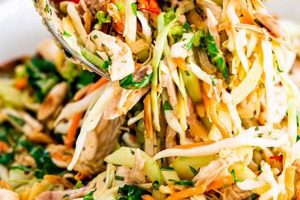
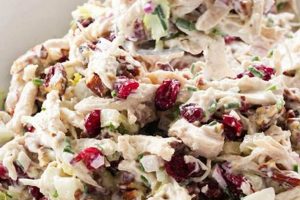
A blend of cooked chicken, mayonnaise, and diced apple creates a refreshing and versatile dish. Often, celery, onion, and seasonings like salt, pepper, and herbs are included to enhance the flavor profile. Variations may incorporate grapes, nuts, or dried cranberries for added texture and sweetness. This dish can be enjoyed as a sandwich filling, a light lunch atop a bed of lettuce, or served with crackers or crusty bread.
This culinary combination offers a balance of protein, healthy fats, and natural sweetness. The apple provides a crisp counterpoint to the creamy texture of the chicken and mayonnaise, contributing dietary fiber and vitamins. Its adaptability makes it suitable for picnics, potlucks, and quick meals. Historically, similar combinations of poultry and fruit have appeared in various cuisines, reflecting a long-standing appreciation for this flavor pairing. The modern iteration, often featuring mayonnaise, gained popularity in the 20th century.
Further exploration will cover specific ingredient selections, preparation methods, variations, nutritional information, and serving suggestions to maximize enjoyment and culinary success.
Tips for Chicken Salad with Apple
Optimizing ingredient selection and preparation techniques elevates this classic dish. Attention to detail ensures a flavorful and texturally satisfying experience.
Tip 1: Chicken Selection: Poached or roasted chicken breast offers optimal flavor and texture. Avoid pre-cooked or processed chicken for best results.
Tip 2: Apple Choice: Crisp, tart apples like Granny Smith or Honeycrisp provide a desirable contrast to the creamy base. Avoid overly sweet or mealy varieties.
Tip 3: Mayonnaise Quality: High-quality mayonnaise contributes significantly to the overall flavor. Consider using homemade or gourmet options.
Tip 4: Enhancing Flavor: Fresh herbs such as dill, tarragon, or chives add depth and complexity. Experiment with spices like celery seed or paprika.
Tip 5: Texture Enhancement: Toasted nuts, such as walnuts or pecans, provide a satisfying crunch. Dried cranberries or grapes offer a burst of sweetness.
Tip 6: Proper Chilling: Chilling the salad for at least 30 minutes allows the flavors to meld and enhances the overall experience.
Tip 7: Serving Suggestions: Serve the salad on croissants, lettuce cups, or crackers for a versatile presentation. Consider adding a garnish of fresh apple slices or herbs.
By following these guidelines, one can achieve a superior chicken salad, balancing flavor, texture, and freshness.
The following section will offer variations on this classic recipe, catering to diverse palates and dietary preferences.
1. Ingredient Quality

Ingredient quality significantly impacts the overall flavor and enjoyment of chicken salad with apple. Subpar ingredients can result in a bland or unbalanced final product. Prioritizing quality ensures a superior culinary experience.
- Chicken
Using fresh, properly cooked chicken breast contributes significantly to the flavor and texture. Pre-cooked or processed chicken often lacks the same depth of flavor and can have a less desirable texture. Roasting or poaching chicken specifically for the salad yields optimal results.
- Apples
The choice of apple variety influences both the flavor and texture of the salad. Crisp, tart apples like Granny Smith or Honeycrisp provide a refreshing contrast to the richness of the mayonnaise and chicken. Mealy or overly sweet apples can detract from the balance of the dish.
- Mayonnaise
Mayonnaise serves as the foundation of the salad’s creamy texture and flavor. Opting for high-quality mayonnaise, whether store-bought or homemade, enhances the overall taste. Lower quality mayonnaise can introduce unwanted flavors or textures.
- Supporting Ingredients
Fresh herbs, such as dill or chives, and crisp celery enhance the flavor profile. Using fresh, high-quality versions of these ingredients elevates the final product. Wilted herbs or limp celery will detract from the overall sensory experience.
The careful selection of each ingredient, from the chicken to the supporting elements, directly correlates with the final quality and enjoyment of the chicken salad. Attention to these details elevates a simple dish into a truly satisfying culinary creation.
2. Apple Selection (Tart)
Apple selection plays a crucial role in the overall balance and flavor profile of chicken salad. The apple’s tartness provides a necessary counterpoint to the richness of the mayonnaise and the savory notes of the chicken. Selecting the appropriate apple variety ensures a harmonious blend of flavors and textures.
- Balancing Flavor Profiles
Tart apples, such as Granny Smith, Braeburn, or Pink Lady, contribute acidity that cuts through the richness of the mayonnaise and complements the savory chicken. This balance prevents the salad from becoming overly heavy or cloying. Sweeter apple varieties can overwhelm the other flavors and create a less desirable result.
- Textural Contrast
Tart apples generally possess a firm, crisp texture that holds up well when mixed with other ingredients. This desirable texture contrasts with the creamy mayonnaise and tender chicken, adding a satisfying crunch to each bite. Softer apples may become mushy and lose their textural appeal.
- Enhancing Visual Appeal
The vibrant color of tart apples, particularly green varieties like Granny Smith, adds visual interest to the finished salad. The bright color contrasts pleasingly with the creamy white of the mayonnaise and the pale color of the chicken, creating a more appetizing presentation.
- Storage and Shelf Life
Tart apples tend to oxidize (brown) more slowly than sweeter varieties. This characteristic makes them a practical choice for chicken salad, as the apple pieces will retain their fresh appearance for a longer period after being cut. This contributes to both the aesthetic appeal and the perceived freshness of the salad.
The considered selection of a tart apple variety contributes significantly to the overall success of the chicken salad recipe. The interplay of flavor, texture, and visual appeal elevates the dish, ensuring a balanced and enjoyable culinary experience.
3. Chicken Preparation
Chicken preparation constitutes a foundational element of a successful chicken salad with apple recipe. The method employed significantly influences the final flavor, texture, and overall quality of the dish. Optimal preparation ensures the chicken contributes appropriately to the balance of ingredients.
- Cooking Method
The chosen cooking method directly impacts the chicken’s flavor and texture. Poaching yields a moist, tender result, ideal for incorporating into the salad. Roasting creates a richer, more intense flavor profile, offering a robust alternative. Boiling, however, often results in a drier, less flavorful outcome, diminishing the salad’s overall quality. Other methods, such as grilling or pan-frying, may introduce flavors that don’t complement the delicate balance of the salad.
- Seasoning
Seasoning during the cooking process enhances the chicken’s inherent flavor. Simple seasonings, like salt, pepper, and herbs, complement the other salad ingredients without overpowering the delicate apple and mayonnaise notes. Over-seasoning can create an imbalance, detracting from the desired flavor profile.
- Cooling and Shredding
Allowing the cooked chicken to cool completely before shredding or dicing prevents the release of excess moisture into the salad, maintaining its desired texture and preventing the mayonnaise from thinning. Proper shredding or dicing creates uniform pieces, ensuring even distribution of flavor and a pleasant mouthfeel.
- Storage Considerations
Properly storing cooked chicken maintains its quality and safety until incorporated into the salad. Refrigerating the cooked chicken promptly inhibits bacterial growth and preserves its freshness. Avoid storing the cooked chicken with strong-smelling foods to prevent flavor transfer.
Careful consideration of these facets of chicken preparation ensures the chicken contributes optimally to the overall composition of the chicken salad with apple. Attention to detail in each stage, from cooking method to storage, elevates the final dish, enhancing both flavor and texture.
4. Mayonnaise Choice
Mayonnaise serves as the foundational binding agent in chicken salad with apple, significantly influencing the final flavor, texture, and overall quality. Careful selection contributes to a harmonious balance of ingredients, elevating the dish beyond a simple combination of components.
- Flavor Profile
Mayonnaise varieties exhibit diverse flavor profiles, ranging from tangy to sweet, and incorporating various spices and seasonings. A classic, neutral mayonnaise allows the flavors of the chicken and apple to shine, while a flavored mayonnaise, such as one with Dijon mustard or herbs, can add complexity. Selection should consider the desired overall flavor profile of the salad.
- Texture and Consistency
Mayonnaise texture ranges from light and fluffy to thick and creamy. A lighter mayonnaise creates a delicate salad, while a thicker mayonnaise provides a heartier, more substantial mouthfeel. The chosen consistency affects the salad’s overall texture and how it holds its shape.
- Ingredient Quality
Mayonnaise quality directly impacts the overall flavor and richness. Higher quality mayonnaise typically contains better oils and fewer additives, resulting in a cleaner, more pronounced flavor. The quality of ingredients contributes significantly to the overall sensory experience.
- Dietary Considerations
Various mayonnaise options cater to specific dietary needs, including low-fat, vegan, or egg-free versions. Selecting a mayonnaise aligned with dietary restrictions ensures inclusivity and allows for broader enjoyment without compromising flavor or texture. Substituting alternative ingredients requires careful consideration of how they interact with the other components.
The choice of mayonnaise constitutes a critical element in crafting a successful chicken salad with apple. Careful consideration of flavor profile, texture, ingredient quality, and dietary considerations ensures the mayonnaise complements the other ingredients, resulting in a balanced and flavorful dish. Selecting the appropriate mayonnaise elevates the salad, transforming it into a cohesive and satisfying culinary creation.
5. Seasoning Balance

Seasoning balance constitutes a critical element in a successful chicken salad with apple recipe. Careful consideration of seasonings elevates the dish beyond a simple combination of ingredients, creating a harmonious flavor profile that complements the inherent flavors of the chicken and apple. Improper seasoning can mask these delicate flavors or create an unbalanced taste experience. Understanding the nuances of seasoning allows for a more nuanced and enjoyable culinary outcome.
- Salt Enhancement
Salt acts as a flavor enhancer, accentuating the natural sweetness of the apple and the savory notes of the chicken. A judicious amount of salt brightens the overall flavor profile without overpowering the other ingredients. Over-salting, however, can mask the subtle flavors and create an unpleasant saline taste. Proper salting requires tasting and adjusting throughout the preparation process.
- Herbaceous Accents
Fresh herbs introduce complexity and depth to the flavor profile. Dill, tarragon, chives, and parsley complement the apple and chicken, adding a refreshing herbal note. The choice of herbs depends on personal preference and the desired flavor profile. Dried herbs can be used as a substitute, but they generally offer a less pronounced flavor.
- Spice Integration
A touch of black pepper adds a subtle warmth and complexity. Other spices, such as paprika or celery seed, can further enhance the flavor profile, but should be used sparingly to avoid overpowering the delicate balance. The choice and amount of spice should complement the other seasonings and the overall flavor profile.
- Acidic Balance
A splash of lemon juice or apple cider vinegar provides a subtle acidic note that balances the richness of the mayonnaise and enhances the brightness of the apple. This acidic element contributes to a more well-rounded and refreshing flavor profile. The amount of acid should be carefully balanced to avoid overpowering the other flavors.
Achieving seasoning balance involves a nuanced understanding of how different flavors interact. Careful consideration of salt, herbs, spices, and acidity allows for a more complex and enjoyable chicken salad experience. The interplay of these elements elevates the dish, transforming it from a simple combination of ingredients into a well-balanced and flavorful culinary creation.
6. Textural Elements
Textural elements contribute significantly to the overall enjoyment of chicken salad with apple. A combination of textures elevates the sensory experience beyond the simple interplay of flavors. The interplay of creamy, crisp, and crunchy elements creates a dynamic and satisfying mouthfeel.
The creamy base of mayonnaise provides a foundation for textural contrast. The inherent smoothness of the mayonnaise interacts with the crisp, juicy apple pieces, creating a balanced textural profile. Adding ingredients like celery or walnuts introduces a contrasting crunch, further enhancing the sensory experience. Consider the following examples:
- Chopped celery adds a refreshing crispness that contrasts with the creamy mayonnaise.
- Toasted walnuts or pecans provide a satisfying crunch, enhancing the textural complexity.
- Red grapes, halved or quartered, offer a juicy burst that complements the apple’s texture.
- Dried cranberries contribute a chewy texture and concentrated sweetness.
The absence of textural variation can result in a monotonous, less engaging experience. A salad composed solely of finely diced chicken, apple, and mayonnaise, while flavorful, may lack the dynamic interplay of textures that elevates the dish. The strategic incorporation of textural elements distinguishes a well-composed chicken salad from a simple mixture of ingredients.
Understanding the importance of textural elements allows for a more intentional approach to recipe development and preparation. Careful selection and incorporation of ingredients with varying textures create a more dynamic and satisfying culinary experience. This awareness transforms a simple chicken salad with apple into a multi-faceted and enjoyable dish, demonstrating a mastery of culinary technique and an appreciation for sensory detail.
7. Serving Method
Serving method constitutes a crucial element in the overall presentation and enjoyment of chicken salad with apple. While flavor and ingredient quality remain paramount, the chosen serving method elevates the dining experience, influencing perception and enjoyment. A thoughtful approach to presentation enhances the appeal and perceived value of the dish.
- Bread Selection
Serving chicken salad with apple on bread offers a classic and convenient approach. The bread’s texture and flavor should complement the salad. Crusty bread provides textural contrast, while softer breads, like croissants or brioche, offer a richer, more delicate experience. The bread’s size and shape should also be considered; smaller portions, like sliders or tea sandwiches, suit formal occasions, while larger portions provide a more substantial meal.
- Green Accompaniments
Serving the salad atop a bed of lettuce or alongside a mixed green salad enhances the dish’s freshness and visual appeal. The greens provide a crisp, refreshing counterpoint to the creamy salad. Consider the type of greens; butter lettuce offers a delicate flavor, while romaine or spinach provide a more robust taste and texture. A simple vinaigrette complements the salad without overpowering its flavor.
- Crackers and Dippers
Crackers or other dippers offer a versatile and less structured serving method. The cracker’s texture and flavor should complement the salad’s richness and sweetness. Plain crackers provide a neutral base, while seeded or herbed crackers add complexity. Vegetable sticks, such as celery or carrot, offer a refreshing alternative.
- Presentation Considerations
Presentation enhances the visual appeal and perceived value of the dish. Garnishing the salad with fresh herbs, apple slices, or a sprinkle of nuts elevates the presentation. Serving in attractive bowls or platters further enhances the dining experience. Attention to detail, even in casual settings, demonstrates care and enhances enjoyment.
The serving method chosen for chicken salad with apple significantly impacts the overall dining experience. Careful consideration of bread, accompaniments, dippers, and presentation elevates the dish, demonstrating an attention to detail that transforms a simple meal into a more considered and enjoyable culinary experience. The chosen method should complement the flavor profile and textural elements of the salad, creating a harmonious and satisfying composition.
Frequently Asked Questions
This section addresses common inquiries regarding chicken salad with apple, providing concise and informative responses to clarify potential uncertainties and enhance understanding of this versatile dish.
Question 1: What type of apple is best suited for chicken salad?
Crisp, tart apples like Granny Smith or Braeburn provide optimal flavor and textural contrast. Their tartness balances the richness of the mayonnaise, while their firmness prevents them from becoming mushy in the salad.
Question 2: How long can chicken salad with apple be stored?
Properly stored in an airtight container in the refrigerator, chicken salad with apple typically lasts for 3-5 days. Always check for signs of spoilage before consuming.
Question 3: Can this recipe be adapted for different dietary restrictions?
Adaptations for various dietary needs are readily achievable. Substituting Greek yogurt or avocado mayonnaise provides a lower-fat option. Using vegan mayonnaise allows for an egg-free and dairy-free version. Adjustments to other ingredients can accommodate additional dietary restrictions, such as gluten-free or nut-free variations.
Question 4: What can be added to chicken salad with apple for enhanced flavor or texture?
Ingredients such as grapes, dried cranberries, toasted nuts (walnuts, pecans), celery, red onion, or fresh herbs (dill, chives, tarragon) can enhance both flavor and texture. Incorporating these additions elevates the complexity of the dish.
Question 5: What are the best methods for preventing the apples from browning in the salad?
Tossing the diced apples with a small amount of lemon juice helps prevent browning due to oxidation. This maintains both the visual appeal and fresh flavor of the apples.
Question 6: Can canned chicken be used in this recipe?
While canned chicken offers convenience, using freshly cooked chicken yields superior flavor and texture. If canned chicken is used, ensure it is thoroughly drained and rinsed to remove excess sodium and preserve the desired texture of the salad.
Addressing these common questions offers further clarity and guidance for preparing and enjoying chicken salad with apple. The information presented provides a foundation for creating a successful and satisfying culinary experience.
The following section will offer a collection of recipe variations to inspire culinary creativity.
Chicken Salad with Apple Recipe
Exploration of this classic dish reveals the interplay of key elements contributing to its enduring appeal. Ingredient quality, particularly the selection of tart apples and fresh chicken, forms the foundation. Mayonnaise choice influences both flavor and texture, while considered seasoning enhances the inherent qualities of the primary components. Textural elements, such as nuts or celery, add complexity, and thoughtful presentation elevates the dining experience. Understanding these aspects allows for informed choices and recipe adaptations.
Chicken salad with apple, seemingly simple in composition, offers a canvas for culinary creativity. From ingredient selection to serving method, opportunities for personalization abound. This adaptability ensures continued relevance across diverse palates and occasions, solidifying its place as a timeless culinary staple. Exploration and experimentation with variations promise ongoing culinary discovery and enjoyment.