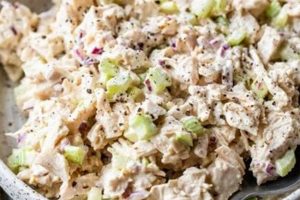
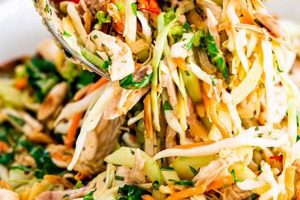
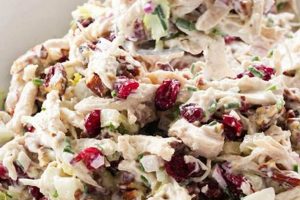
A dish combining cooked chicken, mayonnaise, and often other ingredients like celery, onion, and grapes, can be enhanced with the addition of cashews for a creamy, crunchy texture and subtle nutty flavor. Variations may include different herbs, spices, fruits, and nuts. This dish can be served chilled on bread, crackers, lettuce cups, or as a standalone salad.
The versatility of this dish makes it a popular choice for picnics, potlucks, quick lunches, and light dinners. Cashews contribute healthy fats, protein, and fiber, enhancing the nutritional profile. Historically, chicken salad emerged as a way to utilize leftover cooked chicken, demonstrating resourcefulness in meal preparation. The incorporation of nuts like cashews adds a gourmet touch, elevating the dish beyond its humble origins.
The following sections will explore various aspects of creating this culinary delight, including selecting the best ingredients, different preparation methods, and creative serving suggestions for a delightful culinary experience.
Tips for a Superior Chicken Salad Experience
Optimizing ingredient selection and preparation techniques elevates this classic dish from simple to exceptional. Attention to detail ensures a delightful combination of flavors and textures.
Tip 1: Chicken Selection: Poaching or roasting chicken specifically for the salad yields superior flavor and texture compared to using pre-cooked or rotisserie chicken. Bone-in, skin-on chicken parts contribute richer flavor.
Tip 2: Cashew Preparation: Raw cashews offer a cleaner flavor profile. Briefly toasting them enhances their natural sweetness and adds a satisfying crunch. Salting lightly after toasting further elevates the flavor.
Tip 3: Enhancing Freshness: Incorporating fresh herbs, such as chives, parsley, or tarragon, adds brightness and complexity. Lemon zest provides a citrusy lift.
Tip 4: Balancing Flavors: A touch of acidity, such as a squeeze of lemon juice or a dash of apple cider vinegar, balances the richness of the mayonnaise and enhances the other flavors.
Tip 5: Texture Considerations: Dicing ingredients uniformly creates a pleasing consistency and ensures even distribution of flavors throughout the salad.
Tip 6: Mayonnaise Selection: High-quality mayonnaise forms the foundation of a good chicken salad. Consider using artisanal mayonnaise or making it from scratch for optimal flavor.
Tip 7: Chill Time: Allowing the salad to chill for at least 30 minutes, and preferably longer, allows the flavors to meld and deepen.
By following these guidelines, one achieves a chicken salad that is both flavorful and texturally satisfying. The result is a dish suitable for casual gatherings or elegant presentations.
The combination of high-quality ingredients and careful preparation ensures a memorable dining experience.
1. High-Quality Chicken

High-quality chicken plays a crucial role in a successful chicken salad recipe that includes cashews. The chicken provides the foundation of flavor and texture, significantly impacting the final dish. Tender, flavorful chicken elevates the salad, while dry, bland chicken diminishes the overall experience. Consider the difference between using freshly roasted chicken breast versus pre-cooked, packaged chicken. The freshly roasted chicken offers a more succulent, nuanced flavor profile, contributing significantly to the salad’s complexity. Conversely, pre-cooked chicken, while convenient, often lacks the same depth of flavor and can result in a drier, less satisfying salad.
This principle extends to the choice of chicken parts. For instance, using a combination of white and dark meat contributes a richer, more balanced flavor. Bone-in, skin-on chicken, roasted or poached, imparts more flavor to the meat than boneless, skinless breasts. The additional flavor from the bones and skin permeates the meat during cooking, resulting in a more flavorful base for the salad. This nuanced flavor complements the creamy richness of the mayonnaise and the crunch of the cashews. Furthermore, high-quality chicken tends to hold its shape better when mixed, preventing the salad from becoming overly mushy.
Ultimately, investing in high-quality chicken directly correlates with the overall quality of the chicken salad. While shortcuts might offer convenience, the compromise in flavor and texture is noticeable. The superior flavor and texture provided by high-quality chicken enhance the other components of the salad, including the cashews, allowing their individual flavors to shine while contributing to a cohesive and satisfying dish. Prioritizing this key ingredient significantly impacts the final result, creating a more enjoyable and memorable culinary experience.
2. Fresh, crunchy cashews

Fresh, crunchy cashews contribute significantly to the overall sensory experience of a chicken salad. Texture plays a vital role in culinary enjoyment, and cashews provide a desirable contrast to the softer textures of chicken and mayonnaise. The crispness offers a satisfying counterpoint, enhancing the interplay of textures within each bite. Furthermore, fresh cashews possess a delicate sweetness and subtle buttery flavor that complements the savory elements of the chicken salad. Roasted cashews, particularly those roasted shortly before incorporation, offer an intensified flavor profile due to the Maillard reaction, further enhancing the overall taste experience. Conversely, stale or improperly stored cashews can introduce off-flavors, detracting from the intended flavor profile. Consider the difference between a salad with freshly roasted, lightly salted cashews and one with cashews that have been sitting open for an extended period. The former contributes a pleasant crunch and a nuanced, nutty flavor, while the latter might impart a stale, oily taste, negatively impacting the overall quality of the salad.
The choice between raw and roasted cashews presents an opportunity for customization. Raw cashews offer a milder, cleaner flavor and a slightly softer crunch. Roasting cashews, however, intensifies their inherent sweetness and develops a deeper, more complex flavor profile, resulting in a more pronounced presence within the salad. The roasting process also increases their crispness. The degree of roast further influences the flavor; lightly roasted cashews retain a subtle sweetness, while heavily roasted cashews offer a more intense, almost caramelized flavor. This allows for tailoring the cashew component to individual preferences and the overall flavor profile desired for the chicken salad. The specific variety of cashew also influences the ultimate outcome. For instance, larger cashews offer a more substantial bite, while smaller pieces provide a more integrated textural experience.
The freshness and quality of cashews directly impact the overall quality of the chicken salad. Selecting high-quality, fresh cashews, whether raw or roasted, ensures optimal flavor and texture, enhancing the complexity and enjoyment of the dish. Careful consideration of these factors elevates the chicken salad from a simple combination of ingredients to a more refined and satisfying culinary creation. The interplay of textures and flavors, driven by the inclusion of fresh, crunchy cashews, contributes significantly to a more pleasurable dining experience.
3. Balanced Flavor Profile
A balanced flavor profile is crucial for a successful chicken salad recipe that includes cashews. It ensures that no single flavor dominates, creating a harmonious and enjoyable culinary experience. Balancing the richness of mayonnaise, the savory chicken, the nutty cashews, and other ingredients is essential. A well-balanced chicken salad offers a complex interplay of flavors that complement each other, enhancing the overall taste experience.
- Acidity:
Acidity plays a crucial role in balancing the richness of mayonnaise and the savory notes of chicken. A touch of lemon juice, vinegar, or pickle relish cuts through the richness, brightening the overall flavor profile. For example, the sharpness of lemon juice complements the creamy mayonnaise and enhances the subtle sweetness of cashews. Without sufficient acidity, the salad can taste heavy and overly rich.
- Sweetness:
A hint of sweetness can balance the savory and acidic components. Incorporating ingredients like grapes, dried cranberries, or a touch of honey introduces subtle sweetness. This sweetness contrasts with the savory chicken and tangy dressing, adding depth to the flavor profile. For example, the sweetness of grapes complements the savory chicken and salty cashews, preventing the salad from being overly savory.
- Savory Elements:
The savory base of the chicken salad derives primarily from the cooked chicken. Seasoning the chicken appropriately with salt, pepper, and other spices is crucial. Additional savory notes can come from ingredients like Dijon mustard, celery, or onion. The interplay of these savory elements with the other flavor components is essential for a well-rounded taste experience. Over-seasoning can overpower the other flavors, while under-seasoning can result in a bland salad.
- Texture and Flavor Integration:
The textures of the various ingredients also contribute to the overall balance. The creamy mayonnaise, tender chicken, crunchy cashews, and other additions like crisp celery or juicy grapes create a varied textural landscape. This textural diversity enhances the eating experience and contributes to the perception of balanced flavors. The crunch of cashews, for instance, provides a pleasant contrast to the softer elements of the salad, further enhancing their individual flavors and contributing to a more dynamic and engaging taste experience.
Achieving a balanced flavor profile requires careful consideration of each ingredient and its contribution to the overall composition. Harmonizing these elements creates a chicken salad that is not only delicious but also offers a complex and satisfying culinary experience. The interplay of acidity, sweetness, savory notes, and textures results in a dynamic flavor profile where each element complements the others, creating a cohesive and enjoyable dish.
4. Appropriate Mayonnaise
Mayonnaise serves as the foundational element that binds the ingredients and contributes significantly to the overall flavor and texture of chicken salad incorporating cashews. Selecting the appropriate mayonnaise is crucial for achieving the desired balance and consistency. The quality, flavor profile, and consistency of the mayonnaise directly impact the final product, influencing the overall enjoyment of the dish.
- Quality and Flavor:
High-quality mayonnaise, preferably made with real eggs and oil, provides a richer, creamier texture and a more nuanced flavor compared to lower-quality alternatives. The flavor of the mayonnaise interacts with the other ingredients, particularly the delicate flavor of the cashews. A mayonnaise with a clean, balanced flavor profile allows the other ingredients to shine without being overpowered. Using a high-quality mayonnaise contributes significantly to a more luxurious and flavorful chicken salad.
- Consistency and Texture:
The consistency of the mayonnaise affects the final texture of the chicken salad. A mayonnaise that is too thin will result in a watery salad, while a mayonnaise that is too thick can make the salad heavy and dense. The ideal mayonnaise possesses a smooth, creamy texture that coats the ingredients evenly without being gloppy. This allows for optimal binding and ensures a pleasant mouthfeel. The consistency also influences how the salad holds its shape, particularly when served on bread or crackers.
- Flavor Pairings:
Different types of mayonnaise offer varying flavor profiles that can complement or contrast with the other ingredients. For example, a plain mayonnaise serves as a neutral base, allowing the flavors of the chicken and cashews to take center stage. A flavored mayonnaise, such as one infused with herbs or spices, can add complexity and depth to the overall flavor profile. Consider the interplay between a lemon-herb mayonnaise and the nutty cashews the bright citrus notes enhance the cashew flavor while adding a refreshing element to the salad. Choosing a mayonnaise with complementary flavors enhances the overall balance and complexity of the dish.
- Quantity:
The amount of mayonnaise used affects the moisture content and overall texture of the salad. Too much mayonnaise can result in a soggy salad, while too little can make it dry and crumbly. The ideal amount binds the ingredients together without making the salad overly wet. The appropriate quantity also depends on the desired consistency some prefer a creamier salad, while others prefer a chunkier texture. Finding the right balance is key to a successful chicken salad.
Careful consideration of these factors ensures that the chosen mayonnaise complements the other ingredients, enhancing the overall flavor, texture, and enjoyment of the chicken salad with cashews. The appropriate mayonnaise elevates the dish beyond a simple combination of ingredients, creating a harmonious and satisfying culinary experience. Selecting the right mayonnaise is fundamental to achieving a well-balanced, flavorful, and texturally pleasing chicken salad.
5. Complementary Ingredients
Complementary ingredients elevate a basic chicken salad with cashews to a more complex and flavorful dish. These additions contribute texture, flavor, and visual appeal, transforming a simple mixture into a well-rounded culinary creation. The strategic inclusion of complementary ingredients offers a multitude of possibilities for customization and enhancement. Consider the interplay of textures: the creamy mayonnaise, the tender chicken, the crunchy cashews. Adding crisp celery or juicy grapes introduces contrasting textures, creating a more dynamic sensory experience. Similarly, incorporating ingredients with distinct flavor profiles enhances complexity. The subtle sweetness of dried cranberries contrasts with the savory chicken and the nutty cashews, while the sharp bite of red onion adds a pungent dimension. These additions create a multi-layered flavor profile that is far more engaging than a simple chicken-mayonnaise-cashew base. For example, a chicken salad with cashews, grapes, celery, and red onion offers a diverse range of flavors and textures, creating a harmonious yet exciting culinary experience.
The selection of complementary ingredients should consider the overall balance of the salad. Ingredients should complement, not overpower, each other. For instance, while a strong-flavored ingredient like blue cheese can add a distinctive element, its pungent flavor might overwhelm the delicate flavor of the cashews. Therefore, the quantity and intensity of complementary ingredients require careful consideration. Incorporating fresh herbs, such as chives or tarragon, provides a subtle aromatic lift without dominating the other flavors. Similarly, a touch of lemon zest adds a bright citrus note that enhances the overall flavor profile. The choice of complementary ingredients also presents opportunities for seasonal variations. A summer salad might include fresh berries and mint, while a fall version could incorporate roasted butternut squash and pecans, adapting the dish to available produce and desired flavor profiles. Such variations demonstrate the versatility of the chicken salad base and the potential for creative customization.
Careful selection of complementary ingredients significantly enhances the overall quality and enjoyment of a chicken salad with cashews. These additions contribute not only to flavor and texture but also to visual appeal and nutritional value. The thoughtful incorporation of complementary ingredients elevates the dish from a simple combination of core components to a more refined and satisfying culinary experience. Achieving a harmonious balance of flavors, textures, and colors maximizes the potential of the chicken salad, transforming it into a truly exceptional dish.
6. Proper Chilling Time

Proper chilling time plays a crucial role in the final quality of chicken salad incorporating cashews. Chilling allows the flavors of the various ingredients to meld and deepen, resulting in a more cohesive and balanced flavor profile. This process enhances the overall dining experience, transforming a simple mixture into a more complex and satisfying dish.
- Flavor Development:
Chilling allows the individual flavors of the ingredientsthe chicken, mayonnaise, cashews, and any complementary additionsto harmonize. During chilling, the flavors meld and mature, creating a more nuanced and complex taste experience. The subtle sweetness of the cashews, for instance, becomes more pronounced, and the savory notes of the chicken deepen, resulting in a more balanced and integrated flavor profile.
- Texture Enhancement:
Chilling firms the texture of the chicken salad, making it easier to handle and serve. This is particularly important for maintaining the desired texture when serving the salad on bread, crackers, or lettuce cups. The chilling process also enhances the crunch of the cashews, ensuring a pleasant textural contrast within the salad.
- Food Safety:
Proper chilling is essential for food safety, particularly for dishes containing mayonnaise. Maintaining a safe temperature below 40F (4C) inhibits the growth of harmful bacteria, preventing spoilage and ensuring the salad remains safe for consumption. Adhering to safe chilling practices is crucial for protecting against foodborne illnesses.
- Optimal Serving Temperature:
A chilled chicken salad offers a more refreshing and palatable dining experience, particularly in warmer weather. The cool temperature enhances the flavors and textures, making the salad more enjoyable to consume. Serving chicken salad at the appropriate temperature maximizes its appeal and contributes to a more satisfying culinary experience.
Therefore, allowing adequate chilling time is essential for maximizing the flavor, texture, and safety of chicken salad with cashews. This simple yet crucial step elevates the dish from a basic mixture of ingredients to a more refined and enjoyable culinary creation. Failing to chill the salad adequately compromises both its flavor profile and its safety, diminishing the overall dining experience.
7. Creative Presentation
Creative presentation elevates chicken salad with cashews from a simple dish to a visually appealing and appetizing culinary experience. Thoughtful presentation enhances the perceived value and enjoyment of the salad, transforming it from a casual meal to a more elegant and sophisticated offering. Visual appeal stimulates appetite and enhances the overall dining experience. Consideration of color, texture, and plating techniques contributes significantly to the presentation’s success.
- Serving Vessels:
Utilizing various serving vessels beyond traditional plates adds visual interest. Consider serving the salad in hollowed-out tomatoes, avocado halves, or endive leaves for a touch of elegance and a contrasting textural element. These options not only enhance presentation but also contribute to the overall flavor and sensory experience.
- Garnishes:
Strategic garnishing enhances visual appeal and complements the flavors of the salad. A sprinkle of chopped fresh herbs, such as chives or parsley, adds a pop of color and freshness. A dusting of paprika adds a warm hue and a subtle smoky flavor. Toasted cashew halves arranged atop the salad provide both visual and textural interest, echoing the ingredient within the salad itself.
- Plating Techniques:
Employing basic plating techniques elevates the visual presentation. Instead of simply scooping the salad onto a plate, consider using a ring mold to create a defined shape or layering the salad with complementary ingredients for visual contrast. For example, a layer of sliced tomatoes topped with the chicken salad and a final garnish of cashews creates a visually appealing and appetizing presentation.
- Bread and Cracker Selection:
Serving chicken salad with a variety of breads or crackers adds visual and textural appeal. Consider offering a selection of crusty breads, crackers with different shapes and flavors, or crisp lettuce cups for a lighter option. This allows diners to customize their experience and adds to the overall presentation of the meal.
Creative presentation significantly enhances the enjoyment of chicken salad with cashews. By focusing on visual appeal, texture contrasts, and thoughtful plating, this simple dish transforms into a more sophisticated and appealing culinary creation. The extra effort invested in presentation elevates the dining experience, making the salad more visually appealing and enjoyable to consume. Thoughtful presentation demonstrates attention to detail and enhances the perceived value of the dish.
Frequently Asked Questions
This section addresses common inquiries regarding chicken salad preparation incorporating cashews, providing concise and informative responses.
Question 1: How long can this type of salad be safely stored?
Properly stored in an airtight container in a refrigerator maintained at 40F (4C) or below, the salad typically remains safe for consumption for up to three to five days. Beyond this timeframe, the risk of bacterial growth increases significantly.
Question 2: Can alternative nuts be substituted for cashews?
While cashews offer a specific flavor and texture profile, other nuts, such as almonds, walnuts, or pecans, may be substituted. However, this substitution will alter the overall flavor and textural experience.
Question 3: What methods exist for reducing the overall fat content?
Using low-fat mayonnaise, Greek yogurt, or a combination thereof reduces overall fat content. Additionally, increasing the proportion of vegetables, such as celery and grapes, relative to the mayonnaise contributes to a lighter salad.
Question 4: Can one freeze the prepared salad?
Freezing is not generally recommended. Mayonnaise-based salads often separate and lose their desired texture upon thawing. The textural integrity of ingredients, particularly celery and grapes, is also compromised.
Question 5: How can one enhance the flavor profile beyond basic seasonings?
Fresh herbs, such as dill, tarragon, or chives, provide a brighter, more complex flavor profile. Spices like curry powder or smoked paprika introduce additional depth. Incorporating a small amount of lemon zest offers a citrusy note.
Question 6: What are suitable accompaniments for serving?
Suitable accompaniments include crackers, croissants, lettuce cups, or sliced bread. Serving the salad as a sandwich filling or atop a bed of mixed greens offers additional presentation options.
Understanding these frequently asked questions contributes to successful preparation and enjoyment of a flavorful and well-balanced chicken salad with cashews. Attention to detail, particularly regarding food safety and flavor pairings, enhances the overall culinary experience.
The following section provides a selection of recipe variations incorporating these key principles.
Chicken Salad Recipe with Cashews
Exploration of this dish reveals the interplay of key elements contributing to its success. High-quality chicken forms the foundation, providing essential flavor and texture. Fresh, crunchy cashews introduce a desirable textural contrast and subtle nutty notes. The appropriate mayonnaise binds ingredients while influencing overall flavor and consistency. Complementary ingredients, such as grapes, celery, or dried cranberries, add depth and complexity. Proper chilling allows flavors to meld, resulting in a more harmonious flavor profile. Finally, creative presentation elevates the dish, enhancing visual appeal and enjoyment.
Careful consideration of these elements transforms a simple combination of ingredients into a sophisticated and satisfying culinary experience. The potential for customization, based on individual preferences and available ingredients, ensures ongoing exploration and enjoyment of this versatile dish. Ultimately, a well-executed chicken salad recipe with cashews demonstrates the power of thoughtful ingredient selection and preparation in creating a truly memorable culinary experience.