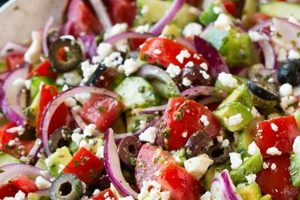
A deconstructed and bite-sized version of the classic wedge salad, this preparation involves chopping iceberg lettuce into smaller pieces, then typically tossing it with other traditional wedge salad ingredients such as crumbled blue cheese, bacon bits, tomatoes, red onion, and a creamy dressing. This variation offers greater ease of eating compared to the traditional wedge, making it a popular choice for casual gatherings and buffets.
The appeal of this salad style lies in its combination of fresh, crisp lettuce, rich and savory toppings, and creamy dressing. It offers a satisfying balance of textures and flavors while being relatively simple to assemble. Its popularity stems from its adaptability to various dietary preferences with the option to substitute ingredients and adjust dressings. Furthermore, the chopped format encourages even distribution of flavors, ensuring each bite is a delightful mix of all components, unlike the traditional wedge where ingredient distribution can be uneven.
This exploration of the chopped wedge salad will delve into ingredient selection, dressing variations, optimal chopping techniques, and creative presentation ideas. Whether a seasoned chef or a novice cook, this guide will equip readers with the knowledge to create a delectable and visually appealing rendition of this popular salad.
Tips for a Perfect Chopped Wedge Salad
Achieving a well-balanced and flavorful salad involves attention to detail and careful selection of components. The following tips provide guidance for creating an exceptional culinary experience.
Tip 1: Crisp Lettuce is Key: Opt for a fresh, firm head of iceberg lettuce. Chill thoroughly before chopping to enhance crispness. Avoid pre-chopped lettuce, as it tends to be less crisp.
Tip 2: Strategic Ingredient Sizing: Dice all ingredients, including tomatoes, onions, and bacon, into bite-sized pieces that complement the chopped lettuce. This promotes even distribution of flavors and textures.
Tip 3: Dressing Matters: Classic blue cheese dressing is a traditional choice. However, buttermilk ranch, Green Goddess, or even a simple vinaigrette can offer interesting flavor profiles. Consider the overall flavor balance when selecting a dressing.
Tip 4: Blue Cheese Selection: Crumbled blue cheese adds a pungent and salty element. Opt for high-quality blue cheese for the best flavor. Roquefort, Gorgonzola, or Stilton are excellent choices.
Tip 5: Bacon Preparation: Crispy bacon bits provide a savory crunch. Cook bacon until crisp, then finely chop or crumble. Avoid using pre-cooked bacon bits, as they often lack the desired texture.
Tip 6: Fresh Herbs: Freshly chopped chives or parsley can elevate the salad by adding a vibrant, herbaceous note. Add these just before serving.
Tip 7: Thoughtful Plating: While a chopped salad might seem inherently casual, attention to presentation enhances the dining experience. Arrange the salad attractively on individual plates or in a serving bowl.
By adhering to these tips, one can create a chopped wedge salad that delivers a harmonious blend of flavors, textures, and visual appeal. This approach ensures a consistently satisfying and enjoyable culinary experience.
These tips serve as a foundation for creating a memorable chopped wedge salad. The following section will explore variations and customization options for further exploration of this versatile dish.
1. Fresh, Crisp Iceberg Lettuce

Iceberg lettuce, often overlooked, plays a crucial role in the chopped wedge salad. Its structural integrity and neutral flavor provide a foundation upon which the other, bolder ingredients can shine. The crispness of the lettuce contributes significantly to the overall textural experience, offering a refreshing counterpoint to the creamy dressing and other toppings. Selecting and preparing the lettuce correctly is paramount to the salad’s success.
- Textural Contrast:
The firm, crisp texture of iceberg lettuce provides a necessary contrast to the creamy dressing and other soft ingredients like tomatoes. This contrast is essential for a balanced and enjoyable sensory experience. A softer lettuce would simply wilt under the weight of the dressing and other components, resulting in an unappealing, mushy salad. Iceberg’s sturdy structure ensures each bite retains a satisfying crunch.
- Neutral Flavor Profile:
Iceberg lettuce, with its mild, watery flavor, acts as a blank canvas, allowing the more pronounced flavors of the blue cheese, bacon, and dressing to take center stage. This neutrality prevents the salad from becoming overly rich or overpowering. Imagine using a more assertive green like arugula; its peppery notes could clash with the blue cheese, disrupting the intended flavor balance.
- Structural Integrity:
The dense composition of iceberg lettuce holds up well when chopped and tossed with the dressing and other ingredients. It resists wilting, maintaining its fresh appearance and crisp texture even after being dressed. This resilience ensures the salad remains visually appealing and enjoyable to eat, even if prepared slightly ahead of serving.
- Preparation and Storage:
Proper handling ensures optimal crispness. Chilling the lettuce thoroughly before chopping is essential. Avoid washing the lettuce too far in advance, as excess moisture can promote premature wilting. Storing leftover chopped lettuce in an airtight container lined with paper towels helps absorb moisture and maintain freshness.
The selection and preparation of the iceberg lettuce are integral to a successful chopped wedge salad. By prioritizing crispness, leveraging the lettuce’s neutral flavor, and understanding its structural properties, one can create a salad that offers a delightful interplay of textures and flavors, ensuring a truly satisfying dining experience. This attention to detail elevates the chopped wedge salad from a simple dish to a carefully composed culinary creation.
2. High-Quality Blue Cheese

Blue cheese provides a crucial element in a chopped wedge salad, offering a pungent, salty, and creamy counterpoint to the other ingredients. The quality of the blue cheese significantly impacts the overall flavor profile of the salad. Selecting a high-quality blue cheese elevates the dish from simple to exceptional. Understanding the nuances of various blue cheeses allows for informed decisions and a more refined culinary outcome.
- Flavor Complexity:
High-quality blue cheese offers a complex flavor profile, encompassing salty, tangy, and sometimes even sweet notes, contributing depth to the salad. These nuanced flavors interact with the other ingredients, creating a more sophisticated taste experience. Examples include Roquefort, with its distinct sheep’s milk tang, and Gorgonzola, which offers a balance of creamy and pungent flavors. In contrast, lower-quality blue cheeses often lack these complexities, resulting in a one-dimensional taste that doesn’t enhance the salad in the same way.
- Texture and Creaminess:
Texture plays a significant role in the overall enjoyment of a chopped wedge salad. High-quality blue cheeses possess a desirable creamy texture that complements the crisp lettuce and crunchy bacon. This creaminess coats the palate, adding a luxurious mouthfeel. Consider the difference between a crumbly, aged Stilton and a softer, younger Gorgonzola. Each provides a unique textural experience, influencing the final salad’s consistency.
- Intensity and Balance:
The intensity of the blue cheese flavor should be balanced against the other ingredients in the salad. A strong blue cheese like Roquefort can easily overpower milder components. Conversely, a milder blue cheese might get lost amongst the other flavors. Choosing a blue cheese with the appropriate intensity ensures a harmonious balance where each element contributes to the overall composition without dominating the palate.
- Ingredient Pairing:
Different blue cheeses pair better with certain ingredients. For instance, a creamy Gorgonzola complements walnuts and pears beautifully, while a sharper Roquefort might pair well with stronger flavors like caramelized onions or figs. Considering these pairings when selecting a blue cheese allows for a more intentional and well-rounded flavor profile in the final chopped wedge salad.
The selection of high-quality blue cheese is integral to creating a truly exceptional chopped wedge salad. The complexity of flavor, textural nuances, intensity, and considered pairing with other ingredients elevate this seemingly simple salad to a gourmet experience. Understanding these aspects empowers one to make informed decisions, resulting in a dish that is both flavorful and balanced. The interplay of these elements contributes significantly to the overall satisfaction derived from consuming this classic American salad.
3. Crispy Bacon
Crispy bacon contributes a crucial textural and flavor dimension to the chopped wedge salad. Its savory, smoky flavor and satisfying crunch provide a counterpoint to the cool, crisp lettuce and creamy dressing. The rendering of fat during cooking adds richness, while the Maillard reaction during browning creates complex aromatic compounds that enhance the overall sensory experience. The crisp texture offers a welcome contrast to the softer elements of the salad, preventing a monotonous mouthfeel. Consider the interplay of a thick-cut, applewood-smoked bacon with a creamy blue cheese dressing; the smoky bacon accentuates the tangy cheese, creating a dynamic flavor combination. Conversely, using a thinly sliced, pancetta-style bacon offers a delicate crispness that complements a lighter vinaigrette. The choice of bacon significantly influences the final profile.
The preparation method impacts the bacon’s contribution to the salad. Overly crisp bacon crumbles excessively, dispersing unevenly and potentially becoming lost amongst other ingredients. Undercooked bacon introduces an unpleasant chewiness that detracts from the desired textural contrast. Achieving the ideal crispness requires careful control of cooking time and temperature. Think of a perfectly cooked piece of bacon: it shatters slightly when bitten, releasing a burst of salty, smoky flavor that complements the other components without overwhelming them. This balance is key to a successful chopped wedge salad. The bacon should be cooked until crisp but not brittle, allowing it to maintain its structural integrity while providing the desired crunch.
Crispy bacon’s role extends beyond mere flavor and texture; it contributes to the overall balance and complexity of the chopped wedge salad. It provides a salty, savory element that complements the creamy, tangy blue cheese and the fresh, slightly sweet lettuce. This interplay of contrasting elements creates a more dynamic and satisfying culinary experience. The crisp bacon also adds visual appeal, its rich brown color contrasting with the vibrant green lettuce and creamy white dressing. This visual contrast further enhances the appeal of the salad. Achieving the perfect balance of flavor, texture, and visual appeal through the proper preparation and incorporation of crispy bacon elevates the chopped wedge salad from a simple dish to a carefully constructed culinary creation.
4. Flavorful Dressing
Dressing provides the unifying element in a chopped wedge salad, binding the individual components and creating a cohesive flavor profile. The dressing’s role extends beyond simply adding moisture; it contributes significantly to the overall balance of flavors, textures, and richness. Careful consideration of dressing choice is essential for a successful chopped wedge salad, as it directly impacts the final sensory experience.
- Classic Choices:
Traditional options like blue cheese and buttermilk ranch offer familiar and well-loved flavor profiles. Blue cheese dressing, with its tangy and creamy notes, complements the crisp lettuce and salty bacon. Buttermilk ranch provides a cooling counterpoint to the richness of the other ingredients. These classic choices offer a reliable foundation for a satisfying salad.
- Vinaigrettes:
Lighter vinaigrettes provide a brighter, more acidic alternative to creamy dressings. A simple red wine vinaigrette adds a touch of acidity that cuts through the richness of the bacon and blue cheese. A balsamic vinaigrette introduces a subtle sweetness and complexity. Vinaigrettes offer a refreshing contrast to the richer elements of the salad.
- Creative Combinations:
Exploring beyond traditional options opens up a world of flavor possibilities. A Green Goddess dressing, with its herbaceous notes, adds a refreshing complexity. A creamy avocado dressing provides a healthy and flavorful alternative. These creative combinations allow for customization and personalization of the salad, catering to individual preferences.
- Balancing Flavors:
The chosen dressing should complement, not overpower, the other ingredients. The intensity of the dressing should be balanced against the strength of the blue cheese and bacon. A delicate vinaigrette might be lost alongside a pungent blue cheese, while a heavy, creamy dressing could overwhelm the subtle flavors of fresh vegetables. A harmonious balance ensures each element contributes to the overall flavor profile without dominating the palate.
The selection of a flavorful dressing is a crucial step in crafting a well-balanced and enjoyable chopped wedge salad. Whether adhering to classic combinations or exploring creative alternatives, the dressing should complement the other ingredients, creating a harmonious blend of flavors and textures. Careful consideration of the dressing’s role in the overall composition ensures a satisfying and memorable culinary experience, transforming a simple salad into a carefully orchestrated symphony of tastes.
5. Ripe, Juicy Tomatoes

Ripe, juicy tomatoes contribute a burst of freshness and acidity that balances the richness of other chopped wedge salad components. Their sweetness offers a counterpoint to the salty bacon and pungent blue cheese, while their inherent acidity cuts through the creamy dressing, preventing the salad from becoming overly heavy. The choice of tomato variety influences the flavor profile; a sweet, low-acid heirloom tomato offers a different experience than a tart, acidic cherry tomato. Consider a salad with ripe Brandywine tomatoes; their sweetness and balanced acidity enhance the creamy blue cheese and smoky bacon. Conversely, using tart cherry tomatoes introduces a burst of bright acidity that cuts through the richness of a ranch dressing. This careful selection ensures the tomatoes complement the other flavors.
Beyond flavor, tomatoes contribute textural complexity. Their juicy flesh provides a burst of moisture that contrasts with the crisp lettuce and crunchy bacon. Overly ripe tomatoes, however, can introduce unwanted excess moisture, compromising the salad’s structural integrity. Consider the difference between a firm, ripe Roma tomato and an overripe beefsteak tomato. The Roma tomato holds its shape when chopped, providing a juicy burst without becoming watery. The overripe beefsteak, on the other hand, might release excess liquid, diluting the dressing and making the salad soggy. This careful selection of appropriately ripe tomatoes is crucial for maintaining the desired texture and preventing the salad from becoming overly watery.
Tomato selection and preparation significantly impact the overall quality of the chopped wedge salad. Choosing tomatoes at peak ripeness ensures optimal flavor and texture. Proper storage and handling further maintain freshness and prevent premature spoilage. Factors such as slicing technique and timing of incorporation into the salad also play a role in preserving the tomatoes’ desirable qualities. These seemingly minor details contribute significantly to the final product, demonstrating the importance of understanding the role of each ingredient in a well-composed chopped wedge salad. By recognizing the impact of tomato selection and preparation, one can elevate this classic dish from simple to exceptional.
6. Finely Chopped Red Onion

Finely chopped red onion contributes a sharp, pungent bite that balances the richness of the other components in a chopped wedge salad. This pungency, derived from sulfur compounds, offers a crucial counterpoint to the creamy dressing, salty bacon, and sometimes sweet tomatoes. The thin slices ensure even distribution of flavor throughout the salad, preventing overpowering bursts of onion flavor in isolated bites. Consider the impact of a coarsely chopped red onion; its strong flavor becomes localized, overwhelming the other ingredients in certain bites while leaving others bland. Finely chopping the onion, however, allows its pungency to permeate the entire salad, enhancing the overall flavor profile without dominating the palate. This precise preparation is essential for a balanced and harmonious flavor experience.
Beyond flavor, finely chopped red onion provides a textural element, adding a subtle crispness that complements the crunchy bacon and crisp lettuce. This textural contrast prevents the salad from becoming overly soft or creamy. Furthermore, red onion introduces a vibrant pop of color, enhancing the visual appeal of the salad. Its deep purple hue contrasts beautifully with the green lettuce, white dressing, and other colorful ingredients. This visual element adds to the overall dining experience, making the salad more enticing. The aesthetic contribution of finely chopped red onion, combined with its flavor and texture, demonstrates its multifaceted role in the chopped wedge salad.
The inclusion of finely chopped red onion demonstrates the importance of considering each ingredient’s contribution to the overall composition of a chopped wedge salad. Its sharp flavor, subtle crispness, and vibrant color enhance the sensory experience. Careful attention to preparation, specifically the fineness of the chop, ensures the onion’s pungency is evenly distributed, contributing to a balanced and harmonious flavor profile. Understanding the multifaceted role of each ingredient, even seemingly minor components like red onion, allows for a more nuanced and ultimately more satisfying culinary experience.
Frequently Asked Questions
This section addresses common inquiries regarding the preparation and enjoyment of a chopped wedge salad.
Question 1: Can other lettuce types be substituted for iceberg lettuce?
While other lettuces can be used, iceberg lettuce is preferred for its structural integrity, which holds up well to the dressing and toppings. Its neutral flavor also allows the other ingredients to shine. Substitutions may result in a different textural and flavor experience.
Question 2: What are suitable blue cheese alternatives for individuals who dislike blue cheese?
Feta cheese, goat cheese, or even a creamy Havarti can be substituted. These alternatives offer distinct flavor profiles that, while different from blue cheese, can still complement the other ingredients. Consider flavor pairings when selecting an alternative.
Question 3: Can the bacon be omitted for a vegetarian version?
Omitting bacon creates a vegetarian version. To maintain a savory element, consider adding toasted nuts, roasted chickpeas, or sunflower seeds for added texture and flavor.
Question 4: How can the salad be made ahead of time without compromising freshness?
Prepare the individual componentschopped lettuce, bacon, tomatoes, onions, and blue cheeseseparately and store them chilled. Combine and dress the salad just before serving to maintain optimal crispness and prevent the lettuce from wilting.
Question 5: What are suitable dressing alternatives for those seeking a lighter option?
A simple vinaigrette, such as a red wine vinaigrette or a lemon vinaigrette, provides a lighter alternative to creamy dressings while still complementing the other flavors. Greek yogurt-based dressings can also offer a lighter, tangier option.
Question 6: How can the nutritional value of the salad be enhanced?
Adding other vegetables like chopped cucumbers, bell peppers, or avocado increases nutritional value. Including lean protein sources such as grilled chicken or fish further enhances the salad’s nutritional profile.
Understanding these commonly addressed concerns allows for a more informed approach to preparing and enjoying a chopped wedge salad tailored to individual preferences and dietary needs.
The following section will offer variations on the classic chopped wedge salad recipe, providing inspiration for creative culinary exploration.
Chopped Wedge Salad Recipe
Exploration of the chopped wedge salad recipe reveals a dish offering adaptable simplicity and satisfying complexity. Careful ingredient selection, from crisp iceberg lettuce to pungent blue cheese and savory bacon, contributes to a balanced flavor profile. Understanding the nuances of dressing selection, from creamy classics to vibrant vinaigrettes, allows for customization and personalized flavor experiences. Attention to preparation techniques, such as achieving optimal bacon crispness and finely chopping red onions, elevates the final product. Addressing common inquiries regarding ingredient substitutions and make-ahead strategies further empowers culinary exploration.
The chopped wedge salad recipe provides a foundation for creative culinary expression. Its adaptability allows for variations incorporating diverse ingredients and flavor combinations. Continued exploration of this classic dish promises exciting culinary discoveries, enriching dining experiences, and ensuring the chopped wedge salad remains a timeless culinary staple.