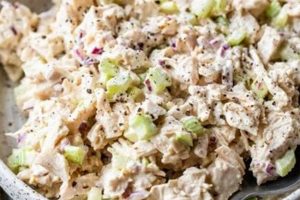
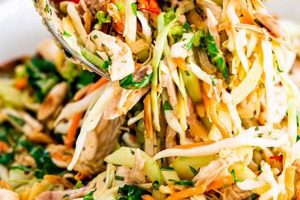
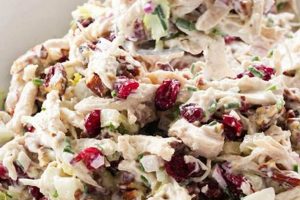
Avian-based salads featuring a blend of cooked poultry, mayonnaise, and additional ingredients often incorporate a sweet element to balance the savory flavors. This sweetness can be derived from fruits like grapes or apples, dried fruits such as cranberries or raisins, or sweeteners like honey or maple syrup. A classic example includes diced chicken, celery, grapes, and pecans, bound with a mayonnaise dressing sweetened with a touch of honey.
The addition of sweetness provides complexity and broadens the appeal of this versatile dish. It offers a pleasant contrast to the richness of the mayonnaise and the savory chicken, creating a more balanced and enjoyable culinary experience. Historically, fruit and nut combinations in salads, including those with poultry, have been present in various cuisines for centuries, showcasing the enduring popularity of this flavor profile.
This exploration will delve into various approaches to crafting these delectable salads, offering a range of ingredient combinations and preparation methods. From classic recipes to innovative variations, readers will discover the versatility and deliciousness achievable through the artful balance of sweet and savory elements in an avian salad.
Tips for Crafting Delicious Sweet Chicken Salads
Achieving the perfect balance of flavors in a sweet chicken salad requires careful consideration of ingredients and techniques. The following tips offer guidance for creating a truly exceptional dish.
Tip 1: Fruit Selection is Key: Consider the texture and sweetness level of the fruit. Grapes offer a juicy burst, while apples provide a crisp counterpoint. Dried fruits like cranberries or golden raisins contribute concentrated sweetness and a chewy texture.
Tip 2: Balancing Sweetness: Start with a small amount of sweetener and adjust to taste. Overly sweet salads can be cloying. A touch of acidity, such as a squeeze of lemon juice, can help balance the sweetness.
Tip 3: Mayonnaise Matters: The quality of the mayonnaise significantly impacts the overall flavor. Consider using a high-quality mayonnaise or making one from scratch.
Tip 4: Nutty Enhancements: Nuts add textural contrast and complementary flavors. Pecans, walnuts, and almonds are excellent choices. Toasting the nuts beforehand enhances their flavor.
Tip 5: Fresh Herbs Elevate: Fresh herbs like tarragon, chives, or dill can add a bright, herbaceous note that complements the sweetness and richness of the salad.
Tip 6: Seasoning is Essential: Salt and freshly ground black pepper are crucial for enhancing the overall flavor profile. A pinch of celery seed or paprika can also add depth.
Tip 7: Proper Chilling: Chilling the salad for at least 30 minutes allows the flavors to meld and enhances the overall experience.
By following these tips, one can create a chicken salad that offers a delightful interplay of sweet, savory, and textural elements. The resulting dish will be a versatile and satisfying culinary creation.
These guidelines offer a starting point for exploring the diverse world of sweet chicken salads. Experimentation with ingredients and techniques is encouraged to discover unique and personalized flavor combinations.
1. Chicken (cooked, diced)

Cooked, diced chicken forms the foundation of a sweet chicken salad, providing the primary protein source and influencing the dish’s overall texture and flavor profile. Its preparation and characteristics are crucial for a successful outcome. The following facets delve into the significance of properly prepared chicken in this context.
- Cooking Method:
The cooking method impacts the chicken’s moisture content and flavor. Poaching or baking results in tender, flavorful meat suitable for salads. Overcooked chicken becomes dry and stringy, negatively affecting the final product. Gentle cooking methods preserve the chicken’s natural sweetness, allowing it to harmonize with the other ingredients.
- Dicing Technique:
Uniform dicing ensures even distribution throughout the salad and contributes to a pleasant mouthfeel. Pieces that are too large can be unwieldy, while excessively small pieces may become lost among other ingredients. A consistent dice promotes both aesthetic appeal and balanced flavor distribution.
- Chicken Type:
Different chicken parts offer varying textures and flavors. Breast meat is lean and mild, while thigh meat is richer and more flavorful. The choice depends on personal preference and the desired outcome. Breast meat provides a cleaner, lighter base, whereas thigh meat contributes a more robust flavor profile.
- Quality and Freshness:
Using high-quality, fresh chicken is paramount for optimal flavor and food safety. Freshly cooked chicken is ideal, but properly stored leftovers can also be utilized. Ensuring the chicken’s quality safeguards against off-flavors and potential health risks.
These interconnected facets highlight the importance of properly prepared chicken in a sweet chicken salad. The cooking method, dicing technique, chicken type, and quality all contribute to the final dish’s texture, flavor, and overall appeal. Careful attention to these details elevates the salad from a simple mixture to a well-balanced and satisfying culinary creation.
2. Sweetener (honey, fruit)

The sweetener component in a chicken salad designated as “sweet” plays a pivotal role in defining its character. This element provides the characteristic sweetness that distinguishes this variation from more savory iterations. The choice of sweetener significantly impacts the overall flavor profile, texture, and perceived complexity of the salad. Honey, for example, offers a distinct floral sweetness and viscous texture, while fruits contribute varying levels of sweetness and textural nuances depending on the type and preparation. Incorporating diced apples introduces a crisp, mildly sweet element, whereas dried cranberries provide a concentrated sweetness and chewy texture.
The interplay between the sweetener and other ingredients is crucial. The sweetness should complement, not overpower, the savory notes of the chicken and other components. A well-balanced sweet chicken salad achieves harmony by judiciously using sweeteners to enhance the overall flavor profile. For instance, the subtle sweetness of grapes can balance the richness of mayonnaise and the savory notes of the chicken, creating a multi-dimensional flavor experience. Conversely, an overabundance of honey might mask the other flavors, resulting in a cloyingly sweet and unbalanced salad. Practical application of this understanding involves careful consideration of the desired sweetness level and the complementary flavors of other ingredients when selecting a sweetener.
Understanding the function and impact of sweeteners is essential for crafting a successful sweet chicken salad. The selection and quantity of the sweetening agent directly influence the final product’s balance, complexity, and overall appeal. Challenges arise when the sweetener dominates the flavor profile or clashes with other ingredients. Achieving a harmonious blend requires careful consideration of the sweetener’s characteristics and its interaction with other components. This knowledge enables the creation of a salad where the sweetness enhances the savory elements, resulting in a well-balanced and enjoyable dish.
3. Mayonnaise (quality matters)

Mayonnaise serves as the emulsifying and flavor-carrying agent in a sweet chicken salad, binding the ingredients and contributing significantly to the overall taste and texture. Its quality directly impacts the final product’s richness, creaminess, and balance. Subpar mayonnaise can result in a bland or oily salad, while high-quality mayonnaise elevates the dish with a smooth, flavorful foundation.
- Emulsification and Texture:
Mayonnaise’s primary function is to emulsify the ingredients, creating a cohesive mixture. A high-quality mayonnaise, typically made with fresh eggs and oil, possesses a stable emulsion that prevents separation and maintains a creamy texture. A less stable emulsion can lead to a watery or oily salad, negatively affecting the sensory experience. This stability is crucial for binding the disparate elementschicken, fruit, nuts, etc.into a harmonious whole.
- Flavor Enhancement:
Beyond its textural contribution, mayonnaise adds a subtle tanginess and richness that complements the sweetness of the other ingredients. The quality of the oil and other ingredients used in the mayonnaise significantly influence its flavor profile. For instance, mayonnaise made with extra virgin olive oil imparts a distinct fruity note, while mayonnaise made with a neutral oil provides a cleaner flavor canvas. The flavor profile of the mayonnaise interacts with the other ingredients, impacting the overall balance and complexity of the salad.
- Balancing Sweetness and Richness:
In a sweet chicken salad, mayonnaise plays a crucial role in balancing the sweetness from fruits or added sugars. The richness of the mayonnaise provides a counterpoint to the sweetness, preventing the salad from becoming cloying. This balance is essential for creating a palatable and enjoyable dish. The right mayonnaise prevents the sweetness from dominating the flavor profile, ensuring a harmonious blend of sweet and savory elements.
- Overall Quality and Freshness:
Using fresh, high-quality mayonnaise is paramount for both flavor and food safety. Store-bought mayonnaise varies in quality, with some brands containing additives and preservatives that can detract from the flavor. Homemade mayonnaise offers greater control over ingredients and freshness. Spoiled mayonnaise can harbor bacteria and pose health risks, underscoring the importance of freshness. The quality and freshness of the mayonnaise directly impact the overall quality and safety of the chicken salad.
The quality of mayonnaise is inextricably linked to the success of a sweet chicken salad. Its role extends beyond simply binding the ingredients; it contributes significantly to the texture, flavor balance, and overall quality of the dish. Selecting a high-quality mayonnaise ensures a creamy, flavorful, and safe salad that showcases the harmonious interplay of sweet and savory elements.
4. Texture (nuts, celery)
Textural contrast plays a crucial role in the overall enjoyment of a sweet chicken salad. Ingredients like nuts and celery contribute significantly to this dimension, providing a counterpoint to the softer textures of the chicken and mayonnaise. The interplay of contrasting textures creates a more engaging and satisfying sensory experience. For example, the crisp crunch of celery and the satisfying bite of toasted pecans or walnuts provide textural complexity against the backdrop of tender chicken and creamy mayonnaise. This interplay prevents the salad from becoming monotonous and adds a dynamic element to each bite.
Celery, with its crisp, fibrous stalks, offers a refreshing crunch and a subtle vegetal flavor that complements the sweetness of the salad. Nuts, whether toasted or raw, introduce a satisfying density and a range of flavor profiles depending on the variety chosen. Pecans offer a buttery richness, walnuts contribute an earthy depth, and almonds provide a delicate sweetness. The choice of nuts can be tailored to complement the other flavor components of the salad, further enhancing the overall complexity. The quantity of these textural elements also requires consideration. Too much celery can make the salad watery, while an overabundance of nuts can create an overly dense and heavy mixture. A balanced approach ensures that the textural elements enhance the salad without overwhelming the other ingredients.
Understanding the contribution of textural elements like nuts and celery is essential for crafting a well-balanced and enjoyable sweet chicken salad. These ingredients add a critical dimension of contrast and complexity, elevating the sensory experience beyond simply taste. The judicious selection and incorporation of these elements ensures a dynamic interplay of textures, contributing to a more satisfying and memorable culinary creation. Challenges can arise from improper handling or preparation of these ingredients. Soggy celery or stale nuts can detract from the desired textural experience. Proper storage and preparation techniques are essential for maximizing their contribution to the overall quality of the salad.
5. Flavor balance (sweet/savory)
Flavor balance represents a crucial aspect of a successful sweet chicken salad recipe. The interplay between sweet and savory elements defines the dish’s character and distinguishes it from other salad variations. This balance prevents the sweetness from becoming cloying and the savory notes from being overpowering. The perceived sweetness is influenced by the choice and quantity of sweetening agents, whether honey, fruit, or dried fruit. Savory notes derive from the chicken itself, the mayonnaise, and potentially added ingredients like celery or onion. A harmonious blend of these contrasting flavors is essential for a palatable and enjoyable salad. For example, the sweetness of grapes can be balanced by the savory notes of roasted chicken and the tanginess of mayonnaise, creating a complex and satisfying flavor profile. Conversely, an overabundance of honey might overwhelm the other flavors, resulting in a dish that is perceived as excessively sweet and unbalanced.
Achieving this balance requires careful consideration of the ingredients and their relative proportions. The inherent sweetness of the chosen fruit, the sweetness of any added sugars, and the savory elements of the chicken and other components must work in concert. The interplay extends beyond simply balancing opposing tastes; it encompasses the overall complexity and depth of flavor. Consider a salad incorporating dried cranberries, toasted pecans, and diced celery. The sweetness of the cranberries is balanced by the savory chicken and the slight bitterness of the celery, while the pecans provide a buttery richness that complements both sweet and savory notes. This multifaceted approach results in a more nuanced and engaging flavor experience. Practical application necessitates tasting and adjusting throughout the preparation process. Start with a smaller amount of sweetener and gradually increase until the desired balance is achieved.
Mastery of flavor balance in a sweet chicken salad recipe hinges on understanding the interplay between sweet and savory components. This balance not only prevents an overly sweet or savory outcome but also contributes to the complexity and overall enjoyment of the dish. Challenges arise when individual flavors dominate or clash, resulting in a disharmonious profile. Overcoming this challenge requires careful ingredient selection, attention to proportions, and continuous tasting and adjustment. The resulting balanced flavor profile elevates the chicken salad from a simple combination of ingredients to a well-rounded and satisfying culinary creation.
6. Freshness (ingredients, herbs)

Freshness of ingredients, particularly herbs and produce, significantly impacts the overall quality and flavor profile of a sweet chicken salad. Fresh ingredients contribute vibrant flavors and desirable textures, while stale or wilted components can impart off-flavors and detract from the sensory experience. This principle applies to all ingredients, from the chicken itself to the fruits, vegetables, and herbs incorporated. For example, using freshly cooked chicken, as opposed to chicken that has been stored for an extended period, ensures optimal flavor and texture. Similarly, incorporating crisp, fresh celery and grapes, rather than limp or aging produce, enhances both the flavor and visual appeal of the salad. Fresh herbs, such as dill, chives, or tarragon, introduce bright, aromatic notes that complement the sweetness and richness of other components. Conversely, using dried-out herbs can result in a dull, muted flavor profile.
The impact of freshness extends beyond mere flavor. Fresh ingredients contribute to the overall perception of quality and enhance the culinary experience. A salad made with vibrant, fresh components is inherently more appealing and appetizing than one made with stale ingredients. This visual and aromatic appeal enhances enjoyment and contributes to a more positive sensory experience. Furthermore, freshness plays a role in food safety. Using fresh ingredients minimizes the risk of bacterial contamination and spoilage, ensuring a safe and enjoyable culinary experience. Practical application involves selecting high-quality ingredients and storing them properly to maintain optimal freshness. For instance, storing herbs in a damp paper towel within a sealed container in the refrigerator helps preserve their freshness and aroma.
Prioritizing ingredient freshness is essential for crafting a high-quality sweet chicken salad. Fresh components contribute vibrant flavors, appealing textures, and enhanced food safety. Challenges arise when access to fresh, high-quality ingredients is limited. In such cases, careful storage and handling practices become even more crucial for maximizing the freshness and quality of available ingredients. Understanding the impact of freshness enables informed ingredient selection and preparation techniques, ultimately resulting in a more flavorful, appealing, and safe culinary creation. This principle aligns with the broader goal of creating a balanced and harmonious flavor profile, where each component contributes positively to the overall sensory experience.
7. Chilling (enhances flavor)
Chilling plays a crucial role in enhancing the flavor profile of sweet chicken salad. Lowering the temperature allows the diverse flavors from various ingredientschicken, mayonnaise, fruits, nuts, and seasoningsto meld and harmonize. This process of flavor integration occurs as the chilled environment slows down molecular movement, allowing individual flavors to diffuse and intermingle more thoroughly. The result is a more cohesive and complex flavor profile compared to a freshly made, unchilled salad. A practical example illustrates this principle: a freshly made sweet chicken salad featuring grapes, pecans, and celery may initially present distinct individual flavors. However, after chilling for at least 30 minutes, the sweetness of the grapes, the nuttiness of the pecans, and the savory notes of the chicken and celery combine to create a more balanced and unified flavor experience.
The importance of chilling extends beyond simple flavor integration. The cooler temperature also enhances the textural aspects of the salad. Chilling firms the chicken and stabilizes the mayonnaise emulsion, contributing to a more desirable mouthfeel. Moreover, the chilled temperature enhances the perception of sweetness, a key characteristic of this particular salad variation. This phenomenon occurs because colder temperatures suppress the perception of some flavor compounds while enhancing the perception of sweetness. This contributes to the overall enjoyment of the salad, particularly in warm weather. Conversely, serving the salad warm can result in a less cohesive flavor profile and a less appealing texture, particularly regarding the mayonnaise, which can become oily or separate at higher temperatures.
Chilling, therefore, represents a crucial step in the preparation of sweet chicken salad, impacting both flavor development and textural quality. The practical significance of this understanding lies in the ability to optimize the sensory experience of the dish. While challenges may arise regarding time constraints, even a brief chilling period contributes significantly to flavor integration and textural enhancement. Integrating this understanding into recipe development and preparation practices ensures a more flavorful, balanced, and enjoyable sweet chicken salad.
Frequently Asked Questions
The following addresses common inquiries regarding the preparation and characteristics of avian salads featuring a sweet component.
Question 1: What types of fruit complement poultry-based salads with a sweet element?
Various fruits enhance such salads. Grapes offer juicy sweetness, apples provide crispness, and dried fruits like cranberries or raisins contribute concentrated flavor and chewy texture. The choice depends on the desired balance of sweetness and textural contrast.
Question 2: How can excessive sweetness be avoided in these salads?
Judicious use of sweeteners is key. Start with small amounts and adjust to taste. Incorporating a touch of acidity, such as lemon juice, can balance sweetness and enhance other flavors.
Question 3: Does the type of mayonnaise used significantly impact the final product?
Mayonnaise quality significantly influences flavor and texture. High-quality mayonnaise, preferably made with fresh ingredients, creates a smoother, richer, and more flavorful salad.
Question 4: What role do nuts play in sweet avian salads?
Nuts contribute textural contrast and complementary flavors. Toasted pecans, walnuts, or almonds provide satisfying crunch and depth. The choice depends on the desired flavor profile.
Question 5: How can one enhance the flavor complexity of these salads beyond fruit and nuts?
Fresh herbs like tarragon, chives, or dill add brightness and complexity. Spices like celery seed or paprika contribute depth and subtle warmth.
Question 6: Why is chilling recommended for sweet poultry salads?
Chilling allows flavors to meld, creating a more cohesive and balanced taste. It also firms the texture and enhances the perception of sweetness, particularly beneficial in warmer weather.
Careful consideration of these points ensures a well-balanced and flavorful salad. Attention to ingredient quality, flavor balance, and proper chilling optimizes the final product.
This FAQ section addresses common concerns regarding sweet avian salads. The next section offers specific recipe variations for practical application of these principles.
Conclusion
Crafting avian salads with a sweet component involves a nuanced understanding of flavor balance, ingredient selection, and textural interplay. The successful integration of sweetness relies on careful consideration of the chosen sweetenerwhether fruit, honey, or dried fruitand its interaction with other components. High-quality mayonnaise, fresh herbs, and textural elements like nuts and celery contribute significantly to the overall sensory experience. Proper chilling enhances flavor development and textural stability, resulting in a more cohesive and enjoyable final product.
Culinary exploration within this specific domain offers a wide range of possibilities for flavor combinations and textural variations. Continued experimentation with diverse ingredients and techniques promises further refinement and expansion of the culinary landscape surrounding avian-based salads featuring a sweet element. This knowledge empowers culinary practitioners to create balanced, flavorful, and texturally appealing salads tailored to individual preferences and desired flavor profiles.